
 Order today for delivery by
 Gustav Klimt's Most Famous Paintings: What Makes Each One Worth Your Wall
A buyer's guide to choosing the right Klimt for your wall, beyond the obvious choice of The Kiss.


Klimt painted more than you think, and most people only ever see one of them. This guide walks through the works that genuinely deserve wall space, what they actually feel like to live with, and how to choose between them based on your room rather than your art history degree.
The Kiss: Why it's one of the most reproduced paintings in history
Painted between 1907 and 1908 during Klimt's Golden Phase, The Kiss is the picture that turned a Viennese symbolist into a global household name. The original hangs at the Belvedere in Vienna, where it pulls crowds every day of the year. The composition is almost square, the two figures wrapped in a single shimmering robe of gold leaf, geometric patterns dissolving into a meadow of tiny wildflowers.
What makes it work as a print is the same thing that made it famous: it reads instantly from across a room, and rewards you when you walk up close. The geometric blocks on his robe and the soft floral spirals on hers carry detail that most reproductions flatten. Printed properly on thick matte paper with real pigment depth, you can actually see the difference between the two patterns, which is the whole point of the painting.
The honest trade-off: it is everywhere. Hotel lobbies, dorm rooms, dentist waiting areas. If that bothers you, skip it. If it doesn't, there is a reason it has lasted more than a century, and a well-made version at 50x70cm above a bed or sofa still looks genuinely beautiful. Just commit to a quality print. A blurry poster on thin stock is what gives this painting its bad reputation, not the painting itself.

Portrait of Adele Bloch-Bauer I: The $135 million 'Woman in Gold'
If The Kiss is the romantic Klimt, Adele Bloch-Bauer I is the regal one. Painted in 1907, it shows Adele, the wife of a Viennese sugar magnate, seated in a dense field of gold leaf, silver, and Byzantine-inspired pattern work. Her face and hands are rendered with a softness that feels almost painfully human against all that decoration. It took Klimt three years to finish.
The painting has a second life as a Nazi-looted artwork restituted to Adele's niece Maria Altmann in 2006, sold shortly afterwards for around $135 million, and turned into the Helen Mirren film Woman in Gold. It now lives at the Neue Galerie in New York. That story matters, because it gives the painting a weight beyond pure decoration. You are hanging an object with a history.
As a print, it works best vertically and at a generous size, 70x100cm or larger. The composition is dense and tall, and a small version loses the architecture of all those triangles, eyes, and spirals. It suits dressing rooms, formal dining rooms, and entrance halls more than living rooms. If you want one luxurious focal point against a dark wall, this is the Klimt to choose. Browse more options like this in our portrait art prints collection.
Tree of Life: Klimt's most versatile decorative work
Tree of Life is technically part of the Stoclet Frieze, a mosaic mural Klimt designed for a private palace in Brussels around 1909. The full frieze includes three panels, but the central tree, with its swirling golden branches looping into spirals against a cream background, has taken on a life of its own.
It is the most decoratively flexible thing Klimt ever made. The composition is symmetrical, the palette is warm but not overwhelming, and there is no figure to interpret. You can hang it in a child's room, a yoga studio, a kitchen, a hallway, and it adjusts to all of them. The spirals reference Celtic, Egyptian and Byzantine imagery, and the symbolism (life, growth, the connection between earth and sky) is broad enough to mean whatever you need it to mean.
This is the Klimt we recommend most often to people who like his aesthetic but don't want a couple kissing above their sofa. It works particularly well as a canvas print, where the matte poly-cotton finish softens the gold tones and feels less formal than glazed framing. At 100x70cm horizontally above a console or sideboard, it earns its keep.
Klimt's landscapes: The overlooked prints that deserve more attention
Here is the part most Klimt guides skip past. Between 1900 and 1916, Klimt spent his summers at Lake Attersee in the Austrian Alps and painted dozens of landscapes there: orchards, birch forests, the lake itself rendered in tiny dots of green and blue. Schloss Kammer on the Attersee, Birch Forest, The Park, Poppy Field. Almost no figures, almost no gold.
These paintings are quietly extraordinary. The compositions are nearly square, the perspective is flattened, and the surfaces vibrate with thousands of small brushstrokes. They look closer to early abstract painting than to Vienna Secession ornament. And because they have not been printed on every coffee mug in Europe, they still feel like a discovery.

For a home, the landscapes are a gift. They bring Klimt's density and richness without the obvious symbolism. Poppy Field (1907) is a riot of red, green and white that holds its own next to modern furniture. Birch Forest (1903) is moodier, almost meditative, and looks superb in a bedroom or reading corner. Schloss Kammer gives you a soft blue palette that works in coastal interiors and bathrooms.
If someone has already shown you The Kiss and asked what else Klimt did, point them here. Then point them to our art nouveau art prints collection for the broader movement these works belong to.
Mother and Child (from The Three Ages of Woman): A quieter, more emotional choice
The Three Ages of Woman (1905) shows three figures: an infant, a young mother, and an old woman. Most prints crop to just the mother and child, and that detail has become one of Klimt's most genuinely tender works.
The mother's head tilts down against the child's, both eyes closed, both surrounded by a halo of patterned colour. It is unmistakably Klimt (the patterning, the gold accents, the flattened perspective) but the emotional register is completely different from The Kiss. Less performative. More private.
This is the Klimt for new parents, for nurseries that want something beyond pastel rabbits, for anyone who wants warmth without romance. It also avoids the slight cliché problem that The Kiss has. The original hangs at the Galleria Nazionale d'Arte Moderna in Rome.
A 40x50cm framed print works beautifully next to a cot or above a changing table. We would suggest the framed option here, because the matte paper and UV-protective acrylic glaze keep the colour stable in rooms with strong daylight, and the solid wood frame finishes the piece off in a way that suits the intimacy of the image.
Flower Garden and other nature works: Bold colour without the gold
If the landscapes are Klimt's quiet side, Flower Garden (1907) is the loud one. It is a square canvas packed edge to edge with poppies, daisies, zinnias and roses, painted so densely there is barely any sky. No gold leaf, no figures, just colour. A lot of colour.
Cottage Garden with Sunflowers belongs to the same family, as does Farm Garden with Sunflowers. These works prove that Klimt didn't need metallic surfaces to make a painting hum. They are some of the most cheerful things he ever did, and they happen to be the easiest Klimts to live with day to day.
A flower garden print works in kitchens, in conservatories, in any room that gets good natural light. The composition is non-directional, so you can hang it square or rotate orientation without worrying about top and bottom. At larger sizes, 70x70cm or above, the detail in the individual blossoms genuinely rewards a closer look.
For buyers who want Klimt's energy and pattern obsession without any of the gold associations, this is the category. For buyers who do want the gold, our gold art prints collection groups his Golden Phase works alongside other metallic-leaning pieces.

A quick word on Klimt's other portraits
Beyond Adele Bloch-Bauer I, there are options worth knowing about. Portrait of Adele Bloch-Bauer II (1912) is the same sitter, post-Golden Phase, in cooler blues and greens. Judith and the Head of Holofernes (1901) is dramatic and confrontational, gorgeous but not for every room. Portrait of Mäda Primavesi (1912) shows a young girl standing on a flowered carpet, brighter and more playful than the Adele portraits.
These are the works that fill the gap between "the famous one" and "I have never heard of this Klimt." If you want a less-reproduced choice without going all the way to landscapes, start with Adele II or Mäda Primavesi.
A note on Klimt's erotic drawings, which sometimes appear in print catalogues: we wouldn't put most of them in a living room. They are remarkable works on paper, but they were not made for casual domestic display, and a lot of cheap reproductions of them feel awkward rather than artistic. Stick to the paintings.
How to choose between them: matching Klimt prints to your room and mood
The honest question is not "what is Klimt's best painting" but "which Klimt fits the room you actually have." A few rules we'd stand behind:
For a bedroom: The Kiss still works if you can commit to a quality print at a real size. Birch Forest is the more sophisticated alternative. Mother and Child suits a nursery or a guest room with a softer feeling.
For a living room: Tree of Life is the safest bet, because it carries pattern and gold without dictating the emotional tone of the room. Flower Garden if your space leans bright and modern. Adele Bloch-Bauer I only if you have a tall wall and want a statement.
For a kitchen, conservatory or hallway: the landscapes and flower paintings, every time. They handle changing light well and don't compete with cooking smells, foot traffic, or the chaos of an entrance.
For a study, dressing room or formal space: Adele Bloch-Bauer I or Judith. These are the works that benefit from being looked at slowly, in a room you sit in deliberately.
On size: the Golden Phase portraits need height (70x100cm and up). The landscapes and flower paintings work square, often 50x50cm or 70x70cm. Tree of Life is the most flexible, working horizontally over furniture or vertically in narrow spaces.
On format: framed prints with acrylic glaze handle direct sunlight without fading and look more polished, which suits the portraits. Canvas suits the landscapes and Tree of Life, where a softer surface flatters the painted brushwork. Either way, what you want is a print that arrives properly fitted in one box, ready to hang, with no warping or bubbling. That is where most cheap Klimt reproductions fall down.

A final thought
The biggest mistake people make with Klimt is treating him as a single painting. He spent forty years working through portraits, landscapes, allegories and decorative friezes, and at least six or seven of those works will outlast any trend in interior design. Pick the one that fits the room you walk through every day, not the one you remember from a postcard. That is the Klimt worth your wall.

Fab products featured in this blog
-
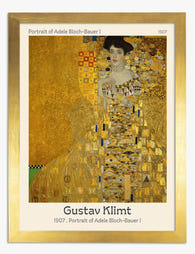
Gustav Klimt – Adele Bloch-Bauer Art Print
Translation missing: en.products.product.sale_price From €16,95€23,95 -

The Kiss by Gustav Klimt Canvas Print
Translation missing: en.products.product.sale_price From €64,95€92,95 -

Portrait of Adele Bloch-Bauer I by Gustave Klimt Canvas Print
Translation missing: en.products.product.sale_price From €64,95€92,95 -

The Kiss by Gustav Klimt Art Print
Translation missing: en.products.product.sale_price From €16,95€23,95 -

Gustav Klimt Night Butterflies Blue Art Print
Translation missing: en.products.product.sale_price From €16,95€23,95 -

Klimts Lush Landscape Canvas Print
Translation missing: en.products.product.sale_price From €64,95€92,95 -

Gustav Klimt Flower Garden Art Print
Translation missing: en.products.product.sale_price From €16,95€23,95 -

Gustav Klimt Vibrant Landscape Art Print
Translation missing: en.products.product.sale_price From €16,95€23,95 -
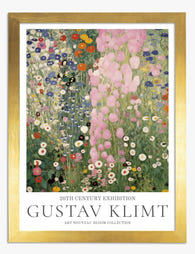
Gustav Klimt Flower Garden Bliss Art Print
Translation missing: en.products.product.sale_price From €16,95€23,95 -

Klimt Flower Garden Canvas Print
Translation missing: en.products.product.sale_price From €64,95€92,95 -

Helene Klimt by Gustav Klimt Canvas Print
Translation missing: en.products.product.sale_price From €64,95€92,95 -

Klimts Vibrant Blooms Canvas Print
Translation missing: en.products.product.sale_price From €64,95€92,95 -

Klimts Serene Landscape Canvas Print
Translation missing: en.products.product.sale_price From €64,95€92,95 -
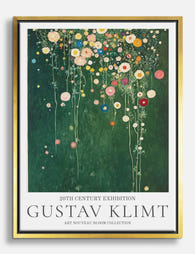
Klimts Floral Dream Canvas Print
Translation missing: en.products.product.sale_price From €64,95€92,95 -
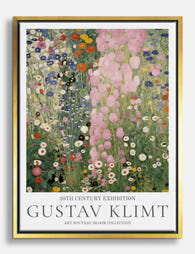
Gustav Klimt’s Floral Symphony Canvas Print
Translation missing: en.products.product.sale_price From €64,95€92,95 -

Klimt Floral Woman Art Print
Translation missing: en.products.product.sale_price From €16,95€23,95 -

Gustav Klimt Floral Field Art Print
Translation missing: en.products.product.sale_price From €16,95€23,95 -

Gustav Klimt – Fritza Riedler Canvas Print
Translation missing: en.products.product.sale_price From €64,95€92,95 -

Klimts Garden Floral Red Pink Art Print
Translation missing: en.products.product.sale_price From €16,95€23,95 -

Klimts Floral Symphony Canvas Print
Translation missing: en.products.product.sale_price From €64,95€92,95


More from The Frame

Why William Morris Prints Look Brilliant in Mod...
William Morris has been quietly miscategorised for decades. His patterns get filed under "country cottage" or "Arts and Crafts revival" and rarely escape, which is a shame because his tree...

Why Arts and Crafts Nature Prints Are the Antid...
The minimalism hangover: why bare walls stopped feeling calming For about a decade, the aspirational interior was a white box with one boucle chair in it. That look has officially...

Botanical Petal Art: Why Close-Up Prints Feel M...
Full florals have had a long run, and they're not going anywhere. But if you've noticed that the botanical art appearing in design magazines, boutique hotel lobbies, and the better-styled...