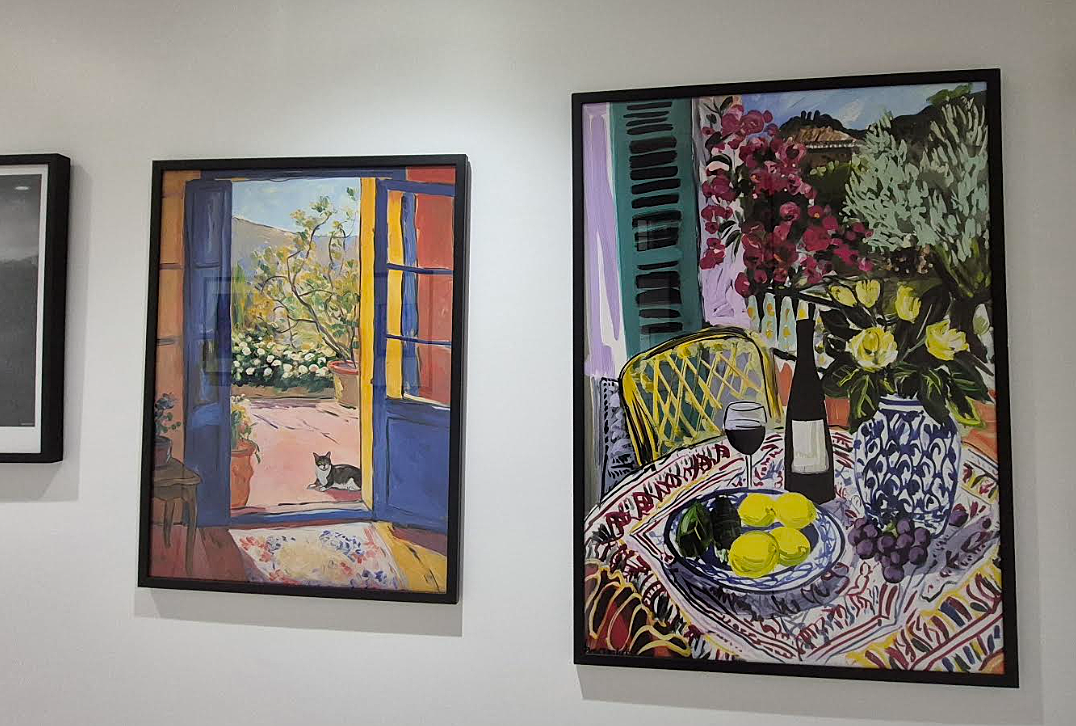
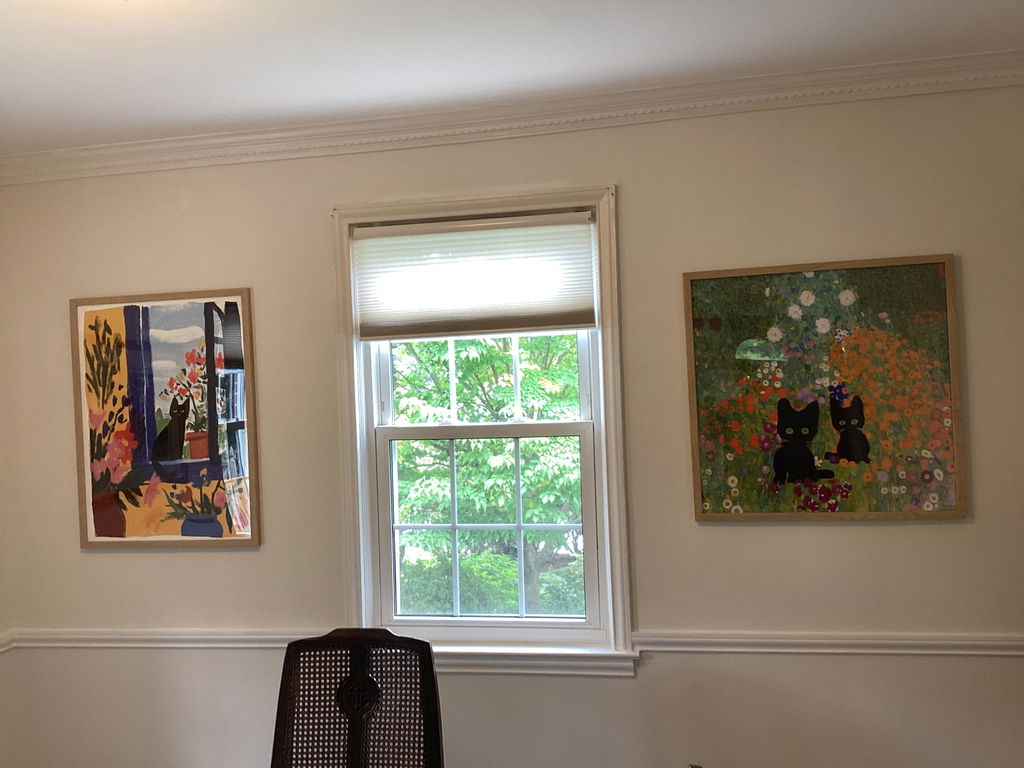
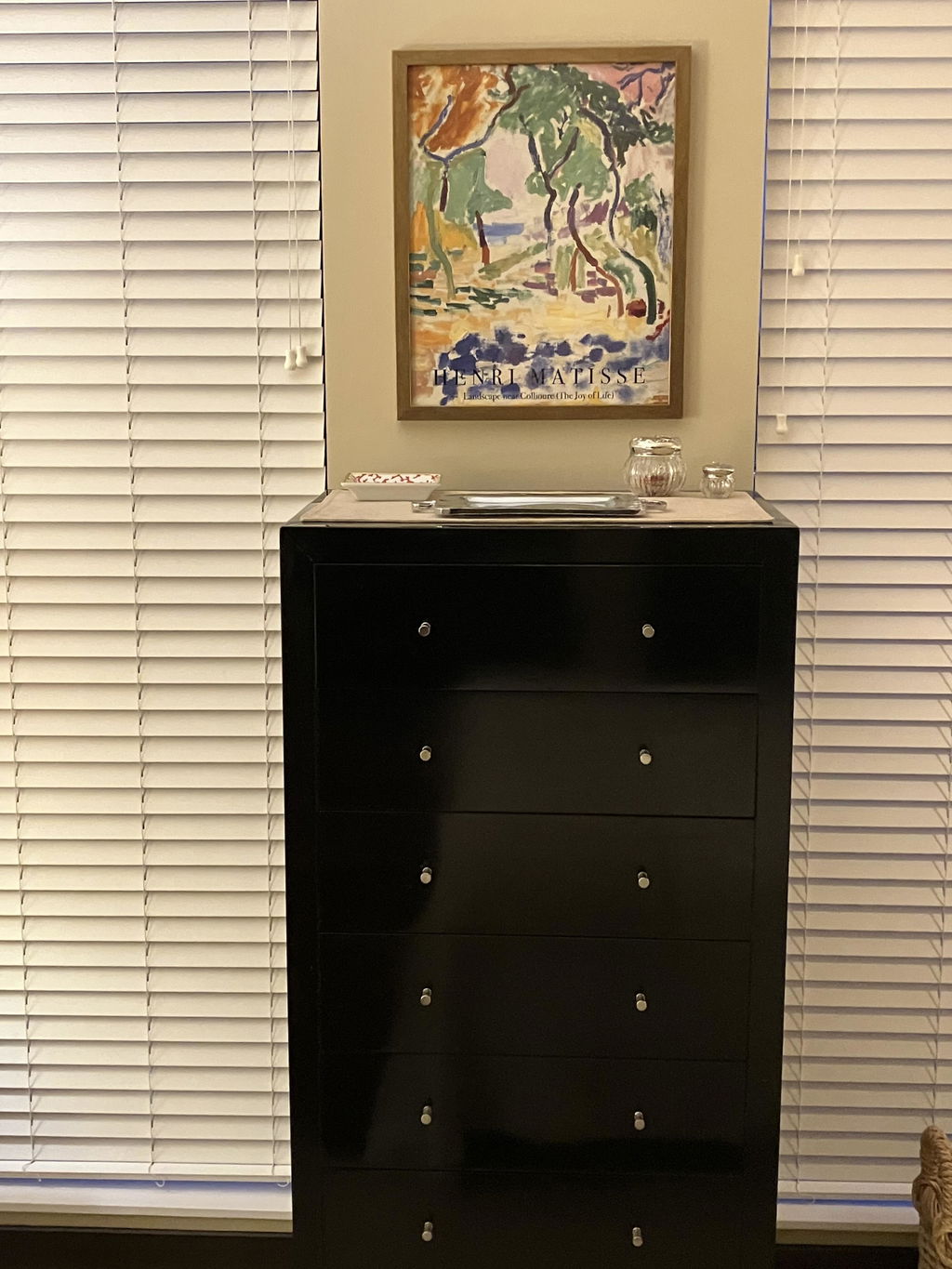
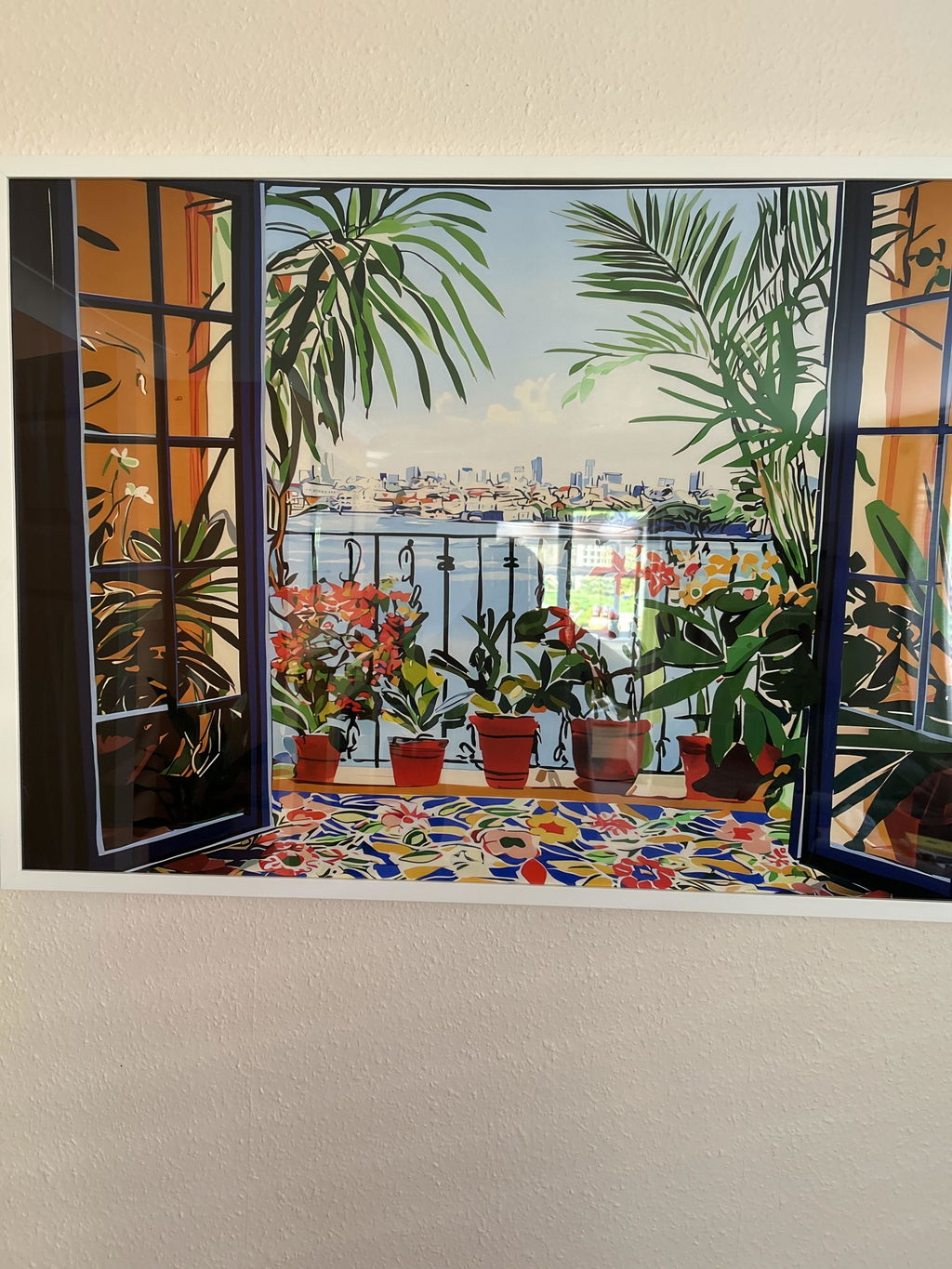
Solid wood. Professionally framed. Arrives ready to hang.
Make your print ready to hang.
Henri Matisse Art Prints
4.8
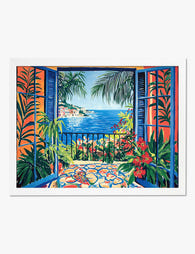
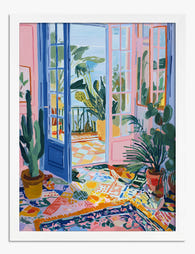
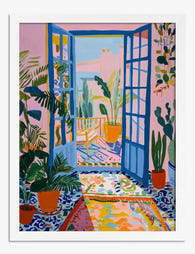
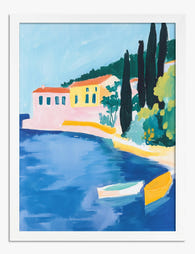
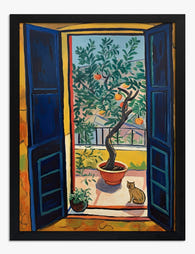
Matisse worked in flat colour and confident line, which is why his work sits so easily in a modern room. Here you'll find the cut-outs, the interiors and the drawings: open shutters and balconies in the window art prints, seated and reclining figures in the woman art prints, and the loose, sunlit south of France in the landscape art prints. Pick a piece unframed, or framed and ready to hang.
The first I describe is the Matisse lemons. I am in my 80s now and enjoy finding the right the things for my grandchildren. I love all the imaginative art that is now sent by email with text, without charge,by some dedicated people. So...your initiative must be very busy.
Walk into almost any well-styled flat in 2026 and you'll spot one. A blue nude above a linen sofa. A Jazz print in a dining room. The Snail's spiralling colour...
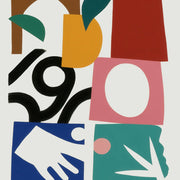
Matisse's cut-outs are the rare bit of art history that works as hard in a modern flat as it does in a museum. The shapes are bold, the palettes are...
Why Matisse's botanicals are the most versatile wall art you can buy Matisse's botanical work sits in a rare sweet spot. The shapes are bold enough to anchor a wall...
Buying a Matisse print: your questions

Framing choices, delivery, returns and tips on where a Matisse works best in a room
Which Matisse Blue Nude print should I choose, and what makes his blue so distinctive?
Choose by pose and wall size. Blue Nude II (1952), with intertwined legs and one arm curved behind the head, is the most recognizable and reads clearly from across a room, so it works as a single focal piece above a sofa or bed. Blue Nude IV feels more fragmented and sculptural, good in a gallery grouping. The blue is distinctive because Matisse cut shapes from paper painted in flat, opaque gouache, and he linked blue to depth and volume, so one saturated tone still suggests a body in space. A simple pale frame keeps those crisp edges sharp. For more of his bodies in line and color, browse the Matisse figure prints.
What's the difference between Matisse's Fauvist paintings and his later paper cut-outs?
The Fauvist works are paintings, made mostly between about 1905 and 1910 with unmixed, non-naturalistic color and loose, visible brushwork applied to canvas. The cut-outs come from the last decade of his life, when illness limited him at the easel and he worked instead with scissors, cutting shapes from paper painted in flat gouache color and arranging them into bold, simplified compositions like the blue nudes and leaf motifs. Visually, expect energetic texture and painterly landscapes or portraits from the Fauve prints, and crisp flat silhouettes with lots of open space from the cut-out prints. To see the painterly Fauve side, look at his landscape prints.
What does Matisse's Palmette print depict, and what colors does it bring into a room?
Palmette (1947) depicts a single stylized palmette, a fan-like palm frond, that Matisse cut freehand from gouache-painted paper and placed on a solid ground. Its French subtitle translates as violet leaf on orange background, so the print brings deep purple-violet against a warm, sun-baked orange, a complementary pairing that feels bold and energetic. It works well in rooms with cream, oatmeal, or terracotta walls and natural wood, rattan, or leather, and you can echo the violet in a pillow, ceramic, or throw. Choose it framed or unframed depending on your wall.
Which Matisse prints suit a bedroom or a child's room?
For a bedroom, choose calmer, cooler cut-outs and line drawings: blue-toned pieces such as the Blue Nudes, Icarus or a simple leaf and floral motif keep the palette restful above a headboard, especially in a pale wood or thin black frame that echoes other trim in the room. For a child's room, lean into playful shapes and brighter color, like sea creatures, stars, birds and the swirling forms of The Snail or Polynesia. Framed prints arrive assembled and ready to hang, which is handy in a nursery, and a pair or trio at matching size reads tidier than a crowded cluster. Quiet line-drawn faces also suit bedrooms, so consider the Matisse portrait prints.
Which Matisse art prints work best for a living room with a blank wall above the sofa?
For the wall above a standard sofa, we'd go with one of Matisse's cut-out compositions like The Snail or a bold Blue Nude in a large framed print (70x100cm sits perfectly above most three-seater sofas). The flat, saturated colour in Matisse wall art holds its own in a room without feeling busy, and our museum-grade giclée printing captures those colours with zero glare thanks to the matte paper. If your room already runs warm, lean into one of Matisse's blue-palette pieces; if it's neutral or cool, his Dance or Goldfish prints bring an instant hit of warmth.
Are your Matisse prints framed and ready to hang, or do I need to sort framing myself?
Every framed Matisse print ships as one complete piece: the print is already professionally fitted into a solid FSC-certified wood frame with UV-protective acrylic glazing, fixtures attached, ready to go straight on the wall. You won't be wrestling with a separate frame kit or discovering the print has bubbled inside cheap moulding three weeks later. It's the single biggest thing that separates a print you actually love from one that quietly annoys you, and our reviewers mention framing quality more than almost anything else.
Which Matisse cut-out prints look best as a pair or gallery wall?
Matisse's cut-outs are practically designed for grouping because they share that same bold, flat-colour language. We'd pick two or three pieces from the same palette family (the blue cut-outs work brilliantly together) and hang them in matching frames at the same size, spaced about 5cm apart, rather than mixing sizes. A pair of 50x70cm framed Matisse cut-out prints side by side on a hallway wall or above a sideboard gives you a collected, intentional look without the chaos of a mismatched gallery wall.
How much does an original Matisse cost compared to a high-quality print?
Original Matisse works sell for tens of millions at auction, and even authenticated lithographs from his lifetime run well into the thousands. A museum-grade giclée Matisse art print on thick matte paper, properly framed in solid wood, gives you the colour depth and detail of the original at a fraction of the price, and our inks are rated to last hundreds of years even in direct sunlight. If you love Matisse's work and want to actually live with it every day rather than keep it in a vault, a beautifully printed and framed reproduction is the obvious move.
How would you describe Matisse's art style, and why does it work so well as wall art?
Matisse's style evolved from the wild, liberated colour of Fauvism in the early 1900s to the radically simple paper cut-outs of his later years, but the thread running through everything is bold colour used with supreme confidence. That's exactly why Henri Matisse prints translate so well to interiors: the shapes are strong enough to anchor a room, the palettes are deliberately harmonious, and the work doesn't lose impact when you scale it. Whether you're drawn to the lush pattern of his painted interiors or the graphic punch of a single blue nude, Matisse gives you art that genuinely changes the feel of a space without demanding a gallery spotlight.
Choosing a selection results in a full page refresh.