Solid wood. Professionally framed. Arrives ready to hang.
Make your print ready to hang.
Interior Art Prints
4.8
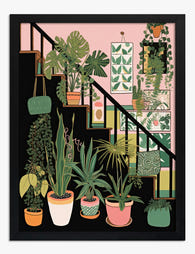
Rooms seen from the inside: sunlit corners, empty hallways, a table laid for nobody, a doorway leading somewhere you can't quite see. Interior art tends to echo the space it hangs in, which is why it settles so easily onto a wall. Browse the full range here, or go narrower with sofa art prints, window art prints or bed art prints.
A blank wall can be intimidating. You know you want art, but where do you even start? You scroll through endless options online, walk through galleries feeling lost, or stare...
You're staring at beige walls that scream "rental property" and wondering how to make this place feel like you actually live here. You love art, but the lease says no...
You walk into your living room and something's off. The furniture is there, the lighting works, everything matches. But the room feels flat. Like it's missing something important but you...
Which interior print suits your room
Short answers on framing, placement, scale and living with art that pictures another room
What is the 70/30 rule and how does it apply to interior art prints?
The 70/30 rule splits a composition into two uneven parts: roughly 70% given to a dominant element, theme or color, with the remaining 30% acting as a contrasting or complementary accent. You can borrow the same idea for a room. Let one print or one palette dominate the wall, then use a smaller secondary piece or a sharper accent color for around a third of the visual weight so the arrangement stays balanced instead of busy.
What art styles are trending for interiors in 2026?
Current trends lean into warmth, texture and storytelling, balancing grounded nature scenes, dreamy escapism and playful maximalism. Layered patterns, tactile digital-look artwork, ethereal softness and deliberately imperfect design all feature strongly. For interior-themed prints, that means rooms rendered with atmosphere and mood rather than clinical accuracy tend to feel current, and they suit spaces you want to read as personal rather than showroom-styled.
Should I choose framed or unframed prints for a room scheme?
Framed prints arrive finished and give an immediate, considered look, which helps in living rooms, hallways and anywhere the artwork is a focal point. Unframed prints cost less and let you match a frame to existing woodwork or metals later, which suits gallery walls you plan to build gradually. Availability of formats varies by design, so check the options listed on the piece you like. Shipping is free and returns run 99 days.
How many interior prints should I group together on one wall?
Odd numbers usually look more natural than even ones, so groups of three, five or seven tend to sit comfortably together. Keep consistent spacing of a few inches between frames and treat the whole cluster as one shape when judging it against the furniture below. If you're unsure, start with one larger anchor print and add smaller pieces around it over time rather than committing to a full grid at once.
Which interior art prints work best for a living room that still feels unfinished?
If your living room has furniture and soft furnishings sorted but the walls feel bare, a single large interior scene print (we'd go 70x100cm framed) above the sofa anchors the whole space immediately. Prints depicting sunlit rooms, architectural interiors, or calm domestic scenes add depth and warmth without competing with your existing decor. Our framed interior art prints arrive ready to hang with solid wood frames and UV-protective glazing, so you're not fiddling with separate frames or worrying about fading near a window. It's the fastest way to make a room feel considered rather than half-done.
How do I use the 2/3 rule when hanging interior design prints?
The 2/3 rule says your artwork should be roughly two-thirds the width of the furniture it sits above. So if your sideboard is 120cm wide, aim for a print around 70x100cm or a pair of smaller prints that span about 80cm together. For interior scene prints, this ratio stops the art from looking lost on a big wall or crammed above a narrow piece. Hang the centre of the print at eye level (around 145cm from the floor) and you'll nail the proportions first time.
Do interior photography prints look cheap compared to paintings or illustrations?
Not when they're printed properly. Our interior photography prints use museum-grade giclée printing on thick matte paper, which gives them a richness and tonal depth that feels closer to a fine art photograph than a poster. Cheap prints on thin glossy paper look flat and reflect light badly, but matte giclée has zero glare and holds detail beautifully up close. Paired with our solid wood frames, interior photography prints often look more polished and contemporary than a reproduction painting. Customers regularly tell us the print looks even better in person than on screen.
How can I make a plain wall look more luxurious with interior prints?
The simplest move is one oversized framed interior print on a blank wall, nothing else. A 70x100cm print of a beautifully composed room or architectural interior, framed in black or natural oak, instantly reads as deliberate and high-end. Avoid clustering too many small pieces, which can look busy rather than luxe. Our FSC-certified wood frames with UV-protective acrylic glazing give that gallery-quality finish without the gallery price, and the print arrives properly fitted and ready to hang so there's no bubbling or warping to undermine the effect.
Where do interior designers actually source their wall art?
Most designers source from a mix of online print studios, galleries, and artist collaborations. The key thing they look for is print and framing quality in one package, because nothing kills a scheme faster than a great image in a warped frame. That's exactly why our interior design prints ship framed and ready to hang, with the print properly fitted into solid wood frames. You get the same calibre of finish designers specify for clients, with a 99-day returns policy so you can see it in situ before committing. No gallery markup, no separate framer visit, no risk.
Choosing a selection results in a full page refresh.


 Order today for delivery by










 Reviewed
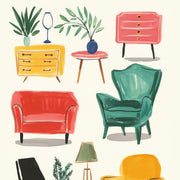
Modernist Living — The Art of Living Art Print →
Reviewed
Modernist Living — The Art of Living Art Print →
 Reviewed
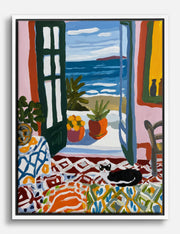
Open Window with Orange Dog Art Print →
Reviewed
Open Window with Orange Dog Art Print →
 Which interior print suits your room