Hokusai gave the world its most famous wave, but there's far more here: carp climbing waterfalls, cranes, bridges, travellers and quiet views of Mount Fuji in every weather. The blues do a lot of the work, which makes these prints easy to hang above a desk, in a hallway or beside a bed. If you want more of the same era, the Ukiyo-e art prints and Utagawa Hiroshige's landscapes sit alongside him well.
I just received this art print and I was pleasantly surprised by the quality. I think because of the quality of the paper the print looks like it is hand painted watercolor and not a print. The details in every line are true to what you see onscreen. Very very happy.
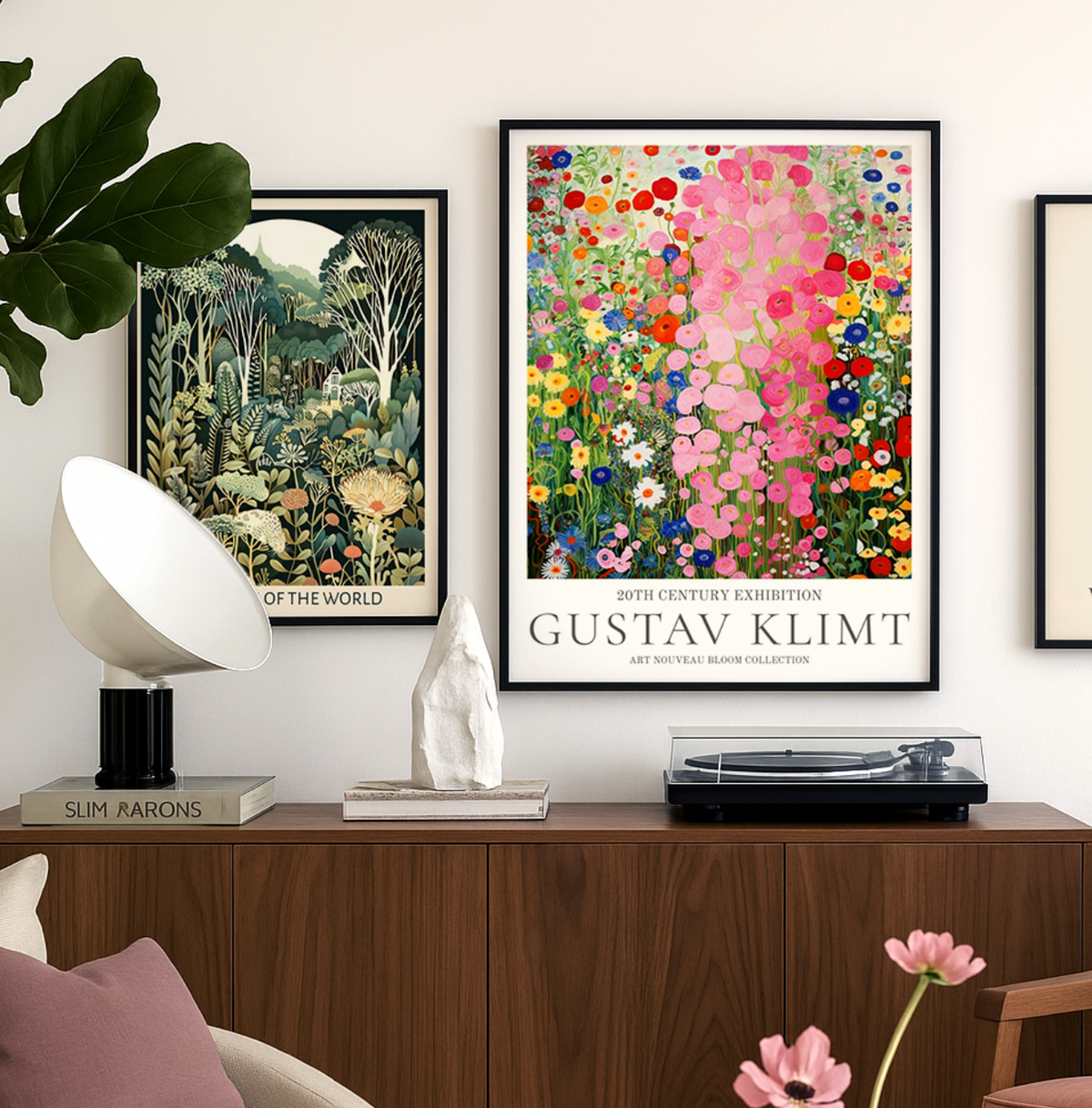
Gustav Klimt wasn’t just an artist — he was a master of seduction through pattern, color, and symbolism. At Fab, we celebrate his work not just as art history, but...
A blank wall can be intimidating. You know you want art, but where do you even start? You scroll through endless options online, walk through galleries feeling lost, or stare...
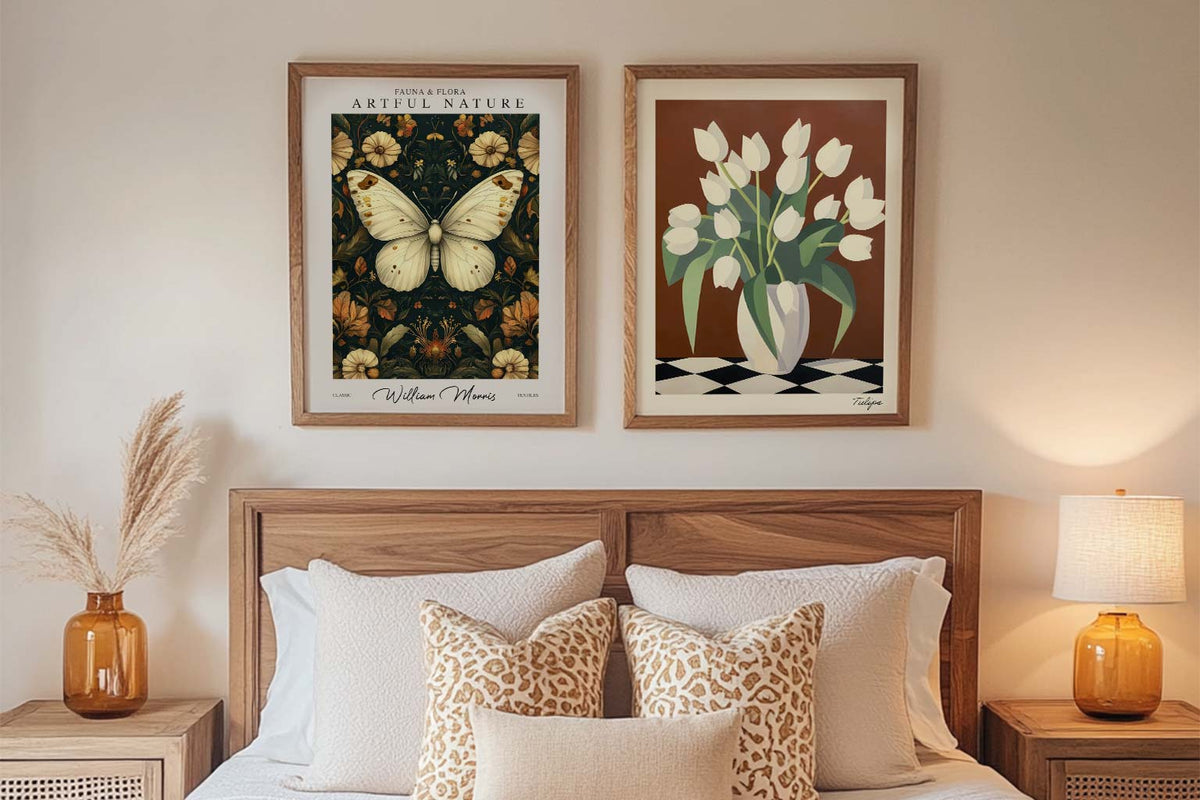
Discover the World of William Morris Art Prints Step into the world of William Morris — where every pattern tells a story, and every print is a celebration of beauty,...
Buying a Hokusai print: the basics
Short answers on framing choices, colour, placement and what happens after you order
The Great Wave off Kanagawa is by far his best-known image, part of the landscape series Thirty-six Views of Mount Fuji made around 1831. It is widely described as one of the most recognizable works of art in the world, which is why it remains the most requested Hokusai design for wall art. Reproductions of it read as instantly familiar without feeling fussy, so it suits both traditional and modern interiors.
What kind of art is Hokusai known for?
Hokusai was a Japanese artist of the Edo period best known for ukiyo-e woodblock prints, especially landscapes such as his Mount Fuji series. He was extraordinarily prolific, producing tens of thousands of paintings, sketches and prints along with illustrations for hundreds of books, and his work is praised for bold composition, perspective and color. Decorative reproductions keep that graphic, flat-color character, which is what makes the designs work so well as wall art.
What colors and decor go best with Japanese woodblock-style prints?
Hokusai's imagery leans on deep blues, soft off-whites and warm earth tones, so it sits comfortably against white, cream, sand or pale gray walls. Natural materials help the most: oak or walnut furniture, rattan, linen and stoneware echo the handmade feel of the original prints. If you want more drama, hang a wave or Mount Fuji design on a darker charcoal or ink-blue wall, which makes the pale foam and sky tones pop.
Should I choose a paper print or a canvas for a Hokusai reproduction?
It depends on the look you want. Paper prints behind glass in a frame stay closest to the flat, graphic feel of traditional woodblock printing, and a slim black or natural wood molding with a white mat suits the style well. Canvas gives a softer, more painterly surface and a frameless option if you prefer less hardware on the wall. Both work; framed items arrive ready to hang with no assembly, shipping is free and returns run 99 days.
Which Hokusai print works best as a statement piece above a sofa?
The Great Wave off Kanagawa is the one. It's dramatic, instantly recognisable, and the deep indigo and white palette works with almost any neutral or navy-toned room. We'd recommend going for a 70x100cm framed print so it fills the space properly above a standard sofa without looking lost. Our frames are solid FSC-certified wood and arrive ready to hang with the print already fitted, so you're not wrestling with loose parts on a Sunday afternoon.
Are these Hokusai art prints good enough quality to frame and display long-term?
They genuinely are. These are museum-grade giclée prints on thick matte paper with inks rated to last hundreds of years without fading, even in direct sunlight. If you choose a framed option, it comes with UV-protective acrylic glaze for extra protection. We hear constantly from shoppers that the detail and colour depth look even better in person than on screen, which is the opposite of what most people expect from online art prints.
Beyond The Great Wave, which other Hokusai prints are worth considering?
Hokusai's Thirty-six Views of Mount Fuji series is packed with stunning pieces that don't get nearly enough attention. Fine Wind, Clear Morning (also called Red Fuji) is a favourite of ours. It has this gorgeous warm palette of burnt orange, teal, and soft sky blue that looks incredible in a living room or bedroom with warm wood tones. If you want something that feels curated rather than obvious, it's a brilliant pick and makes for a really thoughtful gift for anyone who loves Japanese art.
Can I create a gallery wall using multiple Hokusai prints?
Absolutely, and this is where Hokusai really shines because his prints share a consistent colour palette of deep blues, earthy tones, and clean linework. We'd suggest a set of three from the Thirty-six Views of Mount Fuji series in matching frames, hung in a horizontal row with about 5cm between each frame. Stick to the same frame finish across all three so the grouping feels intentional. A row of three 30x40cm framed prints fills a wall section of roughly 110cm wide, which works perfectly above a console table or sideboard.
Why is Hokusai's art still so popular for home interiors?
Hokusai created his most iconic works in his 70s, and they've outlasted virtually every interior trend since. The Great Wave and his Mount Fuji series use a striking balance of movement, negative space, and a restrained colour palette that slots naturally into modern, Japandi, and minimalist rooms alike. His work also has real visual weight without being dark or heavy, which is exactly what you want when you're trying to anchor a room that feels unfinished. There's a reason Hokusai wall art keeps appearing in design magazines two centuries later.
Choosing a selection results in a full page refresh.