
 Heute bestellen, Lieferung bis
 Minimalist Mountain Prints: Why They Work in Almost Every Room (and How to Hang Them)
The practical guide to choosing, sizing and hanging mountain art that actually earns its place on your wall.


Mountain prints have quietly become one of the most popular ways to bring calm into a home, and for good reason. They carry the weight of a landscape painting without the visual noise. This guide covers why mountains and minimalism work together, how to choose the right style for your space, and exactly how to hang them so they look intentional rather than accidental.
Why mountains and minimalism are a natural pairing
Mountains are already minimalist. A peak is essentially a triangle, a ridge is a soft horizontal, and the sky behind both is negative space doing real work. Strip a mountain photograph back to its essentials and you still have a recognisable, emotionally resonant image. That isn't true of most subjects.
This is the structural reason minimalist mountain prints hang so well in modern homes. They give you a strong focal point without competing with the rest of the room. A botanical print needs context. A figurative piece demands attention. A mountain just sits there, anchoring the wall, asking nothing of you.
There's also the horizon line, which architects and interior designers lean on constantly. A clear horizontal in your art echoes the lines of your sofa, your bed, your shelves. It calms a room down in a way busier compositions can't.

Illustrated vs photographic minimalist mountain prints: which to choose
Both styles fall under modern minimalist landscape art, but they do very different things in a room.
Photographic mountain prints
Photography brings drama and realism. A black and white shot of a fog-shrouded peak feels cinematic and slightly serious. It works well in spaces where you want a moment of awe: a hallway you walk into after a long day, a study, a master bedroom with deeper colours. Photography also handles large sizes beautifully because the detail rewards close inspection.
We'd choose photographic prints when the rest of your room is fairly soft. They give you contrast and gravity. If your sofa is cream boucle and your walls are warm white, a stark monochrome mountain photograph will stop the room from drifting into blandness.
Illustrated mountain prints
Illustrations, line drawings and painted minimalist mountains are gentler. They often use just two or three colours, with simplified shapes and softer edges. They suit nurseries, children's bedrooms, calm sitting rooms, and spaces with a lot of pattern elsewhere (where a photograph might tip things into chaos).
Illustrated prints also tend to age better in transitional spaces. A hand-drawn ridge line in muted terracotta will feel as appropriate in three years as it does today. Photography, especially highly stylised photography, can feel more tied to a moment.
The honest answer: if you want one piece to command a wall on its own, go photographic. If you're styling a softer space or a gallery wall, illustrations give you more flexibility.
Colour palettes that work: from moody monochromes to soft pastels
Mountains are forgiving with colour because the subject is so simple. The palette ends up doing most of the emotional lifting, so choose it deliberately.
Moody monochromes
Charcoal, slate, deep navy, and warm black work brilliantly in bedrooms, studies and snug rooms. They suggest stillness. Pair them with brass or aged bronze fixtures and natural wood, and avoid putting them in rooms that already feel cold or under-lit. Monochrome mountains in a north-facing room with grey walls can tip into bleak.
Warm neutrals
Sand, oat, taupe, soft terracotta, and clay tones are the safest choice for living rooms and open-plan spaces. They flatter most existing décor and play well with linen, oak and rattan. This is the palette to default to if you're not sure.
Soft pastels
Dusty pink, sage, pale blue and butter yellow suit nurseries, bathrooms and bright kitchens. Illustrated styles dominate here because photography rarely captures these tones convincingly. A pastel mountain print in a child's room can grow with them in a way cartoons can't.
Cool tones
Deep blues, foggy greens and icy whites suit bathrooms and modern bedrooms. They reinforce a sense of calm and pair well with chrome, marble and cool grey textiles.
One rule worth following: pick a palette that's already present somewhere in the room (a cushion, a rug, a lampshade) and let the print echo it. Introducing a completely new colour family through a large print is a gamble.

Sizing guide: from small bathroom prints to XL living room canvases
Getting the size right matters more than getting the style right. A beautiful print at the wrong scale will always look wrong.
The two-thirds rule
Above any piece of furniture (sofa, bed, console, sideboard), your art should be roughly two-thirds to three-quarters of the furniture's width. A 220cm sofa wants art around 150cm to 165cm wide. A 180cm bed wants something in the 120cm to 135cm range. Smaller than that and the art looks marooned.
This is where larger formats earn their place. A canvas print at 100x150cm above a generous sofa reads as architecture, not decoration.
Room-by-room recommendations
Living room (above sofa or fireplace): 70x100cm framed minimum, ideally 100x150cm canvas for larger sofas. This is the room to go big.
Bedroom (above bed): 70x100cm framed for a single statement, or a pair of 50x70cm prints flanking the headboard. Keep the bottom edge 15cm to 25cm above the headboard.
Hallway: 40x60cm or 50x70cm works for narrow halls. Hang them in a series of two or three for rhythm.
Bathroom: 30x40cm or 40x50cm. Canvas tends to handle humidity better than paper, which is worth knowing if your bathroom doesn't have a window or extractor fan running consistently.
Home office: 50x70cm at eye level when seated, not standing. This is the one room where the standard hanging height needs adjusting.
Kitchen and dining: 50x70cm to 70x100cm depending on wall size. Avoid hanging directly above the hob.
When in doubt, go larger
The most common sizing mistake is buying too small. A print that feels enormous in your hands almost always looks modest on the wall. Measure your wall, mark out the planned size with masking tape, and live with it for a day before committing.
How to hang a single mountain print so it commands the wall
A single large print done well will outperform a complicated gallery wall every time. Here's how to make it work.
The 145cm centre line
Professional hangers aim for the centre of the artwork to sit at roughly 145cm to 150cm from the floor (the gallery standard of 57 to 60 inches). This puts the visual centre at average eye level for most people standing in a room.
To find your hook placement, the maths is simple. Take the height of your print, halve it, and add 145cm. So for a 100cm tall print, the centre is at 145cm and the top edge is at 195cm. Then subtract the distance from the top of the frame to the hanging wire or D-ring (usually 7cm to 10cm) to get the exact hook position.
Adjustments above furniture
When hanging above a sofa or bed, ignore the 145cm rule and instead leave 15cm to 25cm of breathing room between the top of the furniture and the bottom of the frame. Any closer and the print sits on the furniture. Any further and it floats off into space, disconnected.
Common single-print mistakes
- Hanging too high (the most common error by far)
- Choosing a print too small for the wall
- Centring the print on the wall instead of on the furniture below it
- Hanging without considering sightlines from the doorway

Creating a mountain-themed gallery wall without overdoing it
Gallery walls go wrong when they try to do too much. With mountain prints specifically, the risk is that you end up with a wall of triangles that all look slightly similar but not similar enough.
Keep the palette tight
Stick to one colour family across every print. Five different mountain prints in five different palettes will read as chaos. Five mountain prints all in warm neutrals will read as a collection.
Vary scale, not subject
A mountain gallery wall works best when one print is clearly the lead (say, 50x70cm) and the others are supporting (30x40cm or 40x50cm). Equal sizes feel static. Wildly different sizes feel deliberate.
Spacing
Keep 5cm to 10cm between frames. Closer than that and they merge. Further apart and they stop reading as a group. Use the same gap consistently across the whole arrangement.
Mix in something non-mountain
A pure mountain gallery wall can feel one-note. Bring in one related piece: a textural abstract, a piece of typographic art, a soft botanical from our nature art prints collection. It gives the eye somewhere to rest.
Plan it on the floor first
Lay the arrangement out on the floor before touching the wall. Take a photo from above. Adjust until it looks right. Then trace each frame on paper, tape the paper to the wall, and only commit when you're sure.
Frame and finish options that suit mountain subjects
The frame is doing more work than people realise. Get it wrong and the print will fight against the room.
Framed prints
For minimalist mountain photography, a thin black or natural oak frame is almost always the right answer. Black sharpens contrast and adds gravity. Oak softens the image and warms the wall. White frames work for illustrated styles and pastel palettes, but can disappear against white walls.
A proper framed print should arrive flat, fitted, and ready to hang in one piece. The most common failure in this category is frames shipped separately from prints, frames that warp because they're MDF dressed up as wood, or prints that aren't properly tensioned and develop bubbles within weeks. Solid FSC-certified wood frames with UV-protective acrylic glaze keep the print flat, fade-free, and sharp for decades, even in direct sunlight.
Canvas prints
Canvas suits mountain subjects exceptionally well, particularly photography. The matte finish kills glare, and the slight texture adds atmosphere to skies and snow. Canvas is also lighter than framed glass, which matters for larger sizes above beds and sofas. A 100x150cm canvas weighs a fraction of an equivalent framed print and is far easier to hang securely.
Canvas also handles humidity better, making it the sensible choice for bathrooms and kitchens. The mirrored edge wrapping means none of the main image is lost around the sides, which matters with mountain compositions where the peak might sit close to the edge.
Unframed prints
If you want something even more minimal, unframed prints clipped or pinned can suit very pared-back interiors. The trade-off is durability and presence. Unframed paper feels casual and temporary. That's sometimes exactly the look you want, particularly in rented spaces.

A few last thoughts
Buy the largest size your wall can carry. Pick a palette that already lives somewhere in the room. Hang it with the centre at around 145cm, or 15cm to 25cm above your furniture. Choose photography for drama, illustration for softness. And resist the urge to fill every wall: a single well-chosen mountain print, properly sized and properly hung, will always beat three smaller ones doing battle for attention.
If you're at the stage of choosing, spend more time on size and palette than on the specific image. A perfect print at the wrong scale is a wasted purchase. A good print at the right scale, in the right colours, will quietly improve the room every day you live with it.

In diesem Blog vorgestellte Fab-Produkte
-

Poster Stille Berghütte unter schneebedeckten Gipfeln
Translation missing: de.products.product.sale_price Ab €16,95€23,95 -

Poster Berglandschaft in Grün und Blau
Translation missing: de.products.product.sale_price Ab €16,95€23,95 -

Poster Geborgen in den Bergen
Translation missing: de.products.product.sale_price Ab €16,95€23,95 -

Poster minimalistische Skilift-Szene in Schwarz-Weiß
Translation missing: de.products.product.sale_price Ab €16,95€23,95 -

Poster Bergauszeit – Ski-Edition
Translation missing: de.products.product.sale_price Ab €16,95€23,95 -

Leinwandbild Sonnige Berglandschaft in Erdtönen
Translation missing: de.products.product.sale_price Ab €64,95€92,95 -

Poster Skifahrer in alpiner Abfahrt – minimalistisch, Schwarz-Weiß
Translation missing: de.products.product.sale_price Ab €16,95€23,95 -

Poster Minimalistische Figuren
Translation missing: de.products.product.sale_price Ab €16,95€23,95 -

Leinwandbild Bergnebel im Mondlicht
Translation missing: de.products.product.sale_price Ab €64,95€92,95 -

Leinwandbild Ruhige Berglandschaft
Translation missing: de.products.product.sale_price Ab €64,95€92,95 -

Poster Winterauszeit in Jackson Hole
Translation missing: de.products.product.sale_price Ab €16,95€23,95 -
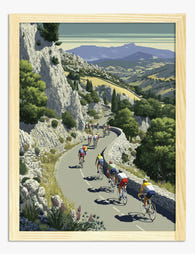
Poster Radfahrer am sonnigen Bergpass
Translation missing: de.products.product.sale_price Ab €16,95€23,95 -

Leinwandbild Berglandschaft in Blau und Schneeweiß
Translation missing: de.products.product.sale_price Ab €64,95€92,95 -

Poster Minimalistische Skifahrer im Schnee
Translation missing: de.products.product.sale_price Ab €16,95€23,95


Mehr aus The Frame

The Complete Guide to Styling Joan Miró Art Pri...
Most gallery wall advice is generic, and most Miró advice stops at "where to buy." This guide does the bit nobody covers: how to actually arrange his work on your...

Building a Gallery Wall Around Floral Prints: A...
Most gallery wall advice skips the hard part: deciding what goes where, and why. This guide assumes you've got a blank wall, you want florals at the heart of it,...

Living Room Quote Prints: Display Ideas That Wo...
Quote prints have a reputation problem. Hang too many in one room and your living room starts to feel like a wellness retreat gift shop. Done properly though, a well-placed...