
 Heute bestellen, Lieferung bis
 Easy Steps to Create a Beautiful Gallery Wall: Full Guide


The Easy Guide to Creating a Stunning Gallery Wall at Home
A gallery wall can transform the most forgettable wall in your home into the most interesting one. It's the kind of project that looks impressive but doesn't actually require design expertise—just a bit of planning and the right approach.
This guide walks you through choosing a layout, selecting art that works together, and hanging everything without unnecessary holes or frustration.
What is a gallery wall
A gallery wall is a grouping of framed art, prints, or photos arranged together on one wall to create a single visual display. The arrangement works best when you plan the layout with paper templates before hanging, choose a unifying color palette, mix different frame styles and art sizes, and keep spacing consistent at about 2-3 inches between pieces. Centering the display around eye level—roughly 57 to 60 inches from the floor—helps everything feel balanced.
Gallery walls can go almost anywhere. Above a sofa, climbing a staircase, filling an awkward hallway. The format is flexible enough to work in any room, which is part of why it's become such a popular way to make a space feel finished.
How to plan a gallery wall before you start hanging
Here's the thing about gallery walls: the actual hanging part is quick. It's the planning that takes time. But that upfront work is what separates a gallery wall that looks intentional from one that looks like you just threw frames at the wall and hoped for the best.
Start by choosing your wall. Look for a spot with good visibility and enough space to make an impact. Above the sofa is classic. A staircase wall creates drama. Even a small bathroom wall can work if you scale the pieces appropriately.
Gather inspiration before you buy anything. Save images that catch your eye and notice what draws you in. Is it the color palette? The mix of frame styles? The overall mood? This gives you direction before you start shopping.
Build your collection. You can accumulate pieces over time for that collected-over-years look, or you can take a shortcut with curated sets that arrive coordinated. Either approach works—it just depends on how quickly you want that blank wall transformed.
Gallery wall layout ideas for every style
The layout you choose sets the tone for your entire display. Some arrangements feel modern and orderly. Others feel eclectic and personal. Neither is better; it just depends on the vibe you're going for.
The grid layout
Uniform frames arranged in neat rows and columns. Clean, modern, satisfying. A grid works especially well when you want impact without visual chaos. It's the gallery wall for people who love symmetry.
The single row layout
A horizontal line of frames creates a streamlined look that's perfect above furniture. It works well on narrow walls or in spaces where you don't want the art competing with other elements. Simple, but effective.
The salon style layout
This is the eclectic, collected-over-time approach you see in Parisian apartments, perfect for displaying bold abstract pieces alongside varied styles. Frames of different sizes and styles cluster together organically. The result feels personal, like you've been gathering art for years. It's also more forgiving of imperfection, which makes it surprisingly beginner-friendly.
The shelf gallery wall
Picture ledges or floating shelves let you display art without committing to nail holes. You can lean frames, layer smaller pieces in front of larger ones, and swap things out seasonally. Perfect for renters or anyone who likes to change things up.
The staircase gallery wall
Frames that ascend along the angle of a staircase create dynamic visual flow. The key is following the staircase line while keeping spacing consistent between pieces.
| Layout | Best for | Overall vibe |
|---|---|---|
| Grid | Modern spaces | Clean and orderly |
| Single row | Above furniture | Streamlined |
| Salon style | Eclectic rooms | Personal and curated |
| Shelf | Renters | Flexible |
| Staircase | Hallways | Dynamic |
How to choose art and frames for a cohesive look
A gallery wall can include wildly different pieces and still feel intentional. The trick is finding the thread that ties everything together.
Start with a large anchor piece
Every gallery wall benefits from one larger piece that grounds the arrangement. This becomes your visual center, the piece everything else orbits around. Start here, then build outward.
Build a color palette that ties everything together
Pick two or three colors that appear across multiple pieces. They don't have to match exactly. A soft blue in one print might echo the sky in another. Warm terracotta tones can create continuity across different subjects. This subtle repetition is what makes a gallery wall feel curated rather than random.
Mix frames without making it look messy
You can absolutely combine different frame styles—wood with black, thin with chunky, ornate with minimal. The key is limiting yourself to one or two frame colors or materials throughout. Enough variety to feel interesting, enough consistency to feel cohesive.
Add canvas prints and unframed pieces
Gallery walls don't have to be all framed prints. Mixing in canvas art, dimensional objects, or small mirrors adds texture and keeps the eye moving. The variation in depth and material makes the whole arrangement more dynamic.
How to arrange and hang your gallery wall
Here's where the planning pays off. Follow this sequence and you'll hang your gallery wall with confidence.
1. Measure your wall space
Grab a measuring tape and figure out the total area you want to fill. Mark the boundaries with painter's tape so you can visualize the space before committing to anything permanent.
2. Lay out your frames on the floor first
This is the trick that prevents most gallery wall regrets. Arrange all your pieces on the floor, experimenting with different configurations until something clicks. Take a photo from above so you can reference it later.
3. Create paper templates for each piece
Trace each frame onto kraft paper or newspaper, cut out the shapes, and label them. Paper templates let you test placement on the actual wall without lifting heavy frames or making premature nail holes.
4. Transfer your layout to the wall
Tape your paper templates to the wall according to your floor arrangement. Step back—way back—and look at the overall composition. Adjust until it feels balanced. Live with it for a day if you're unsure.
5. Hang your anchor piece first
Start with your largest or most central piece. Getting this one right sets the foundation for everything else. Use a level to make sure it's straight, then work outward from there.
6. Work outward and check your spacing
Hang the remaining pieces, maintaining consistent gaps between frames. A credit card works as a quick spacing guide. Step back frequently to check the overall balance as you go.
Tip: Mark your nail placement directly on the paper templates before removing them. Hammer through the paper, then peel it away to reveal perfectly placed hooks.
Styling tips to make your gallery wall feel personal
Once the basics are in place, a few finishing touches take your arrangement from nice to truly yours.
- Add something personal: Family photos, travel prints, or artwork with sentimental value give your gallery wall meaning beyond aesthetics.
- Include unexpected elements: A small mirror, a decorative object on a tiny shelf, or a sculptural piece breaks up the flat plane and adds dimension.
- Consider your lighting: A picture light or nearby lamp draws attention to your display and creates atmosphere in the evening.
- Leave room to grow: You don't have to fill every inch immediately. Intentional gaps let you add new pieces over time.
From blank wall to beautiful gallery in minutes
Creating a gallery wall doesn't require months of collecting or a design degree. When you start with art that arrives professionally framed and ready to hang, the hardest part—sourcing, measuring, and framing—is already done.
The transformation happens faster than you'd expect. One afternoon of planning and hanging, and suddenly that blank wall has personality. It tells people something about who you are and what you love.
Shop art prints and framed wall art to find pieces that ship ready to hang, so you can go from inspiration to finished gallery wall without the wait.
FAQs about how to make a gallery wall
What is the 57 rule for hanging art?
The 57-inch rule comes from museum standards. It suggests positioning art so the center of the piece—or the center of your entire gallery wall grouping—sits at 57 inches from the floor. This is roughly average eye level, which creates a natural, comfortable viewing height.
How much space do I leave between gallery wall frames?
Most designers recommend 2 to 3 inches between frames. This spacing feels connected without crowding. For larger pieces, you might go up to 4 inches, but consistency matters more than the exact measurement.
Can I create a gallery wall in a rental without damaging walls?
Yes. Damage-free adhesive strips work well for lighter frames. Picture ledges let you display art without any nail holes at all. You can also lean larger pieces against the wall on a shelf or even on the floor for a relaxed look.
How do I add new pieces to my gallery wall over time?
Leave intentional gaps in your original layout, or plan to rearrange as your collection grows. Gallery walls are meant to evolve. When you find a new piece you love, shift things around to accommodate it—that's part of what makes the arrangement feel personal.
What tools do I need to hang a gallery wall?
Keep it simple: a hammer, nails or picture hooks, a level, measuring tape, pencil, and painter's tape for planning. Paper templates make the process easier. A step stool helps for higher placements.
In diesem Blog vorgestellte Fab-Produkte
-

Poster modernes Wohnzimmer in Türkis mit gelbem Sessel und Pflanzen
Translation missing: de.products.product.sale_price Ab €17,95€29,95 -

Poster Gemütliche Katze & Zitrus im Wohnzimmer
Translation missing: de.products.product.sale_price Ab €17,95€29,95 -

Poster weiße Katze auf grünem Samtsofa im Wohnzimmer
Translation missing: de.products.product.sale_price Ab €17,95€29,95 -

Poster Blumenstrauß in gemütlicher Leseecke
Translation missing: de.products.product.sale_price Ab €17,95€29,95 -

Leinwandbild Farbkick fürs Wohnzimmer
Translation missing: de.products.product.sale_price Ab €64,95€107,95 -

Poster Verspieltes Blumenstillleben mit Schachbrett-Vase
Translation missing: de.products.product.sale_price Ab €17,95€29,95 -

Poster Gemütliche Bibliothek mit gelbem Sofa
Translation missing: de.products.product.sale_price Ab €17,95€29,95 -

Poster Kleine Welten II von Kandinsky
Translation missing: de.products.product.sale_price Ab €17,95€29,95 -
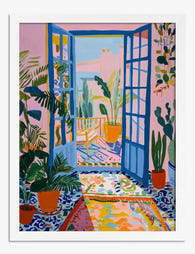
Poster Matisse-inspirierter Wintergarten in Pink und Blau
Translation missing: de.products.product.sale_price Ab €17,95€29,95 -

Poster Liebevoll leben – Rote Typografie
Translation missing: de.products.product.sale_price Ab €17,95€29,95


Mehr aus The Frame

The Best Watercolor Art for Your Bedroom (And W...
A blank wall above your bed is one of the easier design problems to solve, but most people overthink it. Watercolour is the answer more often than not, and this...

William Morris Wallpaper vs. Art Prints: How to...
Morris is everywhere again. Strawberry Thief on cushions, Pimpernel on lampshades, Willow Bough on tea towels in shops that didn't stock anything floral five years ago. The question is whether...

Vintage Art Prints Explained: From Botanical to...
Vintage art is one of the most loved categories in wall decor, and one of the most loosely defined. Botanicals, travel posters, oil portraits and psychedelic 1970s graphics all get...