
 Heute bestellen, Lieferung bis
 Best Plants for Minimalist Decor: Real Ones and Printed Ones (And How to Mix Both)
How to fill your home with greenery without turning the lounge into a garden centre.


There's a tension at the heart of minimalist interiors: you want the calm of clean surfaces, but you also want the warmth that only living things bring. Buy too many plants and your lounge starts looking like a humid garden centre. Buy too few and the room feels sterile. The fix is treating plants and plant prints as two halves of the same design problem.
The problem with too many plants (and how wall art solves it)
Plant clutter is real. You start with one fiddle leaf fig in the corner, then a snake plant by the sofa looks nice, then a trailing pothos on the bookshelf, and suddenly every horizontal surface has a terracotta pot on it. The room no longer reads as minimalist. It reads as "person who watched a lot of houseplant content during lockdown."
The reason this happens is that plants do a job other decor doesn't: they bring nature indoors. Designers call this biophilic design, and the research supporting it is solid. Humans feel better in rooms with natural elements. The trouble is that "more plants" feels like the only way to scale that benefit.
It isn't. Botanical wall art delivers a surprising amount of the same psychological lift, particularly when the print is large, detailed, and rendered with care. You get the visual reference to nature without watering schedules, leaf drop, or the slow brown death of an overwatered calathea. A well-chosen minimalist plant print lets you keep three or four real plants instead of fifteen, and the room finally breathes.

Five plant species that look as good on your wall as on your shelf
Not every plant photographs well. The species worth living with and printing both share a few traits: strong silhouettes, clear leaf structure, and enough sculptural presence to anchor a corner without help. These five do both jobs.
Monstera deliciosa
The split leaves are graphic, almost cartoonish in their clarity, which is exactly why they translate so well to line drawings and minimalist prints. A real monstera reads as architectural rather than fussy, and a single mature plant in a 30cm pot can carry an entire corner of a room.
Snake plant (Sansevieria)
Vertical, stiff, almost zero maintenance. The blade-like leaves create strong vertical lines that complement modern interiors. In print form, snake plants work brilliantly as monochrome silhouettes or simple two-tone studies. They tolerate low light, so they're useful in spots where most plants sulk.
Bird of Paradise (Strelitzia)
The big, paddle-shaped leaves photograph beautifully and print with real drama. One Bird of Paradise can do the work of three smaller plants. As wall art it scales up well, which makes it ideal for the 70x100cm framed prints that anchor a feature wall.
Olive tree
A small indoor olive has slender, silvery-green leaves and a gnarled trunk that adds texture without volume. Olive prints, especially detailed botanical studies of a single branch, lean Mediterranean rather than tropical, which suits warmer minimalist palettes (oat, terracotta, bone).
Eucalyptus
Eucalyptus is everywhere in print form, partly because the round, blue-green leaves photograph well and partly because everyone has hopped on the trend. The risk is looking generic. If you want eucalyptus on your wall, go for a high-detail study rather than the washed-out watercolour version that's saturated every flat in the country.
Matching your real plants to your minimalist plant prints
The trick is echoing, not duplicating. If you have a real monstera in the corner, you don't need a giant monstera print on the wall directly behind it. That's a costume, not a styling choice. Instead, place the monstera print on a different wall, or pair the real monstera with a print of a different but visually compatible species.
Three approaches that work:
Echo the species, separate the location. Real snake plant in the hallway, snake plant line print in the bedroom. The eye registers the repetition across rooms as intentional, not redundant.
Echo the silhouette, vary the species. Real Bird of Paradise on the floor, a large palm or banana leaf print on the wall above the sofa. Different plants, similar visual weight.
Echo the colour, ignore the species. Real olive tree (silvery green) with a sage-toned abstract botanical print. You're matching the palette, not the plant.
The style of the print matters as much as the subject. For minimalist interiors, three print styles tend to work and one tends not to.
Line drawings are the safest bet. Black ink on cream paper, single colour on white, no shading. They read as graphic, almost like punctuation, and they don't fight with anything else in the room.
Botanical studies (detailed, scientific-illustration style) work when your minimalism leans warm or has any vintage or library-ish feel. They're heavier visually, so use them as the single statement piece on a wall rather than in pairs.
Photographic prints in moody, low-key light can be beautiful, particularly for tropical leaves shot close up. Look for high-resolution images with real depth, not stock photography. This is where giclée matters: cheap prints flatten out the leaf texture and you end up with a poster.
Loose watercolour eucalyptus is the one to avoid, mostly because it's been done to death and the cheap versions look identical in every flat. If you love watercolour, go for something less obvious.
Browse the wider botanical art prints collection if you want to see how these styles sit next to each other.

Where to place art vs. where to place a plant: practical room planning
Here's the question to ask of every corner: does this spot want something living, or something flat?
A spot wants a real plant if:
- It gets at least medium indirect light (so most window-adjacent positions)
- There's floor space or a sturdy surface for a pot
- You'll actually walk past it often enough to remember to water it
- The corner feels visually flat and needs three-dimensional volume
A spot wants a print if:
- The light is poor (dark hallway, internal wall, north-facing corner)
- The surface is already busy or there's no room for a pot
- It's above a piece of furniture (sofa, bed, console table) where wall height is the issue
- You want greenery in a humid room (bathroom) without dealing with the practicalities
Canvas tends to be the smarter choice in bathrooms and kitchens, where humidity fluctuates. It's lighter than a framed print and copes with damp air better. Paper prints behind UV-protective acrylic glaze, on the other hand, hold up well in direct sunlight, which makes them the right call for that bright south-facing wall where you definitely don't want a real plant baking in the sun.
A reliable layout for an average sitting room: one large real plant (Bird of Paradise or fiddle leaf fig) in the brightest corner, one medium real plant (snake plant or rubber plant) on a sideboard or floor, one large print above the sofa, one smaller print or pair of prints on a perpendicular wall. That's two living plants and two to three prints in a 20m² room. Plenty of greenery, no clutter.
For living room wall art, scale matters more than quantity. One properly-sized print at 70x100cm above the sofa does more work than four small prints scattered around.
How to keep the look minimal when you love greenery
If you genuinely love plants and find it hard to stop at three, a few rules help.
Use a single pot material across the whole flat. Matte stoneware, terracotta, or undyed concrete. Mixing four different planter styles is what makes a plant collection look chaotic, not the plants themselves.
Stick to a tight colour palette in the leaves. Mostly mid-greens, with one outlier (silver olive, dark rubber plant). Variegated plants are beautiful but variegated everything starts to look like a fabric swatch book.
Allow negative space. A useful informal ratio for minimalist plant styling is roughly one part real plants, one part prints, one part empty space. If a shelf has a plant, a print propped against the wall, and a stack of books, leave the rest of it bare.
Prune ruthlessly. Brown leaves, leggy growth, plants that have outgrown their corner. Minimalism with greenery only works if the greenery itself looks intentional. A drooping pothos with three yellow leaves is not adding to the room.
Swap, don't stack. When you fall in love with a new plant species, replace one of the current ones rather than adding to the count. Move the displaced plant to a friend's flat. This is the rule that keeps you sane.
Over a year, five quality real plants and five well-chosen prints work out cheaper than maintaining a rotating collection of fifteen plants you keep replacing. Plants die. Prints don't.

Our favourite pairings: specific prints with specific plants
These are the combinations we keep coming back to.
Real monstera + monstera line print on a different wall
The real plant gives you volume and movement (those leaves shift in any draft). The line print on a perpendicular wall echoes the silhouette without competing. Works in a sitting room with a sofa on one wall and the print above a sideboard on the other.
Real snake plant + abstract green botanical print
Snake plants are graphic and slightly cold on their own. Pair with an abstract green or sage-toned print to warm up the corner. The print doesn't need to depict a snake plant, just to share its palette.
Real Bird of Paradise + large palm or banana leaf print
This is the maximalist-leaning-minimalist combo. Both pieces are statement-sized, both are tropical in feel, but the print pulls the look upward and gives the eye somewhere to land above sofa height. Best in rooms with high ceilings.
Real olive tree + detailed botanical olive branch study
The most quietly elegant pairing on the list. Olive in a terracotta pot near a window, framed botanical print on a nearby wall. Reads as Mediterranean farmhouse without trying too hard.
Real fiddle leaf fig + simple two-tone fig leaf print
Fiddle leaf figs are dramatic and a bit needy. A simple, two-tone print of the same leaf style (not a literal photograph) acknowledges the plant without doubling down. Keep the print small and offset, not centred behind the plant.
Real eucalyptus stems in a vase + a non-eucalyptus print
If you have eucalyptus on the table, don't put eucalyptus on the wall. Pair the cut stems with a green-toned but different botanical print, or with a green art print that's abstract rather than literal. This is the rule that saves you from the eucalyptus-on-eucalyptus look that's become a cliché.

A few practical notes on prints
The single biggest failure point in plant prints, and wall art generally, is bad framing: warped frames, prints that arrive separately from the frame and bubble when you fit them, MDF that looks fine for six months and then starts to swell. If you're spending real money on a print, the frame quality matters as much as the image. Solid wood frames, prints fitted properly before they ship, fixtures already attached. That's the standard to look for.
For botanical subjects specifically, paper quality also matters. Thick matte paper without glare lets the leaf detail read properly. Glossy paper flattens the greens and creates reflections that fight with whatever real plants are nearby.
The point of all of this is not to replace your plants with art. It's to let your plants do their best work by giving them room to breathe, and to fill the rest of the space with greenery that doesn't ask anything of you. Three living plants and three good prints will always look more considered than fifteen plants and bare walls. Start there and add only what the room actually wants.

In diesem Blog vorgestellte Fab-Produkte
-

Poster Minimalistische Skizze einer blattreichen Topfpflanze
Translation missing: de.products.product.sale_price Ab €16,95€23,95 -

Leinwandbild Minimalistische botanische Zeichnung
Translation missing: de.products.product.sale_price Ab €64,95€92,95 -

Poster Botanische Pflanzen auf dem Regal vor gelbem Hintergrund
Translation missing: de.products.product.sale_price Ab €16,95€23,95 -

Poster Zimmerpflanzen am Treppenabsatz
Translation missing: de.products.product.sale_price Ab €16,95€23,95 -

Poster Minimalistische weiße Blüte
Translation missing: de.products.product.sale_price Ab €16,95€23,95 -

Poster Mediterrane Pflanzenparade
Translation missing: de.products.product.sale_price Ab €16,95€23,95 -

Poster Lebendige Pflanzen auf der Fensterbank
Translation missing: de.products.product.sale_price Ab €16,95€23,95 -

Poster Boho-Vasen mit Zimmerpflanzen
Translation missing: de.products.product.sale_price Ab €16,95€23,95 -

Poster Keramik und Pflanzen im Matisse-Stil
Translation missing: de.products.product.sale_price Ab €16,95€23,95 -

Poster moderne botanische Skizze – handgezeichnete Topfpflanze
Translation missing: de.products.product.sale_price Ab €16,95€23,95 -

Poster Zimmerpflanzen auf Sonnengelb
Translation missing: de.products.product.sale_price Ab €16,95€23,95 -

Poster neutrale botanische Silhouette in Erdtönen
Translation missing: de.products.product.sale_price Ab €16,95€23,95 -

Poster Modernes botanisches Blattmotiv in Grün
Translation missing: de.products.product.sale_price Ab €16,95€23,95 -

Poster abstrakt-minimalistische botanische Blätter auf warmem Braun
Translation missing: de.products.product.sale_price Ab €16,95€23,95 -

Leinwandbild Abstrakte Pflanzen in warmen Tönen
Translation missing: de.products.product.sale_price Ab €64,95€92,95 -

Poster Zimmerpflanzen in Boho-Vasen
Translation missing: de.products.product.sale_price Ab €16,95€23,95 -
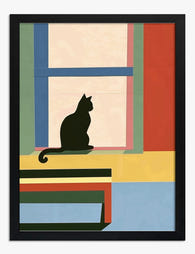
Poster Fensterpflanze im Sonnenlicht
Translation missing: de.products.product.sale_price Ab €16,95€23,95 -

Poster Topfpflanze - botanische Skizze
Translation missing: de.products.product.sale_price Ab €16,95€23,95 -

Poster Botanische Boho-Harmonie
Translation missing: de.products.product.sale_price Ab €16,95€23,95


Mehr aus The Frame

Why William Morris Prints Look Brilliant in Mod...
William Morris has been quietly miscategorised for decades. His patterns get filed under "country cottage" or "Arts and Crafts revival" and rarely escape, which is a shame because his tree...

Why Arts and Crafts Nature Prints Are the Antid...
The minimalism hangover: why bare walls stopped feeling calming For about a decade, the aspirational interior was a white box with one boucle chair in it. That look has officially...

Botanical Petal Art: Why Close-Up Prints Feel M...
Full florals have had a long run, and they're not going anywhere. But if you've noticed that the botanical art appearing in design magazines, boutique hotel lobbies, and the better-styled...