
 Heute bestellen, Lieferung bis
 How to Build a Stunning Gallery Wall Around Sunflower Prints
The tactical playbook for turning a single sunflower print into a gallery wall that actually looks intentional.


Sunflowers are bold. That's the gift and the problem. Build a gallery wall around one without a plan and you'll end up with chaos; build it with the right anchor, layout, and spacing, and you get a wall that stops people mid-conversation.
This is the execution manual: sizes, measurements, layouts, and the mistakes that quietly ruin most attempts.
Start with your anchor: choosing the right sunflower print size
The sunflower print is the centrepiece, and centrepieces have to earn the title. Go too small and the wall reads as a scattering of equals. Go too large and there's no room for supporting pieces.
For most living room and dining room walls, your anchor sunflower print should be 60x80cm or 70x100cm. That's large enough to dominate visually but leaves breathing room for four to six smaller pieces around it. In a bedroom above a bed or a hallway, drop down to 50x70cm. Above a sofa on a wide wall, go all the way to 70x100cm portrait or even a 100x70cm landscape.
The rule we follow: your anchor should occupy roughly 40-50% of the visual weight of the finished gallery. If you have to squint to find it, it's not anchoring anything.
A few practical notes on the print itself. Sunflower yellow is a notoriously tricky colour to print well, and cheap prints come out either acidic and neon or muddy and brown. Look for giclée printing on matte paper, which holds the warm gold tones without glare. Matte also matters because sunflowers are often hung in bright rooms, and gloss finishes will catch every window.

Three gallery wall layouts that work with sunflower art
Three layouts do the heavy lifting for sunflower-anchored walls. Pick one and commit; mixing logics is what makes gallery walls look uncertain.
Layout 1: The classic grid
Six or nine prints in even rows, anchor sunflower in the centre. This works best when all your supporting prints are the same size (say, six 30x40cm prints around a 70x100cm centrepiece, or a 3x3 grid of 40x50cm with the sunflower swapped into the middle position).
The grid is calm, architectural, and forgiving. Choose it when your room is busy or your furniture is loud.
Layout 2: The asymmetric cluster
The sunflower sits slightly off-centre (typically left of centre at standard eye height). Five to seven supporting pieces of varied sizes radiate outward, with the smallest pieces at the edges and medium pieces nearest the anchor.
Asymmetric clusters feel collected over time. They work brilliantly above a sofa, where the cluster can extend further to one side than the other, mirroring an arm of furniture below.
Layout 3: The horizontal salon line
Anchor in the middle, two to three prints on each side at roughly the same height, baseline aligned along an invisible horizontal line. Prints can vary in height but bottoms stay level.
This layout is ideal for narrow hallways or above long sideboards. It draws the eye along the wall rather than upward, which makes corridors feel longer and dining rooms feel more formal.
What to pair with sunflowers: subjects and styles that complement
This is where most people lose the plot. They see sunflowers and reach for more flowers, then more flowers, until the wall looks like a florist's window. Curation is editing.
Other botanicals, but quieter ones. Single-stem ferns, eucalyptus studies, pressed leaf prints. The job of these is to support the sunflower's energy, not compete with it. Browse botanical art prints for the calmer end of the spectrum.
Vintage seed packets and botanical illustrations. These add a slightly nostalgic, scholarly note that flatters the sunflower's farmhouse associations without making the wall feel themed. One or two is plenty.
Neutral abstracts in cream, ochre, or warm grey. Abstracts give the eye a place to rest. Without them, every print is shouting. A muted abstract in tones that pick up the sunflower's gold or the centre's deep brown is the secret weapon of cohesive gallery walls.
Landscape prints in warm palettes. Tuscan fields, golden hour wheat, Provence lavender. Landscapes pull the sunflower's outdoor energy and give it geographical context. Avoid cool-toned landscapes (blue mountains, snowy scenes) unless you're deliberately going for contrast.
Typography or single-letter prints. Used sparingly, a single text print, ideally in a neutral palette, breaks up the visual rhythm. Don't use more than one in a six-piece wall.
What to avoid: other large florals (they'll fight the sunflower), photographs of people (they pull focus completely), and anything in a saturated cool colour like cobalt or emerald, which will jar against the warm gold.
If you want a shortcut to a coordinated set, our floral art prints collection includes pieces specifically curated to sit alongside bolder centrepieces.

Frame consistency: why matching finishes matters more than matching sizes
Here's the rule that separates intentional gallery walls from messy ones: match your frame finishes, not your frame sizes.
You can have a 70x100cm anchor next to a 30x40cm supporting print and the wall will look cohesive, as long as both frames are the same wood tone or the same painted finish. The eye reads the frames first and the prints second. Inconsistent frames make every print feel like it arrived from a different house.
Three finishes that work consistently well with sunflower prints:
- Natural oak. Warm, light, slightly grainy. Flatters the gold tones and works in farmhouse, Scandi, and modern country interiors.
- Black. Sharp, graphic, contemporary. Makes the sunflower yellow pop harder. Best for modern interiors or rooms with darker walls.
- White. Recedes into the wall, lets the print do all the work. Best in already busy rooms or when you want a softer, more vintage feel.
Avoid mixing wood tones (oak with walnut with pine) and avoid mixing painted with natural finishes. If you must mix, limit yourself to two finishes maximum and use them in a deliberate pattern (anchor in one, all supporting in the other).
A practical aside: framed prints should arrive properly fitted with no warping, no bubbling, and fixtures already attached. The fastest way to ruin a gallery wall is to assemble it from pieces that arrived in three separate boxes from three separate suppliers, all slightly different shades of "oak." Order from one source where the print and frame ship together, fitted, in a single box. This also keeps your finishes genuinely consistent rather than approximately consistent.
For frames that hold colour over time, look for UV-protective glazing. Sunflower walls tend to live in the brightest rooms in the house, and standard glass offers no fade protection.
Spacing and alignment: the measurements that make it look professional
This is where the article earns its keep. Most gallery walls fail because the spacing is guessed.
Centre height: 145-152cm from the floor to the centre of the gallery (roughly 57-60 inches). This is gallery and museum standard. It places the visual centre at average adult eye level. The centre of the gallery is not the centre of your sunflower print; it's the middle of the whole composition.
Spacing between frames: 5-8cm (2-3 inches). Tighter than 5cm and the wall reads as a single chunk; wider than 8cm and the prints feel disconnected. Pick a number within that range and use it consistently across the entire wall.
Anchor offset: in asymmetric layouts, place your sunflower's centre about 10-15cm off the true centre of the wall. Any less and it looks like a mistake; any more and the wall feels lopsided.
Furniture clearance: when hanging above a sofa, sideboard, or bed, leave 15-25cm between the top of the furniture and the bottom of the lowest frame. Less than 15cm and the art feels cramped onto the furniture; more than 25cm and the art floats.
The paper template trick: before you put a single nail in the wall, cut paper templates the exact size of each frame. Tape them to the wall with masking tape. Move them around for at least a day. Live with the layout before you commit. This sounds tedious. It saves more walls than any other piece of advice in this article.
For the actually finicky among us, mark the hanging point on each paper template (measured from the back of the frame) so you nail directly through the paper into the right spot, then tear the paper away.

Common mistakes that make gallery walls look cluttered
Mistake 1: Too many pieces. A six-piece wall almost always looks better than a twelve-piece wall. If you can't decide what to remove, you have too many.
Mistake 2: Inconsistent print quality. A museum-grade giclée next to a phone-camera printout will make the cheap one look cheaper and the good one look pretentious. Commit to one quality level across the whole wall.
Mistake 3: Mixing portrait and landscape randomly. Either commit to a deliberate mix (alternating in a pattern) or stick to one orientation for supporting pieces. Random is noise.
Mistake 4: Ignoring the wall colour. Sunflower prints look best on warm whites, soft creams, sage green, terracotta, and deep navy. They struggle against cool greys, lavender, and bright primary colours.
Mistake 5: Forgetting the bottom edge. People obsess over the top of a gallery wall and ignore the bottom. The bottom edge of your composition matters more, because it's the line your eye returns to. Either make it level (salon line) or make it deliberately stepped, never accidentally jagged.
Mistake 6: Buying everything at once from different places. Frames that look identical online can arrive looking entirely different. Source from a single supplier wherever possible.
Mistake 7: Hanging too high. When in doubt, lower. Most amateur gallery walls are hung 5-10cm too high.
Our favourite sunflower gallery wall combinations
A few combinations we keep coming back to, with rough costs to budget against. These assume quality framed prints rather than poster-grade alternatives.
The farmhouse classic (six pieces): 70x100cm sunflower anchor, two 40x50cm vintage botanical illustrations, two 30x40cm neutral linen-toned abstracts, one 30x40cm pressed-leaf print. All in natural oak. Works above a sofa or dining sideboard.
The modern minimalist (five pieces): 60x80cm sunflower anchor, two 40x50cm cream and ochre abstracts, two 30x40cm single-stem botanicals. All in matte black. Works in contemporary living rooms with neutral palettes.
The salon hallway (seven pieces, horizontal line): 50x70cm sunflower anchor centred, three 30x40cm pieces stepping outward on each side (vintage seed packet, warm landscape, single botanical study). All in white frames. Works in narrow corridors.
The bedroom calm (four pieces): 50x70cm sunflower anchor, three 30x40cm pieces (one warm abstract, one fern study, one wheat field landscape) clustered to one side. All in natural oak. Works above a chest of drawers or to one side of a bed.
For pre-curated options, our sunflower art prints collection pairs naturally with pieces from our wall art sets range, which removes most of the curation guesswork if you want a head start.

A note on seasonal swaps
One advantage of building around a sunflower anchor: the anchor stays, and you can swap supporting pieces seasonally without rebuilding the wall. In autumn, swap one neutral abstract for a wheat or harvest landscape. In spring, swap a vintage seed packet for a fresh botanical study. The anchor and frame finishes hold the wall together while the supporting cast rotates.
Plan your gallery wall with at least two of the supporting frame sizes as "swap slots," and you'll get years of variation from a single foundational layout.
Final thought
A great sunflower gallery wall is 20% taste and 80% measurement. Pick your anchor size, commit to one layout, match your frame finishes, hold to 5-8cm spacing, and centre the whole thing at 145-152cm. Do that, and the wall will look intentional whether you spent a fortune or built it slowly over a year.
Then, before you nail anything, cut the paper templates. Always cut the paper templates.

In diesem Blog vorgestellte Fab-Produkte
-

Poster Sonnenblumen im Sonnenlicht auf schwarzem Hintergrund
Translation missing: de.products.product.sale_price Ab €16,95€23,95 -
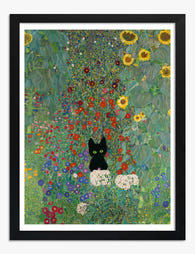
Poster Bauerngarten mit Sonnenblumen von Gustav Klimt
Translation missing: de.products.product.sale_price Ab €16,95€23,95 -

Poster Sonnenblumenfeld im Sonnenschein
Translation missing: de.products.product.sale_price Ab €16,95€23,95 -

Poster Sonnenblumengarten von Gustav Klimt
Translation missing: de.products.product.sale_price Ab €16,95€23,95 -

Leinwandbild Bauerngarten mit Sonnenblumen von Gustav Klimt
Translation missing: de.products.product.sale_price Ab €64,95€92,95 -

Poster Sonnenblumen-Sommeridylle
Translation missing: de.products.product.sale_price Ab €16,95€23,95 -

Leinwandbild Sonnenblumen von Gustav Klimt
Translation missing: de.products.product.sale_price Ab €64,95€92,95 -
Poster Sonnenblumen und weite Felder
Translation missing: de.products.product.sale_price Ab €16,95€23,95 -

Leinwandbild Sonnenblumen im Sonnenlicht
Translation missing: de.products.product.sale_price Ab €64,95€92,95 -

Leinwandbild Sonnenblumen vor ruhiger Landschaft
Translation missing: de.products.product.sale_price Ab €64,95€92,95 -

Poster Van Gogh: Sonnenblume im Kleingarten
Translation missing: de.products.product.sale_price Ab €16,95€23,95 -

Leinwandbild Goldene Sonnenblumen vor dunklem Hintergrund
Translation missing: de.products.product.sale_price Ab €64,95€92,95 -

Leinwandbild Sonnenblume vor ruhiger Landschaft
Translation missing: de.products.product.sale_price Ab €64,95€92,95 -

Leinwandbild Sonnenblume vor farbenprächtigen Feldern
Translation missing: de.products.product.sale_price Ab €64,95€92,95 -

Poster Sonnenblumen und Cowboystiefel
Translation missing: de.products.product.sale_price Ab €16,95€23,95 -

Poster Bauerngarten mit Sonnenblumen von Gustav Klimt
Translation missing: de.products.product.sale_price Ab €16,95€23,95 -

Leinwandbild Sonnenblume von Gustav Klimt
Translation missing: de.products.product.sale_price Ab €64,95€92,95 -

Poster Sonnenblumen von Vincent van Gogh
Translation missing: de.products.product.sale_price Ab €16,95€23,95 -

Poster Sonnenblume von Gustav Klimt
Translation missing: de.products.product.sale_price Ab €16,95€23,95 -

Leinwandbild Kleingarten mit Sonnenblumen – Van Gogh
Translation missing: de.products.product.sale_price Ab €64,95€92,95


Mehr aus The Frame

The Best Watercolor Art for Your Bedroom (And W...
A blank wall above your bed is one of the easier design problems to solve, but most people overthink it. Watercolour is the answer more often than not, and this...

William Morris Wallpaper vs. Art Prints: How to...
Morris is everywhere again. Strawberry Thief on cushions, Pimpernel on lampshades, Willow Bough on tea towels in shops that didn't stock anything floral five years ago. The question is whether...

Vintage Art Prints Explained: From Botanical to...
Vintage art is one of the most loved categories in wall decor, and one of the most loosely defined. Botanicals, travel posters, oil portraits and psychedelic 1970s graphics all get...