
 Heute bestellen, Lieferung bis
 Soft Masculine: Earth Tones, Texture, Restraint
The evolved masculine aesthetic trades black leather and chrome for clay, linen, and one perfectly chosen print.


Masculine interiors have quietly grown up. The loud, heavy, all-black-everything approach has given way to something warmer, more considered, and frankly more livable. Soft masculine design is the result, and wall art is the fastest way in.
What "soft masculine" actually means
Traditional masculine design relied on contrast and weight. Black leather, dark wood, chrome, oxblood, exposed brick. It read as serious but often felt cold, performative, like a hotel lobby trying to impress you.
Soft masculine keeps the assertiveness but loses the armour. It's grounded rather than imposing. Warm rather than stark. Intimate rather than theatrical. The palette shifts from black and red to charcoal, clay, and espresso. The materials shift from polished metal to oiled wood and washed linen. The walls shift from gallery clutter or bare drywall to one well-chosen piece with room to breathe.
Three principles hold the whole look together: earth tones, texture, and restraint. Get those right and almost everything else falls into place.

Pillar one: the earth tone palette
Earth tones are the foundation because they do something cool greys and pure whites can't. They make a room feel inhabited.
The working palette for soft masculine spaces sits roughly here:
- Charcoal: the new black. Softer, less graphic, easier to live with.
- Espresso and walnut: deep browns that read as grown-up without going gothic.
- Rust and terracotta: warmth and pigment without slipping into orange.
- Clay and warm beige: the neutral backbone, miles away from cold builder-grade off-white.
- Sage and olive: muted greens that ground a room and pair with everything.
- Deep navy: the one "colour" that still earns its place, used sparingly.
The trick is mixing several of these rather than committing to one. A room built entirely around beige goes flat. A room with clay walls, an espresso headboard, sage bedding, and a rust-toned print on the wall has tension and depth.
For earth tone art prints, look for pieces where the artist has used multiple tones from this family within a single composition. A photograph of a desert at dusk, a tonal abstract in clay and ochre, a minimal landscape in sage and bone. These do the layering work for you.
What to avoid
Anything fluorescent, anything candy-coloured, anything aggressively black-and-white. Pure monochrome photography can work, but it tends to feel sharper and more graphic, which pulls against the warmth you're building. If you want a black-and-white piece, choose one with visible grain, soft contrast, and warm paper tones rather than glossy high-contrast prints.
Pillar two: texture as a masculine element
Texture is the most underused tool in masculine design. It's also the thing that prevents restraint from collapsing into emptiness.
A flat colour on a flat wall reads as cold. The same colour with visible texture, canvas weave, brushwork, paper grain, reads as considered. This is why heavily minimal spaces can feel either monastic and beautiful or sterile and depressing. The difference is almost always texture.
In wall art, texture comes from a few places:
The print surface itself. A canvas weave has a tactile quality that a smooth print doesn't. Our canvas prints use a poly-cotton weave with a matte finish, which catches light unevenly and adds depth even from across the room. For a soft masculine bedroom, that texture does a lot of heavy lifting.
The paper. Thick matte art paper has a different presence to glossy stock. The matte surface absorbs light, deepens the colour, and removes the slight cheapness of glare. Museum-grade giclée on heavy matte paper is the standard you want, especially for tonal earth-tone work where any reflection would flatten the image.
The subject matter. Photographs of rough plaster, weathered stone, ploughed fields, linen folds, tree bark. Abstract paintings with visible brushwork or palette knife marks. Architectural images with shadow play across textured surfaces. All of this brings tactile interest into the room without you having to physically touch anything.
The frame. Solid wood frames in oak, walnut, or black-stained ash add another layer of grain. Avoid anything plasticky, glossy, or metallic for this look. Thin profiles work for art prints; chunkier profiles suit canvas.

Pillar three: restraint, not minimalism
Restraint is where most people get masculine design wrong in both directions. They either over-decorate, ending up with a busy gallery wall of mismatched pieces, or they strip everything back until the room feels like a serviced apartment.
Soft masculine sits between those poles. The principle is intentional curation. One large, considered piece will almost always beat three medium pieces fighting for attention.
Why one big piece wins
A single statement piece does three things a gallery wall struggles to do. It creates a clear focal point so the eye knows where to land. It allows negative space to function as part of the design rather than feeling like an unfinished wall. And it commits. Hanging one 70x100cm print above a bed is a decision. Hanging six small prints is hedging.
For large wall art, the rule of thumb above a bed or sofa is that the piece should span roughly two-thirds the width of the furniture below it. A 150cm sofa wants a print around 100cm wide. A standard double bed (135cm) wants something in the 90 to 100cm range. Smaller than that and the piece floats; larger and it overwhelms.
When a pair works
The exception is a clean diptych or matched pair, hung with equal spacing, treated as a single visual unit. Two 50x70cm prints flanking a bed can work if they're tonally identical and the spacing is tight. Three or more pieces and you're back in gallery wall territory, which fights the restraint principle.
The soft masculine bedroom
The bedroom is where this aesthetic really earns its keep. It's the most personal room in the house and the one most often ruined by either over-styling or total neglect.
Above the bed
This is the prime real estate. One piece, large, low-contrast, earth-toned. Hang the centre of the artwork around 145 to 150cm from the floor, or roughly 15 to 25cm above the headboard, whichever places it more comfortably within the wall composition.
For masculine bedroom art, the safest subject choices are abstract landscapes, tonal photography, and organic abstracts. A misty mountain range in charcoal and warm grey. A close-up of weathered timber. An abstract in espresso and clay with visible brushwork. These hold the wall without demanding attention while you're trying to sleep.
What to avoid above the bed: anything with faces staring out, anything with strong horizontal lines that visually compete with the headboard, anything in saturated colour, and any literal imagery that reads as theme-park masculine. Lone wolves, vintage cars, boxing gloves, world maps. They've all had their moment.
Pairing with furniture
Earth-toned art works hardest when the rest of the room supports it. A tan or chocolate leather headboard. Oak or walnut nightstands. Linen bedding in oat, stone, or warm grey. A wool rug with visible weave. The art ties the colour story together rather than carrying it alone.
If your existing bedroom is more neutral, you can use the print to introduce warmth. A clay and rust abstract above an off-white bed instantly shifts the whole room toward soft masculine without you replacing a single piece of furniture.

Choosing subject matter that works
Subject matter is where good intentions often unravel. People commit to the palette, get the scale right, then pick a print that drags the whole room back into cliché.
Reliably good for soft masculine:
- Abstract landscapes with low contrast and earth-tone palettes
- Tonal black-and-white photography with warm undertones (architecture, dunes, coastlines)
- Organic abstracts (brushwork, washes, palette knife textures)
- Minimal architectural photography (concrete, plaster, shadow studies)
- Botanical line work in muted tones (single stems, branches, not floral arrangements)
- Vintage-inspired topographical or geological prints in faded ink
Best avoided:
- Literal wildlife imagery (especially the lone wolf and the stag)
- Sports memorabilia and vintage car prints
- Quote-based typography ("hustle", "grind", you know the ones)
- High-saturation pop art
- Anything explicitly themed (nautical, industrial, "wild west")
The unifying logic: soft masculine reads as quiet confidence. Anything that has to announce its masculinity is, by definition, not it.
Material and finish: getting the details right
This is where the difference between a £30 print that looks cheap and a £150 print that looks intentional shows up. The cheap version usually has a glossy finish, a thin plastic-feeling frame, and arrives in two boxes that don't quite fit together. The intentional version is matte, properly fitted, and ready to go on the wall in five minutes.
For soft masculine specifically, matte everything. Matte paper, matte canvas, matte frames. Glossy finishes catch overhead light, throw glare, and visually flatten earth tones into something cheaper-looking than they are.
Frames should be solid wood. Oak for lighter palettes, walnut or black-stained for darker rooms. A UV-protective acrylic glaze (rather than glass) keeps the print safe from fading in sunlit bedrooms, which matters if you're hanging something tonal and don't want to watch the rust slowly turn pink over five years.
Canvas works particularly well for this aesthetic because the weave is part of the look. Hung unframed, a canvas reads as minimal and slightly raw, which suits soft masculine. Framed, it gains polish. Both are valid. Canvas is also lighter, which makes it easier to live with if you're renting and dealing with picture hooks rather than proper fixings.
Lighting: the unsung half of the look
You can do everything else right and lose the whole effect under cool LED bulbs. Earth tones need warm light. Specifically, 2700K to 3000K. Anything cooler than 3500K pulls the warmth out of the palette and makes clay and rust read as muddy beige.
Bedside lamps with linen or paper shades, a single warm overhead pendant on a dimmer, and ideally a wall light or two at low brightness. Avoid spotlighting your art directly with cool downlights; let it sit in ambient warmth instead.
A practical starting point
If you're building a soft masculine space from scratch, do it in this order. Pick the palette first (three or four tones from the list above). Choose one statement piece of masculine wall art that pulls two or three of those tones together. Let that piece dictate the textiles and smaller details rather than the other way around. Hang it large, hang it alone, and resist the urge to add anything else for at least a week.

Restraint is uncomfortable at first. The wall will look bare. You'll want to fill it. Don't. Give it a week, live with it, and the room will start to feel right in a way busier spaces never quite manage.
That's the whole philosophy: fewer things, warmer things, better things. One good print on a quiet wall does more for a room than a dozen decisions made in a hurry.

In diesem Blog vorgestellte Fab-Produkte
-

Poster Sanfte Stärke – Erdige Töne für Schlafzimmer und Wohnzimmer
Translation missing: de.products.product.sale_price Ab £11.95£19.95 -

Leinwandbild Sanfte Formen in Erdtönen
Translation missing: de.products.product.sale_price Ab £44.95£74.95 -
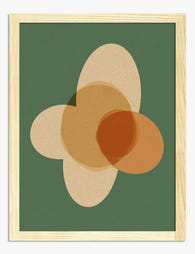
Poster Abstrakte organische Formen in warmen Erdtönen
Translation missing: de.products.product.sale_price Ab £11.95£19.95 -

Poster Harmonie in Erdtönen – modern
Translation missing: de.products.product.sale_price Ab £11.95£19.95 -

Poster Sanfte Umarmung in warmen Erdtönen
Translation missing: de.products.product.sale_price Ab £11.95£19.95 -

Leinwandbild Minimalistischer Ast in warmen Erdtönen – Boho
Translation missing: de.products.product.sale_price Ab £44.95£74.95 -

Poster überlappende Formen in warmen Erdtönen
Translation missing: de.products.product.sale_price Ab £11.95£19.95 -

Leinwandbild abstrakte Balance in warmen Erdtönen
Translation missing: de.products.product.sale_price Ab £44.95£74.95 -

Leinwandbild Abstrakte Formen in warmen Erdtönen
Translation missing: de.products.product.sale_price Ab £44.95£74.95 -

Poster Abstrakte Schichten in Erdtönen
Translation missing: de.products.product.sale_price Ab £11.95£19.95 -

Poster Sanfter Terrakotta-Fluss in Beige – Abstrakt
Translation missing: de.products.product.sale_price Ab £11.95£19.95 -

Leinwandbild Geometrische Formen in Erdtönen
Translation missing: de.products.product.sale_price Ab £44.95£74.95 -

Poster Minimalistische Kontur – Organische Form in Erdtönen
Translation missing: de.products.product.sale_price Ab £11.95£19.95 -

Leinwandbild minimalistische Kreise in beige und goldbraun
Translation missing: de.products.product.sale_price Ab £44.95£74.95 -

Poster Abstrakte Geometrie in sanften Neutraltönen
Translation missing: de.products.product.sale_price Ab £11.95£19.95 -

Poster organische Formen in warmen Naturtönen auf tiefgrünem Grund
Translation missing: de.products.product.sale_price Ab £11.95£19.95 -

Poster Sanfter Fluss in Terrakotta und Beige
Translation missing: de.products.product.sale_price Ab £11.95£19.95 -

Poster Minimalistische Formen in sanften Erdtönen
Translation missing: de.products.product.sale_price Ab £11.95£19.95 -

Leinwandbild Überlappende Formen in warmen Erdtönen
Translation missing: de.products.product.sale_price Ab £44.95£74.95 -

Leinwandbild Sanfte Stärke
Translation missing: de.products.product.sale_price Ab £44.95£74.95


Mehr aus The Frame

You Bought the Sofa. Now What?
The sofa arrived. It looks great. And now you're staring at the empty wall above it wondering if you've made a terrible mistake, because nothing else in the room seems...

You've Finished the Renovation. The Walls Are S...
The dust has settled. The skip is gone. You've made roughly 4,000 decisions about grout colour and socket placement, and now you're standing in a beautifully painted room staring at...

You've Just Moved In: What to Put on the Walls ...
The boxes are mostly unpacked, the sofa is in roughly the right place, and now you're staring at a lot of very blank walls. The instinct is to fix it...