
 Heute bestellen, Lieferung bis
 How to Style William Morris Animal Prints in a Modern Home (Without Looking Like a Country Cottage)
How to make Strawberry Thief and the Forest tapestry feel like considered modern art, not your nan's tearoom.


You love the foxes, the strawberry-stealing thrushes, the hares peering through tangled vines. You also live in a flat with white walls, a grey sofa, and an oak coffee table, and you're worried one Morris print will turn the whole thing into a Victorian tearoom. It won't, if you make a few specific choices about scale, framing and placement.
Why William Morris animal art is having a moment in modern interiors
Morris's animal designs sit in a sweet spot that contemporary homes are short on: detailed, hand-drawn imagery that rewards looking up close. After a decade of minimalist line drawings and beige abstracts, people are craving art with story and density again. Morris delivers both, plus genuine craft heritage.
The shift is also about scale. When you take a Strawberry Thief or a Forest tapestry pattern and print it large, framed cleanly, it stops reading as "heritage textile" and starts reading as graphic art. The trick is treating these designs as art, not as a soft furnishings reference.

The colour palettes in Morris's animal designs and what they pair with
Morris worked in three broad palettes and knowing which one you're buying changes everything about how it sits in your room.
The indigo and madder palette (Strawberry Thief, Brother Rabbit) is built around deep blue, dusty red and cream. These prints pair beautifully with warm whites, unfinished oak, terracotta and brass. They look heavy in cool, grey-toned rooms.
The forest palette (the Forest tapestry, the Woodpecker, Honeysuckle and birds) leans olive, sage, ochre and rust. This is the most flexible group for modern interiors because the greens read as quietly contemporary next to plaster pinks, off-whites and natural linen.
The Pure Morris muted palette is the modern reissue route: the same designs reprinted in chalk, ink, soft greys and washed neutrals. If your home is genuinely minimalist, start here. The pattern is intact but the palette doesn't fight your existing scheme.
The colour extraction trick
Pick one secondary colour from your print and let it inform a single accent elsewhere in the room. A cushion, a ceramic, a throw. One. If you match three or four colours from the print, you've built a Morris-themed room. If you echo one, you've built a modern room with a great piece of art in it.
Living room: sizing and placement above sofas and fireplaces
This is where most people get nervous and end up buying something too small. A timid Morris print floating above a three-seater looks apologetic. A confident one looks intentional.
Above the sofa
Your art should span roughly two-thirds to three-quarters of the sofa width. For a standard 210cm three-seater, that means art between 140cm and 160cm wide. A single 70x100cm framed print in portrait orientation hits the lower end of that range and works for most rooms. For a longer sofa, go to 100x70cm landscape, or run a pair of 50x70cm prints side by side with 5cm between them.
Hang the centre of the artwork roughly 20cm above the top of the sofa back. Any higher and it floats away from the furniture. Any lower and you'll knock it with your head.
Above the fireplace
Fireplaces invite a single statement piece. A Morris animal print in portrait orientation, 70x100cm, framed in matte black or natural oak, sits above a mantel beautifully because the vertical composition echoes the chimney breast. Avoid landscape formats here unless your mantel is unusually wide.
The William Morris animals collection has the strongest options for fireplace-scale pieces because the animal motifs give you a clear focal point, which a pure pattern repeat doesn't.
Hallways and entryways: making a first impression with Morris wildlife
Hallways are where Morris animal prints earn their keep. They're transitional spaces, often poorly lit, and they need something with enough detail to reward a second glance as you pass through.
A vertical run of three smaller prints (30x40cm each, stacked with 8cm gaps) along a narrow hallway works far better than one large piece. It draws the eye down the corridor rather than stopping it. Mix one bird print, one mammal, one botanical from the same Morris series so the palette stays cohesive but the imagery varies.
For an entryway with a console table, a single 50x70cm framed print hung 25cm above the table, slightly off-centre to one side, with a tall vase or lamp on the opposite side, gives you balance without symmetry. Symmetry is what tips Morris into period-drama territory.

Bedroom styling: which animal prints create calm vs. drama
Morris's animal designs split clearly into two emotional camps and you should know which you're buying for a bedroom.
Calm prints: Strawberry Thief in its softer reissues, the Honeysuckle birds, single hare or rabbit prints with negative space around them. These have airier compositions and pair well with linen bedding in oatmeal, sage or chalk.
Dramatic prints: the Forest tapestry, dense Woodpecker designs, anything with deep indigo backgrounds. These read as occupied and intense, which is wonderful in a guest room or a small study but can feel claustrophobic above a bed you're trying to sleep in.
For above the bed, go wider than you think. A 100x70cm landscape print centred above a king-size headboard is roughly the right scale. Hang the bottom edge 15-20cm above the headboard. If you want a pair, two 50x70cm portraits with 8cm between them works for a double or king bed.
Bedrooms also benefit from Morris bird prints specifically: birds carry less narrative weight than foxes or hares, so they don't demand attention when you're trying to wind down.
Framed vs. canvas: which finish suits your space
This is the choice nobody else explains properly, and it's the one that decides whether your Morris print looks modern or twee.
Framed prints
Framed prints look more polished and feel more like considered art. The frame creates a visual border that separates the busy Morris pattern from your wall, which is exactly what you want in a modern room. Three frame finishes to consider:
- Matte black: the most modernising choice. Black sharpens the print and pulls Morris into contemporary territory immediately. Best for white, grey or dark walls.
- Natural oak: warmer, more organic, lets the print feel like part of the room rather than an imposition. Best for plaster, cream or sage walls and homes with visible wood elsewhere.
- White: soft and gallery-like. Works in genuinely minimalist rooms but can feel weightless if your walls are also white.
Avoid ornate gold or dark mahogany frames. They're the single fastest way to make Morris look like it came from a National Trust gift shop.
Fab's framed prints arrive ready to hang with fixtures attached, the print is properly fitted under UV-protective acrylic glaze rather than glass (lighter, no glare, doesn't fade in direct sun), and the frame and print ship together in one box. The most common complaint about framed art generally is warped materials and frames arriving separately from prints, which we've engineered around.
Canvas prints
Canvas softens Morris designs because there's no frame border and no glaze. The image floats on the wall with a tactile, textile quality, which is fitting given Morris's textile heritage. Canvas works particularly well for:
- Larger statement pieces (100x150cm) where a frame would feel too heavy
- Humid rooms (bathrooms, kitchens) where framed prints aren't ideal
- Layered, lived-in interiors where polished framing would feel too formal
The trade-off: canvas reads slightly less crisp than a framed giclée print on matte paper, and the lack of a frame can make some Morris designs blur into busy walls. If you're going canvas, hang it on a plain wall with at least 40cm of breathing room on either side.
Mixing Morris animal prints with contemporary and minimalist art
The single biggest unlock for making Morris work in a modern home is refusing to let it sit alone in a "vintage" zone. Mix it up.
Gallery wall formulas
In a mixed gallery wall, follow a 1:3 ratio: one Morris animal print to three contemporary pieces. The contemporary pieces could be a black-and-white photograph, a minimalist line drawing, an abstract colour study, or a piece of typography. The Morris print becomes the dense, detailed anchor and the modern pieces give it room to breathe.
Position the Morris print slightly off-centre in the arrangement, never dead in the middle, and never at the top. It should feel like one voice in a conversation, not a chairperson.
Pairing with photography
Morris animal prints sit beautifully alongside black-and-white landscape or architectural photography. The photography's restraint balances Morris's density. Try a 70x100cm Morris print on one wall and a 70x100cm black-and-white photograph on a perpendicular wall, same frame finish on both. Instant cohesion.
The one statement piece rule
If you're nervous, commit to exactly one Morris print in a room. One. Make it large (70x100cm minimum), frame it in matte black or natural oak, and hang it on a wall with nothing else on it. This is the safest, most modern way to use Morris and it consistently looks more sophisticated than scattering three smaller prints around the room.

Three room schemes that prove Morris isn't just for period homes
Scheme one: Scandi-modern living room
White walls, pale oak floor, grey linen three-seater, low walnut coffee table, cream wool rug. On the main wall, a single 70x100cm Morris bird print in a slim natural oak frame. One sage green cushion on the sofa, pulling the secondary colour out of the print. One ceramic vase in cream. That's the entire reference. The Morris print does all the heavy lifting.
Scheme two: Plaster-pink bedroom
Walls in a soft chalky pink, white linen bedding, brass pendant light, a tan leather bench at the foot of the bed. Above the headboard, a 100x70cm Morris hare print in matte black frame, centred. The black frame is critical here: it grounds the pink and stops the room going cottagecore. A single black ceramic on the bedside table echoes the frame.
Scheme three: Dark moody home office
Deep green walls (something like a forest or ink green), black metal desk, vintage rattan chair, brass desk lamp. On the wall behind the desk, a vertical pair of 50x70cm Morris animal prints, both in black frames, hung 8cm apart. The dark walls let the Morris colours sing without any of the room reading as twee. This scheme also works with vintage art prints of botanical illustrations as a complementary pair.

A few practical notes before you buy
Go larger than feels comfortable. Small Morris prints (under 40x50cm) in a modern home almost always read as fussy. The same image at 70x100cm reads as confident, considered art.
Buy quality reproductions, not budget posters. Morris designs are densely detailed and they fall apart at low resolution. Look for giclée printing on thick matte paper, which holds the linework crisply and doesn't have the cheap sheen of glossy poster prints.
If you're decorating a whole room around Morris, balance the animal prints with quieter botanical art prints on adjacent walls. Pure botanical work without the animal motifs gives the eye a place to rest.
Rotate seasonally if you commit to multiple pieces. Morris's warmer indigo and rust palettes feel right from October through February. The greener, lighter designs carry the spring and summer months. There's no rule that says art has to stay on the wall year-round.
The fear that Morris will date your home is misplaced. What dates a home is half-hearted decisions: prints too small, frames too ornate, palettes too matched. Commit to scale, choose a clean frame, give the print room to breathe, and a 140-year-old fox will look more current than most of what's been printed this year.

In diesem Blog vorgestellte Fab-Produkte
-

Poster William Morris – Vögel
Translation missing: de.products.product.sale_price Ab £11.95£19.95 -

Poster Tiger zwischen üppigen Blüten – William Morris
Translation missing: de.products.product.sale_price Ab £11.95£19.95 -

Poster Britische Landschaft – inspiriert von William Morris
Translation missing: de.products.product.sale_price Ab £11.95£19.95 -

Leinwandbild Fasan von William Morris – botanisches Motiv
Translation missing: de.products.product.sale_price Ab £44.95£74.95 -

Poster Vögel zwischen Blüten und Früchten – William Morris
Translation missing: de.products.product.sale_price Ab £11.95£19.95 -

Poster William Morris – Edler brauner Hund vor floraler Kulisse
Translation missing: de.products.product.sale_price Ab £11.95£19.95 -

Leinwandbild Klassische Katzen im William-Morris-Stil
Translation missing: de.products.product.sale_price Ab £44.95£74.95 -

Poster Katzen im klassischen William-Morris-Stil
Translation missing: de.products.product.sale_price Ab £11.95£19.95 -

Poster Fuchs nach William Morris
Translation missing: de.products.product.sale_price Ab £11.95£19.95 -

Poster weiße Katze zwischen Blüten im William-Morris-Stil
Translation missing: de.products.product.sale_price Ab £11.95£19.95 -

Poster William Morris – Katze im floralen Vintage-Stil
Translation missing: de.products.product.sale_price Ab £11.95£19.95 -
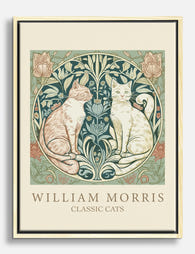
Leinwandbild Klassische Katzen nach William Morris
Translation missing: de.products.product.sale_price Ab £44.95£74.95 -

Poster Botanisches Muster mit Vögeln im William-Morris-Stil
Translation missing: de.products.product.sale_price Ab £11.95£19.95 -

Poster Schwarze Katze mit William-Morris-Rankgitter
Translation missing: de.products.product.sale_price Ab £11.95£19.95 -

Poster William Morris – Hund im floralen Muster
Translation missing: de.products.product.sale_price Ab £11.95£19.95 -

Poster Klassische Katzen im William-Morris-Stil
Translation missing: de.products.product.sale_price Ab £11.95£19.95 -

Poster Klassische Katzen im William-Morris-Stil
Translation missing: de.products.product.sale_price Ab £11.95£19.95 -

Poster Katzen und botanische Motive im William-Morris-Stil
Translation missing: de.products.product.sale_price Ab £11.95£19.95 -
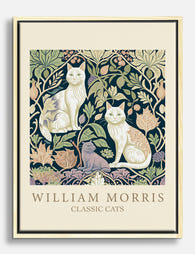
Leinwandbild klassische Katzen im William-Morris-Stil
Translation missing: de.products.product.sale_price Ab £44.95£74.95


Mehr aus The Frame

Why Seafood Art Works in Every Room (Not Just K...
Seafood art has a reputation problem. Mention an octopus print or a vintage lobster illustration and most people picture a fish market, a beachside diner, or someone's nautical-themed bathroom. That...

What Gallery Curators Know About Displaying Sur...
Surrealism has a reputation for being difficult to live with. Floating apples, melting clocks, men in bowler hats raining from the sky: not the obvious choice for the wall behind...

Transform One Wildflower Print into a Stunning ...
You bought a wildflower print. You love it. Now it's leaning against the wall because you suspect it wants company, but you don't know what kind of company, or how...