
 Heute bestellen, Lieferung bis
 Why Retro Gallery Walls Need Stricter Rules Than Other Styles
Standard gallery wall advice fails the moment you bring bold graphics and saturated colour palettes into the mix.


Most gallery wall advice was written with muted vintage art in mind. Retro prints play by different rules because they shout: bigger graphics, brighter colours, instantly recognisable decade signatures. Get the curation right and a retro gallery wall is the most arresting thing in your home. Get it wrong and it looks like a charity shop window.
Why retro prints are perfect for gallery walls (when you treat them properly)
Retro prints have three qualities that make them ideal for grouping: bold silhouettes that read from across the room, palettes that were designed as systems (the 70s didn't pick its oranges randomly), and a graphic language that already feels curated. A single retro print can look loud in isolation. Five of them, arranged with intent, look like a confident design choice.
But that same boldness is exactly why retro punishes lazy curation. A muted botanical sketch forgives uneven spacing. A 70s mushroom poster in tangerine and chocolate brown does not. The colours fight, the shapes compete, and the eye has nowhere to rest. The fix is not loosening up. It is tightening up.

Pick your era first: why mixing decades can go wrong fast
This is the single biggest mistake. People treat "retro" as one aesthetic when it is actually at least three distinct visual languages, each with its own rules.
60s mod leans on primary colours, hard geometry, and op-art black and white. Think Verner Panton, Saul Bass, lots of confident shapes on flat backgrounds.
70s earthy is saturated warm tones: burnt orange, mustard, avocado, chocolate, ochre. Organic curves, mushrooms, sunbursts, the entire wood-panelled basement palette.
80s pastel and Memphis is cotton candy pink, mint, baby blue, lemon, often with squiggles, grids, and geometric confetti.
These three palettes do not coexist. A 70s sunburst next to a Memphis squiggle next to a 60s op-art piece reads as visual chaos, not eclecticism. Pick one decade and commit. If you want range, vary the subjects within that era (landscapes, abstracts, typography) rather than jumping between eras. Our retro art prints collection is organised this way for a reason.
If you absolutely must mix, the only safe combination is 60s mod with 70s earthy, and only if you pull the 70s prints toward darker, more graphic compositions rather than the floaty psychedelic stuff.
The best layout for retro prints: grid vs asymmetric
For most retro gallery walls, we recommend a grid. Here is why: retro prints already carry strong internal graphics, so adding asymmetric placement creates a second layer of visual noise that fights the prints themselves. A grid gives the eye a steady frame so the art can do the talking.
A grid works especially well for:
- Sets of four or six prints in matching sizes
- Bold typography prints
- Anything from the 60s mod or 80s Memphis end of the spectrum
- Walls behind sofas and beds, where symmetry feels grounding
Asymmetric layouts work for retro only when the prints are visually quieter or when one piece is clearly the anchor. A 70s nature poster at 70x100cm flanked by smaller travel prints and typography pieces can absolutely work asymmetrically, because there is a clear hierarchy. The eye knows where to land first.
The rule of thumb: if your prints are loud, your layout should be quiet. If your prints are quieter (illustrative 70s landscapes, soft pastel abstracts), you can afford a more organic arrangement.
Frame finish guide: matching frames to retro colour palettes
Frame finish is where most retro gallery walls go sideways. The advice to "mix frames" is fine for vintage botanicals. With retro, mixed frames create a fourth competing element on top of the already-busy prints.
For 70s earthy palettes (burnt orange, mustard, chocolate, avocado): natural oak or walnut wood frames. The warm wood tone harmonises with the palette rather than fighting it. Black frames also work if the print has high contrast, but skip white, which makes the colours look dated rather than considered.
For 60s mod palettes (primary colours, black and white): black frames, full stop. White frames undermine the graphic punch. Wood frames can muddle the crispness. Black gives the prints the museum treatment they deserve.
For 80s pastel and Memphis: white frames, and only white. Black is too heavy and oak is too warm. White lets the pastels breathe and feels appropriate to the era's love of clean surfaces.
Whatever you choose, keep all frames in the gallery wall the same finish. This is the rule we break least often. Our framed prints use solid FSC-certified wood with UV-protective acrylic glaze instead of glass, which matters more than it sounds: glass reflects, and reflections on a busy retro print make it almost unreadable from across the room.

Size combinations that actually work
Vague advice like "mix sizes" is useless. Here are specific combinations for standard wall sizes.
Small wall (around 120cm / 4ft wide), above a console or desk:
- Grid of four 30x40cm prints in a 2x2 arrangement, or
- One 50x70cm anchor with two 30x40cm prints stacked beside it
Medium wall (around 180cm / 6ft wide), above a sofa or bed:
- Grid of six 40x50cm prints in a 3x2 arrangement
- One 70x100cm anchor with four 30x40cm prints arranged around it
- Three 50x70cm prints in a row
Large wall (around 240cm / 8ft wide or more):
- One 70x100cm centrepiece flanked by two 50x70cm prints, with four 30x40cm prints filling the lower tier
- A 3x3 grid of 40x50cm prints
- Two 70x100cm prints side by side with a row of smaller pieces beneath
The ratio that almost always works: one large, two medium, three to four small. The large piece anchors the eye, the mediums create rhythm, and the smalls fill negative space without dominating. Pre-curated wall art sets take the maths out of this if you would rather not measure.
Spacing, alignment, and hanging height: the numbers you need
Standard gallery wall spacing is 5 to 10cm (roughly 2 to 4 inches) between frames. For retro prints, we recommend the tighter end of that range, 5 to 7cm. Here is why: bold graphics need visual cohesion to read as a single composition. Wider spacing breaks them into isolated pieces and the colour story falls apart.
For grids specifically, go even tighter, around 4 to 5cm. The closer spacing makes the grid feel intentional rather than scattered.
Hanging height: the centre of the gallery wall (not the centre of any single piece) should sit at 145 to 150cm from the floor, which puts it at average eye level. If the wall sits above furniture, leave 15 to 20cm of breathing room between the top of the furniture and the bottom of the lowest frame. Less than that and the art feels like it is resting on the sofa. More and the art floats away from it.
Alignment: pick either a top line, a bottom line, or a centre line and align all frames to it. For a 3x2 grid, align the centres of each row. For asymmetric layouts, find one continuous horizontal line that at least three frames touch. This is the invisible structure that separates curated from chaotic.
Before you put a single nail in the wall, lay everything out on the floor first. Better yet, cut paper templates to the size of each frame and tape them to the wall. Live with it for a day. Move things around. Squint at it.
Adding non-art objects without killing the vibe
Mirrors, shelves, sconces, and clocks can elevate a retro gallery wall or destroy it. The rule: non-art objects should echo either the era's palette or its materials, never both, and never neither.
Mirrors work when the frame matches your art frames exactly. A round mirror with a walnut frame inside a 70s gallery wall reads as part of the composition. A gold sunburst mirror inside a 70s gallery wall reads as a second focal point fighting your prints. Keep mirrors at the same size as your medium prints, not larger.
Shelves belong below or beside the gallery wall, never inside it. A narrow picture ledge running underneath your prints lets you add ceramics, books, or small objects without disrupting the wall composition. Pick objects that share the palette.
Clocks are tricky. A genuine period clock (a 60s starburst, a 70s teak number) can anchor a wall beautifully if it sits as one of the smaller elements, not the largest. A generic modern clock will pull the whole composition into the present and undo your work.
The placement rule: non-art objects go on the perimeter of the arrangement, never in the centre. The centre belongs to your strongest print.

Our top retro gallery wall combinations to steal
Here are four specific arrangements that we know work. Treat them as starting points.
The 70s sun lounge: one 70x100cm landscape print (warm desert scene or sunset) as the anchor, flanked by two 30x40cm typography prints in mustard and brown, with two 30x40cm abstract sun shapes beneath. All in walnut frames, spaced 5cm apart. Works above a tan leather sofa or a low sideboard.
The 60s mod grid: a 3x2 grid of 40x50cm prints, mixing op-art geometrics with bold typography in red, yellow, and blue. Black frames, 4cm spacing. Sharp, structured, and works best in a kitchen or home office where you want energy. Pieces from our mid-century modern art prints collection slot straight into this template.
The 80s pastel cluster: five 30x40cm prints in white frames arranged asymmetrically around a single 50x70cm Memphis-style anchor. Lots of negative space, 8cm spacing (this is the one time we recommend wider spacing, because pastels need air). Best in a bedroom or dressing area.
The mixed retro shelf wall: a single picture ledge at 150cm height, holding four leaning prints of varying sizes (one 50x70cm, two 40x50cm, one 30x40cm), all from the same decade, all in matching frames. Add a ceramic vase and a small lamp. The most forgiving format if you change your mind often, and a good entry point if you are still building your collection from our vintage art prints selection.
The squint test
Before you commit to any arrangement, stand 3 metres back and squint until your prints blur. You should see: one clear focal point, colour distributed evenly across the wall (not all the dark prints on one side), and a recognisable overall shape (rectangle, square, or clean asymmetric form). If the wall looks lopsided when blurred, it will look lopsided sharp.

Pick your decade, match your frames, tighten your spacing, and trust the grid. Retro prints reward discipline more than any other style, and the payoff is a wall that looks like it was assembled by someone who actually knew what they were doing.

In diesem Blog vorgestellte Fab-Produkte
-

Leinwandbild Retro-Charme Kollektion - Mid-Century-Möbel
Translation missing: de.products.product.sale_price Ab £44.95£74.95 -

Leinwandbild Retro-Oase – Geometrische Formen in Gelb & Blau
Translation missing: de.products.product.sale_price Ab £44.95£74.95 -

Leinwandbild Retro Vibes Station – geometrisches Retro-Design
Translation missing: de.products.product.sale_price Ab £44.95£74.95 -

Poster Pop-Art mit Retro-Vinyl-Schallplatten
Translation missing: de.products.product.sale_price Ab £11.95£19.95 -

Leinwandbild Retro-Vinyl-Vibes
Translation missing: de.products.product.sale_price Ab £44.95£74.95 -

Leinwandbild Retro-Film-Collage mit Filmrollen & Regieklappen
Translation missing: de.products.product.sale_price Ab £44.95£74.95 -

Poster Retro-Schallplatten in kräftigen Farben
Translation missing: de.products.product.sale_price Ab £11.95£19.95 -

Leinwandbild Retro-Kassetten-Kollektion
Translation missing: de.products.product.sale_price Ab £55.99£79.99 -

Poster/Leinwandbild Retro Campari-Bar in Schwarz-Weiß
Translation missing: de.products.product.sale_price Ab £44.95£74.95 -

Poster Retro-Sonnenbrillen mit geometrischen Linien
Translation missing: de.products.product.sale_price Ab £11.95£19.95 -

Leinwandbild Retro-Rollschuhe in Bonbonfarben
Translation missing: de.products.product.sale_price Ab £55.99£79.99 -

Poster Retro-Groove im Vinyl-Look
Translation missing: de.products.product.sale_price Ab £11.95£19.95 -

Leinwandbild Retro-Loungesessel-Parade
Translation missing: de.products.product.sale_price Ab £55.99£79.99 -

Poster Mid-Century-Möbel mit Retro-Charme
Translation missing: de.products.product.sale_price Ab £11.95£19.95 -
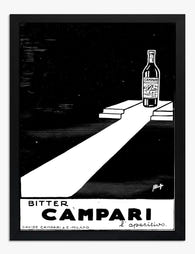
Poster Campari im Retro-Chic
Translation missing: de.products.product.sale_price Ab £11.95£19.95 -

Poster Retro-Kassetten vor zartrosa Hintergrund
Translation missing: de.products.product.sale_price Ab £13.99£19.99 -

Poster Retro-Kassetten – Bunte Mixtape-Kollektion
Translation missing: de.products.product.sale_price Ab £13.99£19.99 -

Leinwandbild Strahlender Retro-Regenbogen
Translation missing: de.products.product.sale_price Ab £44.95£74.95 -

Leinwandbild Vintage Vibes Kollektion
Translation missing: de.products.product.sale_price Ab £44.95£74.95


Mehr aus The Frame

Living Room Botanical Prints: The Right Way to ...
Botanical prints are one of the most forgiving categories of wall art to choose, and one of the easiest to ruin with bad framing. A warped frame, the wrong glazing,...

Why William Morris Animal Prints Work in Modern...
Morris's floral patterns get all the attention, but his animal designs are quietly the easier win. A fox or a hare gives your eye somewhere to land, which means these...

The Best Botanical Prints for Your Conservatory...
Conservatories are sun traps, and most art prints are not built for them. The same light that makes the space so lovely to sit in will cook a poorly made...