
 Order today for delivery by
 Gallery Wall Rules That Work in 2025
The maximalist Pinterest collage is dead. Here's how to build a gallery wall that actually looks good in 2025.


The gallery wall has had a glow-up. The mismatched, frame-everything-you-own approach that ruled Pinterest a decade ago now looks like visual noise, and the modern version is quieter, more deliberate, and significantly easier to pull off. This is your guide to building one that looks curated rather than cluttered.
Why gallery walls evolved: from eclectic chaos to curated calm
The 2016 gallery wall was a brag. Fifteen frames in five finishes, postcards next to oil paintings next to a vintage mirror, every available inch covered. It signalled personality through volume, and at the time, it worked.
It doesn't work now. Interiors have shifted toward visual rest, fewer surfaces, slower looks, more confidence in negative space. The gallery wall survived that shift, but it had to evolve. The modern version is five to seven pieces with a clear visual relationship, not twenty pieces stitched together by vibes alone.
If you're wondering what is a gallery wall in 2025, the simplest definition is this: a grouping of two or more artworks hung together as a single composition, designed to read as one cohesive piece rather than a scrapbook. That last part is the key change. The wall is now the artwork. The individual prints are components.

The rules for a modern gallery wall (fewer pieces, stronger theme)
The biggest mistake people make is treating gallery wall rules as optional. They're not. The "no rules" advice you've read elsewhere is how you end up with the 2016 look you're trying to escape. Here's what actually works now.
Fewer pieces, larger sizes. Five to seven prints at 40x50cm or 50x70cm will always look more sophisticated than fifteen at A4. Small frames clustered together read as clutter, not curation. If you have the wall space, go bigger and use fewer.
One strong unifying thread. That can be subject (all botanical, all abstract, all architectural), palette (everything in muted earth tones), or medium (all line drawings, all photography). Without one of these threads, you don't have a gallery wall, you have a pile of unrelated things on a wall.
Consistent frames. This is non-negotiable now. We'll get into it properly below, but mixed frame finishes are the fastest way to date a gallery wall.
Disciplined spacing. Two to three inches between frames, measured properly, kept consistent. Uneven spacing reads as accidental, not artistic.
A diagnostic check. If your gallery wall has more than ten pieces, more than two frame colours, no colour story, and inconsistent gaps between frames, it's dated. Strip it back.
Choosing a colour story: how to pick prints that talk to each other
The fastest way to make unrelated prints look intentional is to give them a shared palette. You don't need the prints to match exactly. You need them to share two or three colours that repeat across the group.
Start with your room. Pull two colours from the existing space (your sofa, a rug, the wall colour) and one accent colour you want to introduce. Those three colours should appear in some form across every print in the set. A sage green sofa, oatmeal walls, and a terracotta accent gives you a clear filter for choosing artwork. Anything outside that palette gets cut.
For neutral rooms, lean into tonal stories: warm beiges with cream and rust, or cool greys with charcoal and slate. For colour-confident rooms, pick prints that pick up the boldest hue and surround it with quieter shades, so the wall feels rich rather than competing.
Abstract work is particularly good for this because the shapes don't tie you to a subject, only a palette. Browsing through abstract art prints with one specific colour in mind is one of the easiest ways to build a coordinated group from scratch.
Why matching frames change everything (and mismatched frames are over)
Mixing frame finishes was the headline trick of the old gallery wall, and it's the single biggest tell that a wall hasn't been updated. Black frame next to gold frame next to natural wood next to white was once "eclectic." Now it just looks indecisive.
Matching frames work better for a simple reason: they give your eye a place to rest. When the frames are identical, your brain stops processing them as separate objects and starts reading the artwork as one composition. The frames become architecture, not decoration. That's the visual quiet that defines modern interiors.

The practical version of this rule: pick one frame colour and one frame profile, and use them across the whole wall. Natural oak is the safest bet for warm or neutral rooms. Matte black works in modern, high-contrast spaces. White frames disappear against white walls and let the art do all the talking.
Frame quality matters more than people admit. A frame in solid FSC-certified wood holds its shape, sits flush on the wall, and ages well. Cheap moulded frames warp at the corners within a year, and once one frame in your gallery wall starts looking off, the whole composition collapses. UV-protective glazing also matters if any part of your wall catches direct sun. A faded print next to a vibrant one breaks the colour story you spent so long building.
Layout planning: the floor-first method with newspaper templates
This is the one piece of universal gallery wall advice that has survived every trend cycle, because it genuinely works. Do not start hammering nails into the wall. Start on the floor.
Step one. Clear a floor space roughly the size of your wall. Lay out all your prints, frames and all, and arrange them until the composition feels balanced. Take photos on your phone as you go so you can compare versions.
Step two. Trace each frame onto newspaper or brown paper. Cut out the templates. Mark where the hanging fixture sits on the back of each frame, then transfer that mark to your paper template.
Step three. Tape the paper templates to the wall in your chosen arrangement. Use a spirit level. Live with it for a day. Walk past it, sit on the sofa, see how it feels from across the room.
Step four. Once you're certain, hammer your nails or screws directly through the mark on each paper template, then tear the paper away. Your fixtures will be exactly where they need to be.
A few spacing principles to apply while you're laying things out. Keep two to three inches between frames consistently. Treat the gallery wall as a single shape, with a clear outer boundary, even if the internal arrangement is asymmetric. The centre of the overall composition should sit at roughly 145 to 150cm from the floor, which is standard gallery eye level.
For arrangement style, you've got three reliable options. A grid (2x2, 3x2, 2x3) is the most modern and the most forgiving. A horizontal row works beautifully above a sofa or sideboard. An asymmetric cluster around a central anchor piece adds movement, but needs more careful balancing.
The best wall art sets for an instant gallery wall without the stress
Here's the piece of advice nobody else seems willing to give you directly: if you're nervous about pulling this off, buy a coordinated set. This isn't cheating. It's how people who do this for a living make it look effortless.
Pre-curated wall art sets solve the three hardest parts of the modern gallery wall in one step. The prints already share a palette. They share a visual style. And when ordered in matching frames, they arrive ready to hang in a composition that's already been balanced by someone whose job it is to balance compositions.
The reason this matters in 2025 specifically is that the curated look depends on cohesion, and cohesion is exactly what people struggle to achieve when they're picking prints individually. You buy one print you love. Then you buy another print you love. Six months later you've got eight prints you love that have nothing in common except your taste, which isn't enough to hold a wall together.
A set of three large prints (think 50x70cm each) hung in matching oak frames is one of the most reliable looks you can put on a living room wall. A set of four at 40x50cm in a 2x2 grid is the safest formula above a sofa or bed. A set of two oversized prints, hung side by side at 70x100cm, makes a serious statement in a hallway or above a console.

The cost-benefit is also worth being honest about. Buying individual prints, then sourcing frames separately, then trying to get everything fitted properly, often costs more and ends in something looking off. Sets that arrive in one box, properly fitted, ready to hang, with no warping or bubbling, eliminate the most common failure point in this whole project.
Gallery walls around TVs, on staircases, and in awkward hallways
Some walls are harder than others. These are the three that come up most often.
Around a TV
The trick here is to make the TV part of the composition rather than fighting it. Frame the TV with art on either side, treating the screen as the central anchor. Two prints stacked vertically on each side of the TV is the cleanest version. Match the height of the top print to the top of the TV and the bottom print to the bottom of the TV, so the whole group reads as a rectangle.
Avoid hanging anything directly above the TV unless the wall is tall enough that there's a clear gap (at least 15cm) between the top of the screen and the bottom of the frame. Cramped TV walls look worse than no gallery at all.
For more layout ideas around a media wall, the living room wall art category is worth browsing with this brief in mind: matching frames, three to five prints, palette pulled from your sofa.
On a staircase
Staircase gallery walls work best when they follow the angle of the stairs rather than fighting it. Pick a consistent gap between each frame and the stair tread below it (around 20 to 25cm works well), then let the entire composition climb diagonally.
Use the same frame size and finish throughout. Mixed sizes on a staircase create visual chaos because the eye is already navigating a diagonal. Three to five prints, identical frames, evenly spaced, is the formula.
In a narrow hallway
Hallways are deceptively tricky because you rarely view the wall from straight on. You see it at an angle as you walk past. That means a single row of prints at eye level almost always works better than a stacked composition.
Go for three or four prints in a horizontal row, all the same size, in matching frames. Keep the spacing tight (around 5cm between frames) because narrow corridors compress your visual field. Larger prints suit hallways better than small ones, despite the instinct to "scale down" for a smaller space.

For renters
If you can't put nails in the wall, heavy-duty adhesive strips (rated for the combined weight of frame and print) work well for anything up to around 50x70cm. Lighter canvas prints are particularly suited to this because they weigh less than a framed print of the same size. For anything larger or heavier, picture-hanging hooks designed for plasterboard leave smaller holes than you'd think and fill easily when you move out.
What to do next
Pick your wall. Measure it. Decide on three to five prints (or buy a set of four) at the largest size the wall comfortably holds. Choose one frame finish and stick to it. Lay everything out on the floor before you touch the wall. Use paper templates. Keep two to three inches between frames.
That's the entire method. The modern gallery wall isn't harder than the old one, it's just more disciplined, and discipline is what makes it look expensive.

Fab products featured in this blog
-

Modern Grid High-Rise Canvas Print
Translation missing: en.products.product.sale_price From €64,95€92,95 -

Graceful Balance Minimal Art Print
Translation missing: en.products.product.sale_price From €19,95€33,25 -

Urban Minimalist Block Art Print
Translation missing: en.products.product.sale_price From €19,95€33,25 -

Classic Bathroom Rules Guide Art Print
Translation missing: en.products.product.sale_price From €19,95€33,25 -

Neutral Organic Flow Art Print
Translation missing: en.products.product.sale_price From €19,95€33,25 -

Pastel Table Gathering Art Print
Translation missing: en.products.product.sale_price From €16,95€23,95 -

Organic Neutral Flow Canvas Print
Translation missing: en.products.product.sale_price From €64,95€92,95 -

Modern Monochrome Collage Canvas Print
Translation missing: en.products.product.sale_price From €64,95€92,95 -
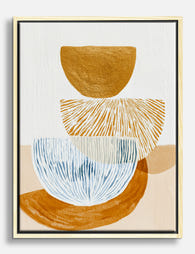
Modern Balance Study Canvas Print
Translation missing: en.products.product.sale_price From €64,95€92,95 -

Modern Curve Composition Art Print
Translation missing: en.products.product.sale_price From €16,95€23,95 -

Bauhaus Modern Minimal Canvas Print
Translation missing: en.products.product.sale_price From €64,95€92,95 -

Modern Poolside Gathering Art Print
Translation missing: en.products.product.sale_price From €19,95€33,25 -

Small People Painting Minimalist Lineup Art Print
Translation missing: en.products.product.sale_price From €19,95€33,25 -

No Dancing, Except On Tables Quote Art Print
Translation missing: en.products.product.sale_price From €19,95€33,25 -

Pastel Table Gathering Art Print
Translation missing: en.products.product.sale_price From €16,95€23,95 -

The Modern Muse Art Print
Translation missing: en.products.product.sale_price From €19,95€33,25 -

Modern Balance Shapes Art Print
Translation missing: en.products.product.sale_price From €19,95€33,25 -

Her Story, Her Rules Art Print
Translation missing: en.products.product.sale_price From €19,95€33,25 -

Playful Gathering Canvas Print
Translation missing: en.products.product.sale_price From €64,95€92,95


More from The Frame

Klimt's Portrait Style: How Gold, Pattern, and ...
The collision of decoration and realism in Klimt's figures Stand in front of a Klimt portrait and your eyes do something strange. They dart. They settle on a face, then...

Klimt's Tree of Life: The Story Behind the Icon...
You've seen it on phone cases, yoga studio walls, and tote bags. But the Tree of Life wasn't conceived as a standalone painting at all. It started life as a...

Living Room Klimt Garden Prints: A Modern Styli...
Klimt's gardens get unfairly lumped in with his gilded portraits, and that's why so many people assume they'll look stuffy at home. They won't, if you treat them as the...