
 Order today for delivery by
 Every Flower Klimt Painted: The Complete Guide to His Floral Masterpieces
The complete catalogue of Klimt's flower paintings, what they actually mean, and which one belongs above your sofa.


Klimt Beyond The Kiss: Why His Flower Paintings Deserve Your Attention
Ask anyone to name a Klimt painting and you'll get The Kiss, maybe Adele Bloch-Bauer. What you almost never hear is Bauerngarten, or Roses Under the Trees, or any of the dense, riotous flower paintings that make up nearly a quarter of his output. That's a strange omission, because Klimt's floral work is arguably where his eye for pattern and colour reaches its most hypnotic form.
Of his roughly 230 surviving works, landscapes and gardens account for a significant chunk, most painted during his summer retreats to the Attersee in Upper Austria. They're quieter than the gold portraits, less famous, and a great deal easier to live with on a wall.

The Flower Garden Paintings: Dense, Decorative, and Completely Mesmerising
Klimt's gardens are not landscapes in any traditional sense. There's no horizon, no perspective, no sense of depth pulling your eye toward a vanishing point. Instead, the canvas becomes a vertical wall of bloom, what art historians have called a "painted carpet" effect.
Flower Garden (1906), now in a private collection, is one of the earliest examples. Painted at the Litzlberg estate on the Attersee, it abandons sky and ground almost entirely. You're looking at a tapestry of poppies, daisies, zinnias and roses pressed flat to the picture plane, with the same flattening logic he was applying to gold backgrounds in his portraits at the time.
Bauerngarten (Cottage Garden), 1907, is the most celebrated of the group, and for good reason. It sold at Sotheby's in 2017 for £48 million, the third-highest price ever paid for a Klimt. The composition is a tight pyramid of red poppies, white daisies and blue cornflowers rising up through the frame, with a tonal opposition of red against green that vibrates if you stand close to it.
Cottage Garden with Sunflowers (1907) does something similar but inserts towering sunflowers as a structural spine. The flowers become near architectural, almost figurative, leaning into one another like a quiet crowd.
What ties these works together is Klimt's method. He'd reportedly carry a small square viewfinder made of cardboard, hold it up at the garden, and crop his composition through it. That's why so many of these paintings are perfect squares. They're not landscapes he found, they're patterns he selected.
Klimt's Sunflowers: How They Compare to Van Gogh's
In January 1906, Galerie Miethke in Vienna mounted a Van Gogh exhibition. Klimt almost certainly attended. Within eighteen months his brushwork loosened, his palette grew thicker, and sunflowers began appearing in his work.
The two painters never met. Van Gogh died in 1890, when Klimt was still painting academic allegories. But the influence is undeniable, and it's worth understanding what specifically changed.
The Sunflower (1907) is Klimt's most famous floral work and his most direct response to Van Gogh. The key difference: Van Gogh painted sunflowers in vases, as still life, cut and arranged. Klimt painted his sunflower in situ, in the garden, standing on its stem with leaves spreading like skirts. Several scholars have noted the painting's resemblance to his portraits of Emilie Flöge, his lifelong companion. The sunflower stands alone, draped, almost anthropomorphic. It's a portrait disguised as a botanical study.
Where Van Gogh's sunflowers crackle with impasto and yellow-on-yellow tension, Klimt's sits in a sea of contrasting greens and small flowering ground cover. Van Gogh wanted heat. Klimt wanted ornament.
Farm Garden with Sunflowers (1913) takes the same subject and explodes it into a field of competing blooms, with the sunflowers now part of a chorus rather than a soloist. If you want to see how far Klimt travelled from his gold backgrounds, compare this to Adele Bloch-Bauer I from six years earlier. The decorative impulse is identical. The vocabulary has shifted entirely from metal to flesh and chlorophyll.
For more on this period of his work, our Gustav Klimt art prints collection covers both the gold portraits and the floral pieces in detail.
The Farm Garden Series: Klimt's Most Layered Floral Work
Klimt returned repeatedly to the farm garden motif, painting at least two major versions and several related works. These are his most complex floral compositions, layered with multiple flower species and structured almost like medieval tapestries.
Farm Garden (1907), sometimes called Bauerngarten mit Sonnenblumen, is the earliest. Triangular composition, sunflowers at the apex, a riot of poppies, daisies and roses banked beneath. The eye has nowhere to rest, which is exactly the point. Klimt wanted saturation.
Farm Garden with Sunflowers (1913) is the more impressionist version, painted six years later. The brushwork is looser, the boundaries between flowers blur, and you can feel Van Gogh's influence settled into Klimt's muscle memory rather than freshly absorbed.
Poppy Field (1907) strips the same garden vocabulary down to a single dominant species, with red poppies floating across a green ground. It's the most graphic of his floral works and the easiest to read as pure pattern. Of all his flower paintings, this is the one that translates most cleanly to modern interiors.

Meadows, Fields, and Landscapes: Klimt's Quieter Botanical Side
Not all of Klimt's flower work is high-key and dense. Several of his Attersee landscapes treat flowers as part of a wider environment, and they're a useful counterpoint if the cottage gardens feel too intense for your space.
Roses Under the Trees (1905) is the most beloved of these. Currently held by the Musée d'Orsay in Paris, it shows a single tree absolutely covered in pink and white blossom, set against a darker meadow of small flowering plants. The composition is nearly circular, with the tree forming a soft globe of colour. It's quieter than Bauerngarten, more contemplative, and works beautifully in rooms where you don't want the art to dominate.
Poppy Field (also 1907) sits between the two modes, denser than Roses Under the Trees but more open than Bauerngarten.
Garden Path with Chickens (1916) is a tragic footnote. The painting depicted a flower-lined path with hens scratching in the foreground, considered one of his finest late works. It was destroyed in 1945 when the Schloss Immendorf was burned by retreating SS forces, along with several other Klimt canvases. We know it only through photographs.
These later landscape-leaning works show Klimt loosening his grip on pattern and letting impressionist concerns about light and atmosphere creep in.
Flower Symbolism in Klimt's Work: What the Blooms Actually Mean
Most writing on Klimt's flower paintings stops at "decorative" and moves on. That's a missed opportunity, because the symbolism in this body of work is layered and personal.
Nature as escape from eroticism. Klimt's portrait commissions and allegorical works were emotionally and erotically charged. The flower paintings were made in summer, away from Vienna, away from clients, often in the company of Emilie Flöge. They were respite, and they look like it. There are no figures, no allegories, no Judith or Danaë. Just plants behaving as plants.
The Flöge connection. The Sunflower and other vertical floral works have been read by multiple scholars as displaced portraits of Emilie. She wore the kind of loose reform-dress silhouettes that Klimt's sunflowers echo. Whether this was conscious is impossible to say, but the visual rhyme is striking.
The square format and Vienna Secession ideals. Klimt was a founding member of the Vienna Secession, which championed the unity of fine and decorative arts. The square format, the flattened picture plane, the mosaic-like arrangement of flower heads, these were all decorative-arts moves brought into the gallery painting tradition. The flower paintings are Secession ideology in pigment.
Red and green opposition. Klimt used complementary colour tension constantly in his floral work. Red poppies against green foliage. Pink roses against dark leaves. The eye reads this as vibration, and it's one of the reasons his gardens feel so alive even when nothing in them is moving.
If the wider Secession aesthetic interests you, our Art Nouveau art prints collection covers the movement Klimt helped define.
Which Klimt Flower Painting Makes the Best Print for Your Wall
Here's where we take a position, because most articles like this won't.
For a statement wall in a living room or dining room: Bauerngarten (1907). The pyramidal composition holds a large space without feeling chaotic, and the red-green palette plays well with warm neutrals, natural wood, and sage or olive walls. We'd go large, 70x100cm framed, hung as a single piece rather than part of a gallery wall.
For a bedroom or quieter space: Roses Under the Trees. The softer pink-and-green palette, the near-circular composition, and the lower visual intensity make it restful. It works in rooms with linen, oak, and muted tones.
For a modern, graphic interior: Poppy Field. This is the Klimt for people who think they don't like Klimt. The composition reads almost like a pattern repeat, and it sits comfortably alongside contemporary art and clean-lined furniture.
For a kitchen, hallway, or smaller space: The Sunflower. Vertical format suits narrow walls. The single-subject composition reads clearly from a distance.
For a maximalist room: Farm Garden with Sunflowers (1913). The looser, denser composition rewards close looking and pairs well with patterned textiles and layered interiors.
A practical note on format. Many of Klimt's flower paintings are perfect squares, which is unusual in print formats and harder to place on standard rectangular walls. The Sunflower and Farm Garden with Sunflowers are vertical and slot neatly above sofas, beds, and consoles. If you're working with a horizontal space above a long sofa, Poppy Field or Roses Under the Trees in landscape crop will sit more comfortably than a square.
You can browse the full range in our Klimt flowers art prints collection, or look at broader floral art prints if you want to see Klimt alongside other botanical work.

How Our Giclée Printing Does Justice to Klimt's Colour and Detail
Klimt is one of the hardest artists to reproduce well, and most prints get him wrong in predictable ways. The reds turn muddy. The greens flatten into a single shade. The mosaic-like flower heads lose their individual definition and become a blur.
The reason is colour gamut. Klimt's palette pushes into saturation territory that cheaper four-colour printing simply cannot hit. The vibration between his red and green relies on both colours being at full intensity, and the moment one drops, the painting loses its pulse.
We print on thick matte paper using museum-grade giclée, which uses a wider ink set and gives a much broader colour range than standard printing. The matte finish matters here too. Klimt's surfaces in the originals are not glossy, and a satin or glossy print finish adds a sheen the paintings never had. Matte preserves the slightly chalky, painterly quality of his flower work.
For framed versions, we use solid FSC-certified wood frames with a UV-protective acrylic glaze rather than glass. The acrylic is lighter, doesn't shatter, and crucially won't let the print fade in direct sunlight. Given Klimt's flower paintings tend to land in bright rooms (because they look best there), this matters.
A few things to look out for when buying any Klimt print, from us or elsewhere. Check the paper weight. Thin paper warps and looks cheap. Check the framing. A print shipped separately from its frame almost always arrives misaligned, and the frame quality on mass-produced prints is often thin MDF that bows within a year. Check the colour. If the reds in Bauerngarten look pinkish or the greens look grey, the print isn't doing the painting justice.

A Final Thought
If you only know Klimt through The Kiss, you're seeing about a tenth of the artist. The flower paintings are where he relaxed, where he experimented with composition without the weight of commission or allegory, and where his eye for pattern reached its most uncomplicated form.
Start with Bauerngarten if you want the full Klimt experience condensed into one painting. Start with Roses Under the Trees if you want something to live with quietly for years. Either way, hang it where you'll see it in changing light, because these are paintings made outdoors, and they want some of that brightness back.

Fab products featured in this blog
-

Farm Garden with Sunflowers by Gustav Klimt Art Print
Sale price From CHF 16.00CHF 23.00 -

Sunflowers by Gustav Klimt Art Print
Sale price From CHF 16.00CHF 23.00 -

Farm Garden with Sunflowers by Gustav Klimt Art Print
Sale price From CHF 16.00CHF 23.00 -

Farm Garden with Sunflowers by Gustav Klimt Canvas Print
Sale price From CHF 63.00CHF 90.00 -

Flower Garden by Gustav Klimt Art Print
Sale price From CHF 16.00CHF 23.00 -

Farm Garden with Sunflowers by Gustav Klimt Canvas Print
Sale price From CHF 63.00CHF 90.00 -

Sunflowers by Gustav Klimt Canvas Print
Sale price From CHF 63.00CHF 90.00 -
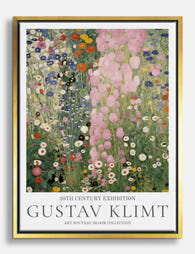
Klimt Garden Bliss Exhibition Print Canvas Print
Sale price From CHF 63.00CHF 90.00 -

Klimt Flower Garden Exhibition Print Art Print
Sale price From CHF 16.00CHF 23.00 -

Gustav Klimt Art Nouveau Bloom Collection Art Print
Sale price From CHF 16.00CHF 23.00 -

Klimt-Inspired Flower Garden Canvas Print
Sale price From CHF 63.00CHF 90.00 -

Klimts Floral Garden Art Print
Sale price From CHF 16.00CHF 23.00 -

Flower Garden by Gustav Klimt Canvas Print
Sale price From CHF 63.00CHF 90.00 -

Klimt Floral Symphony Exhibition Poster Art Print
Sale price From CHF 16.00CHF 23.00 -

Flower Garden by Gustav Klimt Art Print
Sale price From CHF 16.00CHF 23.00 -

Flower Garden by Gustav Klimt Canvas Print
Sale price From CHF 63.00CHF 90.00 -

Klimt Flower Meadow Exhibition Print Art Print
Sale price From CHF 16.00CHF 23.00 -

The Sunflower by Gustav Klimt Art Print
Sale price From CHF 16.00CHF 23.00 -
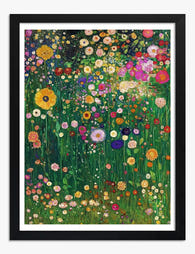
Klimt-Inspired Wildflower Garden Art Print
Sale price From CHF 16.00CHF 23.00 -

Klimt Flower Garden Art Print
Sale price From CHF 16.00CHF 23.00


More from The Frame

Why Do Most Park Wall Art Gallery Walls Fail Be...
Most gallery walls fail on paper, not on the wall. People buy prints they love, guess at spacing, hammer in a nail, and hope. This guide walks through the actual...

Curated or Cluttered? Decorating with Nature Pr...
Nature prints are the easiest wall art to buy and the easiest to get wrong. One botanical here, a moody forest there, a vintage bird plate your aunt gave you,...

Japandi Bedroom Wall Art: How to Create a Space...
Bedrooms are the hardest room to decorate well because the goal isn't to impress anyone. It's to help you sleep, wake up gently, and spend quiet hours in a space...