
 Order today for delivery by
 Navy vs Royal Blue Wall Art: How to Pick the Right Blue for Your Space
A practical guide to choosing between moody navies and vivid royal blues, with a one-question test to settle it.


You've narrowed it down to blue. Good. The trouble is that "blue" covers everything from a near-black navy to an electric cobalt, and the wrong shade on your wall can either disappear into the gloom or shout louder than the rest of your room combined. This guide will get you to a decision.
Navy and royal blue: what's actually different (beyond the obvious)
Navy is a deep, desaturated blue with a lot of black in the mix. It reads as a neutral in many rooms, behaving more like charcoal or aubergine than like a "colour." Royal blue, and its close cousin cobalt, sit much higher on the saturation scale. They keep their vibrancy in almost any light and refuse to blend into the background.
The practical difference comes down to two things: how much light each shade absorbs, and how loudly each one speaks. Navy absorbs light and quiets a wall. Royal blue reflects more light and demands attention. Neither is better. They just do different jobs.
There's also the undertone question, which trips up more shoppers than any other detail. Navy can lean purple, green, or grey. Royal blue tends to lean either true-blue or slightly purple, rarely green. When you're shopping online, look at the print against a neutral background and ask: does the navy feel cool and slate-like, or does it have a warmer, almost-violet edge? That tells you what colours it will actually pair with in your room.

A quick word on saturation
Saturation is the single most useful concept here. A swatch of navy and a swatch of royal blue can look surprisingly similar on a screen, but on a wall, royal blue holds onto its colour even at dusk, while navy slides toward black as the light drops. If you've ever wondered why a print looked vibrant in the listing photo and muddy on your wall at 7pm, that's saturation at work.
How lighting changes everything: north-facing vs south-facing rooms
This is the part most shopping guides skip, and it's the one that matters most.
North-facing rooms get cool, indirect light all day. Navy in a north-facing room can read as nearly black, especially in winter. The undertones get pushed cooler, so a navy with grey undertones can start to look like wet slate. Royal blue, on the other hand, holds up beautifully in north light. The cool light flatters its blue saturation without distorting it.
South-facing rooms get warm, direct light for much of the day. This is where navy comes alive. Sunlight reveals the navy's true depth and any subtle undertones, turning what looked flat in the shop into something rich and layered. Royal blue in a south-facing room can occasionally feel intense, particularly during peak afternoon sun. Not unpleasant, but loud.
East-facing rooms favour navy in the morning when the warm low light brings out depth, then shift cooler later. West-facing rooms favour royal blue in the afternoon, when the warm golden light meets cool saturated blue and creates that particular "stained glass" effect.
The shortcut: navy needs warm or strong light to be its best self. Royal blue works in almost any light, but really sings in cool natural light or against warm-white interior bulbs.
What about artificial light?
Warm white bulbs (around 2700K) deepen navy and slightly mute royal blue. Cool white bulbs (4000K and up) flatten navy toward grey and brighten royal blue. If your room relies heavily on lamp light in the evenings, factor that in. A navy print over a sofa lit only by a 2700K floor lamp can look almost monochrome by 9pm.
Navy blue wall art: where it works best and the interiors it suits
Navy blue wall art is the safer bet for most British homes, and we don't mean that as a compliment so much as a reality. It plays well with the muted palettes most of us live with: warm whites, oatmeal, sage, terracotta, brass, oak. It looks expensive almost by default.
Navy belongs in:
- Traditional and transitional interiors: panelled walls, antique furniture, layered textiles. Navy adds gravitas without competing.
- Quiet, considered minimalism: a single large navy abstract above a low oak sideboard, no other colour in the room. This is where navy earns its reputation.
- Bedrooms: navy is genuinely restful. It darkens the visual temperature of a room without making it feel cold.
- Studies and snugs: rooms designed for retreat. Navy supports the mood.
Where navy struggles: rooms with very little natural light, or rooms where the walls behind the print are also dark. A navy print on a charcoal wall in a north-facing dining room will simply vanish. Light it properly or move it.
The framing decision matters here. A black frame makes navy more dramatic and graphic. A natural oak or walnut frame warms it up and softens the contrast. White frames give navy room to breathe and work especially well in bright, gallery-style hangs. Our framed prints come with UV-protective acrylic glaze rather than glass, which means no harsh reflections cutting across that deep navy field.

Royal and cobalt blue prints: when to go bold and saturated
Cobalt blue art prints and royal blue wall prints behave differently. They're a statement, full stop. You don't sneak royal blue into a room. You commit to it.
Royal blue works hardest in:
- Modern and contemporary interiors: clean lines, lots of white, a few sharp accents. Royal blue is the accent.
- Maximalist rooms: where colour, pattern, and texture are already in conversation, royal blue joins in rather than overpowering.
- Coastal and Mediterranean styles: cobalt is the colour of Greek doors and Moroccan tiles. It belongs there.
- Rooms with one or two existing saturated colours: mustard, emerald, terracotta, hot pink. Royal blue pairs cleanly with all of them.
Where royal blue fails: rooms that are entirely neutral or muted. If the rest of your space is greige, oatmeal, dusty pink, and warm white, a single royal blue print won't feel curated. It will feel like a mistake. Royal blue needs friends.
The saturation test is useful here. Look around your room. Is there anything saturated already? A mustard chair, a deep green plant pot, a piece of pottery in a real colour? If yes, royal blue will slot in. If everything is muted, choose navy.
For a saturated print, we'd lean toward a white or pale natural wood frame. Black frames can fight royal blue rather than support it. Canvas also handles royal blue particularly well because the matte finish softens the intensity slightly without dulling the colour.
Small rooms: which blue makes the space feel bigger (not darker)
The old advice is "small rooms need pale colours." This is mostly nonsense. What small rooms actually need is intention.
In a small room, navy works if the wall behind it is light. Navy art on a white wall creates contrast that draws the eye and gives the space a focal point, which makes the room feel deliberate rather than cramped. Navy art on a beige or grey wall in a small room can feel heavy.
Royal blue in a small room is riskier. The saturation pulls the eye, but the high contrast against white walls can feel restless. If your small room is a guest WC, hallway, or alcove, royal blue can be brilliant. The smallness of the space lets the colour land without competing with much else.
Our verdict for small rooms: navy on white walls in larger formats (60x80cm and up). The single-large-print approach almost always beats a cluster of small ones in tight spaces. For living room wall art in a smaller flat, one well-scaled navy print does more work than three medium ones.
Mixing blue shades: can you combine navy and royal in a gallery wall?
Yes, but with rules.
Mixing navy and royal blue in the same gallery wall works when you give them other colours to mediate. Pure navy and pure royal side by side, with nothing else, looks like you couldn't decide. Add a third element, a warm cream, a soft pink, a botanical green, a black-and-white photograph, and the two blues stop competing and start harmonising.
The rule we follow:
- Choose one blue as dominant (more pieces, larger formats).
- Use the other blue as an accent (one piece, smaller).
- Include at least two non-blue prints to break up the field.
- Repeat one element across all frames, usually frame colour or mat width, to tie it together.
Pre-curated wall art sets take a lot of the maths out of this. The pieces are designed to share a palette, scale, and visual weight, which is the part most people get wrong when building a gallery wall from scratch.
What doesn't work: navy and royal blue in identical formats hung symmetrically. The eye reads them as a failed match rather than an intentional pairing. Vary the sizes.

Common mistakes worth avoiding
A few patterns we see repeatedly:
- Putting navy in a windowless room and wondering why it looks black. It will. Add light or change colour.
- Choosing royal blue for a small white-walled room and feeling overwhelmed. The contrast is too high. Soften with a warmer wall colour or step down to navy.
- Buying a navy print online without checking undertones. A purple-leaning navy in a sage green room is a fight. A grey-leaning navy in the same room is a conversation.
- Hanging royal blue against an already-saturated wall colour. Two saturated colours competing rarely works. Royal blue wants a calmer backdrop.
- Assuming canvas and framed paper read the same. They don't. Matte paper holds navy's depth slightly better. Canvas softens royal blue in a flattering way. Both have their place.
A note on quality, since it's the thing most likely to ruin your decision regardless of shade: a beautifully chosen navy print loses everything if the frame arrives warped or the print bubbles in the mount. Frames and prints fitted together properly in one piece, with solid wood frames rather than veneered MDF, make a visible difference once they're on the wall. Cheap framing flattens any colour, but it's especially unkind to deep blues.
Our recommendation: the one-question test to decide which blue is right for you
Here it is.
Does your room get direct afternoon sunlight, and does it already contain at least one saturated colour?
- Yes to both: choose royal or cobalt blue. Your room can carry it, the light will flatter it, and the existing saturation gives it a context to live in.
- Yes to sunlight, no to saturation: choose navy. The light will reveal its depth, but the room's muted palette won't support royal blue's intensity.
- No to sunlight, yes to saturation: choose royal blue, but go slightly smaller and use a white or pale frame to keep things light.
- No to both: choose navy on light walls in a larger format, and add a lamp nearby. This is the most common scenario in British homes, and navy almost always wins.

If you're still torn after running the test, here's the tiebreaker: navy is a long-term decision, royal blue is a phase decision. Navy will work with whatever interior you grow into over the next ten years. Royal blue will define this version of your room and may need rethinking when the rest of the room changes. Both are valid. Just know which one you're choosing.
Pick the blue. Buy the larger size. Hang it on the lightest wall in the room. You're done.

Fab products featured in this blog
-

Red Mark on Blue Horizon Canvas Print
Sale price From CHF 63.00CHF 89.00 -

It Comes and Goes in Waves Canvas Print
Sale price From CHF 63.00CHF 89.00 -

Blue Spot Footballer Canvas Print
Sale price From CHF 63.00CHF 89.00 -

Blue Spot Footballer Art Print
Sale price From CHF 16.00CHF 23.00 -

Indigo Half Moon and Dots Canvas Print
Sale price From CHF 63.00CHF 89.00 -

Blue Tulip Minimal Curve Art Print
Sale price From CHF 16.00CHF 23.00 -

Bold Blue & Red Balance Art Print
Sale price From CHF 16.00CHF 23.00 -

Serene Blue Hues Canvas Print
Sale price From CHF 63.00CHF 89.00 -

Coastal Shell in Soft Blue Art Print
Sale price From CHF 16.00CHF 23.00 -

Blue Tulip Minimal Curve Canvas Print
Sale price From CHF 63.00CHF 89.00 -

Serene Blue Hues Art Print
Sale price From CHF 16.00CHF 23.00 -

Pool Day Brushmarks Art Print
Sale price From CHF 16.00CHF 23.00 -

Radiance Blue Aura Poster Canvas Print
Sale price From CHF 63.00CHF 89.00 -

Bold Blue Portrait Art Print
Sale price From CHF 16.00CHF 23.00 -
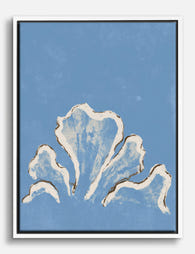
Coastal Shell in Soft Blue Canvas Print
Sale price From CHF 63.00CHF 89.00 -

Blue Nude II by Henri Matisse Canvas Print
Sale price From CHF 63.00CHF 89.00 -

Bauhaus 1919 — Navy Geometry Canvas Print
Sale price From CHF 63.00CHF 89.00 -

Bold Blue Portrait Canvas Print
Sale price From CHF 63.00CHF 89.00 -

Pink Sails on Blue Water Art Print
Sale price From CHF 16.00CHF 23.00 -

Different Strokes by McRay Magleby Canvas Print
Sale price From CHF 63.00CHF 89.00


More from The Frame

Beyond the Kitchen: 5 Unexpected Rooms Where Le...
Lemon art has a branding problem. Search for it online and you'll drown in kitchen shots: farmhouse signs, fruit bowls, tea towels with slogans. But a good lemon print is...

Lemon Art for the Kitchen: Where to Hang It, Wh...
Lemon art has quietly become the most-requested kitchen subject of the last few years, and for good reason. This guide skips the styled-shelf inspiration and gets straight to the decisions...

Why Do Palm Prints Work So Well in Minimalist B...
Palm prints have a reputation problem. Say the words and most people picture tiki bars, holiday postcards, and hot pink flamingos. Done properly, though, palm art is one of the...