
 Smiles Guaranteed
 Order today for delivery by
How to Style William Morris Prints in a Modern Home Without Going Full Victorian
Practical advice for living with Morris's butterflies, birds, and botanicals in homes that aren't remotely Victorian.


William Morris designed his patterns in the 1870s and 1880s, but the colour palettes he used (sage, ochre, deep teal, faded terracotta) are almost identical to the ones contemporary paint companies are selling right now. That's not a coincidence. It's why his prints slot into modern rooms more easily than people expect, provided you make a few deliberate choices about frames, scale, and what you put around them.
Why William Morris prints work in modern interiors
The assumption is that Morris belongs in a wood-panelled drawing room with a chesterfield and a grandfather clock. In practice, his work plays beautifully against clean-lined furniture because the visual richness of the print does all the decorative heavy lifting. The room around it can stay simple.
Look at any Morris design and you'll notice the colours are muted, layered, and slightly desaturated. There's no electric blue, no synthetic pink. Everything reads as if it has aged in natural light for a hundred years, which it essentially has. That softness is what allows a Morris butterfly print to sit above a flat-front oak credenza without the two fighting each other.
The other reason it works: contemporary interiors have swung hard towards biophilic design. Morris was painting birds, fritillaries, willow boughs, and strawberry thieves more than a century before "bringing the outdoors in" became a styling trend. His work is essentially nature illustration with extraordinary craft, and that translates across decades.

Pairing Morris butterfly prints with contemporary furniture
The pairing rule is simple: the busier the print, the calmer the furniture needs to be. A Morris butterfly print already has dozens of small motifs, layered foliage, and three or four colours doing different jobs. If you hang it above a buttoned velvet sofa with cushions in three different patterns, the room collapses into visual noise.
What works:
- Scandinavian-style furniture in pale oak, ash, or beech. The blonde wood lifts Morris's deeper greens and reds.
- Mid-century pieces with tapered legs and walnut tones. The geometry of the legs contrasts with the organic curves of the print.
- Industrial spaces with exposed brick or concrete. Morris's softness humanises hard surfaces, which is why butterfly prints look surprisingly good in converted warehouse flats.
- Boucle and linen upholstery in oatmeal, bone, or warm grey. Texture without pattern.
What to avoid: floral upholstery, heavily carved furniture, and anything in mahogany. The combination tips immediately into pastiche. If you already own a chesterfield, fine, but balance it with a print on a clean wall away from other pattern.
For most rooms, a single framed butterfly print at 60x80cm or 70x100cm above a sideboard or sofa is the most reliable starting point. Browse the William Morris butterfly art prints collection to see the range of motifs, then pick the one whose dominant colour echoes something already in your room (a cushion, a rug, the wood tone of your floor).
Frame colour and finish: what actually works
This is where most people get stuck, and where most product pages give you no help at all. Frame choice should be driven by your existing decor, not by what looks best in isolation on a white studio wall.
Black frames
Use these in Scandinavian minimalist rooms, monochrome interiors, or any space where you already have black accents (a black floor lamp, black window frames, black shelving brackets). Black frames give Morris prints a contemporary edge and stop them reading as period pieces. They suit the William Morris butterfly designs particularly well because the dark frame echoes the inky outlines in his original woodblock printing.
Natural oak frames
The default choice for mid-century modern, Japandi, and warm contemporary interiors. Oak frames soften the print and let it breathe. They work especially well with Morris's botanical and bird designs, where the wood tone picks up the earthier elements in the artwork.
White frames
Best for very light rooms, coastal interiors, and small spaces where you don't want the frame to add visual weight. White can flatten a Morris print if your walls are also white, so this works better when the wall has some colour or texture to it.
Gold or warm metallic frames
Save these for maximalist, eclectic, or deliberately layered interiors. A gold frame on a Morris butterfly print over a deep green wall is a confident, traditional move. Don't try this in a minimal room. It will look like a single ornate object marooned in space.
A small note on construction: warped frames and prints that arrive separately from their frames are the single biggest problem in this category. Look for solid wood frames (not MDF or veneer) with the print already fitted, ideally with UV-protective acrylic glaze rather than glass, which keeps the colours from fading and means you can hang it in a sunny room without anxiety.
The best wall colours to set off Morris's deep botanical tones
"Pair with neutral walls" is the advice you'll see everywhere, and it's not wrong, but it's not specific enough to be useful. Here's what actually works.
Warm whites and off-whites. Anything with a slight yellow or pink undertone (think soft chalk whites rather than brilliant white) lets Morris's reds and ochres glow. Cool blue-whites can make the prints look slightly grey and sad.
Sage and soft green. A wall in a muted sage picks up the foliage in nearly every Morris design and creates a tonal, immersive effect. This works particularly well behind the William Morris botanical art prints, where leaves and stems are the dominant motif.
Deep navy or forest green as a contrast wall. If you want drama, a single dark feature wall behind a large framed Morris print is the most effective move you can make. The richness of the wall colour matches the richness of the print, and the whole thing reads as deliberate rather than nostalgic.
Clay, plaster pink, and warm terracotta. These tones flatter Morris's reds and oranges and feel modern in a way that traditional Victorian wallpaper never did.
Avoid: cool greys (they fight Morris's warmth), bright accent colours, and any wall in a strong pattern. Morris is the pattern. The wall is the stage.

Sizing and placement: single statement vs curated sets
The 60 to 75 percent rule (your art should fill 60 to 75 percent of the wall space above a piece of furniture) is a useful starting point, but it needs translating into real dimensions.
Above a 180cm sofa: aim for a single print at 70x100cm, or a pair of 50x70cm prints hung 5 to 8cm apart. Centre the arrangement on the sofa, not the wall, and aim for the bottom of the frame to sit roughly 20 to 25cm above the sofa back.
Above a 120cm sideboard or console: a single 60x80cm print works well. If you want a set, three smaller prints at 30x40cm hung in a row will feel more curated than one large piece.
In a hallway: narrow walls suit vertical prints. A single 50x70cm portrait orientation print, hung at average eye level (about 145cm from floor to centre of print), is the most reliable choice.
In a bedroom above the bed: scale up. A 70x100cm or even 100x70cm landscape print centred above the headboard creates a focal point. Smaller prints get lost.
For gallery walls: stick to a maximum of three different Morris designs in one grouping. Any more and you lose the calm tension between them. Keep frame colour consistent across the whole wall, vary the sizes, and leave 5 to 7cm of breathing space between frames. Mat borders give a more formal, gallery-like effect; no mat reads more contemporary.
For canvas, the rules shift slightly. Canvas reads less formal than framed paper, so it can carry larger sizes without feeling imposing. A 100x150cm Morris canvas above a sofa is a real statement, and the matte poly-cotton finish stops the pattern from looking glossy or commercial.
Mixing Morris butterfly prints with bird and botanical designs
The temptation when you fall for Morris is to buy three of his designs and hang them together. This usually works, but only if you follow the one-hero rule.
Pick a single dominant print (your hero) and make it the largest piece in the grouping. Around it, choose smaller prints in related but quieter Morris designs. A large butterfly print works beautifully alongside a smaller bird design and a botanical study of leaves or fruit, because the eye has somewhere to rest.
What to watch for: scale clash. If all three prints have a similar density of pattern, the wall becomes exhausting. Look for one busy print, one medium-detail print, and one quieter design with more negative space.
A practical pairing: a 70x100cm Morris butterfly print as the hero, a 40x50cm bird print to one side, and a 30x40cm botanical study to balance the composition. Browse the William Morris bird art prints collection for complementary pieces. Strawberry Thief and the various dove and pigeon designs are particularly easy companions to the butterfly motifs.
Keep the colour palette consistent across the grouping. If your hero print is dominated by reds and ochres, the smaller prints should pull from the same family. Mixing a green-dominant Morris design with a red-dominant one in the same wall can work, but it's a harder edit than it looks.
Three real room scenarios with specific recommendations
Scenario one: a Scandinavian-style living room with pale oak floors and a white boucle sofa
Hang a single 70x100cm Morris butterfly print in a black frame above the sofa. Walls in a soft warm white. Add one terracotta cushion and a sage green throw to pull the print's colours into the room. Skip any other pattern. The art does all the decorative work.
Scenario two: a mid-century-inspired dining room with a walnut table and tan leather chairs
A pair of 50x70cm Morris botanical prints in natural oak frames, hung side by side on the longest wall. Wall colour: a clay or warm plaster tone. Add a brass pendant light over the table. The walnut, tan, brass, and clay all sit in the same warm tonal family, and the Morris prints anchor the room without dominating it.
Scenario three: a small London flat lounge with limited wall space and white rental walls
One 60x80cm Morris butterfly print in a white or natural oak frame, leaning on a low shelf or sideboard rather than wall-hung (good for renters). Add a small table lamp beside it for evening lighting. Keep everything else in the room textural rather than patterned: a linen sofa, a jute rug, one ceramic vase. The print becomes the single decorative event in the room.

A note on lighting
Morris designs have depth that flat overhead lighting flattens. If you can, light your prints with a warm bulb (2700K to 3000K) from the side or above. A picture light above a hero print, or a floor lamp angled towards the wall, will reveal detail that you'd otherwise miss. Avoid cool white LEDs, which strip the warmth out of the colours and make the prints look slightly clinical.
Natural light matters too. North-facing rooms make Morris's greens read cooler and slightly grey. South-facing rooms warm the reds and ochres up. If your room is north-facing, lean towards Morris designs with stronger red and yellow content; if south-facing, the cooler botanicals and bird designs will sing.

Common mistakes worth avoiding
- Over-matching. Buying Morris wallpaper, Morris cushions, Morris curtains, and Morris prints for the same room. Pick one or two surfaces, not all of them.
- Wrong scale. A 30x40cm print above a three-seater sofa looks lost. Always size up if in doubt.
- Competing patterns. A patterned rug plus a patterned sofa plus a Morris print equals chaos. Subtract something.
- Frames that fight the room. A gold ornate frame in a minimalist flat reads as a costume, not a choice.
- Hanging too high. The centre of any print should sit at roughly 145 to 150cm from the floor. Most people hang too high by about 15cm.
If you want to explore the full range before deciding on your hero piece, the broader William Morris art prints collection covers butterflies, birds, botanicals, and the iconic textile designs in one place.
The goal isn't to recreate a Victorian parlour. It's to bring one of the best decorative artists in British history into a room that already feels like yours, and let his work do what it's been doing since 1875: make the wall more interesting than it was before.

Fab products featured in this blog
-

William Morris Butterfly Elegance Art Print
Translation missing: en.products.product.sale_price From CHF 16.00CHF 22.00 -

William Morris Pink Butterfly Art Print
Translation missing: en.products.product.sale_price From CHF 16.00CHF 22.00 -

William Morris White Butterfly Elegance Art Print
Translation missing: en.products.product.sale_price From CHF 16.00CHF 22.00 -

William Morris Butterfly Elegance Art Print
Translation missing: en.products.product.sale_price From CHF 16.00CHF 22.00 -

William Morris Butterfly Canvas Print
Translation missing: en.products.product.sale_price From CHF 61.00CHF 87.00 -

William Morris Butterfly Canvas Print
Translation missing: en.products.product.sale_price From CHF 61.00CHF 87.00 -

William Morris Butterfly Canvas Print
Translation missing: en.products.product.sale_price From CHF 61.00CHF 87.00 -

William Morris Floral Butterfly Garden Art Print
Translation missing: en.products.product.sale_price From CHF 16.00CHF 22.00 -

William Morris White Butterfly Art Print
Translation missing: en.products.product.sale_price From CHF 16.00CHF 22.00 -

Morris Butterfly Elegance Art Print
Translation missing: en.products.product.sale_price From CHF 16.00CHF 22.00 -
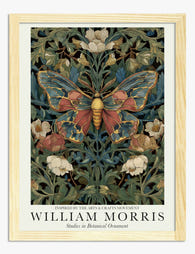
Morris Botanical Butterfly Art Print
Translation missing: en.products.product.sale_price From CHF 16.00CHF 22.00 -

Morris Butterfly Garden Art Print
Translation missing: en.products.product.sale_price From CHF 16.00CHF 22.00 -
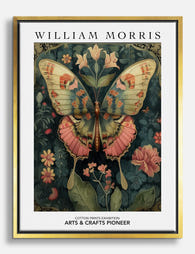
William Morris Butterfly Canvas Print
Translation missing: en.products.product.sale_price From CHF 61.00CHF 87.00 -

Morris Butterfly Elegance Canvas Print
Translation missing: en.products.product.sale_price From CHF 61.00CHF 87.00 -

William Morris Botanical Butterfly Art Print
Translation missing: en.products.product.sale_price From CHF 16.00CHF 22.00 -

Morris Botanical Butterfly Art Print
Translation missing: en.products.product.sale_price From CHF 16.00CHF 22.00 -

William Morris Botanical Butterfly Canvas Print
Translation missing: en.products.product.sale_price From CHF 61.00CHF 87.00 -

William Morris Floral Bird Art Print
Translation missing: en.products.product.sale_price From CHF 16.00CHF 22.00 -

William Morris Butterfly Blooms Art Print
Translation missing: en.products.product.sale_price From CHF 16.00CHF 22.00 -

William Morris Butterfly Elegance Art Print
Translation missing: en.products.product.sale_price From CHF 16.00CHF 22.00


More from The Frame

Choosing a Set of 3 William Morris Prints That ...
Buying one Morris print is easy. Buying three that look intentional together, hung at the right height with the right spacing, is where most people get stuck. This guide walks...

How to Hang William Morris Prints as a Set: Pai...
Morris prints break the rules of standard gallery wall advice. The patterns are dense, the colours are layered, and the visual weight is heavier than modern minimalist art, which means...

Building a William Morris Gallery Wall: Layouts...
Gallery walls go wrong when people guess. With William Morris prints, where every design is already busy with leaves, vines and birds, guessing gets expensive. This guide gives you specific...