
 Smiles Guaranteed
 Order today for delivery by
The Peacock in William Morris's Work: Why It Became His Most Iconic Motif
Why Morris returned to the peacock for over a decade, and what makes his interpretation feel strikingly modern today.


William Morris designed hundreds of patterns across his career, but he kept circling back to one bird. The peacock appears in his textiles, tapestries, embroideries, carpets and wallpapers across more than a decade of work. Understanding why he returned to it so often tells you something important about his philosophy, and about why these patterns still feel right on a wall today.
Why the peacock captivated Victorian designers
The Victorians were obsessed with the peacock, and the reasons were equal parts cultural and aesthetic. Aesthetic Movement designers like James McNeill Whistler turned them into shorthand for refined taste (his Peacock Room of 1876-77 is the obvious example). They symbolised beauty, immortality and self-conscious artistry, all things the Victorian middle class wanted decorating their drawing rooms.
Peacocks were also genuinely accessible. Unlike the exotic parrots and birds of paradise that dominated chinoiserie wallpapers, peacocks lived on British country estates. A designer could go and watch one. That mattered to Morris in a way it didn't to most of his contemporaries.
The bird also offered something practical: an enormous range of colour and detail in a single creature. Iridescent blue-greens, copper bronzes, deep ochres, the architectural geometry of the eye feathers. For a designer working with natural dyes and complex repeats, that was a gift.

Morris's key peacock works: Peacock and Dragon, and beyond
The most famous is Peacock and Dragon (1878), a woven wool textile with a vast 109x90cm repeat. Morris designed it after seeing fragments of medieval Italian and Persian textiles, and it was reportedly inspired in part by hangings he saw in a Damascus shop. He used thick wool deliberately to recreate the dense, weighty feel of medieval tapestry, not the thinner Victorian upholstery fabric of the time.
He liked it enough to hang it in his own dining room at Kelmscott House in Hammersmith. That detail matters. Morris designed for clients constantly, but the patterns he chose to live with himself reveal which ones he genuinely believed in.
Peacock and Dragon wasn't a one-off. There's the Peacock and Vine embroidery (around 1880), the Peacock carpet designed for the Vanderbilt family in 1881, and The Forest tapestry (1887), where peacocks appear alongside foxes, hares and ravens against a dense ground of acanthus. Across roughly a decade, Morris returned to this bird in wool, silk, knotted pile and woven tapestry. That's a sustained obsession, not a passing interest.
It's worth noting that Morris didn't draw the peacocks himself in many of these designs. His friend and frequent collaborator Philip Webb, the architect who designed Red House, had a serious naturalist's eye and drew most of the animal figures in Morris's tapestries. Morris designed the botanical scaffolding (the acanthus leaves, the pomegranates, the curling vines) and Webb drew the birds. It's one of the most interesting partnerships in 19th century design, and it explains why the creatures in Morris's work feel anatomically convincing rather than stylised.
How Morris studied nature differently from his Art Nouveau peers
This is where Morris parts company with the broader peacock fashion of his era. Art Nouveau designers like Tiffany or Lalique treated the peacock as a vehicle for surface effect: iridescent glass, jewelled enamel, sinuous whiplash lines. The bird became a pretext for showcasing technique. Beautiful, certainly, but stylised to the point of abstraction.
Morris took a different route. He and Webb worked from observation. Webb's naturalist training meant the birds in their tapestries stand correctly, their tail feathers fall with proper weight, their proportions are right. There's a clear influence from Thomas Bewick's wood engravings of British wildlife, which prized accurate observation over decorative flourish.
The result is a peacock that reads as a real animal living inside a stylised botanical world. Compare that to Art Nouveau, where the peacock dissolves into pure pattern. Morris's birds inhabit their patterns; Art Nouveau's birds become them.
This is also why his designs read as surprisingly modern. The flat, observational quality (no fussy shading, no decorative excess) sits closer to contemporary illustration than to most Victorian work. You can browse the William Morris bird art prints and see how cleanly these compositions translate to a modern wall.
The symbolism Morris wove into his peacock patterns
The question of william morris peacock meaning is more layered than most introductions suggest. The conventional symbolism (beauty, immortality, renewal, the all-seeing eye) was well-known to any educated Victorian, and Morris drew on all of it. But he layered in something else: a political and craft-based reading.
For Morris, beauty had to be made by skilled human hands working in good conditions. The peacock, with its complex pattern and natural luxury, became a kind of emblem for what he believed decoration should be. Rich, considered, made well, rooted in the natural world rather than in industrial repetition.
The pairing with the dragon in his most famous design is also deliberate. Both creatures appear repeatedly in medieval European tapestry and Persian textile. By bringing them together, Morris was placing himself in a continuous tradition of pre-industrial decorative art, deliberately stepping outside the Victorian present.
There's also the matter of colour. Morris's peacock blues and greens come from indigo and woad, traditional plant dyes he revived through years of experimentation at his Merton Abbey works. The emotional register of those natural pigments is genuinely different from the harsh aniline dyes flooding the Victorian market at the time. Softer, deeper, more atmospheric. It's part of why these patterns still feel calm rather than busy on a modern wall.

Why peacock designs dominated the Arts and Crafts movement
The arts and crafts peacock motif wasn't just a Morris quirk. Walter Crane, C.F.A. Voysey and other Arts and Crafts designers all returned to the peacock, and for connected reasons.
First, the bird suited the movement's commitment to natural dyes. Peacock plumage maps almost perfectly onto the colour range you can achieve with indigo, weld, madder and walnut. A peacock pattern was a kind of demonstration piece for what natural dyes could do.
Second, the complex pattern of a peacock's tail rewarded skilled craftsmanship. Arts and Crafts philosophy held that decoration should showcase the maker's hand. A peacock gave the weaver, embroiderer or block-printer something genuinely difficult to render. It was a worthy subject.
Third, the peacock was British in a way exotic Victorian florals weren't. They lived on the same country estates Morris and his circle drew from for inspiration. The bird carried a kind of localism that fit the movement's resistance to mass-produced imports.
And finally, there was the matter of scale. Morris's huge 109cm repeat for Peacock and Dragon would overwhelm most Victorian rooms. He could pull it off because his patterns are tonally restrained: even the densest designs use a relatively narrow colour palette, so the eye reads them as a unified surface rather than a chaotic field. That's the technical insight other Victorian pattern designers missed.
How these 19th-century patterns fit in today's homes
This is the question that matters most if you're thinking about hanging one. The honest answer is that Morris's peacock designs translate better to modern interiors than almost any other Victorian pattern, and there are specific reasons why.
They're flat. No three-dimensional shading, no faux-realism, no fussy gradients. That flatness reads as graphic and contemporary, closer to a modern illustration than to a Victorian oil painting.
The palette is restrained. Even the richest Morris peacock designs use maybe five or six colours, almost all of them muted and earthy. They sit comfortably alongside contemporary paint colours like Farrow & Ball's Card Room Green or De Nimes.
The compositions are dense but ordered. Modern minimalist rooms often feel improved by one piece of dense, complex pattern as a focal point. A Morris peacock print at 50x70cm above a plain sofa does exactly this work.
For maximalist or eclectic interiors, you can go bigger and bolder. A 70x100cm framed print of Peacock and Dragon over a fireplace anchors a room full of layered texture without competing for attention, because Morris's tonal restraint keeps it from shouting.
The trickier setting is mid-century modern. Morris's Victorian density can feel at odds with the open, light aesthetic of mid-century rooms. If that's your space, look for his sparser peacock-adjacent designs (the embroideries tend to have more breathing room than the woven textiles) or hang a single print as a deliberate counterpoint rather than trying to layer multiple pieces.

Choosing the right William Morris peacock print for your space
A few honest principles, based on what actually works.
Match the print scale to the wall, not the room
The mistake most people make is buying a print sized to the room rather than the wall it's going on. A 60x80cm print looks generous on a 2 metre wall and lost on a 4 metre one. For a chimney breast or a large empty wall above a sofa, go to 70x100cm. Morris's patterns hold up to scale better than almost any other historical work, because they were designed as repeats meant to fill large surfaces.
Decide between framed and unframed honestly
Framed prints look more considered and protect the paper properly. They're also heavier and need a proper fixing. An unframed art print on thick matte paper, mounted with bulldog clips or a poster hanger, gives a lighter, more casual feel. For Morris specifically, we think framed wins. The density of his patterns benefits from the visual containment a frame provides. A solid wood frame in natural oak or black sits well with the earthy palette.
Think about colourway before subject
People tend to choose Morris prints by which design they like, but the colourway matters more for whether it'll work in your room. The same Peacock and Dragon design exists in deep indigo, soft sage, terracotta and ochre versions. Hold the colourway against your wall paint and your largest piece of furniture before deciding. The pattern is forgiving; the wrong dominant colour isn't.
Pay attention to print quality
This is where reproductions vary enormously. A cheap Morris print loses the subtle tonal shifts that make his work read correctly: the slightly textured ground, the soft edges of the indigo, the depth of the darks. Look for giclée printing on thick matte paper, which holds detail without the glare of a glossy finish, and ideally a UV-protective glaze if it's framed (peacock blues fade faster than most pigments in direct sunlight). The full William Morris peacock art prints collection is printed this way, with frames fitted properly before shipping rather than packed separately.
Group thoughtfully if you're hanging more than one
Two Morris prints together can work beautifully. Three starts to feel like a gift shop. If you're building a small gallery wall, mix one peacock design with one or two of his quieter botanical patterns rather than stacking peacock on peacock. The wider William Morris art prints range gives you the supporting cast.

A final thought
Morris returned to the peacock for more than a decade because it gave him everything he wanted from a motif: a real animal he could observe, a colour range his natural dyes could match, a complex pattern that rewarded skilled making, and a creature with deep roots in the medieval and Persian textile traditions he loved. That's why these designs still hold up. They were built from honest observation and made with real craft, and you can feel that in them 150 years later. Choose the colourway that suits your wall, size the print to the wall rather than the room, and frame it properly. The pattern will do the rest.

Fab products featured in this blog
-

William Morris Peacock Art Print
Translation missing: en.products.product.sale_price From CHF 16.00CHF 22.00 -

William Morris Peacock Neutral Flowers Art Print
Translation missing: en.products.product.sale_price From CHF 16.00CHF 22.00 -

William Morris Peacock Art Print
Translation missing: en.products.product.sale_price From CHF 16.00CHF 22.00 -

Peacock Floral Art Print
Translation missing: en.products.product.sale_price From CHF 16.00CHF 22.00 -

William Morris Peacock Canvas Print
Translation missing: en.products.product.sale_price From CHF 61.00CHF 87.00 -

William Morris: Peacock Elegance Canvas Print
Translation missing: en.products.product.sale_price From CHF 61.00CHF 87.00 -
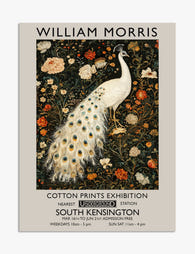
William Morris Peacock Elegance Art Print
Translation missing: en.products.product.sale_price From CHF 16.00CHF 22.00 -

Peacock Elegance by William Morris Canvas Print
Translation missing: en.products.product.sale_price From CHF 61.00CHF 87.00 -

William Morris Peacock Art Print
Translation missing: en.products.product.sale_price From CHF 16.00CHF 22.00 -
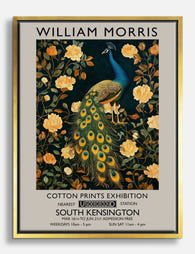
Peacock Elegance by William Morris Canvas Print
Translation missing: en.products.product.sale_price From CHF 61.00CHF 87.00 -

William Morris Peacock Elegance Art Print
Translation missing: en.products.product.sale_price From CHF 16.00CHF 22.00 -

William Morris Peacock Elegance Art Print
Translation missing: en.products.product.sale_price From CHF 16.00CHF 22.00 -

William Morris Peacock Canvas Print
Translation missing: en.products.product.sale_price From CHF 61.00CHF 87.00 -

William Morris Peacock Elegance Art Print
Translation missing: en.products.product.sale_price From CHF 16.00CHF 22.00 -

William Morris Peacock Canvas Print
Translation missing: en.products.product.sale_price From CHF 61.00CHF 87.00 -
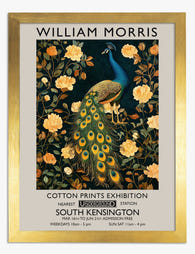
William Morris Peacock Elegance Art Print
Translation missing: en.products.product.sale_price From CHF 16.00CHF 22.00 -

William Morris Peacock Elegance Art Print
Translation missing: en.products.product.sale_price From CHF 16.00CHF 22.00 -

William Morris Peacock Elegance Art Print
Translation missing: en.products.product.sale_price From CHF 16.00CHF 22.00 -

William Morris Peacock Elegance Canvas Print
Translation missing: en.products.product.sale_price From CHF 61.00CHF 87.00 -

William Morris Peacock Elegance Canvas Print
Translation missing: en.products.product.sale_price From CHF 61.00CHF 87.00


More from The Frame

Building a William Morris Gallery Wall: Layouts...
Gallery walls go wrong when people guess. With William Morris prints, where every design is already busy with leaves, vines and birds, guessing gets expensive. This guide gives you specific...

Arts and Crafts Botanical Art: Why Morris's Lea...
Trends in wall art now turn over faster than ever. A pattern goes viral in spring, floods every feed by summer, and looks dated by Christmas. Morris's leaf designs, drawn...

William Morris Patterns Explained: What Each Ga...
If you've ever scrolled through a Morris collection and felt all the patterns blur into one botanical haze, you're not alone. The differences between Honeysuckle, Jasmine and Bower are genuinely...