
 Order today for delivery by
 The Strawberry Thief: Everything You Need to Know Before Buying Morris's Most Famous Print
The definitive guide to choosing the right colourway, size and finish for Morris's most-loved bird print.


Strawberry Thief is the William Morris design people search for by name. It's also the one most often bought badly: wrong size, wrong colourway for the room, wrong print quality for a pattern this intricate. This guide walks you through every decision before you click buy.
The story behind Strawberry Thief (and why it endures)
Morris designed Strawberry Thief in 1883, inspired by the song thrushes he watched stealing fruit from the kitchen garden at Kelmscott Manor, his country house in Oxfordshire. Rather than shoo them away, he found the whole scene charming enough to build a pattern around it. The result is a mirrored arrangement of thrushes, strawberries, and curling foliage, dense but perfectly balanced.
The design was technically ambitious for its time. Morris insisted on using the indigo discharge method to achieve the deep blue ground, a process so slow and expensive that Strawberry Thief became one of the most costly furnishing fabrics of his career. He was reportedly delighted every time a wealthy customer paid the premium.
That combination of naturalist observation and craft obsession is why the pattern still works nearly 150 years later. It reads as decorative from across the room and as narrative up close, which is exactly what you want from a print you're going to live with.

Original vs charcoal vs slate: understanding the colourways
There is genuine confusion about which Strawberry Thief you're actually looking at online, so here's the plain version.
The original (indigo and red)
The 1883 original has a deep indigo ground with cream birds, red strawberries, and green foliage. It's the version in the V&A collection and the one most people picture when they hear the name. It reads rich and traditional, and it holds its own against dark woods, brass, and warm neutrals.
Charcoal
The charcoal colourway swaps the indigo for a near-black ground, with the foliage and birds rendered in more muted tones. It reads distinctly more modern than the original. If you like Morris's pattern language but your interior is contemporary rather than period, this is usually the one.
Slate (sometimes called Simply Strawberry Thief)
Slate is a lighter, cooler variation with a soft grey-blue ground and gentler contrast between the elements. Some retailers call this Simply Strawberry Thief, which was originally the name of a wallpaper version by Morris & Co. In print form, it behaves as a lighter, more airy option that suits pale rooms where the original would feel too heavy.
To settle the recurring question: slate and charcoal are not the same. Charcoal is darker and higher contrast. Slate is lighter and cooler. If a listing shows a black-ground version, it's charcoal. If it shows grey-blue, it's slate.
Quick rule: original for traditional and warm interiors, charcoal for modern and dramatic, slate for pale and Scandinavian-leaning rooms.
What size Strawberry Thief print to choose for your space
Strawberry Thief has more visual weight than lighter Morris designs like Willow Bough. The dark ground and dense detail mean it commands more attention at any given size, so you generally want to go one size larger than you might for a simpler pattern.
Above a sofa
For a standard 200cm three-seater, we'd recommend 70x100cm in portrait or 100x70cm in landscape. A 60x80cm print will look undersized here, which is the single most common Strawberry Thief mistake. If you have the wall for it, a canvas at 100x150cm works beautifully as a proper statement piece.
Above a bed
Above a standard double, aim for 60x80cm or 70x100cm centred on the headboard. Above a king, go straight to 70x100cm. The pattern is symmetrical, which makes it forgiving to centre.
In a hallway or narrow wall
A 50x70cm framed print works well at eye level in a hallway. Anything smaller and you'll lose the detail that makes the design worth buying in the first place.
On a gallery wall
If you're building a gallery wall, use Strawberry Thief as the anchor at 50x70cm or 60x80cm and build smaller Morris prints around it. Don't try to make it a supporting piece. It won't behave.
The general principle: this is a design that rewards scale. Small Strawberry Thief looks fussy. Large Strawberry Thief looks considered.

Framed vs unframed vs canvas: our recommendation
Most guides hedge on this. We won't.
For Strawberry Thief, we recommend framed. The pattern is dense and detailed, and framing gives it the visual containment it needs to read properly on a wall. An unframed print, even a beautiful one, tends to make Strawberry Thief feel like it's floating rather than sitting.
A black frame works with charcoal. A natural oak or warm wood works with the original indigo. A pale ash or white frame suits the slate colourway. All of our William Morris art prints come with solid FSC-certified wood frames, UV-protective acrylic glaze rather than glass (lighter, no glare, and it protects the print from fading), and fixtures already attached so you can hang the thing the day it arrives.
Canvas is a legitimate choice if you want a softer, less formal feel or you're hanging in a humid space like a bathroom or kitchen where framed prints under glazing can be more temperamental. Our canvas uses mirrored edge wrapping, so none of the pattern gets cropped around the sides, which matters for a design this symmetrical.
Unframed paper prints are the cheapest route and fine if you already own a frame you love. Just be honest with yourself about whether you'll actually get round to framing it. Most people don't.
One thing worth flagging: a common failure in this category is prints and frames shipping separately, arriving warped, or being poorly fitted so the paper bubbles behind the glazing. That's not what happens here. Everything ships together in one box, properly fitted, ready to hang.
The best rooms and wall colours for Strawberry Thief
Living rooms
The original indigo colourway sings against warm neutrals: bone, oatmeal, mushroom, or a soft clay. It also works surprisingly well against a deep green wall, which picks up the foliage tones without competing. Charcoal Strawberry Thief looks striking against off-white or a dusky pink. Slate belongs on pale walls: soft grey, warm white, or pale blue.
Avoid hanging any version of Strawberry Thief on a heavily patterned wallpaper. This is a busy design and it needs a plain ground to breathe.
Bedrooms
Bedrooms are where Strawberry Thief comes into its own. The pattern reads as calming from a distance, and there's real pleasure in noticing new details as you're lying in bed. Charcoal against a deep navy or forest green wall is our favourite combination. Original indigo against warm white also works beautifully.
Kitchens and dining rooms
The strawberry motif makes this an obvious kitchen choice, and it's one of the few places where a smaller print (say 40x50cm) can work, as long as it's hung close to eye level on a narrow wall or above a dresser. Slate is particularly good in a bright kitchen.
Hallways and studies
Strawberry Thief in a hallway is a quietly confident choice. It's a design guests will notice and comment on, which is what you want in a transitional space. In a study, the original colourway pairs beautifully with dark wood and leather.

Pairing Strawberry Thief with other Morris prints
Strawberry Thief is a lead act, not a supporting one. If you're building a set, it needs companions that complement its density rather than compete with it.
Good pairings from Morris's bird art prints and animal art prints catalogue include Brer Rabbit (similar visual weight, similar palette, works as a natural pair), Bird & Anemone (lighter but shares the ornithological theme), and Peacock and Dragon (rich and dense, but different enough to avoid feeling repetitive).
For floral art prints to pair, consider Pimpernel or Chrysanthemum in complementary colourways. Both have enough structural pattern to hold their own next to Strawberry Thief without echoing it too closely.
Avoid pairing Strawberry Thief with other high-contrast bird designs at similar scales. Two versions of a similar idea on the same wall reads as indecision, not curation.
A three-print arrangement we like: Strawberry Thief at 70x100cm as the centrepiece, with two 50x70cm supporting prints in coordinating colourways flanking it. Keep the frames identical across all three.
Why print quality matters more with intricate designs like this
Here's the part most guides skip. Strawberry Thief has more detail per square centimetre than almost any other Morris design in wide circulation. The thrushes' feathers, the strawberry seeds, the tiny curling tendrils of the foliage: all of it needs to be printed sharp or the whole thing collapses into visual mud.
What to look for in a reproduction:
Giclée printing. This is the museum-standard inkjet process using pigment-based inks. It preserves fine detail and produces colours that stay accurate over decades. If a seller doesn't specify giclée, assume they're using a cheaper commercial press process that will lose detail in the darker areas of the pattern, which is exactly where Strawberry Thief lives.
Thick matte paper. Glossy paper creates reflections that fight with the pattern's detail. Thin paper feels cheap and can warp behind glazing. You want proper archival matte paper with real weight to it.
Archival, UV-stable inks. Strawberry Thief has red strawberries and green foliage sitting on a dark ground. Cheap inks will fade unevenly, with the reds going first, leaving you with a muted, off-colour print within a few years. Museum-grade inks last hundreds of years, even in direct sunlight.
Colour accuracy. The original indigo of Morris's design is very specific. Cheap reproductions often shift it toward black (killing the depth) or toward purple (killing the authenticity). Look for sellers who show real product photography, not just the digital artwork file, and who offer a proper returns window if the colour isn't what you expected. Our 99-day returns policy exists for exactly this reason.
Regarding authenticity: Strawberry Thief is in the public domain, so no one needs a Morris & Co. licence to reproduce it. What matters is print quality, not licensing status. A well-printed public domain reproduction on museum-grade paper will always look better than a poorly printed licensed version.

The short version
Buy the original indigo if your interior is warm and traditional. Buy charcoal if it's modern and dramatic. Buy slate if it's pale and airy. Go at least 70x100cm above any full-sized sofa or bed. Choose framed unless you have a specific reason not to. Insist on giclée printing and archival matte paper, because this pattern punishes shortcuts.
Get those five decisions right and Strawberry Thief will be one of the pieces you never get tired of looking at.

Fab products featured in this blog
-

Strawberry Thief Exhibition by William Morris Art Print
Translation missing: en.products.product.sale_price From CHF 16.00CHF 22.00 -

Strawberry Thief by William Morris Art Print
Translation missing: en.products.product.sale_price From CHF 16.00CHF 22.00 -

Strawberry Thief by William Morris Canvas Print
Translation missing: en.products.product.sale_price From CHF 62.00CHF 88.00 -

Strawberry Thief Exhibition by William Morris Canvas Print
Translation missing: en.products.product.sale_price From CHF 62.00CHF 88.00 -

Strawberry Thief by William Morris Art Print
Translation missing: en.products.product.sale_price From CHF 16.00CHF 22.00 -

Strawberry Thief by William Morris Art Print
Translation missing: en.products.product.sale_price From CHF 16.00CHF 22.00 -

Strawberry Thief by William Morris Canvas Print
Translation missing: en.products.product.sale_price From CHF 62.00CHF 88.00 -

Strawberry Thief by William Morris Art Print
Translation missing: en.products.product.sale_price From CHF 22.00CHF 39.00 -

Strawberry Thief by William Morris Canvas Print
Translation missing: en.products.product.sale_price From CHF 62.00CHF 88.00 -

Strawberry Thief by William Morris Canvas Print
Translation missing: en.products.product.sale_price From CHF 55.00CHF 91.00 -

Strawberry Thief by William Morris Art Print
Translation missing: en.products.product.sale_price From CHF 16.00CHF 22.00 -
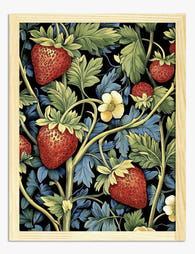
Strawberry Thief Garden by William Morris Art Print
Translation missing: en.products.product.sale_price From CHF 16.00CHF 22.00 -

Strawberry Thief by William Morris Canvas Print
Translation missing: en.products.product.sale_price From CHF 62.00CHF 88.00 -

Strawberry Thief by William Morris Art Print
Translation missing: en.products.product.sale_price From CHF 16.00CHF 22.00 -

Strawberry Thief Garden by William Morris Canvas Print
Translation missing: en.products.product.sale_price From CHF 62.00CHF 88.00 -

Strawberry Thief by William Morris Canvas Print
Translation missing: en.products.product.sale_price From CHF 62.00CHF 88.00 -

William Morris Strawberry Fields Exhibition Art Print
Translation missing: en.products.product.sale_price From CHF 16.00CHF 22.00 -
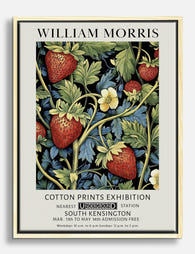
William Morris Strawberry Fields Exhibition Canvas Print
Translation missing: en.products.product.sale_price From CHF 62.00CHF 88.00 -

William Morris Strawberry Exhibition Poster Art Print
Translation missing: en.products.product.sale_price From CHF 16.00CHF 22.00 -

William Morris Strawberry Exhibition Poster Canvas Print
Translation missing: en.products.product.sale_price From CHF 62.00CHF 88.00


More from The Frame

Our Favourite Jungle Prints for Every Room: The...
Jungle prints have a reputation problem. Done badly, they tip a room into themed-restaurant territory faster than almost any other trend. Done well, they add depth, movement and a sense...

Thrushes, Hares, and Peacocks: The Animals in W...
Why Morris put animals at the centre of his designs William Morris wasn't decorating walls with cute creatures. He was making a quiet argument. While Victorian factories churned out cheap,...

From Dutch Masters to Modern Minimalism: The Ke...
Search "types of flower bouquet art" and you'll get wedding centrepieces, posy guides, and cascading bridal arrangements. Useful if you're getting married. Useless if you're trying to choose what goes...