
 Order today for delivery by
 Beyond the Kitchen: 5 Unexpected Rooms Where Lemon Prints Look Brilliant
Why the fruit bowl deserves a promotion, and the five rooms where citrus art actually belongs.


Lemon art has a branding problem. Search for it online and you'll drown in kitchen shots: farmhouse signs, fruit bowls, tea towels with slogans. But a good lemon print is really just a study in yellow, green and Mediterranean light, and that works almost anywhere.
Why lemon art doesn't have to live in the kitchen
The kitchen association is lazy shorthand. Lemons appear in centuries of European still life, from Dutch Golden Age oil paintings to 19th century botanical plates. None of those were painted for kitchens. They were painted because lemons are beautiful objects: sculptural, saturated, structurally interesting.
The distinction that matters is between "lemon themed" and "lemon featured." Lemon themed means novelty: quote prints, cartoon fruit, "when life gives you lemons" typography. Lemon featured means the fruit is the subject of a serious piece of art, treated the way a painter would treat a pomegranate or a pear. The first belongs in a holiday rental. The second belongs anywhere you want warmth, light and a hit of Amalfi Coast energy.
Get the style right and lemon art stops reading as seasonal decor and starts reading as design. It works in January. It works in an adult living room. It works on a gallery wall next to abstract prints. You just need to stop treating it like a themed accessory.

Entryways and hallways: setting the tone with citrus
Entryways are the single most underused space for lemon art, which is odd, because they're the perfect fit. You want an entryway to feel warm and welcoming within two seconds of the door opening. Yellow does that faster than almost any other colour.
The rules here are about scale and restraint. In a narrow hallway, hang one confident print at eye level, roughly 145 to 150cm from the floor to the centre of the piece. Go bigger than feels comfortable: 50x70cm minimum, 70x100cm if the wall can take it. Small prints get swallowed by hallway proportions and end up looking like an afterthought.
For style, lean vintage or botanical. A single lemon branch study, or an antique Italian citrus plate reproduction, does more for a hallway than a cluster of small illustrated prints. If you've got a long hallway, resist the urge to line it with tiny frames. Two large prints spaced generously apart look far more considered.
Pair the yellow with something grounding on the walls or floor: a deep navy runner, a terracotta tile, a charcoal console. The lemon print becomes the point of light in an otherwise moody scheme. Browse hallway art prints for proportions that suit narrow spaces, and vintage art prints if you want that European hotel feeling from the moment guests walk in.
Bathrooms: small prints, big personality
Bathrooms are where lemon art earns its keep. They're usually short on natural light, tiled in white or grey, and starved of colour. A citrus print solves all three problems at once.
Canvas is the sensible choice here. Bathrooms are humid, and while our canvas prints aren't waterproof, the poly-cotton canvas stretched over a solid wood frame handles humidity better than paper behind glass. If you do want a framed print in a bathroom, hang it well away from the shower spray and make sure the room ventilates properly.
Scale down. Bathrooms are small rooms, so a 30x40cm or 40x50cm print above the toilet or beside the mirror is usually enough. Two prints stacked vertically on a narrow wall look brilliant and add height. Avoid anything with text or novelty framing: a bathroom is intimate space, and you'll be looking at that print every morning while brushing your teeth.
Colour-wise, lemon works beautifully against the classic bathroom palette. Yellow and white feels crisp. Yellow against pale blue tiles reads like a Portuguese guesthouse. Yellow against warm terracotta or unlacquered brass fittings feels rich and grown up. Skip yellow against beige, which flattens everything out.

Dining rooms: creating a Mediterranean mood
If there's one room where lemon art earns instant sophistication, it's the dining room. The connection between citrus and eating is old and honest: sliced lemons on a table, a bowl of fruit as a centrepiece, the whole Southern European tradition of long lunches under a pergola. Lemon art in a dining room isn't decorative, it's contextual.
Go big here. This is not the place for a 30x40cm print. A dining room needs a piece that holds its own against the table, and that generally means 70x100cm or larger. Our canvas goes up to 100x150cm, which is the right scale for anything above a six-seater table.
One large print centred on the main wall usually beats a gallery arrangement. The exception is if you have a long dining table against a long wall, in which case two matching large prints spaced apart, or a horizontal triptych of related citrus studies, works exceptionally well.
Framing matters more in dining rooms than anywhere else because the light is often warm and directional (candles, pendant lights, low sun). Light oak frames read casual and coastal. Black frames read graphic and modern. Thin gold frames read old-money-Italian. Avoid ornate gilt: it tips over into holiday-let territory fast.
For colour pairings, dining rooms give you licence to be bold. Lemon prints look extraordinary against deep sage green walls, dusty blue, warm terracotta, and even the currently-fashionable burgundy. The one combination to avoid is bright buttery yellow walls with lemon art, which is too much of the same thing.
Living rooms: how to make lemon art feel sophisticated, not novelty
The living room is where most people hesitate, and reasonably so. This is the room your guests judge you on. If your lemon art looks like it belongs in a beachside café, you've made a mistake.
Three rules keep living room lemon art on the sophisticated side of the line.
First, style ruthlessly. Vintage botanical illustration and fine art still life work. Illustrated cartoon lemons, watercolour "sunshine" quotes and photographic close-ups of a single lemon do not. If the print would look at home in a natural history museum or a 1950s Italian villa, it belongs in your living room. If it would look at home on a tea towel, it doesn't.
Second, respect scale. Living rooms need statement art. Above a three-seater sofa, you want something at least 70x100cm, or a pair of 50x70cm prints hung side by side. Anything smaller floats and looks provisional.
Third, pair it with grown-up company. A single lemon print above a sofa can feel isolated. Balance it with an abstract print, a landscape, or a piece of figurative art in a gallery arrangement. The lemon becomes one voice in a conversation rather than the whole statement. Explore botanical art prints for other subjects that pair naturally with citrus without matching too obviously.
Colour palettes for living rooms with lemon art: soft grey walls with warm wood, off-white with black accents, sage green with brass, deep navy with cream. The lemon is the accent, not the theme. If the whole room is yellow and lemon-referencing, you've overshot.

Home offices and reading nooks: the case for warm colour on your sightline
There's a mood argument for lemon art in workspaces that most decor guides miss. Yellow is a genuinely energising colour, well documented in colour psychology as a mood lift. Put a lemon print in your direct sightline from your desk and you get a small, reliable hit of warmth every time you look up from your screen.
Home offices tend to be practical rooms with a lot of grey (monitors, keyboards, neutral walls). A single vibrant lemon print breaks up the visual monotony without being distracting the way a busy landscape or portrait might be. Botanical studies work particularly well because they read as calm and considered, not stimulating in a chaotic way.
Size-wise, aim for 40x50cm or 50x70cm on the wall behind your monitor, or a slightly larger piece on an adjacent wall. Hang it high enough that it's visible above your screen when you're seated.
Reading nooks are similar. A small armchair with a lamp needs one thing on the wall behind it, ideally something warm. A single lemon print in a light wood frame does that job perfectly, and pairs well with the natural leather, wool and linen you tend to find in a well-designed reading corner.
Skip anything with text in a workspace. You'll read it involuntarily, over and over, and it'll drive you mad by month three.
Picking the right style: vintage, botanical, or illustrative
The whole argument for lemon art outside the kitchen collapses if you choose the wrong style, so this is worth getting right.
Vintage still life
The gold standard for sophisticated rooms. Reproductions of oil paintings, antique Italian market posters, faded French botanical plates. These work in living rooms, dining rooms and hallways because they carry weight and history. Look for muted colour palettes rather than saturated ones: aged cream backgrounds, deep olive foliage, lemons that look slightly imperfect. See vintage art prints for the reference points.
Botanical illustration
The most versatile category. Fine line drawings and watercolour studies of lemon branches, blossoms and cross-sections. These read as scientific and considered rather than decorative. They work in offices, bathrooms, hallways and living rooms, and they pair beautifully with other botanical prints for gallery walls. Framed in light oak with a generous white mount, they look museum-grade.
Photographic
Riskier. A hyper-close-up macro shot of a lemon can feel too commercial. But a moody photograph of a lemon tree in an Italian garden, or a still life composition on a linen tablecloth, can be extraordinary. The test: does it look like a photograph, or does it look like a stock image?
Illustrative and typographic
Save for children's rooms, playful utility spaces or, if you must, the kitchen. "When life gives you lemons" prints, cartoon lemons with faces, bright graphic patterns. These aren't wrong, they're just not what we're talking about when we say lemon art belongs in the living room.

Framing choices, briefly
Light oak: coastal, relaxed, works everywhere.
Black: graphic, modern, best in living rooms and hallways.
Slim gold or brass: elevated, European, best in dining rooms and bathrooms.
Ornate gilt: leave it.
Our framed prints ship ready-hung with UV-protective acrylic glaze, so the yellow won't fade even in a sunny south-facing dining room. That last bit matters more than people realise: cheap prints in sunny rooms lose their colour within a couple of years, and yellow is the first pigment to go.
A quick word on when not to use lemon art
Bedrooms, generally. Yellow is stimulating, and bedrooms want to be calm. There are exceptions (guest bedrooms, cheerful children's rooms) but as a rule, keep citrus out of the master bedroom.
Rooms that are already saturated with colour. If your living room has emerald walls, a mustard sofa and a persimmon rug, adding lemon art tips the whole thing into chaos. Lemon works best when it's the accent, not another competing voice.
Rooms with no natural light at all. Yellow needs some daylight to sing. In a windowless downstairs loo, a lemon print looks dull rather than fresh. Pick a subject that reads well under lamp light instead.
The takeaway
Choose vintage or botanical over illustrative. Size up rather than down. Frame in light oak, black or slim gold depending on the room's formality. Pair with grounded colours (sage, navy, terracotta, warm grey) rather than more yellow. Give it space to breathe on the wall.
Do that, and your lemon art prints will look at home in your hallway, above your dining table, or behind your desk, and they'll still be doing that job in ten years. Not seasonal. Not novelty. Just good art that happens to feature a very beautiful fruit.

Fab products featured in this blog
-

Lemon Branch Study Art Print
Sale price From €16,95€23,95 -

Lemon Branch Study Art Print
Sale price From €16,95€23,95 -

Big Yellow Lemon and Slice Art Print
Sale price From €16,95€23,95 -

Lemon Branch Linework Art Print
Sale price From €16,95€23,95 -

Lemon Branch Study Canvas Print
Sale price From €65,95€93,95 -

Amalfi Lemons Art Print
Sale price From €16,95€23,95 -

Lemon Stamp Art Print
Sale price From €16,95€23,95 -

Sunlit Lemons Still Life Art Print
Sale price From €16,95€23,95 -
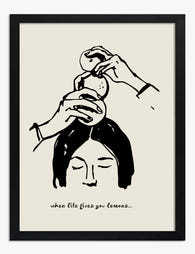
When Life Gives You Lemons Art Print
Sale price From €16,95€23,95 -

Fruit Market Lemons Art Print
Sale price From €16,95€23,95 -

Fruit Market Lemons Canvas Print
Sale price From €65,95€93,95 -

Big Yellow Lemon and Slice Canvas Print
Sale price From €65,95€93,95 -
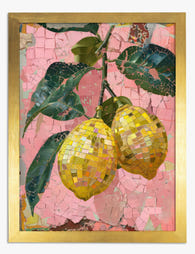
Mosaic Lemons on Pink Art Print
Sale price From €16,95€23,95 -

Patio Lemons & Leaves Art Print
Sale price From €16,95€23,95 -

Lemon Stamp Canvas Print
Sale price From €65,95€93,95 -

Lemon Branch Linework Canvas Print
Sale price From €65,95€93,95 -

Bright Lemon and Slice Art Print
Sale price From €16,95€23,95 -

Amalfi Lemons Canvas Print
Sale price From €65,95€93,95 -

Fruit Market Lemons Art Print
Sale price From €16,95€23,95 -

Lemons in a Green Bowl Art Print
Sale price From €16,95€23,95


More from The Frame

Lemon Art for the Kitchen: Where to Hang It, Wh...
Lemon art has quietly become the most-requested kitchen subject of the last few years, and for good reason. This guide skips the styled-shelf inspiration and gets straight to the decisions...

Why Do Palm Prints Work So Well in Minimalist B...
Palm prints have a reputation problem. Say the words and most people picture tiki bars, holiday postcards, and hot pink flamingos. Done properly, though, palm art is one of the...

9 Vintage House Decor Ideas That Start With Wha...
Most vintage decor advice starts with the wrong thing. It tells you to hunt flea markets, install crown moulding, or refinish a dresser before you've decided what the room is...