
 Smiles Guaranteed
 Order today for delivery by
 Art Print vs Poster: Why the Difference Matters More Than You Think
The quality differences are real, often invisible in product photos, and entirely fixable once you know what to look for.


A poster and an art print can look almost identical on screen. In your living room, two years in, they look nothing alike. One has held its colour and still feels considered on the wall. The other has gone slightly yellow, curled at the corners, and started to feel like something you should have replaced already.
The real difference between an art print and a poster
A poster is mass-produced on thin paper using a four-colour printing process designed for speed and volume. The goal is to get an image onto a wall cheaply. Posters are usually printed on stock between 130 and 170 GSM, with standard CMYK inks, and finished with a glossy coating that catches light from every angle.
An art print is a different object entirely. It uses heavier paper (200 GSM and up), a giclée printing process with more ink colours for smoother gradients, and pigment-based inks designed to resist fading. The paper has a proper finish, usually matte, sometimes textured, that you can feel between your fingers.
The visible difference comes down to three things: depth of colour, sharpness of detail, and how the surface reacts to light. A good art print absorbs light rather than bouncing it back at you. The blacks look genuinely black. The shadows have detail in them rather than blocking out into mud.
This matters because most shoppers asking what are art prints are really asking a different question: will this look good on my wall, and will it still look good in five years? The honest answer depends almost entirely on what you buy, not the image itself.

Paper weight and finish: why it matters more than you think
Paper weight is the single easiest quality check you can perform. Pick up a print, or read the listing carefully. Anything below 200 GSM is poster territory. 200 to 250 GSM is the entry point for proper art prints. 300 GSM and above is what you'd find in a gallery shop.
Heavier paper does three things. It resists curling and warping (especially important if you ever plan to frame the print yourself). It feels substantial when handled, which translates to a more considered look on the wall. And it holds ink differently, with deeper colour saturation because the paper isn't immediately bleeding through.
Finish matters almost as much as weight. There are three main options worth knowing.
Matte is the gallery default. No glare from windows or lamps, soft surface, colours read as solid rather than shiny. This is what we use across our prints because it works in almost every room and lighting condition.
Glossy is photo-paper territory. Sharp, punchy, but reflective. Useful for high-contrast photography, frustrating in any room with overhead lighting.
Textured (sometimes called fine art or cotton rag) has a slight tooth to it that mimics watercolour paper. Brilliant for paintings and illustrations, less suitable for photography.
If a listing doesn't mention paper weight or finish at all, that's a red flag. Quality sellers tell you because it's a competitive advantage. Vague language like "premium paper" with no GSM number usually means the number isn't worth quoting.
Giclée printing vs standard digital printing
Giclée (pronounced zhee-clay) is a printing method, not a marketing term, although it gets used as both. The actual technical difference is in the printer.
Standard digital printing, the kind used for posters, uses four ink colours: cyan, magenta, yellow, and black. Giclée printers use eight, ten, or twelve. More ink colours mean smoother gradients, more accurate colour matching, and far better results in difficult tonal ranges like skin tones, skies, and deep shadows.
You see the difference most clearly in two places. Gradients (a sky fading from pale blue to deep indigo) appear smooth on a giclée print and slightly banded on a standard print. And subtle colour shifts (the difference between sage and olive, or terracotta and rust) are preserved on a giclée print and flattened on a standard one.
The other giclée advantage is droplet size. Giclée printers spray microscopic droplets of ink, which means sharper detail when you stand close to the print. Posters look fine from across the room and start to break down at arm's length. A proper giclée print looks better the closer you get.
This is why we print everything giclée on thick matte paper. The art holds up to scrutiny, which matters because people do walk over and look closely at things hanging on your walls.

How inks affect colour and longevity
Two prints can come off the same printer and age completely differently depending on the inks used. There are two categories worth knowing.
Dye-based inks are cheaper, brighter on day one, and prone to fading. They sit on top of the paper rather than bonding with it. In direct sunlight, dye-based prints can show visible fading within 12 to 24 months. Even in indirect light, you'll see meaningful colour shift within five years.
Pigment-based inks are made of microscopic solid particles that bond into the paper fibres. They cost more, look slightly less aggressively bright on day one (which is a feature, not a bug, because the colour is more accurate), and resist fading for decades. Museum-grade pigment inks are rated for hundreds of years of colour stability under normal indoor lighting conditions.
This is the single biggest reason a £15 poster and a £60 art print can look identical in week one and completely different in year three. The cheap one fades. The good one doesn't.
If you're shopping for affordable art prints, the ink question is the one to push on. Sellers using pigment-based archival inks will tell you. Sellers using dye-based inks will use vague language like "vibrant colours" or "high-quality printing" without specifying.
We use water-based pigment inks rated for hundreds of years even in direct sunlight. The UV-protective acrylic glaze on our framed prints adds another layer of protection, which matters if your wall gets afternoon sun.
The framing problem: why cheap frames ruin good art
This is where most affordable art print purchases go wrong. You spend £40 on a beautiful print, then £15 on a flimsy frame from a high street shop, and the whole thing looks worse than the print did rolled up in its tube.
Cheap frames have a few telltale problems. The mouldings are MDF or plastic dressed up to look like wood, and they warp slightly within a few months, especially in humid rooms or near radiators. The backing boards are thin cardboard that bows under tension, pulling the print out of flat. The glazing is often standard glass, which adds significant weight and reflects light aggressively.
The other framing trap is buying a print and frame separately, then having them shipped in different boxes. The print arrives flat. The frame arrives needing assembly. You spend an hour fitting them together, usually at a slight angle, and the result looks homemade in the wrong way.
The fix is buying prints already framed and fitted by the seller. Our framed art prints ship in one box with the print already mounted in a solid FSC-certified wood frame, fixtures attached, ready to hang. No MDF, no veneers, no assembly. The acrylic glaze is lighter than glass and won't shatter if you knock the frame off the wall during a move.
Trade-off worth naming: framed prints are heavier than unframed prints and cost more. If you're a renter who moves often, or you want maximum flexibility for swapping art around, an unframed print or a canvas might suit you better. If you want the polished, gallery-finished look on your wall, framed is worth the extra.
What 'museum-grade' actually means (and why it matters in your living room)
"Museum quality" gets thrown around constantly, mostly by sellers who can't define it. Here's what it actually means.
Museum-grade refers to materials and processes that meet archival standards used by actual museums and galleries for preserving art. The criteria are specific: acid-free paper that won't yellow over time, pigment-based inks rated for at least 100 years of colour stability, and (where relevant) UV-filtering glazing on framed pieces.
The 80-year test is a useful frame for thinking about this. If you bought a print today and put it on a wall in a normally lit room, would it still look essentially the same in 80 years? For a poster, no. The paper would yellow, the inks would shift, the corners would foxing. For a museum-grade print, yes. The colour might shift very slightly, but the print would be recognisably the same object.
You don't need archival quality because you're building a collection to pass down. You need it because spending £80 on something that looks bad in three years is worse value than spending £80 on something that looks good in twenty.

How to buy affordable art prints without sacrificing quality
The good news: the gap between "cheap poster" and "genuinely good print" is much smaller than the gap between "good print" and "fine art investment piece." You can buy properly made art for £50 to £150 that will look excellent for decades. Here's how to do it without overpaying or getting burned.
What you get at each price point
Under £30. Almost always poster territory. Thin paper, dye-based inks, basic four-colour printing. Fine for student flats, kids' rooms, or anywhere you'll happily replace the print in two years. Don't frame it expensively, you'll spend more on the frame than the print.
£30 to £75. This is the sweet spot for renters and first-time buyers. Look for 200+ GSM paper, giclée printing, and pigment-based inks. Available unframed or with simple frames. The art will look properly considered on the wall and last at least a decade without visible fading.
£75 to £200. Premium territory. Heavier paper (250 to 300 GSM), full archival inks, solid wood frames with proper acrylic glazing, ready to hang out of the box. This is what you buy for the room you spend the most time in.
£200 and up. Larger sizes (70x100cm and above), limited edition prints, or premium framing. Worth it for statement walls and primary living spaces.
Quality checks before you buy
Read the product description carefully. Look for specific paper weight in GSM, the printing method (giclée or fine art digital), the ink type (pigment-based or archival), and the frame material (solid wood, not MDF or "engineered wood"). If any of these are missing, ask. Quality sellers will tell you. Vague answers are an answer in themselves.
Check the returns policy. Good prints look better in person than on screen, and most sellers worth buying from offer generous returns because they know the product holds up. We offer 99 days because we'd rather you live with a print for a few weeks before deciding.
Look at the size honestly. A print that looks impressive on a website at 30x40cm often looks small on a real wall. For a feature piece above a sofa or bed, you want at least 60x80cm. For a gallery wall, mix sizes but include at least one piece at 50x70cm or larger.

The framing decision
If you're buying affordable art and want the polished look, buying framed-as-standard from the seller is almost always cheaper than buying unframed and framing separately. The maths is simple: a custom frame from a high street shop costs £60 to £120 for a medium-sized print. A print that arrives already framed in solid wood for £90 total is a better deal and a better-looking object.
If you'd rather keep things flexible and minimal, an unframed print pinned or clipped to the wall has a casual, considered look that suits a lot of modern interiors. A canvas print is the third option: lighter than a framed print, no glazing to worry about, and the mirrored edge wrapping means you don't lose any of the image.
The point of all this isn't to turn you into a print snob. It's to give you the information to spend £80 once, properly, instead of £30 three times badly. Good art on the wall changes how a room feels. Cheap art on the wall changes how a room feels too, just not in the direction you wanted.

Fab products featured in this blog
-

Vintage Floral Exhibition Poster Canvas Print
Translation missing: en.products.product.sale_price From €54,95€91,95 -

Every Step Matters Poster Canvas Print
Translation missing: en.products.product.sale_price From €54,95€91,95 -

Vintage Bicycle Race Poster Art Print
Translation missing: en.products.product.sale_price From €14,95€24,95 -

Meaningful Connections Art Print
Translation missing: en.products.product.sale_price From €14,95€24,95 -

Vintage Bicycle Race Poster Canvas Print
Translation missing: en.products.product.sale_price From €54,95€91,95 -
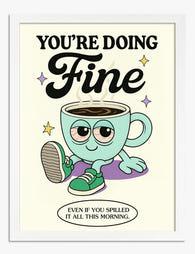
Youre Doing Fine Poster Art Print
Translation missing: en.products.product.sale_price From €14,95€24,95 -

Retro Japanese Rose Poster Art Print
Translation missing: en.products.product.sale_price From €14,95€24,95 -

Playful Peach Nice Poster Art Print
Translation missing: en.products.product.sale_price From €14,95€24,95 -

Nice Peach Pop Poster Art Print
Translation missing: en.products.product.sale_price From €14,95€24,95 -

Kitten Bath Time Joy Art Print
Translation missing: en.products.product.sale_price From €14,95€24,95 -

Vintage Cycle Race Poster Art Print
Translation missing: en.products.product.sale_price From €14,95€24,95 -

Who Matters Most Canvas Print
Translation missing: en.products.product.sale_price From €54,95€91,95 -
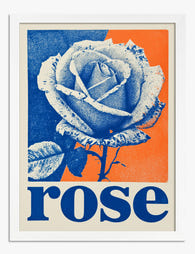
Retro Pop Rose Poster Art Print
Translation missing: en.products.product.sale_price From €14,95€24,95


More from The Frame

How to Build a Dog-Themed Gallery Wall That Loo...
Loving your labrador is not a design problem. Decorating a wall with eight prints of one is. This guide gives you the rules, the layouts, and the exact size combinations...

Building a Gallery Wall Around Vase Art Prints
Vase prints are the most underrated anchor subject in wall art. The vertical shape gives a gallery wall a built-in compositional spine, and the painterly subject matter sits comfortably alongside...

How to Build a Music Gallery Wall That Actually...
Most music gallery walls fail for the same reason: they're built one print at a time, with no plan. This guide gives you the measurements, the layout templates and the...