
 Order today for delivery by
 Stop Hanging Tropical Prints Wrong: A Room-by-Room Fix
Room-by-room rules for sizing, placement, and frames that keep palm prints chic instead of tiki bar.


Tropical prints have a reputation problem. Hung well, they bring depth, calm, and a sense of slow afternoons into a room. Hung badly, they tip a space straight into 1990s resort lobby, and most styling advice online is too vague to help you avoid it.
This guide fixes that. Specific sizes, specific heights, specific frame choices, room by room.
Why tropical prints work in almost any room (when you get the balance right)
Tropical art is, at its core, botanical art with a holiday accent. A monstera leaf is structurally not that different from a fig branch or an oak study. The shapes are bold, the negative space is generous, and the palette tends towards greens, sand, terracotta, and ink black. All of which sit comfortably alongside modern interiors.
The trick is treating tropical prints as botanical first, themed second. The moment you start adding wicker, bamboo trim, parrot cushions and a pineapple lamp, you've crossed into pastiche. One strong tropical print in a clean frame, in a neutral room, will always look more expensive than five themed pieces fighting each other.
Scale matters too. Tropical foliage is large in real life, so the prints want room to breathe. Tiny prints of huge leaves feel apologetic. Give them space.

Living rooms: sizing, placement above the sofa, and gallery wall options
The living room is where most tropical prints end up, and where most get hung too small and too high.
Sizing above the sofa
The professional consensus, and the one we agree with, is that art above a sofa should be roughly two-thirds the width of the sofa. So for a standard three-seater of around 210cm, you're looking for art that spans 140cm or so. That can be one statement piece or a pair sitting side by side.
In Fab sizes, that usually means:
- A single 70x100cm framed print, hung portrait, for a two-seater
- A 100x150cm canvas for a three-seater, hung landscape, if you want one hero piece
- Two 50x70cm framed prints hung 5 to 8cm apart for a softer, more curated look
How high to hang it
Centre of the artwork should sit roughly 145 to 150cm from the floor, which puts it at average eye level. Above a sofa, leave a gap of 15 to 25cm between the top of the sofa back and the bottom of the frame. Closer than 15cm feels cramped. Wider than 25cm and the art starts to float off on its own.
Gallery wall options
A tropical gallery wall works best when you mix scales rather than repeat them. Try one large print of a banana leaf or palm, paired with two smaller botanical studies and one piece of negative space art, like a minimalist beach horizon. Browse tropical art prints and beach art prints together to build that mix without everything looking matched.
Stick to two frame finishes maximum across the wall. Three or more starts to look accidental.
Bedrooms: creating calm with tropical botanical prints
Bedrooms are where tropical prints really earn their keep, because the genre at its quietest is essentially botanical, and botanicals are inherently restful.
Above the bed sizing
For a standard UK double (135cm wide), look for art around 90cm wide. For a king (150cm), aim for 100 to 120cm. For a super king (180cm), go to 120 to 150cm wide or hang a pair.
Specifically:
- Double bed: one 60x80cm framed print, or two 40x50cm prints side by side
- King: one 70x100cm framed print, or three 30x40cm prints in a row
- Super king: a 100x150cm canvas, or two 50x70cm prints with a 10cm gap
Hang the bottom of the frame 15 to 20cm above the headboard. If you don't have a headboard, treat the pillows as the reference point.
Choosing the print
For tropical prints for bedroom walls, lean towards monochrome or muted. A black and white palm study, a soft sage monstera, a sandy beach scene in faded tones. Save the saturated colour for living areas. You want to wake up to something restful, not something shouting at you in turquoise.
Pieces from the botanical art prints collection sit beautifully alongside tropical work and stop the room feeling like a themed suite.

Bathrooms and hallways: the underrated spots for tropical art
These are the rooms where tropical prints make the most sense and where almost nobody puts them.
Bathrooms
A tropical print in a bathroom feels obvious in the best way. Plants love humidity, the imagery reads as fresh, and bathrooms tend to be small enough that one well-chosen piece can transform the whole space.
The frame question is real here. A standard framed print can struggle in a heavily steamed bathroom over years of daily showers, and warping is a genuine risk with cheaper framing. Two practical options:
- A canvas print. Canvas is more forgiving in humid rooms because there's no paper sitting behind glass collecting condensation. The poly-cotton canvas finish on a stretched frame handles the environment well.
- A framed print in a smaller bathroom with good ventilation, hung away from direct shower spray. The UV-protective acrylic glaze (which we use instead of glass) also reduces the weight and shatter risk in a tiled room.
Sizing wise, a 40x50cm or 50x70cm piece above the towel rail or beside the mirror is usually plenty. Don't try to fill a bathroom wall with one giant print. It will feel close and overbearing.
Hallways
Hallways are usually narrow, often dark, and almost always under-decorated. Tropical art fixes all three problems because the imagery suggests light and depth even when the hallway itself has neither.
For long hallways, try a run of three or four 30x40cm prints, evenly spaced, all in the same frame. Repetition works in transitional spaces because you're walking past, not sitting and studying. Hang the centre line at 150cm and keep 10cm between frames.
For a small entryway, a single 50x70cm portrait orientation print at eye level beats anything smaller. Small art in small spaces just emphasises how little wall you have.
Home offices: why a tropical print beats a motivational quote
A motivational quote on the wall makes a home office feel like a LinkedIn header. Botanical art does the opposite. It softens the room, gives your eyes somewhere restful to land between tasks, and reads as adult.
The science of attention restoration (the consensus that brief glances at natural imagery reduce mental fatigue) supports putting greenery in your eyeline if you stare at screens all day. A real plant is ideal. A large tropical print is the next best thing and needs no watering.
Placement
If you're at a desk, hang the art so the centre sits roughly at your seated eye level, which is usually 110 to 120cm from the floor. Lower than for a standing room. The piece should be visible when you look up from the screen, not behind you on Zoom calls (unless you actively want it there, which is fine too).
Sizing
For a standard desk against a wall, a 50x70cm framed print works well. If you're styling for video calls, a portrait orientation print just off to one side, with a plant on the other, gives a balanced, lived-in backdrop without trying too hard.
This is also a good spot for nature art prints more broadly. A misty fern, a single banana leaf on cream, a quiet beach study. Tropical without tropics.

Frame and colour choices that keep things modern
This is where most tropical decor ideas go off the rails. The print might be beautiful, but a heavy ornate frame or a glossy bamboo border drags it backwards thirty years.
Frames that work
- Black: sharpens the image, makes greens look greener, works in almost every room. Our default recommendation for modern tropical wall art.
- Natural oak: warm without being yellow, brilliant alongside linen, rattan, and pale walls. Best for bedrooms and living rooms.
- White: disappears into the wall and lets the art carry the room. Good for small spaces and bathrooms.
- Unframed canvas: the most minimal option. The mirrored edge wrap means no part of the image is lost around the sides, and you avoid the framing question entirely.
Frames to avoid
Ornate gold. Faux bamboo. Anything described as "tropical" by the frame itself. The print is doing the tropical work. The frame's job is to get out of the way.
Colour: monochrome vs. colour
A useful rule. If the rest of the room is colourful, go monochrome on the art. If the rest of the room is neutral, the art can carry the colour.
A black and white palm print in a room with terracotta cushions and a mustard throw looks editorial. A saturated tropical print in the same room looks chaotic. Reverse the logic for a beige and white room, where a colourful print becomes the focal point.
Common mistakes: how tropical decor goes wrong (and how to fix it)
A practical checklist of what we see most often.
Too small for the wall
The single biggest mistake. A 30x40cm print floating above a 200cm sofa looks like a postage stamp. Fix it by going up at least one size, or by adding companion prints to build a group that fills the space properly.
Hung too high
If you have to tilt your head up to look at the art, it's too high. Centre line at 145 to 150cm in living spaces, 140cm above furniture, lower in seated areas.
Too many tropical pieces in one room
One strong tropical print per room is usually enough. Two if they're related and the room is large. Five and you're running a beach bar.
Matching the print to the cushions
A palm print on the wall and palm print cushions on the sofa reads as a showroom set. Pick one surface for the pattern and keep the rest plain.
Cheap framing that warps
A common failure in the print category is frames and prints shipped separately, then fitted at home with materials that bow within months. We send frame and print together in one box, properly fitted, on solid FSC-certified wood rather than MDF. Worth checking whatever you buy, from us or elsewhere, that the frame is solid wood and the print is fitted before dispatch.
Not testing placement
Before you put a nail in the wall, cut paper to the size of the print and tape it up. Live with it for a day. Move it 5cm in each direction. It takes ten minutes and saves you patching plaster later.

Mixing tropical with other styles
Tropical prints play well with most modern aesthetics if you let them. With Scandinavian: stick to pale frames and one monochrome botanical. With mid-century: black frames, warm wood furniture, one saturated print. With minimalist: a single oversized leaf study, nothing else on the wall. With bohemian: layer tropical with other botanical art prints and let the rugs and textiles carry the warmth.
The thread through all of them is restraint. Pick the print, frame it well, hang it at the right height, and stop. Tropical art rewards confidence and punishes clutter.
The short version
Size up, not down. Hang at eye level, not ceiling level. Choose black, oak, or white frames. Use monochrome prints in colourful rooms and colourful prints in neutral rooms. One tropical piece per room, two at most. Test with paper before you commit.
Get those right and the print does the work for you.

Fab products featured in this blog
-

Tropical Escape Art Print
Translation missing: en.products.product.sale_price From €14,95€24,95 -

Tropical Escape Canvas Print
Translation missing: en.products.product.sale_price From €54,95€91,95 -

Tropical Escape Art Print
Translation missing: en.products.product.sale_price From €14,95€24,95 -

Flamingo Dreams Art Print
Translation missing: en.products.product.sale_price From €14,95€24,95 -
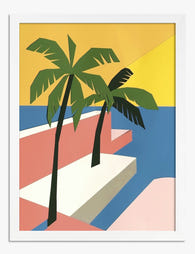
Tropical Escape Art Print
Translation missing: en.products.product.sale_price From €14,95€24,95 -

Kew Gardens Tropical Oasis Art Print
Translation missing: en.products.product.sale_price From €14,95€24,95 -
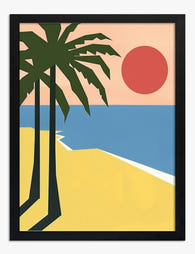
Tropical Escape Art Print
Translation missing: en.products.product.sale_price From €14,95€24,95 -
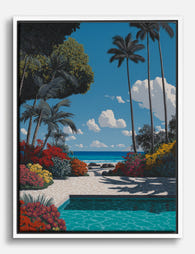
Tropical Poolside Haven Canvas Print
Translation missing: en.products.product.sale_price From €54,95€91,95 -

Tropical Hawaiian Oasis Canvas Print
Translation missing: en.products.product.sale_price From €54,95€91,95 -

Tropical Vibes Canvas Print
Translation missing: en.products.product.sale_price From €54,95€91,95 -

Tropical Escape Art Print
Translation missing: en.products.product.sale_price From €14,95€24,95 -

Tropical Hammock Escape Canvas Print
Translation missing: en.products.product.sale_price From €54,95€91,95 -

Tropical Muse Portrait Art Print
Translation missing: en.products.product.sale_price From €16,95€23,95 -

Tropical Beach Window Watercolor Art Print
Translation missing: en.products.product.sale_price From €14,95€24,95 -
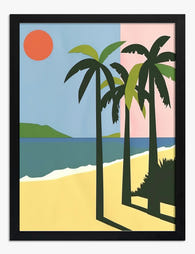
Sunlit Tropical Escape Art Print
Translation missing: en.products.product.sale_price From €14,95€24,95 -

Tropical Beach Escape Art Print
Translation missing: en.products.product.sale_price From €14,95€24,95 -

Tropical View Bedroom by Matisse Canvas Print
Translation missing: en.products.product.sale_price From €54,95€91,95


More from The Frame

William Morris Bird Prints: Which Ones to Choos...
If you've started searching for Morris birds, you've probably already hit the wall: there are at least five distinct designs, they look nothing like each other, and most shops sell...

The Best William Morris Prints for Your Bedroom...
Morris designs have a reputation for being busy, which makes a lot of people nervous about putting them in a bedroom. That nervousness is fair, because some of his patterns...

Strawberry Thief, Acanthus, and Beyond: The Wil...
If you've ever searched for William Morris prints, you've met Strawberry Thief within about ten seconds. It's the pattern everyone knows, the one museums put on tote bags, the one...