
 Order today for delivery by
 Transform Every Room with Petal Art Prints: A Styling Guide
Room-by-room sizing, placement heights, and petal styles that turn a pretty print into a considered piece.


You bought a beautiful petal print. Now what? This guide walks you through sizing, placement, and styling for every room in the house, with the dimensions and heights you actually need.
Why petal prints work in almost any room (and the one room they don't)
Petal art is one of the most versatile categories of wall art you can buy. The subject is soft enough to calm a bedroom, detailed enough to anchor a lounge, and graphic enough to hold its own in a hallway. Macro photography of a single bloom reads almost like an abstract. Scattered petals against a pale background feel light and airy. A botanical close-up has the weight of a fine art print.
The one room we'd hesitate to put petal art in is the kitchen. Not because it looks bad there, but because cooking grease, steam, and constant temperature swings are hard on any framed piece. If you do want florals near the hob, pick a smaller print, hang it well away from the cooker, and accept that you may need to clean the frame more often.
Everywhere else is fair game. Below, the specifics.

Bedroom: sizing, placement, and the best petal tones for restful spaces
The bedroom is where petal art genuinely earns its keep. Soft tones, organic shapes, and the quiet beauty of a close-up bloom all work with what you want a bedroom to feel like. The trick is sizing it to the bed and choosing colours that calm rather than energise.
Size your print to the bed, not the wall
A single print above the headboard should be roughly two-thirds the width of the bed. Above a king bed (150cm wide), that means a print around 70x100cm or 100x70cm. Above a double, 60x80cm hits the right proportion. Smaller than 50x70cm tends to look stranded above anything larger than a single bed.
If you'd rather do a pair, two 40x50cm prints with a 5cm gap between them sit beautifully above a double or king. A triptych of three 30x40cm prints works above a king bed if you want something more rhythmic.
Placement height
Hang the bottom edge of the frame 15 to 20cm above the headboard. Any higher and it floats. Any lower and it competes with the pillows. If you don't have a headboard, treat the top of the mattress as your reference point and hang the bottom of the frame around 75cm above it.
Tones that suit sleep
Blush, dusty rose, ivory, soft peach, and pale lilac all work. So does anything close to white, including magnolia, gardenia, or pressed-style petals on a cream background. We'd avoid hot pinks, deep reds, and high-contrast black backgrounds in a bedroom. They're beautiful, but they pull the eye and energise the space when you want the opposite.
For watercolour petal styles especially, the bedroom is the right home. The softer edges and washed pigments echo the way you want the room to feel. Browse the full bedroom art prints collection for more options in this register.
When you already have floral bedding
If your duvet is patterned, drop the colour intensity in your art. A pale, single-bloom petal print on a near-white background gives you the same botanical thread without doubling up. Or go the other way and pick a macro shot that's almost abstract, so it reads as texture rather than another floral pattern.
Living room: making a petal print the focal point above a sofa
The lounge is where petal art can really perform. A 100x150cm canvas of a single open peony or a tightly cropped tulip macro becomes the thing people look at when they walk into the room. The rules here are about scale, height, and resisting the urge to undersize.
Size to the sofa
Your print (or arrangement) should span roughly two-thirds to three-quarters the width of the sofa. For a standard three-seater (about 200cm wide), that means a single piece around 100x140cm or 120x80cm, or a pair of 60x80cm prints hung side by side.
The most common mistake we see is a 40x50cm print marooned in the middle of a huge expanse of wall above a long sofa. It looks like a postage stamp on an envelope. If you're nervous about going big, lay out newspaper sheets taped to the wall in the size you're considering. You'll almost always end up choosing the larger option.
Placement height
Hang the bottom edge of the frame 20 to 25cm above the back of the sofa. Closer than that and it looks crammed. Higher than 30cm and it floats away from the furniture, as if the two pieces don't know each other.
If the sofa sits in the middle of the room with no wall behind it, switch to gallery-wall logic: centre the arrangement at eye level, around 145cm to 150cm from the floor to the centre of the grouping.
Macro petals as a focal point
This is where bold, close-up petal photography earns its money. A tightly cropped image of an open ranunculus, a poppy interior, or the layered centre of a dahlia gives you scale, depth, and colour in one piece. On canvas, the matte finish keeps the colours from looking glossy or flat, and the mirrored-edge wrap means none of the bloom gets cropped off the front.
Explore more options in the living room art prints and petal art prints collections.

Hallways and entryways: first impressions with close-up petal photography
Hallways are usually narrow, often badly lit, and frequently ignored. They're also the first thing anyone sees when they walk into your home. A petal print here pulls double duty: it makes the space feel intentional, and it sets the tone for everything that follows.
Size for the corridor
Hallways suit portrait-orientation prints. Try 30x40cm, 40x50cm, or 50x70cm depending on the wall length. If the hallway is wider than 1.2 metres, you can push up to 60x80cm without it feeling crowded.
A run of three matching prints down a long hallway works beautifully. Space them evenly, around 10 to 15cm apart, all at the same height.
Placement height
Centre each print at eye level, which is 145cm from the floor to the centre of the print. In a narrow corridor where people walk past at speed, this is the height that catches the eye without forcing anyone to look up or down.
Style choices
This is the place for high-contrast, saturated petal photography. Deep reds, hot pinks, sunshine yellows, and dramatic black backgrounds all work. Hallways usually have artificial lighting and limited windows, so colour-rich prints punch through where pale ones would disappear. A macro shot of a single bold bloom against a dark ground is the easiest win in this room.
Bathroom and unexpected spaces: smaller prints that add softness
Bathrooms, downstairs loos, dressing areas, and laundry rooms benefit hugely from a small piece of art. Most people never put anything on the walls, so even a single 30x40cm print transforms the space.
Size and style
Stick to 20x30cm, 30x40cm, or at most 40x50cm in bathrooms. Anything bigger fights with tile patterns and mirrors. Pressed-style botanicals, delicate single-stem photographs, and pale watercolour petals all suit the soft, often steamy atmosphere.
Placement and practicalities
Hang at eye level when standing, around 150cm from the floor to the centre of the print. Keep it well away from the direct path of shower spray, ideally on a wall opposite or adjacent to the shower rather than next to it.
In a humid bathroom, canvas tends to handle moisture more forgivingly than paper prints, since there's no glass or acrylic to fog and the stretched canvas doesn't warp the way some papers can. If you'd rather go framed, the UV-protective acrylic glaze on our framed prints won't shatter and won't yellow over time, which matters in a room you might also use as a place for kids' baths.
Framed vs. canvas: which finish suits which room
Both finishes work for petal art. They just do different jobs.
Choose framed when
You want a polished, considered feel. Framed prints sit beautifully in bedrooms, hallways, dining rooms, and formal living rooms. The solid FSC wood frame gives the piece weight and structure, and the matte paper holds petal detail with extraordinary depth. The UV-protective acrylic glaze means even a print hung in direct sunlight won't fade.
Framed prints are heavier, so check your wall fixings if you're going above 60x80cm. They arrive ready to hang with the fixtures already attached, so there's no fiddling with separate frame kits or trying to fit a print yourself.
Choose canvas when
You want softness, scale, or a more relaxed feel. Canvas suits living rooms, family snugs, conservatories, and bathrooms. The poly-cotton surface has a slight texture that flatters petal photography, particularly macro shots where you want the image to feel painterly rather than crisp.
Canvas is lighter than framed equivalents, which makes it easier to hang very large pieces (up to 150x100cm) without industrial-grade fixings. It's also more forgiving in rooms with humidity.
Choose unframed paper when
You want minimal commitment, a more casual look, or you plan to clip the print into a poster hanger. This works well in dressing rooms, teenage bedrooms, and rented spaces where you can't put many holes in the wall.

Common mistakes that make petal art look like an afterthought
Most petal art that looks "off" in a room isn't a problem with the print. It's a problem with how it's hung, sized, or paired. Here are the mistakes we see most often.
Hanging it too high
The single most common mistake. People hang art at the height that feels right when they're standing two metres from the wall holding the print up. Once it's nailed in, it looks like it's floating near the ceiling. Centre most pieces at 145cm from the floor. Lower for above-furniture placements.
Going too small
A 30x40cm print above a sofa or a king bed will always look undersized. When in doubt, go one size up from your instinct.
Matching everything
If your curtains are floral, your cushions are floral, and your wallpaper is floral, another floral on the wall tips the room into pastiche. In a room with existing florals, pick a single, simple petal print with lots of negative space, or switch to an abstract petal-inspired piece that reads as colour and form rather than another bloom.
Ignoring the frame colour
Black frames look striking against pale walls but can feel heavy against deep colours. Natural oak frames warm up cool rooms. White frames disappear into white walls, which can be exactly what you want, or exactly what you don't. Think about the frame as part of the composition, not packaging.
Treating petal art as a stand-alone category
Petal prints sit happily alongside abstracts, landscapes, and line drawings. A gallery wall with one petal print, one abstract, and one black and white photograph reads as a curated collection. Three petal prints in a row reads as a theme. Both can work, but pick deliberately. For more options to mix in, the botanical art prints collection pairs well with petals without doubling up on the same subject.
Forgetting about light
Natural light flatters pale petal tones (blush, ivory, peach) and can wash out very saturated colours. Artificial light, especially warm bulbs, makes reds and oranges glow but dulls cool tones like lilac and pale blue. Check what kind of light a room gets before you commit to a colour palette.

Where to start
Measure the wall first, then the furniture beneath it, then choose your print size to match. Decide on framed or canvas based on the room's formality and humidity. Pick petal tones that work with the light the room actually gets, not the light you wish it had. Hang at the heights above and stand back. If it still doesn't feel right, the print is almost always too small or too high. Adjust one, then the other.

Fab products featured in this blog
-

Petal Pop in Green Art Print
Translation missing: en.products.product.sale_price From €19,95€33,25 -

Radiant Brush Petals Art Print
Translation missing: en.products.product.sale_price From €16,95€23,95 -

Colorburst Petals Art Print
Translation missing: en.products.product.sale_price From €16,95€23,95 -

Modern Petal Spread Art Print
Translation missing: en.products.product.sale_price From €19,95€33,25 -

Blush Petal Duo Art Print
Translation missing: en.products.product.sale_price From €19,95€33,25 -

Bold Petal Formation Canvas Print
Translation missing: en.products.product.sale_price From €64,95€92,95 -

Blush Petal Daydream Art Print
Translation missing: en.products.product.sale_price From €19,95€33,25 -

Lilac Petal Bloom Art Print
Translation missing: en.products.product.sale_price From €19,95€33,25 -

Blush Petal Rhythm Art Print
Translation missing: en.products.product.sale_price From €19,95€33,25 -

Soft Petal Flow Art Print
Translation missing: en.products.product.sale_price From €19,95€33,25 -

Modern Petal Harmony Art Print
Translation missing: en.products.product.sale_price From €19,95€33,25 -

Blush Petal Duo Art Print
Translation missing: en.products.product.sale_price From €19,95€33,25 -

Blush Petal Dream Canvas Print
Translation missing: en.products.product.sale_price From €64,95€92,95 -

Soft Petal Spiral Art Print
Translation missing: en.products.product.sale_price From €19,95€33,25 -

Blush Petal Radiance Art Print
Translation missing: en.products.product.sale_price From €19,95€33,25 -

Checkered Petal Reverie Art Print
Translation missing: en.products.product.sale_price From €16,95€23,95 -

Colorburst Petals Art Print
Translation missing: en.products.product.sale_price From €19,95€33,25 -

Petal Pop in Green Canvas Print
Translation missing: en.products.product.sale_price From €64,95€92,95 -

Soft Blush Petals Art Print
Translation missing: en.products.product.sale_price From €19,95€33,25 -
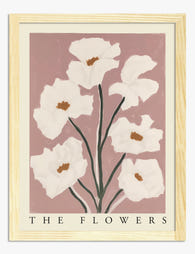
Blush Petal Serenity Art Print
Translation missing: en.products.product.sale_price From €19,95€33,25


More from The Frame

Modern vs Traditional Botanical Prints: Which S...
Botanicals are the most forgiving genre in wall art. They go with almost everything, which is precisely why so many people end up with the wrong ones. This guide will...

Art Nouveau vs Art Deco Prints: How to Tell The...
If you've ever stood in front of two beautiful vintage prints and had no idea whether you were looking at Art Nouveau or Art Deco, you're in good company. The...

The Only William Morris Gallery Wall Guide You ...
Buying William Morris prints is the easy part. The hard part is making three or five or seven of them look like a curated set on your wall, rather than...