
 Order today for delivery by
 William Morris in a Modern Home: Why Victorian Botanicals Work With Contemporary Interiors
How to hang Victorian botanicals in a contemporary home without turning your living room into a National Trust gift shop.


You love the patterns. You're just not sure they belong in a flat with white walls, an oak sideboard, and a bouclé armchair. Good news: Morris is far more compatible with modern interiors than his Victorian reputation suggests, and the styling rules are simpler than you'd think.
Why Morris's flat, graphic style is more modern than you think
Strip away the Victorian context and look at what Morris was actually drawing. Flat shapes. Strong outlines. Repeating motifs in two or three colours. No shading, no perspective, no fussy realism. That's not a million miles from a Matisse cut-out, a mid-century textile print, or a contemporary Scandi botanical.
Morris was a pattern designer first, and pattern design relies on graphic clarity. His "Strawberry Thief" works on the same visual principle as a modern wallpaper from a Copenhagen studio: a limited palette, a confident silhouette, a rhythm your eye can follow. The Victorian framing is what dates it, not the artwork itself.
This is the unlock for modern interiors. You're not hanging a heritage object. You're hanging a graphic botanical print that happens to be 150 years old. Treat it like contemporary art, frame it like contemporary art, and it behaves like contemporary art.
Colour palette matching: Morris greens, blues, and terracottas with modern paint choices
Morris worked in muted, earthy palettes long before "earthy palettes" became a paint trend. His golden ochres, indigos, sage greens, soft terracottas, and inky blue-blacks land almost exactly where modern paint brands have spent the last five years.
A few pairings that genuinely work:
- Morris greens (the sages and ferns in "Willow Bough" or "Acanthus") against warm whites or a soft greige. Think Farrow & Ball's School House White or Setting Plaster as neighbours, not Brilliant White.
- Morris indigos (the deep blues in "Strawberry Thief") against charcoal or off-black walls. A deep, moody backdrop makes the print read as a graphic object rather than a heritage relic.
- Morris terracottas and ochres against putty, clay, and pale plaster shades. The print becomes a tonal extension of the wall instead of fighting it.
The rule: pull one secondary colour from the print and echo it somewhere in the room (a cushion, a throw, the spine of a book). Don't try to match every colour in the design. That's how rooms start to look like themed sets.

Living room: a single 70x100cm statement print above a sofa
The single biggest mistake people make with Morris in a living room is hedging. Three small prints in a row. A matching cushion set. A coordinating lampshade. It reads as a collection, and collections of Morris read as period.
Instead, commit to one print, sized properly. A 70x100cm framed botanical hung centrally above a three-seater sofa does the work of an entire feature wall, with none of the heritage cosplay. The scale gives it presence. The isolation gives it confidence.
A few practical numbers:
- Centre the print roughly 15 to 20cm above the back of the sofa.
- The print should be around two-thirds the width of the sofa, no wider.
- Hang it so the centre of the image sits at standard gallery height (around 145 to 150cm from the floor), unless the sofa back forces it higher.
Browse the William Morris plants collection and pick the design that contains a colour already present in your room, not one that introduces a new colour. If you want the print to feel especially current, look for the densely patterned botanicals like "Willow Bough" or "Acanthus" rather than the figurative scenes. More pattern reads more graphic, which reads more modern. For wider inspiration, the full living room art prints range is a useful place to compare scales.
Bedroom: pairing Morris botanicals with linen and natural textures
Bedrooms are where Morris can either sing or suffocate. The trick is texture, not pattern.
Pair a Morris botanical with washed linen bedding in oatmeal or stone. Add a single chunky wool throw at the foot of the bed. Keep the bedside lamps in raw ceramic, brass, or matt black. The print becomes the only decorative pattern in the room, which is exactly what it needs to feel intentional rather than thematic.
Above a bed, the framing logic flips slightly. A landscape orientation print (100x70cm) sits better than a tall portrait one, because it visually anchors the headboard. Hang the bottom edge around 20 to 25cm above the headboard so it reads as a unit with the bed.
Avoid the temptation to add a second botanical on the opposite wall. One Morris per room is a useful rule of thumb. If you want greenery elsewhere, use real plants. A trailing pothos on a chest of drawers does more for the botanical mood than a second print would.
For a softer, less saturated look in the bedroom, the green art prints collection has plenty of options that sit in a similar tonal family without going full Morris.
Hallways and entryways: making a first impression with Arts and Crafts prints
Hallways are the most underused walls in most homes, and they're where william morris style prints actually have the strongest impact. You walk past them every day, the lighting is usually controlled, and they don't need to coordinate with much.
A narrow hall benefits from a vertical 50x70cm print hung at eye level near the door. A wider entryway can take a 70x100cm print at the end of the corridor, where it acts as a destination point as you walk in.
A few hallway-specific rules:
- Skip the picture light. A picture light over a Morris print is the fastest route to "boutique hotel pretending to be a country house." Use existing ambient lighting and let the print sit naturally.
- Hang it on the wall you see when you open the front door, not the wall behind it.
- If your hallway has period features (cornicing, dado rails), counterbalance with a slim, contemporary frame. If it's a new-build with flat plaster, you have more freedom.

Framed vs canvas: which finish suits a modern interior
For Morris specifically, framed prints win in modern interiors. Here's the honest breakdown.
Framed prints in a slim black or natural oak frame read as contemporary gallery objects. The clean edge, the matte paper, the UV-protective acrylic glaze: all of it pushes the print away from heritage and towards graphic art. The solid FSC wood frames we use are deliberately understated for this reason. A slim profile in black or oak is the safest, most modern choice. Avoid ornate, gilt, or dark mahogany finishes. They drag the print backwards 100 years.
Canvas prints suit Morris well in some situations, particularly larger formats above 100cm where the texture of the canvas softens the density of the pattern. Canvas also works better in humid rooms (bathrooms, kitchens) where framed prints with acrylic glazing can feel heavy. The mirrored edge wrapping means you don't lose any of the original design, which matters with pattern-based work where cropping would break the repeat.
A clear recommendation: in a living room, bedroom, or hallway, choose a framed print in a slim oak or matt black profile. In a kitchen, conservatory, or anywhere bright and busy, canvas is the more relaxed choice.
Whichever you pick, both arrive with fixtures already attached and the print properly fitted, so you're not unboxing a frame in three pieces and trying to mount a print yourself. That's usually where the cheap-looking Morris reproductions fall apart: warped MDF frames, prints shipped separately, glass that arrives cracked.
Mixing Morris with other art styles on a gallery wall
Morris plays surprisingly well with other styles, as long as you respect the visual weight.
Combinations that work:
- Morris + black and white photography. The graphic flatness of Morris balances the realism of a monochrome photograph. Hang them side by side at the same scale.
- Morris + abstract line drawings. Single-line nudes, ink sketches, or simple shape compositions share Morris's emphasis on outline.
- Morris + mid-century botanical illustrations. They're cousins. A 1960s fern study and a Morris "Willow Bough" sit together comfortably because both prioritise pattern over realism.
Combinations that don't:
- Morris and other Victorian or Pre-Raphaelite work. Too much of the same era reads as a museum corner.
- Morris and highly textured oil paintings. The flatness of the Morris print gets bullied by the depth of the painting.
- Morris and other dense floral prints. Two repeating botanicals in one composition is visual noise.
For a gallery wall, the working ratio is one Morris print per four to six other pieces, and the Morris should be the largest or second-largest piece in the arrangement. It's the anchor, not the accent.

Common styling mistakes (and how to avoid looking like a heritage gift shop)
The fear isn't unfounded. There's a specific aesthetic Morris can tip into, and once you've seen it you can't unsee it. Here's how to stay on the right side of the line.
Mistake 1: Matching Morris across multiple surfaces. A Morris print, a Morris cushion, a Morris mug, and a Morris tea towel in one room is a gift shop, not a home. Pick one surface. Make it the wall.
Mistake 2: Choosing the wrong frame. Ornate gilt frames, dark stained wood, and anything with carved detail will pull the print into the 1880s. Slim black metal, slim natural oak, or slim warm white. Those are the three modern options.
Mistake 3: Hanging it too low or too small. Morris prints have density. They need scale to read properly. A 30x40cm Morris print on a large wall looks apologetic. Go bigger than feels comfortable. A 70x100cm framed print is usually the right answer in a living space.
Mistake 4: Surrounding it with antique furniture. This one's blunt, but if your sofa is a chesterfield, your sideboard is mahogany, and your rug is a Persian, a Morris print will read as the natural conclusion of a period scheme. To modernise, you need at least one obviously contemporary element in the same eyeline: a modern sofa, a sculptural lamp, a low-slung coffee table.
Mistake 5: Believing every Morris pattern is interchangeable. The denser, more abstracted patterns like "Acanthus" or "Willow Bough" read graphic and modern. The figurative scenes with birds and narrative elements lean more traditional. If you're nervous about looking dated, start with the pure botanicals.

Where to start
If you're new to Morris in a modern context, buy one print at 70x100cm, frame it in slim oak or matt black, and hang it in the room where you spend the most time. Live with it for a month before adding anything else. Most people find that one well-chosen print does more than three smaller ones ever could, and the "too traditional" worry quietly disappears the moment it's on the wall.

Fab products featured in this blog
-

William Morris Botanical Pattern Art Print
Translation missing: en.products.product.sale_price From €19,95€33,25 -

William Morris Botanical Romance Canvas Print
Translation missing: en.products.product.sale_price From €64,95€92,95 -

William Morris Botanical Art Print
Translation missing: en.products.product.sale_price From €19,95€33,25 -
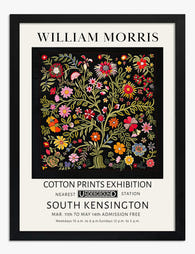
William Morris Botanical Bloom Art Print
Translation missing: en.products.product.sale_price From €19,95€33,25 -

William Morris Vine Botanical Art Print
Translation missing: en.products.product.sale_price From €19,95€33,25 -

Morris Botanical Vase Art Print
Translation missing: en.products.product.sale_price From €19,95€33,25 -
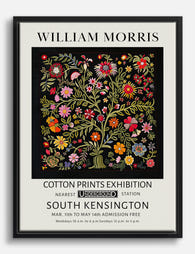
William Morris Botanical Canvas Print
Translation missing: en.products.product.sale_price From €64,95€92,95 -

William Morris Blue Botanical Art Print
Translation missing: en.products.product.sale_price From €19,95€33,25 -

William Morris Botanical View Art Print
Translation missing: en.products.product.sale_price From €19,95€33,25 -

William Morris Vine Botanical Canvas Print
Translation missing: en.products.product.sale_price From €64,95€92,95 -

William Morris Botanical Bloom Canvas Print
Translation missing: en.products.product.sale_price From €64,95€92,95 -

Morris Botanical Elegance Canvas Print
Translation missing: en.products.product.sale_price From €64,95€92,95 -

William Morris Botanical Bloom Art Print
Translation missing: en.products.product.sale_price From €19,95€33,25 -

William Morris Jasmine Floral Vase Art Print
Translation missing: en.products.product.sale_price From €19,95€33,25 -

William Morris Botanical Vase Canvas Print
Translation missing: en.products.product.sale_price From €64,95€92,95 -

William Morris Blue Botanicals Art Print
Translation missing: en.products.product.sale_price From €19,95€33,25 -

William Morris Botanical Bloom Art Print
Translation missing: en.products.product.sale_price From €19,95€33,25 -
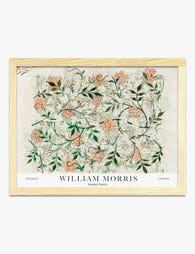
William Morris Jasmine Botanical Art Print
Translation missing: en.products.product.sale_price From €19,95€33,25 -

William Morris Wallflower Art Print
Translation missing: en.products.product.sale_price From €19,95€33,25 -

William Morris Floral Canvas Print
Translation missing: en.products.product.sale_price From €64,95€92,95


More from The Frame

From Victorian Textiles to Your Wall: The Story...
The fox has been hiding in plain sight for over 150 years, slipping from Victorian tapestries to wallpapers to the walls of your living room. Its appeal isn't accidental. Understanding...

What Interior Stylists Know About Botanical Win...
Botanical window art is a specific subgenre: prints that frame foliage, flowers, or garden scenes as if viewed through a real window. Styled well, it borrows light, adds depth, and...

Living Room Botanical Prints: The Right Way to ...
Botanical prints are one of the most forgiving categories of wall art to choose, and one of the easiest to ruin with bad framing. A warped frame, the wrong glazing,...