
 Order today for delivery by
 How to Build a French-Themed Gallery Wall That Actually Looks Sophisticated
The curatorial rules for combining Paris, Provence and the Riviera on one wall without it looking like a souvenir shop.


A French-themed gallery wall sits on a knife edge. Done well, it reads like a well-travelled friend's flat in the 6th arrondissement. Done badly, it looks like the back wall of a brasserie chain in a UK shopping centre. This guide is about staying on the right side of that line.
The difference between a curated gallery wall and a fridge door
A fridge door is additive. You stick things up as you find them, every piece equal in weight, no editing. A curated wall is the opposite. It starts with a unifying logic and only admits prints that serve it.
The fastest way to test whether a wall is curated is to squint. If your eye finds a clear tonal rhythm and a consistent visual temperature, it's curated. If your eye bounces between unrelated colours, eras and finishes, you've built a fridge door at scale.
Tonal cohesion is what does the heavy lifting here. Before you think about subject matter, decide what the overall mood of the wall should feel like: warm and sun-bleached, cool and architectural, or moody and cinematic. Every print you bring in either reinforces that mood or breaks it. There is no neutral.

Choosing a visual thread: colour palette vs. subject vs. photographic style
Every gallery wall needs one thread that runs through every piece. Pick one. Trying to unify by all three at once is what produces the gift shop look.
Colour palette as the thread. This is the most forgiving option for mixed French subjects. Set a palette of three or four tones (say bone white, dove grey, sage and muted ochre) and only buy prints that sit inside it. A photo of the Pont Alexandre III at dawn, a lavender field at midday and a Riviera balcony scene can co-exist beautifully if all three share the same tonal range.
Subject as the thread. All Paris, or all Provence, or all coastal. Easy to execute, but narrower in feel. Use this when you want a focused, almost monographic wall.
Photographic style as the thread. Black and white film grain, or saturated 1970s travel-poster style, or contemporary minimalist architectural photography. This is the professional's choice. It lets you mix Paris with Provence with Antibes because the visual treatment ties everything together. Browsing photography prints by style rather than location is the trick here.
The 60-30-10 rule, borrowed from interior design, applies cleanly. 60% of your wall is your dominant tone (often a neutral like cream, stone, or soft black), 30% is a secondary tone (sage, terracotta, dusty blue), and 10% is your accent (a single shot of red wine, a yellow café awning, a flash of cobalt). Map your prints to those proportions before you buy.
How many prints you actually need (and the sizes that work together)
Six to nine prints is the sweet spot for most living rooms and hallways. Three to five works for narrower walls or above a sofa. Beyond nine you're committing to a salon hang, which is its own discipline.
Mix sizes. A wall of nine identical 30x40cm prints is a grid, not a gallery. We'd suggest a structure roughly like this for a nine-print wall:
- One hero piece at 70x100cm or 60x80cm
- Two to three medium pieces at 50x70cm or 40x60cm
- Four to five smaller pieces at 30x40cm or 21x30cm
For a six-print wall, drop one medium and two small. The hero piece anchors the composition and gives your eye a place to land. Without it, the wall feels weightless.
A note on canvas versus framed paper. Framed prints look more polished and collected, which suits a refined French aesthetic. Canvas reads more casual and is lighter on the wall, useful for upstairs hallways or rooms with humidity. We'd lean framed for this kind of wall, but a single oversized canvas as your hero piece can work beautifully if the rest are framed.
Three gallery wall layouts that work for French-themed collections
The 3x3 grid (architectural and modern)
Nine prints in a perfect three-by-three grid, all the same size (typically 30x40cm or 40x50cm), with 5cm gaps. This layout suits black-and-white Parisian architecture, doorway studies, or window-shutter close-ups from across France. It's disciplined, slightly austere, and feels current. Best for modern flats, home offices, and above sideboards.
The salon hang (classically French)
This is the authentic French approach. An asymmetric, densely packed arrangement built around a central anchor piece, with surrounding prints of varying sizes radiating out. Visually it descends from the picture-stuffed walls of 19th century Parisian salons. The rules: keep gaps consistent at around 5cm, balance visual weight across the composition (not symmetry, weight), and let the outer edge form a soft rectangle.
A salon hang forgives more variation in subject matter, which is exactly why it works for mixed French collections. A Paris street scene, a Provence vineyard, a Côte d'Azur balcony and a Loire château can all co-exist in a salon hang in a way they cannot in a grid.
The linear run (for hallways and narrow walls)
Three to five prints in a single horizontal row, all the same height, varying widths. Centre everything on a single horizon line at roughly 145cm from the floor (gallery standard for the centre of the artwork). This works exceptionally well for travel sequences: a series of moments from a single trip through France, hung in narrative order.

Mixing Paris prints with countryside and Riviera scenes without clashing
This is the bit no-one talks about, and it's where most French-themed walls fall apart.
The mistake is treating Paris, Provence and the Riviera as equals on the wall. They aren't. Each region has a different visual register. Paris is grey stone, wrought iron, café browns and slate roofs. Provence is ochre, lavender, terracotta and olive. The Riviera is bleached white, turquoise, hot pink bougainvillea and cobalt sea. Throw them together in equal measure and you get visual whiplash.
The 60/40 anchor rule. Pick one region as your dominant voice (60% of prints), and one or at most two others as accent voices (40% combined). A Paris-anchored wall might have six Paris prints and three Provence prints. A Provence-anchored wall might have five Provence prints, two Riviera prints and two Paris prints. Never split evenly across three regions.
Use photographic style as the bridge. If all your prints are shot in the same treatment (black and white, or muted film tones, or high-contrast colour), regional differences soften considerably. A black-and-white Eiffel Tower and a black-and-white Provençal vineyard share a language. The same two scenes in saturated colour fight each other.
Match the light. Golden hour Paris pairs with golden hour Provence. Overcast Paris pairs with overcast anything. Midday harsh-light Riviera does not pair with moody twilight Montmartre. Light temperature is the most underrated unifier in French wall art.
Avoid the obvious landmarks in their most-photographed angles. The Eiffel Tower from the Trocadéro, the Notre-Dame from the front, the lavender field with the lone tree. These are fine images but they read as souvenir. Look for unexpected compositions: the tower glimpsed through Haussmann rooftops, a single lavender row in shadow, a Riviera doorway rather than the whole bay.
Why using the same frame finish across your gallery wall is non-negotiable
This is the single rule we will not compromise on. Mixed frame finishes kill gallery walls faster than any other mistake.
Pick one frame finish and apply it to every print on the wall. Three finishes work for French aesthetics:
Slim black. The most versatile. Sharpens photography, suits monochrome and colour equally, reads modern and editorial. Our default recommendation.
Natural oak or ash. Warmer, slightly Scandinavian, suits Provence and Riviera palettes especially well. Reads slightly more relaxed than black.
Thin gold or brass. Beautiful for classical Paris subjects and architectural prints, but harder to pull off without tipping into period drama. Use only if the rest of your room can carry it.
Avoid ornate gilded frames, distressed wood, or anything described as "vintage style." These are the visual cues that tip a French wall into kitsch territory. Profile thickness matters too. Slim profiles (around 2cm) read contemporary and let the art speak. Chunky frames feel heavy and dated.
Solid wood frames matter here, not just aesthetically but practically. Veneered or MDF frames warp over time, especially in centrally heated rooms, and a warped frame on a gallery wall is immediately visible. FSC-certified solid wood with UV-protective glazing means the prints stay flat and the colours don't shift even on a sunlit wall, which matters when you've spent time curating something you intend to live with.

Hanging it straight: tools, spacing, and the paper-template trick
Spacing first. 5cm between frames is the standard for a tightly composed gallery wall. Tighter (3cm) reads more modern and intentional. Wider (7-8cm) reads more relaxed but starts to feel disconnected past that. Pick one spacing and apply it consistently.
The centre of the overall composition should sit at approximately 145cm from the floor, which is gallery hanging height and aligns with average eye level. If the wall is above a sofa or sideboard, the bottom edge of the lowest frame should be 15-20cm above the furniture.
The paper template method, properly explained. This is the only way to plan a gallery wall without filling your wall with mistake holes.
- Lay every framed print face-down on the floor and trace each one onto brown kraft paper or newspaper. Cut out the templates.
- Mark the hanging point on each template (measure from the top of the actual frame to where the hook or wire sits, then mark that exact point on the paper).
- Lay all your templates out on the floor in front of the wall and arrange the composition there first. Take a photo from above.
- Stick the templates to the wall with low-tack masking tape. Stand back. Adjust.
- Once you're happy, hammer or drill straight through the marked hanging point on each template, then tear the paper away.
This sounds fiddly. It saves you from at least a dozen wrong holes. Use a spirit level for each frame, and a long level across the whole composition to check your top and bottom lines.
Frames that arrive ready to hang with fixtures already attached make this process considerably less tedious, which is worth flagging if you're choosing between framed and unframed options.
Our top France art print picks for a gallery wall
A few principles for sourcing rather than specific titles, because the right prints depend entirely on your chosen thread.
For a Paris-anchored salon hang: look for one large hero shot (a Seine bridge at twilight, or Haussmannian rooftops), supported by smaller details (a café table, a wrought-iron balcony close-up, a metro entrance). Mix in one or two Provence accents in the same tonal palette to soften the urban feel.
For a Provence-anchored linear run: consider a sequence that moves through a day or a region. Lavender at dawn, a village square at midday, an olive grove in late afternoon. Same photographer or same treatment if possible.
For a Riviera-anchored 3x3 grid: strict architectural studies work brilliantly here. Doorways, shutters, pool details, balcony railings, all shot in the same high-contrast colour or muted film treatment. Don't include any obvious landmarks.
If you want a starting point that's already curated to work together, our wall art sets are designed as cohesive groupings, and the broader travel art prints collection is useful for finding tonal matches across regions.

Where to start
Pick your thread before you buy anything. Decide whether colour, subject or photographic style is doing the unifying work, and write down your three or four palette tones. Then choose your dominant region, your layout, and a single frame finish. Buy your hero piece first and let it set the standard for everything else. The wall will build itself from there, one considered print at a time, which is the only way these things ever look properly French.

Fab products featured in this blog
-

Paris, France Illustrated Travel Print Canvas Print
Sale price From 731,00 kr1 044,00 kr -

Mac and Cheese Recipe Art Print
Sale price From 183,00 kr261,00 kr -

Parisian Charm Collection Art Print
Sale price From 183,00 kr261,00 kr -

Paris Eiffel Tower Travel Poster Art Print
Sale price From 183,00 kr261,00 kr -

Paris Eiffel Tower Travel Poster Canvas Print
Sale price From 731,00 kr1 044,00 kr -

Parisian Stroll Art Print
Sale price From 183,00 kr261,00 kr -

Montmartre Morning Art Print
Sale price From 183,00 kr261,00 kr -

Vietnam French Architecture Canvas Print
Sale price From 731,00 kr1 044,00 kr -

Tour de France Cyclists Poster Art Print
Sale price From 183,00 kr261,00 kr -

Parisian Charm Canvas Print
Sale price From 731,00 kr1 044,00 kr -

Quiet Paris Street, Montmartre Art Print
Sale price From 183,00 kr261,00 kr -

Parisian Café Vibes Art Print
Sale price From 183,00 kr261,00 kr -

Parisian Charm Collection Canvas Print
Sale price From 731,00 kr1 044,00 kr -

Vietnam French Architecture Travel Poster Canvas Print
Sale price From 731,00 kr1 044,00 kr -

Paris Eiffel Tower Travel Poster Canvas Print
Sale price From 731,00 kr1 044,00 kr -

Parisian Charm Art Print
Sale price From 183,00 kr261,00 kr -

Paris Street View, Eiffel Tower in Watercolour Art Print
Sale price From 183,00 kr261,00 kr -
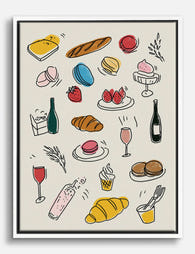
Parisian Foodie Sketches Canvas Print
Sale price From 731,00 kr1 044,00 kr -
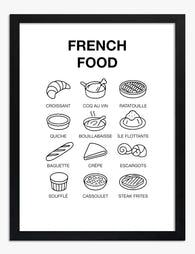
French Food Line Art Chart Art Print
Sale price From 183,00 kr261,00 kr -

Paris Café Street Scene Art Print
Sale price From 183,00 kr261,00 kr


More from The Frame

What to Actually Hang on Your Kitchen Walls (An...
Most kitchen art is too small, too generic, and hung too high. It fades within two years because the frame was cheap, the glazing was thin, and nobody thought about...

Lemon Decor: Timeless Trend or Passing Fad? You...
Lemon art is everywhere right now, which naturally raises the question of whether it belongs on your walls or in a time capsule marked "2023." The honest answer is more...

Beyond the Kitchen: 5 Unexpected Rooms Where Le...
Lemon art has a branding problem. Search for it online and you'll drown in kitchen shots: farmhouse signs, fruit bowls, tea towels with slogans. But a good lemon print is...