
 Pide hoy, entrega el
 What Interior Stylists Know About Botanical Window Art Placement
The room-by-room rules for hanging window-view botanical prints so they read as architecture, not afterthought.


Botanical window art is a specific subgenre: prints that frame foliage, flowers, or garden scenes as if viewed through a real window. Styled well, it borrows light, adds depth, and convinces the eye that a wall has architecture it doesn't. Styled badly, it floats awkwardly above a sofa looking like a decision nobody fully committed to.
Why botanical window art works where other subjects fall flat
Most wall art is read as decoration. Botanical window art is read as a view. That's a meaningful difference, because your brain processes a framed garden scene with mullions or arched panes as something closer to a real window than to a poster.
This is why it earns its keep in spaces other art struggles in: windowless hallways, internal bathrooms, dim dining nooks, north-facing bedrooms. A still life of fruit doesn't add light to a corridor. A wisteria-draped sash window does, at least to the part of your brain that decides whether a room feels claustrophobic.
The trick is treating these prints like architectural features, not accessories. That means scale, height, and frame choices matter more than they do for abstract or typographic art. A print pretending to be a window has to behave like one.

Living rooms: size, placement, and the sofa-to-print ratio
Above the sofa is where most people put their largest print, and it's where most people get the proportions wrong. The rule worth memorising: your artwork should span roughly two-thirds the width of the sofa beneath it. A 220cm sofa wants a print (or arrangement) around 140-150cm wide. Anything smaller and it looks like a postage stamp pinned to a duvet.
For a single statement piece, that usually means 70x100cm framed, or 100x150cm on canvas if you want maximum impact. The bottom edge of the frame should sit 15-25cm above the top of the sofa back. Closer than that and it crowds the cushions. Higher and the print disconnects from the furniture, floating in no-man's-land.
For botanical window art specifically, orientation matters. A portrait-oriented print (taller than wide) mimics a casement or sash window and adds vertical lift to rooms with standard 2.4m ceilings. Landscape orientations suit wider sofas and rooms with 2.7m+ ceilings, where you've got room to play.
If you're working with a smaller two-seater, a pair of medium prints (40x50cm or 50x70cm) hung side by side reads better than one undersized piece. Browse botanical window art prints in portrait formats first if you're styling above seating, since the vertical proportions almost always work harder.
Lighting your living room botanical print
Don't hang botanical window art directly opposite a real window. The glare flattens the print and kills the illusion you're paying for. Instead, place it on a wall perpendicular to your light source, or on the same wall as the window. A small picture light or wall-mounted uplighter, switched on in the evenings, intensifies the faux-window effect dramatically.
Hallways and entryways: adding depth to narrow, windowless spaces
Hallways are where botanical window art does its most impressive work. A long, windowless corridor is the architectural equivalent of holding your breath. A print depicting an arched garden window halfway down that corridor gives the eye somewhere to exhale.
For standard UK hallway widths (around 90-110cm), prints sized 40x50cm to 50x70cm work best at eye level. Hang the centre of the artwork 145-150cm from the floor, which is gallery standard and works for the average viewing height. In wider hallways or open entryways, you can scale up to 70x100cm without it feeling oppressive.
If the hallway is long enough, a series of three prints spaced 15-20cm apart creates a rhythm that pulls you through the space. Use the same frame and similar botanical subjects (all garden views, or all conservatory scenes) so the eye reads it as a sequence, not a clash. Our hallway art prints collection is worth a browse for this kind of layout.
The borrowed-light trick
In a truly windowless hallway, install a small LED picture light above the print. The combination of warm artificial light hitting a botanical window scene is the closest you'll get to faking actual daylight. It sounds gimmicky. It isn't. It's the single most effective styling move for a dark corridor.

Kitchens and dining rooms: pairing garden window prints with natural materials
Kitchens and dining rooms tolerate (and reward) bolder botanical choices than other rooms. Think herbs in terracotta pots, kitchen garden views, fruiting vines. The subject matter ties to the room's function in a way that doesn't feel heavy-handed.
In kitchens, the best wall is usually the one opposite the run of cabinetry, or above a breakfast nook if you have one. Avoid hanging directly above the hob (heat and grease will eventually find their way to anything porous) and steer clear of the splashback zone behind the sink.
Sizing depends on what's around. Above a 180cm dining table, a single 70x100cm framed print or a 100x70cm canvas centred on the table works beautifully. The bottom of the frame should sit 25-30cm above the table surface so it clears glassware and centrepieces.
Natural materials amplify the effect. Botanical window art sits comfortably alongside oak, linen, rattan, unglazed ceramics, and brass. It fights with high-gloss lacquer and chrome. If your kitchen leans modern and reflective, choose botanical window prints with cleaner, more graphic linework rather than soft watercolour styles, which can look fussy against hard surfaces.
Bedrooms: choosing calmer botanical scenes for restful walls
Bedrooms call for restraint. The botanical window art you'd happily hang in a hallway (bright, high-contrast, dense foliage) can feel busy above a bed where you're trying to wind down. Aim for softer palettes: misty greens, dusty pinks, pale lavender, chalky whites. Subjects that read as quiet rather than abundant.
Above the bed, the two-thirds rule applies again. A standard UK double headboard is around 135cm wide, so you want a print or arrangement spanning 90cm or so. A king-size headboard at 150cm wants closer to 100-110cm. Hang the bottom edge 15-20cm above the headboard.
For a calmer feel, a single horizontal print often works better above a bed than a vertical one. Landscape orientations settle the eye. Portrait orientations draw it upward, which is the opposite of what most people want from a bedroom.
If you'd rather not hang above the bed at all (a perfectly legitimate choice if you're earthquake-anxious or just don't like the look), the wall opposite the bed becomes your statement wall. This is actually a smart use of botanical window art, since it's the view you'll wake up to. Treat it as the window your room never had.
Explore broader botanical art prints if you're after softer, more painterly styles than the architectural window subgenre offers.
Bathrooms: humidity, sizing, and why framed prints with UV glazing matter here
Bathrooms are the room where most people assume they can't hang real art. They can. They just need to choose carefully.
Humidity is the obvious concern, and it's why framed prints with acrylic glazing (not glass) and solid wood frames outperform poster-style alternatives. Acrylic doesn't fog or condense the way glass does, and a solid FSC wood frame is far more stable in fluctuating moisture than MDF or particleboard, which swell and warp. UV-protective acrylic also stops fading from any direct sunlight bouncing off bathroom tiles.
Canvas works in bathrooms too, particularly because there's no glazing to fog. The poly-cotton handles humidity well, and the hand-stretched FSC wood frame stays stable. For en suites and small bathrooms without ventilation, framed prints still tend to win on longevity.
Sizing in bathrooms is usually smaller: 30x40cm to 50x70cm depending on wall space. Above the toilet, a single portrait print or a pair stacked vertically works well. Above a freestanding bath, go larger (up to 70x100cm) and centre the print on the bath's long axis.
Avoid hanging anything within direct splash range of the shower. A metre away is sensible. And if your bathroom has no window, this is where botanical window art truly earns its place: a print of a sunlit conservatory or rose-framed sash turns an internal bathroom from a cupboard with plumbing into something that feels like it belongs in a hotel.

Frame colour guide: matching your botanical window print to your room's palette
Frame colour is where good intentions go to die. The fix is to stop matching the frame to the print and start matching it to your room's existing trim and joinery.
If your skirting, door frames, and window trim are white: white or natural oak frames keep things calm. Black frames work if you want contrast, but only if there's already black somewhere else in the room (taps, lamps, hardware).
If you have warm wood floors or oak furniture: match the frame to the dominant wood tone. Oak frames on oak floors read as intentional. Mismatched woods (oak frame, walnut floor) look accidental.
If your walls are a deep colour (forest green, navy, plaster pink): dark walnut or black frames disappear into the wall slightly, which lets the botanical scene inside the frame do the talking. Natural oak on a dark wall creates a strong contrast that draws the eye to the frame edges, which can be either a feature or a distraction depending on your taste.
If your room has mixed metals: match the frame to the warmer of the two. Brass and oak. Chrome and white.
Should botanical prints have a mount?
A white mount (the border between print and frame) adds formality and visual breathing room. For botanical window art specifically, mounts can occasionally compete with the architectural illusion, since they introduce a second "frame" around the window scene. If you want the print to read as a real window, skip the mount. If you want it to read as art, keep it.
Common mistakes that make botanical art look like an afterthought
A few of these come up again and again. Most are easy fixes.
Hanging too high. The single most common error. Eye level for the centre of the artwork is 145-150cm from the floor. Higher than that and the print floats. Most people instinctively hang too high because they're aiming for "above the furniture" rather than "in conversation with it."
Buying too small. A 30x40cm print above a three-seater sofa looks like it wandered in by mistake. When in doubt, size up. The two-thirds rule isn't optional.
Forgetting the orientation. Botanical window art with strong vertical mullions wants to be portrait-oriented in most rooms. Hanging a portrait print landscape (or vice versa) breaks the window illusion immediately.
Competing with real windows. If you've got a stunning bay window, don't hang a botanical window print on the wall next to it. You're asking the eye to choose, and the real window wins every time. Use botanical window art in the rooms or walls that lack the real thing.
Mixing too many botanical styles. A pressed-fern illustration, a watercolour rose, and a graphic palm print on the same wall fight each other. Pick one visual language per room.
Ignoring the lighting. A beautifully chosen print in a dim corner is a waste. A modest print under good light looks twice as expensive. Picture lights, wall sconces, or even a well-placed floor lamp transform how the artwork reads.
Cheap framing on good prints. This one's worth saying plainly: a museum-grade giclée print in a flimsy frame that arrives warped, with the print badly fitted, is worse than no art at all. Frames and prints shipped separately almost always end in tears. Look for prints that arrive properly fitted in solid wood frames, ready to hang.

The styling principle worth remembering
Botanical window art is the only category of wall art that asks to be treated like architecture. Hang it like a window, light it like a window, scale it like a window, and frame it in a way that flatters the rest of your room's joinery. Do those four things and the print will do the rest. Skip them and you'll end up with a perfectly nice piece of art that looks slightly wrong, in a way you can't quite name.
If you're styling more than one room, start with the darkest space you own. That's where window art changes the most. Everywhere else is a bonus.

Productos Fab destacados en este blog
-

Lámina botánica soleada en ventana
Precio de oferta Desde €16,95€23,95 -

Lámina porción de pizza vibrante
Precio de oferta Desde €16,95€23,95 -
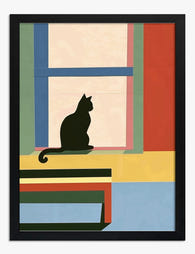
Lámina de planta al sol junto a la ventana
Precio de oferta Desde €16,95€23,95 -

Lámina paisaje de inspiración botánica de la campiña británica
Precio de oferta Desde €16,95€23,95 -

Lámina de plantas vibrantes en el alféizar
Precio de oferta Desde €16,95€23,95 -
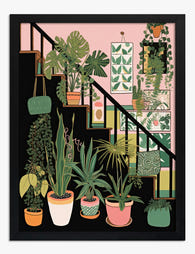
Lámina escalera botánica ecléctica
Precio de oferta Desde €16,95€23,95 -
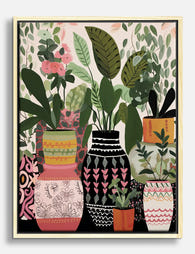
Lienzo de jarrones boho botánicos
Precio de oferta Desde €65,95€93,95 -

Lámina botánica con macetas sobre estante, fondo amarillo
Precio de oferta Desde €16,95€23,95 -

Lámina botánica de jarrones boho
Precio de oferta Desde €16,95€23,95 -

Lienzo escalera botánica con plantas de interior
Precio de oferta Desde €65,95€93,95 -

Lámina de plantas en maceta sobre fondo amarillo
Precio de oferta Desde €16,95€23,95 -

Lámina botánica vintage de primavera
Precio de oferta Desde €16,95€23,95 -

Lámina habitación botánica luminosa de Matisse
Precio de oferta Desde €16,95€23,95 -

Lámina bodegón botánico moderno en ocre y azul cielo
Precio de oferta Desde €16,95€23,95 -

Lienzo selva interior ecléctica
Precio de oferta Desde €65,95€93,95 -

Lámina botánica moderna en verde y marfil
Precio de oferta Desde €16,95€23,95 -

Lámina ramas de olivo en jarrón a rayas
Precio de oferta Desde €16,95€23,95 -

Lienzo planta al sol junto a la ventana
Precio de oferta Desde €65,95€93,95 -

Lámina botánica elegante en verde oscuro
Precio de oferta Desde €16,95€23,95 -

Lámina oasis botánico boho
Precio de oferta Desde €16,95€23,95


Más de The Frame

Más allá de la cocina: 5 estancias donde las lá...
El arte con limones arrastra un problema de marca. Si lo buscas online, te ahogas en cocinas: carteles rústicos, fruteros, paños con frases. Pero una buena lámina de limones es,...

Láminas de limones para tu cocina: dónde colgar...
Las láminas de limones se han convertido, casi sin hacer ruido, en el tema más solicitado para la cocina en los últimos años, y con razón. Esta guía pasa de...

Por qué las láminas de palmeras funcionan tan b...
Las láminas de palmeras tienen un problema de reputación. Dices “palmeras” y la mayoría imagina bares tiki, postales veraniegas y flamencos fucsia. Pero, bien trabajadas, las palmeras son de lo...