
 Pide hoy, entrega el
 How to Create a Minimalist Gallery Wall That Actually Feels Intentional
The 57-inch rule, the editing test, and why three prints often beat thirteen.


Gallery walls aren't dead, but cluttered ones are
The Pinterest-era gallery wall, the one with seventeen mismatched frames squeezed into every spare centimetre above the sofa, is finished. What's replaced it is quieter, more confident, and frankly easier to live with. A minimalist gallery wall is still a gallery wall, just one that's been edited until every piece earns its place.
If you've been wondering whether your existing arrangement looks dated, the test is simple: does it feel curated or accumulated? The 2025 version leans into negative space, restrained palettes, and a clear unifying thread. Below is how to plan one properly, including the maths, the layouts, and the moment you should put the hammer down.

The 57-inch rule and why it matters for minimal layouts
If you've ever asked what is the 57 rule for hanging pictures, here's the short answer: the centre of your artwork (or the centre of your overall arrangement) should sit at 57 inches, roughly 145cm, from the floor. That number approximates average human eye level, which is why galleries and museums use it as a baseline.
For a single print, the rule is straightforward. You measure 145cm from the floor, mark it, and that's the centre point of your piece. For a gallery wall, you treat the entire arrangement as one object: find the visual centre of the whole grouping and place that at 145cm.
Where it gets interesting for minimal layouts is the interaction with furniture. The standard guidance is to leave 15-20cm (6-8 inches) between the bottom of your art and the top of a sofa or console. If applying the 57-inch rule pushes your prints too close to or too far from the furniture, the furniture wins. Anchoring art visually to the piece below it matters more than hitting an abstract eye-level number.
Two practical exceptions: in dining rooms, where you're seated for long stretches, drop the centre to around 140cm. In hallways, where you're standing and walking past, you can push it slightly higher.
Choosing a layout: grid, linear row, or asymmetric cluster
Minimal gallery walls live and die on layout choice. There are three that consistently work, and we'd recommend ignoring the rest until you've nailed one of these.
The grid
Two by two, three by two, or three by three, with identical frame sizes and consistent spacing. This is the most forgiving layout for beginners because the structure does the heavy lifting. It reads as deliberate even if your print choices are slightly off, and it suits modern interiors, panelled walls, and any space that already has clean lines.
The linear row
Three or four prints in a straight horizontal line, evenly spaced, identical sizes. This is our favourite for above-sofa placements because it echoes the horizontal line of the furniture and stays out of the way visually. A row of three 50x70cm framed prints above a three-seater is close to foolproof.
The asymmetric cluster
Three to five pieces in varied sizes arranged around a central anchor. This is the hardest to pull off in a minimal way because asymmetry naturally trends toward "busy." If you go this route, keep the piece count low (three or four maximum), use no more than two different sizes, and leave generous breathing room between frames.
Line art prints tend to work brilliantly in clusters because their visual weight is light, so even an asymmetric arrangement reads calm.
How many prints you actually need (hint: fewer than you think)
Most people overshoot. If you're building a minimalist gallery wall, the answer is almost always three, sometimes four, occasionally five. Beyond five, you're working harder to maintain cohesion and the wall starts to lose its quiet quality.
Here's a useful frame: minimal gallery walls cover roughly 30-50% of the wall area behind them. Maximalist walls cover 70-90%. If you find yourself filling more than half the available space, you're drifting out of minimal territory.
Three prints is the sweet spot for most rooms. It gives you enough variation to feel composed without enough volume to feel cluttered. Two prints can work but often reads as incomplete unless they're large. One large print isn't a gallery wall, it's a statement piece, and that's a different decision entirely.

Size combinations that work: our recommended pairings
The most common mistake in minimal gallery walls isn't choosing the wrong art, it's choosing the wrong sizes. Here are pairings we'd actually use, with the reasoning behind each.
Three pieces, linear row above a sofa: Three 50x70cm framed prints, identical orientation, spaced 5cm apart. Total width comes in around 160cm, which suits a standard three-seater of 200-220cm and respects the two-thirds rule (art should occupy roughly two-thirds the width of the furniture below).
Three pieces, asymmetric anchor: One 70x100cm anchor flanked by two 30x40cm pieces stacked vertically on one side. This works because the anchor carries the visual weight and the smaller pair creates rhythm without competing.
Two pieces, generous portrait pair: Two 60x80cm prints, portrait orientation, hung side by side with 8cm between them. Best above a bed, console, or in an entryway. The taller proportions feel architectural.
Four pieces, 2x2 grid: Four 40x50cm prints in a tight square arrangement, 4cm between each. Works in narrower spaces like between two windows or above a slim console. Keep the spacing tight, because too much breathing room inside a grid breaks the unity.
Five pieces, anchored cluster: One 50x70cm landscape anchor with four 20x25cm prints arranged around it. This is the upper limit of "minimal" and only works if all five pieces share an obvious unifying thread.
If you don't want to hunt down individual pieces that work together, pre-curated wall art sets are designed with these proportions in mind.
Picking a unifying thread: palette, line weight, or subject
Cohesion is what separates a minimalist gallery wall from "three random prints on a wall." Pick one unifying thread and commit to it. Trying to unify on multiple dimensions at once usually produces something that feels themed rather than considered.
Palette. All pieces share a common colour story: muted earth tones, black and white, or a single accent colour against neutral backgrounds. This is the easiest thread to maintain and the most flexible.
Line weight. All pieces use a similar visual density. Delicate single-line drawings together, or all bold high-contrast pieces together. Mixing a heavy abstract with two airy line drawings rarely works.
Subject matter. All botanical, all architectural, all figurative. This is more restrictive but creates strong cohesion when done well.
Frame style. Same frame colour and profile across all pieces. We'd argue this is the single most underrated unifier, because consistent framing can pull together prints that wouldn't otherwise sit comfortably side by side. Natural oak across the board, or matte black, or warm walnut. Pick one.
The decision tree we'd suggest: start with palette, layer in frame consistency, and only worry about subject matter or line weight if the first two aren't carrying it. Minimal design prints tend to play well together because they're already built around restraint.
Hanging it straight the first time: practical tips and tools
Before any nails go in, plan on the floor. Lay your prints out exactly as they'll appear on the wall, adjust spacing, take a photo from above. Live with the arrangement on the floor for a day if you can. It's much easier to swap a piece out when nothing's mounted yet.
Then move to the wall using painter's tape. Cut tape to the exact dimensions of each frame and stick the rectangles where you plan to hang. Step back. Live with the tape for an hour. This catches every spacing issue before you commit.
The standard spacing
5-8cm between frames for tight, considered groupings. Less than 4cm and the prints visually merge into one shape. More than 10cm and the arrangement loses its sense of being a single composition. For grids, stay at the tighter end. For linear rows, the middle works well.
The tools worth owning
A spirit level (the small bubble kind, or a level app on your phone if you trust it). A tape measure. A pencil. Painter's tape. Picture hooks rated for the weight of your frames, which matters more for larger pieces.
Renting? Read this
Command strips work well for prints up to around 50x70cm in framed form, provided you follow the weight ratings honestly. For anything larger or heavier, picture rails (if your flat has them) or simply leaning prints against the wall on a shelf or console looks intentional in its own right. A leaning gallery is genuinely a layout choice, not a compromise.
One thing worth flagging: framing quality matters here more than people realise. A warped frame, a print that's not properly fitted, or a frame that arrives separately from the artwork creates a gallery wall that looks slightly off no matter how perfectly you hang it. Frames built from solid wood with the print fitted properly before shipping make a visible difference, especially in minimal layouts where every flaw is visible.

When to stop adding: the minimalist gallery wall editing test
This is the question almost no guide answers, and it's the one that separates a minimal gallery wall from one that crept into clutter. Run your arrangement through these four checks before adding anything else.
The negative space test. Step back five metres. Can you see clear, uninterrupted wall space around the edges of your arrangement and between the frames? If your eye can't rest anywhere, you've gone too far.
The thirty-second test. Look at the wall for thirty seconds. Can you describe the unifying thread out loud in one sentence? "It's all black and white photography." "They're all line drawings of plants." If you can't, the cohesion isn't strong enough and adding more pieces won't fix it.
The removal test. Mentally remove one piece. Does the wall still feel complete? If yes, you have the right number or possibly one too many. If it feels broken, you're at the right count. Try this with each piece in turn.
The newest piece test. When you add a new print, does it elevate the existing arrangement or just sit alongside it? If it doesn't make the rest of the wall look better, take it down. The bar for joining a minimal gallery wall is high.

A final note on rotation
The best minimal gallery walls are designed for swapping, not stasis. Plan your layout so two or three pieces can be rotated seasonally without rehanging the entire wall. Keep the anchor piece fixed, change the satellites. This is how you keep the wall feeling alive without falling back into the habit of just adding more.
If you're starting from scratch, begin with three prints, one unifying thread, and the simplest layout your space allows. You can always add later. You almost certainly won't need to. Browse abstract prints when you're ready to start choosing pieces, and trust the editing test to tell you when you're done.

Productos Fab destacados en este blog
-

Lámina minimalista de equilibrio sereno en blanco y negro
Translation missing: es.products.product.sale_price Desde €16,95€23,95 -

Lámina de figuras minimalistas en fila
Translation missing: es.products.product.sale_price Desde €16,95€23,95 -

Lienzo figuras minimalistas
Translation missing: es.products.product.sale_price Desde €65,95€92,95 -

Lámina figuras minimalistas
Translation missing: es.products.product.sale_price Desde €16,95€23,95 -

Lámina menos es más, pero a veces más es más
Translation missing: es.products.product.sale_price Desde €16,95€23,95 -

Lámina minimalista de equilibrio sereno en línea continua
Translation missing: es.products.product.sale_price Desde €16,95€23,95 -

Lienzo Bauhaus minimalista y moderno
Translation missing: es.products.product.sale_price Desde €65,95€92,95 -

Lienzo armonía minimalista de figuras coloridas
Translation missing: es.products.product.sale_price Desde €65,95€92,95 -

Lámina minimalista en tonos neutros
Translation missing: es.products.product.sale_price Desde €16,95€23,95 -

Lámina urbana minimalista en cuadrícula azul y coral
Translation missing: es.products.product.sale_price Desde €16,95€23,95 -

Lienzo figura de yoga en dibujo lineal minimalista
Translation missing: es.products.product.sale_price Desde €65,95€92,95 -
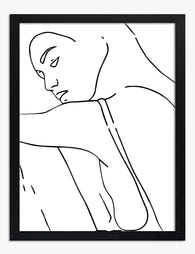
Lámina figura femenina minimalista en línea continua, blanco y negro
Translation missing: es.products.product.sale_price Desde €16,95€23,95 -

Lienzo minimalista en blanco y negro con líneas audaces
Translation missing: es.products.product.sale_price Desde €65,95€92,95 -

Lienzo musa minimalista de trazo único
Translation missing: es.products.product.sale_price Desde €65,95€92,95 -

Lámina minimalista de líneas serenas
Translation missing: es.products.product.sale_price Desde €16,95€23,95 -

Lienzo silueta de yoga minimalista en blanco y negro
Translation missing: es.products.product.sale_price Desde €65,95€92,95 -

Lámina abstracta de equilibrio minimalista en blanco y negro
Translation missing: es.products.product.sale_price Desde €16,95€23,95 -

Lienzo siluetas humanas minimalistas
Translation missing: es.products.product.sale_price Desde €65,95€92,95 -

Lámina abstracta minimalista en beige y blanco
Translation missing: es.products.product.sale_price Desde €16,95€23,95 -

Lienzo torre urbana minimalista
Translation missing: es.products.product.sale_price Desde €65,95€92,95


Más de The Frame

Every Animal in William Morris's Designs: The C...
Most people know the thrush in Strawberry Thief and stop there. But Morris's wider body of work contains foxes, hares, peacocks, ravens, lions, herons, woodpeckers, deer, and doves, often half-buried...

Countryside Decor Ideas: How to Bring Rural Cal...
Countryside art has quietly become one of the most versatile choices in modern interiors. Not the chintz-and-bunting version, but the kind of soft, considered pastoral scenes that bring the outside...

Arts and Crafts Animal Prints: The Victorian De...
The Arts and Crafts revival: why Victorian animal prints are trending again Scroll through any interior design hashtag right now and you'll see them everywhere: hares peering through curling foliage,...