
 Pide hoy, entrega el
 The Only Maximalist Gallery Wall Guide That Stays Intentional
The systems-based approach to building a busy wall that feels collected, not chaotic.


Maximalism isn't the absence of rules. It's the careful concealment of them. The walls that look like joyful chaos in design magazines are almost always built on invisible structure: a colour thread, a sizing hierarchy, deliberate spacing. This guide gives you that structure.
Why maximalist gallery walls work (and why most people chicken out too early)
A great maximalist wall does something a single oversized print cannot. It tells a layered story, rewards repeat looking, and lets you keep adding to it for years without redecorating. It also fills awkward architectural spaces (long hallways, tall stairwells, the wall above a deep sofa) more gracefully than any standalone piece.
The reason most people give up halfway is fear. They hang four prints, panic at the imbalance, and stop. A wall with four prints reads as indecision. A wall with fourteen reads as intention. The midpoint is the danger zone, which is why most home gallery walls look unfinished rather than maximalist.
The counterintuitive truth: busy walls need more planning than sparse ones, not less. With a single print, you can be off by 10cm and nobody notices. With seventeen, every gap, every frame finish, every colour relationship is doing visible work. Maximalism rewards system thinking.

Pick your thread: colour, mood, or subject as the connective tissue
Before you buy anything, pick your connective thread. This single decision is what separates "curated excess" from "messy hodgepodge." Without a thread, even gorgeous prints feel like a thrift shop wall.
You have three options.
Colour thread
Choose two or three colours that must appear in every piece, even subtly. A wall of mustard, navy, and burnt sienna can include abstracts, botanicals, portraits, photography, and typography, and still feel deeply unified. The colours do all the cohesion work, which frees you to be wild with subject matter. Our bold and colourful art collection is built for this approach.
Mood thread
Mood is harder but more rewarding. Pick a feeling (dusky romantic, sun-bleached coastal, Bauhaus academic, witchy folk) and only buy pieces that match it. Colours can vary widely. The unifying force is atmosphere. This is the route to take if you love eclectic visual cultures and want them all on one wall.
Subject thread
The most literal option: every piece shares a subject. All botanical, all portraits, all architecture, all night scenes. This is the easiest thread to execute and the easiest to outgrow. If you go subject-led, give yourself permission to mix eras and styles aggressively (a Renaissance portrait next to a 1970s photograph next to a contemporary illustration), or it tips into themed-restaurant territory.
The mistake to avoid: trying to use all three threads at once. One is plenty. Pick it, write it down, and use it as a filter every time you're tempted to add a new piece.
The sizing formula: anchors, satellites, and fillers
Every maximalist wall that works is built on three sizes of piece, in roughly these proportions.
Anchors (1 to 2 pieces, 60x80cm or larger). These are the visual gravity wells. They draw the eye first and give the wall a centre. Without them, your wall reads as a swarm.
Satellites (4 to 6 pieces, 30x40cm to 50x70cm). The supporting cast. They orbit the anchors, picking up colours and themes, and form the structural midweight of the composition.
Fillers (8 to 12 pieces, 13x18cm to 21x30cm). Small pieces that fill gaps, soften edges, and reward close inspection. They're where you can be most playful with subject and style.
A wall of twenty pieces in this ratio will look intentional. A wall of twenty pieces all roughly the same size will look like a filing cabinet. Even spacing of even sizes is the single most common reason maximalist walls fail.
If you're starting smaller (one anchor, three satellites, five fillers) the same ratios apply. The system scales.
For sets that already balance these proportions, our wall art sets collection does the maths for you.
Frame finishes for maximalist walls: match or deliberately mismatch
Frames are not neutral. They carry visual weight, and on a maximalist wall they're either your unifier or your second layer of variation. Decide which before you commit.
When to match frames
Match frames (all black, all natural oak, all white) when your art is wildly disparate in style, era, or palette. The frame becomes the unifying thread. A wall of Matisse cutouts, vintage botanical plates, and modern abstract photography will feel coherent if every frame is identical solid oak. The eye reads "collection" rather than "pile."
When to deliberately mismatch
Mismatch frames when your art is already tightly unified by colour or subject. If you've got a clear colour thread doing the cohesion work, varied frames (black, brass, natural wood, painted) add richness without confusion. The rule of thumb: only one element should be doing the chaos. If art is wild, frames should be calm. If art is calm, frames can be wild.
A practical middle path
Limit yourself to two or three frame finishes maximum, in deliberate proportions. For example: 60% black frames, 30% natural oak, 10% brass. Random distribution rarely works. Repetition with variation does.
A note on quality, since this is where most gallery walls quietly fall apart: cheap frames warp, the print bows, and within six months the whole wall starts looking shabby. Solid wood frames with proper acrylic glazing hold their shape and don't yellow. UV-protective glazing matters even more on a busy wall, because uneven fading across pieces will wreck your colour thread within a couple of years.

How to map your layout on the floor before you drill a single hole
This is the single most important step. Skip it and you will regret it. Do it properly and the actual hanging takes thirty minutes.
Step 1: Clear a floor area the same size as your wall
Use the actual dimensions. If your wall area is 240cm wide and 180cm tall, mark out that exact rectangle on the floor with masking tape. Do not eyeball it.
Step 2: Lay out all your pieces, frames included
Start with your anchors. Place them off-centre, never dead centre. The classic move is one anchor at roughly one third from the left, slightly below the wall's vertical midpoint. Then arrange satellites around the anchors, then fillers in the remaining gaps.
Step 3: Photograph it from directly above
Stand on a chair, phone held flat. The photo flattens the layout into the same plane your eye will see on the wall. Things you didn't notice at floor level (a heavy left side, a colour clump, a gap that looks like a missing tooth) become obvious in the photo.
Step 4: Rearrange and reshoot at least three times
Three layouts minimum. Often the second or third is markedly better than the first. Compare the photos side by side.
Step 5: Make paper templates
Cut newsprint or kraft paper to the exact size of every frame. Label each one. Tape them to the wall in your final arrangement using painter's tape. Live with it for at least 24 hours. Walk past it. Look at it from the sofa, from the doorway, from the kitchen.
Step 6: Hang through the paper
Mark the hanging point on each paper template, drill straight through it, then tear the paper away. Your spacing is already perfect.
You'll know your layout is ready when nothing in the photograph above is begging you to move it.
Spacing rules that give busy walls breathing room
"There are no rules" is unhelpful when you're holding a hammer. Here are the numbers.
Dense zones: 4 to 6cm between frames. Use tight spacing where you want pieces to read as a single unit, typically around an anchor or in a small cluster of fillers.
Breathing zones: 8 to 12cm between frames. Use looser spacing at the outer edges of the wall, or where a piece needs visual isolation to be appreciated.
Edge buffer: at least 15cm from the edge of furniture, doorframes, light switches, or ceiling. Walls feel cramped when art crowds the architecture.
Vary your spacing. This is the rule competitors miss. Even spacing throughout makes the wall feel like wallpaper. Varied spacing (some tight clusters, some breathing room) creates rhythm. Aim for two or three "tight pockets" inside an overall looser composition.
The negative space paradox
Even maximalist walls need empty zones, usually at the top and bottom edges, occasionally as a deliberate gap inside the composition. Without negative space, the eye has nowhere to rest and the whole wall reads as noise. A good rule: leave at least one corner of your overall rectangle slightly more open than the others. The asymmetry is what makes it feel intentional.
Adding non-print elements: mirrors, shelves, and objects alongside art
A truly maximalist wall isn't just framed prints. The best ones include sculptural objects, small shelves, mirrors, ceramics, woven pieces, and the occasional bit of weirdness (a vintage hat, a pressed botanical, a tiny taxidermy moth in a shadow box).
A few principles.
Mirrors count as anchors. A round mirror functions like a large framed piece, and reflects light back into a busy wall, which keeps the whole composition from feeling heavy.
Shelves should be narrow and shallow. A 6cm deep picture ledge holds small objects without dominating. Anything deeper turns the wall into furniture.
One sculptural object per square metre, maximum. More than this and the wall stops reading as a gallery and starts reading as a junk shop.
Repeat materials. If you've got a brass mirror, add a brass-framed print and a small brass object on a ledge. Material repetition does the same unifying work as colour repetition.
For pieces with the right tactile, layered energy for this kind of wall, the eclectic prints collection is a useful starting point.

Three real gallery wall arrangements you can copy print by print
Arrangement one: the warm botanical (12 pieces)
A colour-threaded wall in ochre, terracotta, sage, and cream. One large 70x100cm botanical anchor slightly left of centre. Four 30x40cm satellites in mixed botanical and abstract subjects orbiting the anchor. Seven 21x30cm fillers including one piece of typography and one black-and-white photograph for contrast. All frames natural oak. Sits beautifully above a linen sofa.
Arrangement two: the moody portrait gallery (15 pieces)
Mood-threaded, dusky and Romantic. Two anchors: one 60x80cm portrait, one 50x70cm dark abstract. Five 30x40cm satellites in moody landscapes and figure studies. Eight small 13x18cm fillers including a small mirror and a postcard-sized vintage print. All frames black. Works in a bedroom or a study with low warm lighting.
Arrangement three: the salon-style sitting room (20+ pieces)
Subject-threaded around "things humans have made beautiful": architecture, objects, hands, textiles. One large 70x100cm anchor and one 60x60cm secondary anchor on opposite sides. Six 40x50cm satellites. Twelve fillers ranging from 13x18cm to 24x30cm. Mixed frames in a 60% oak, 30% black, 10% brass ratio. Climbs from skirting board to ceiling on one wall of a sitting room.
If you're building one of these as a gift, the gifts for maximalists collection is full of pieces that slot into these arrangements without disrupting a colour thread.
Building it in phases (because nobody buys twenty prints at once)
Start with your anchor. Live with it for two weeks. Add two satellites that pick up colours from the anchor. Live with that for another fortnight. Then add three fillers. Then more satellites. Then more fillers.
The advantage of a slow build: you'll refine your thread as you go, and your wall will feel personal rather than purchased. The disadvantage: it requires patience, and the in-between stages will look unfinished. Tape paper templates of "future" pieces onto the wall to remind yourself of the plan.
When your wall looks messy instead of curated: a quick troubleshooting list
- Too many similar sizes: add an anchor or remove a few middling pieces.
- No clear thread: identify which two or three colours appear most, and remove anything that fights them.
- Even, gridded spacing: create one or two tight clusters and one breathing zone.
- Frames competing with art: unify the frames, or unify the art, but not neither.
- Wall feels heavy on one side: rebalance by moving an anchor or adding a small mirror to the lighter side.
- Everything reads as muddy from across the room: you've lost contrast. Add one piece with high tonal contrast (a black-and-white photograph, a graphic typography print) to reset the eye.

The final test
Stand back six metres. Squint. If the wall reads as one composition with clear weight and rhythm, you've done it. If it reads as a flat field of rectangles, your anchors aren't strong enough, your spacing is too even, or your thread is too weak. Go back to the floor, photograph from above, and rearrange. The work is in the planning. The hanging is just admin.

Productos Fab destacados en este blog
-

Lienzo cena maximalista
Translation missing: es.products.product.sale_price Desde €64,95€92,95 -

Lienzo Bauhaus minimalista y moderno
Translation missing: es.products.product.sale_price Desde €64,95€92,95 -

Lámina de movimiento audaz de estilo maximalista
Translation missing: es.products.product.sale_price Desde €16,95€23,95 -

Lienzo Bauhaus minimalista en tonos púrpura
Translation missing: es.products.product.sale_price Desde €64,95€92,95 -

Lienzo paisaje de ensueño Bauhaus
Translation missing: es.products.product.sale_price Desde €64,95€92,95 -

Lienzo frase motivadora minimalista
Translation missing: es.products.product.sale_price Desde €64,95€92,95 -

Lienzo Kandinsky violeta y verde
Translation missing: es.products.product.sale_price Desde €64,95€92,95 -
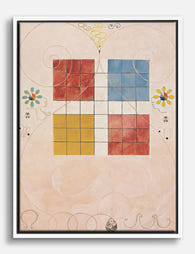
Lienzo los diez mayores de Hilma af Klint
Translation missing: es.products.product.sale_price Desde €64,95€92,95 -

Lienzo cama minimalista en azul y naranja
Translation missing: es.products.product.sale_price Desde €64,95€92,95 -

Lienzo minimalista en blanco y negro con líneas audaces
Translation missing: es.products.product.sale_price Desde €64,95€92,95 -

Lienzo tigre vibrante y maximalista
Translation missing: es.products.product.sale_price Desde €64,95€92,95 -

Lienzo rostro de línea continua azul vibrante
Translation missing: es.products.product.sale_price Desde €64,95€92,95


Más de The Frame

Why William Morris Prints Look Brilliant in Mod...
William Morris has been quietly miscategorised for decades. His patterns get filed under "country cottage" or "Arts and Crafts revival" and rarely escape, which is a shame because his tree...

Why Arts and Crafts Nature Prints Are the Antid...
The minimalism hangover: why bare walls stopped feeling calming For about a decade, the aspirational interior was a white box with one boucle chair in it. That look has officially...

Botanical Petal Art: Why Close-Up Prints Feel M...
Full florals have had a long run, and they're not going anywhere. But if you've noticed that the botanical art appearing in design magazines, boutique hotel lobbies, and the better-styled...