
 Commandez aujourd'hui, livré le
 Affiches botaniques ou tropicales : le guide simple pour choisir l’art végétal idéal
One is a 19th century science lesson, the other is a holiday in print form. Here's how to choose.


Les affiches végétales sont souvent mises dans le même panier en ligne, mais « botanique » et « tropical » désignent deux univers vraiment différents. L’une s’enracine dans l’illustration scientifique des XVIIIe et XIXe siècles, l’autre célèbre la profusion de couleurs intenses et luxuriantes. Mal choisie pour la pièce, l’affiche se fond dans le mur… ou couvre de sa voix tout le reste.
Affiches botaniquesa0: ce que le terme recouvre vraiment
Une affiche botanique, au sens propre, est une illustration re9alise9e pour la documentation scientifique. Imaginez une seule fouge8re, une tige df9 iris ou un brin de romarin rendus avec une pre9cision chirurgicale sur fond clair, souvent accompagne9s du nom latin manuscrit en dessous. Cette tradition naeet des grands explorateurs et collecteurs europe9ens des XVIIIe et XIXe sie8clesa0; des artistes comme Pierre-Joseph Redoute9 e9taient mandate9s pour inventorier chaque espe8ce rapporte9e des colonies et du Nouveau Monde.
Cette he9ritage explique le0 allure actuelle des affiches botaniques. La palette est retenuea0: verts sourds, ocres passe9s, se9pia, papier cre8me. La composition pre9sente en ge9ne9ral un seul spe9cimen, centre9, avec beaucoup de9 espace ne9gatif autour. Le de9tail fait tout le sensa0: on doit pouvoir compter les nervures de9 une feuille.
Les affiches botaniques contemporaines reproduisent soit directement ces planches historiques, soit en adoptent le langage visuela0: trait pre9cis, lavis aquarelle9s, le9gendes soigne9es. Elles inspirent le calme, la mesure, presque le9 acade9misme. Ce9est leur charmea0e9 et la raison pour laquelle elles exigent le bon contexte pour fonctionner.
Si ce9est la voie qui vous attire, la collection de9affiches botaniques est le meilleur point de de9part pour vos recherches.

Affiches tropicalesa0: la cousine plus audacieuse et de9corative
Les affiches tropicales partagent un air de famille avec les botaniques (ce sont toutes deux des arts ve9ge9taux au mur) mais leur intention est tout autre. Lb4affiche tropicale cherche fe faire ressentira0: la chaleur, lab abondance, une parenthe8se vacances un peu de9seenvolte quelque part avec une piscine. Imaginez de grandes feuilles de monstera qui emplissent tout le cadre, des frondes de bananier en e9meraude sature9e, des silhouettes de palmiers sur des ciels terracotta.
Quand la botanique isole un seul spe9cimen, le tropical superpose. Quand la botanique chuchote, le tropical projette. Les couleurs sont volontairement percutantesa0: vert jungle profond, corail vif, moutarde, noir encre. Les compositions sont de9coratives plutf4t qub4e9ducatives, recadrant souvent les feuilles e0 le9exce8s jusqub4e0 frf4ler le9abstraction.
La quasi-totalite9 des affiches tropicales sont modernes. Pas de tradition de folios pluricentenaires derrie8re elles. Elles e9mergent comme style de9coratif au mitan du XXe sie8cle, cf4tant Palm Beach et le9esthe9tique tikia0e9 le9esprit Riviera ne9est jamais bien loina0e9 et connaissent un retour en force dans les anne9es 2010 avec la folie des plantes db4inte9rieur. Aujourdb4hui, notre se9lection de9affiches tropicales va de le9e9tude minimaliste de9une feuille unique aux sce8nes de jungle maximalistes.
La diffe9rence pratique compte au moment db4acheter. Une affiche botanique vous invite e0 regarder de pre8s. Une affiche tropicale demande e0 la pie8ce de changer db4atmosphe8re.
Cf4te e0 cf4tea0: comment la meame feuille change selon le style
Prenons une Monstera deliciosa, ve9ritable ce9le9brite9 du monde ve9ge9tal.
Version botaniquea0: une seule feuille pose9e e0 plat sur papier cre8me, chaque fenestration trace9e avec pre9cision, la tige et un morceau du syste8me racinaire pour comple9ter, et aba0Monstera deliciosa Liebm.a0bb imprime9 en petites italiques en bas. Les verts sont adoucis, presque olive. On croirait une page du carnet de9un explorateur victorien.
Version tropicalea0: la meame feuille peut remplir le cadre de bord e0 bord, recadre9e au niveau du pe9tiole, dessine9e en deux aplats de vert profond sans modele9, sur fond rose poudre9. Aucune le9gende. Pas de tige. Rien que la forme et la couleur.
Meame plante, intention radicalement diffe9rente. La version botanique la documente. La version tropicale sb4en empare.
Ce9est le test le plus limpide pour choisir votre camp. Si la petite version pre9cise vous attire, vous eates du cf4te9 botanique. Si vous voulez la grande version graphique, vous eates tropical. Le fait que les boutiques rangent les deux sous aba0affiches de feuilles e0 encadrera0bb cre9e la plupart des confusions.
Dans quelles pie8ces les affiches botaniques excellent
Les botaniques sb4installent le0 of9 vous cherchez la concentration ou le calme. La raison est autant pratique que sensorielle.
Bureaux et espaces de te9le9travail. Leur petite e9chelle, le trait de9taille9 et la tonalite9 acade9mique re9compensent le regard attentifa0e9 ide9al quand on est assis. Un ensemble de quatre affiches encadre9es en 30 d7 40a0cm au-dessus du bureau cre9e un fond discret et re9fle9chi qui ne de9tourne pas lb4attention.
Chambres. Palettes sourdes et compositions de9e9pure9es favorisent le repos. Des affiches botaniques dans des nuances de sauge, de vert passe9 et de cre8me dialoguent e0 merveille avec le linge de lit en lin et des murs neutres. c9vitez de les accrocher directement au-dessus de la teate de lit si vous tenez e0 votre sommeila0: pre9fe9rez-les en paires de chaque cf4te9.
Couloirs et cages de9escalier. Les longs murs e9troits sont parfaits pour des se9ries botaniquesa0: la re9pe9tition de spe9cimens e0 e9chelle constante cre9e un rythme. Une enfilade de six petites affiches encadre9es dynamise un couloir bien mieux qub4une pie8ce unique de grand format.
Salles de bains. Les botaniques conviennent e0 le9esprit un brin utilitaire, presque db4officine, de9une belle salle de bains. Privile9giez des affiches encadre9es avec vitrage acrylique anti-UV plutf4t que du verrea0: lb4acrylique re9siste mieux e0 le9humidite9 et ne se brisera pas si un flacon tombe.
Le0 of9 les botaniques peinenta0: grands se9jours ouverts, cuisines de9je0 tre8s colore9es, et tout mur de plus de deux me8tres de large si vous nb4y mettez qub4une petite affiche. Elles se perdent. Montez en format, accrochez-les en se9rie, ou changez de style.

Dans quelles pie8ces les affiches tropicales sb4imposent
Les tropicales appartiennent aux pie8ces sociales, e9nerge9tiques, of9 la conversation bat son plein. Leurs couleurs sature9es et leurs compositions fortes font un travail dont les pie8ces calmes nb4ont pas besoin.
Se9jours. Une seule affiche tropicale encadre9e en 70 d7 100a0cm au-dessus de9un canape9, ou une Toile XL en 100 d7 150a0cm sur un mur db4accent, ancre la pie8ce et offre un point de fuite e0 lb453il. Lb4audace justifie le9e9chellea0: ce9est le0 que les tropicales brillent vraiment.
Cuisines et salles e0 manger. Les cuisines sont de9je0 visuellement charge9es (appareils, faefences, ustensiles, denre9es)a0: une pie8ce db4art assertive sb4y tient le0 of9 une de9licate botanique se9e9vanouirait. Les affiches tropicales en verts et coraux flattent aussi la lumie8re chaude des suspensions au-dessus de la table.
Ve9randas et jardins db4hiver. Le9e9vidence joue en leur faveur. Une affiche tropicale, dans des tonalite9s jungle, prolonge le9inte9rieur-vers-le9exte9rieur. Optez ici pour la Toile plutf4t que le9affiche encadre9ea0: la finition mate ge8re mieux les variations de lumie8re et lb4absence de vitrage supprime les reflets des baies.
Mur db4accueil dans lb4entre9e. Si vous avez un mur face e0 la porte db4entre9e, ce9est le0 qub4accrocher une grande affiche tropicale. Elle donne le ton e0 la maison en trois secondes.
Le0 of9 les tropicales peinenta0: inte9rieurs scandinaves minimalistes (trop bavardes face e0 la retenue), pie8ces maximalistes de9je0 tre8s fortes (tout sb4affronte), et petites chambres-boeetes (e9crasantes e0 courte distance). Les tropicales ont besoin de9espace visuel autour de9elles ou db4un de9cor assume9 et e9quilibre9.
Pour des options ve9ge9tales plus transversales, e0 mi-chemin entre les deux, la collection de9affiches ve9ge9tales vaut le de9tour.
Peut-on mealer les deux styles sous le meame toita0? Oui, voici comment
Vous pouvez tout e0 fait re9server les botaniques au bureau et les tropicales au se9jour. Ce qui se complique, ce9est de les mealer sur un meame mur ou dans un meame champ visuela0e9 le0 of9 beaucoup se prennent les pieds.
Trois re8gles font la diffe9rence.
Una0: choisissez un e9le9ment liant. Si vos botaniques sont dans de fines baguettes noires, mettez vos tropicales dans de fines baguettes noires aussi. Ou unifiez la couleur du passe-partout. Ou restez dans une meame famille chromatique (verts profonds et neutres chauds fonctionnent pour les deux). Sans lien, le me9lange paraeet accidentel.
Deuxa0: donnez e0 chaque style sa zone. Une galerie qui me9lange e0 parts e9gales deux botaniques et deux tropicales marche rarement. Groupes les botaniques db4un cf4te9, les tropicales de lb4autre, avec de lb4espace entre eux. Lb453il doit percevoir chaque ensemble comme intentionnel.
Troisa0: respectez la logique db4e9chelle. Les botaniques supportent bien le petit format, en se9ries. Les tropicales sb4expriment en grand, souvent seules. Nb4agrandissez pas une botanique en 100 d7 150a0cm pour ab faire comme bb une tropicalea0: son de9tail nb4est pas cone7u pour cette e9chelle et paraeetra e9tire9. Et ne re9duisez pas une tropicale en 30 d7 40a0cma0: sa force graphique disparaeet.
Lb4approche la plus nettea0: des botaniques sur les murs de transition (couloirs, passages, escaliers) et une tropicale en grand format comme pie8ce db4ancrage dans la pie8ce de vie. Les botaniques assurent la respiration entre deux moments forts.

Encadrements qui subliment chaque style
Ce9est souvent le0 que les affiches ve9ge9tales se font trahira0: lb4image est belle, mais le cadre se bat contre elle.
Pour les affiches botaniques
Les botaniques gagnent e0 eatre encadre9es dans des solutions qui honorent leur origine historique ou sb4effacent avec e9le9gance.
Baguettes fines noires. Le classique, pour de bonnes raisons. Elles font re9fe9rence e0 lb4accrochage de galerie contemporain, contiennent proprement lb4image et laissent parler le de9tail. Ide9ales en se9ries de trois ou plus, of9 la cohe9rence compte.
Cheane naturel ou bois clairs. Parfait pour les botaniques de style aquarelle9. Plus chaleureux et moins tranche9 que le noir, particulie8rement agre9able dans une chambre.
Un large passe-partout blanc. Quelle que soit la couleur du cadre, un passe-partout ge9ne9reux (5a0cm minimum) donne e0 une botanique un ve9ritable cachet db4archive. Il rappelle la pre9sentation muse9ale des planches historiques et offre un temps de repos e0 lb453il avant lb453uvre.
c0 e9vitera0: cadres massifs et contemporains, encadrements aba0statementa0bb surdimensionne9s, finitions qui attirent lb453il. Le cadre est un e9crin, pas la vedette.
Pour les affiches tropicales
Les tropicales supportent des cadres plus affirme9s e0a0e9 ou aucun.
Toiles, sans cadre. Souvent le meilleur choix. La surface mate de la toile, le montage e0 bords miroir et la silhouette minimaliste collent e0 le9esprit de9coratif et moderne de lb4art tropical. Aucun reflet, ze9ro complication, et en format XL (jusqub4e0 100 d7 150a0cm) lb4impact est re9el.
Toile encadre9e en caisse ame9ricaine noire. Pour une finition plus aboutie sans perdre la matie8re de la toile, une fine caisse ame9ricaine noire fait le trait db4union ide9al.
Cadres en bois naturel pour affiches papier. Un cadre en cheane ou noyer de largeur moyenne apporte de la chaleur et re9pond au sujet naturel. Particulie8rement re9ussi avec des fonds terracotta ou rose chaud.
c0 e9vitera0: cadres dore9s orne9s (en porte-e0-faux avec la modernite9), cadres blancs sur murs tre8s clairs (lb4affiche semble flotter e9trangement), et tout ce qui ajouterait du bruit visuel e0 une composition de9je0 anime9e.
Une remarque valable pour les deux stylesa0: les affiches encadre9es Fab arrivent monte9es, cadre et image pre9-assemble9s dans un seul colis, syste8mes db4accrochage de9je0 pose9sa0e9 vous e9vitez lb4assemblage approximatif et lb4alignement hasardeux db4une affiche dans un cadre achete9 e0 part. Les flops historiques dans la cate9goriea0? Cadres voile9s e0 lb4arrive9e, affiches qui gondolent sous le vitrage, chasse au cadre au bon format. Rien de tout cela ici. Le vitrage acrylique anti-UV des affiches encadre9es pre9serve e9galement les couleurs meame en pie8ce ensoleille9ea0e9 pre9cieux si vous avez choisi une botanique pour sa palette de9licate.

Deux questions pour de9cider vite
Si vous he9sitez encore, ces deux questions vous me8nent e0 la bonne re9ponse.
c0 quoi sert la pie8cea0? Concentration, repos ou conversations feutre9esa0: botanique. c9nergie, re9ception, effet waouh e0 la premie8re secondea0: tropical.
Quelle est la largeur du mura0? Moins db4un me8tre, ou envie db4une se9riea0: botanique. Plus db4un me8tre et envie db4une pie8ce uniquea0: tropical.
Avec ces re9glages, vous pouvez parcourir les affiches nature sans douter de chaque option. Les styles ne sont pas interchangeables et le marketing qui les traite comme tels rend un mauvais service aux de9corateurs en herbe. Choisissez celui qui sert la pie8ce que vous e9quipez, pas celui qui allait bien sur le mur de quelqub4un db4autre.

Produits Fab présentés dans cet article
-
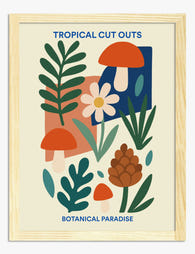
Affiche botanique tropicale en collage
Prix promotionnel À partir de €19,95€33,25 -

Affiche botanique tropicale
Prix promotionnel À partir de €19,95€33,25 -

Affiche paradis botanique en papier découpé
Prix promotionnel À partir de €19,95€33,25 -

Affiche formes botaniques tropicales
Prix promotionnel À partir de €19,95€33,25 -

Affiche paradis botanique en papier découpé
Prix promotionnel À partir de €19,95€33,25 -

Affiche botanique, plantes sur étagère, fond jaune
Prix promotionnel À partir de €19,95€33,25 -

Affiche élégance botanique des palmiers
Prix promotionnel À partir de €19,95€33,25 -

Affiche jardin aux formes botaniques découpées
Prix promotionnel À partir de €19,95€33,25 -

Affiche paradis tropical en découpages botaniques
Prix promotionnel À partir de €19,95€33,25 -

Toile collage botanique tropical
Prix promotionnel À partir de €65,95€93,95 -

Affiche oasis botanique
Prix promotionnel À partir de €19,95€33,25 -

Affiche guide des pains
Prix promotionnel À partir de €19,95€33,25 -

Affiche plantes vertes sur fond jaune lumineux
Prix promotionnel À partir de €19,95€33,25 -

Affiche serre tropicale paisible
Prix promotionnel À partir de €19,95€33,25 -
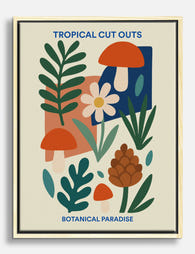
Toile collage botanique tropical
Prix promotionnel À partir de €65,95€93,95 -

Affiche collage tropical et botanique
Prix promotionnel À partir de €19,95€33,25 -

Affiche jardin en découpage végétal
Prix promotionnel À partir de €19,95€33,25 -

Toile jungle d'intérieur éclectique
Prix promotionnel À partir de €65,95€93,95 -

Affiche formes botaniques paradisiaques
Prix promotionnel À partir de €19,95€33,25 -

Affiche botanique sombre, inspiration héritage
Prix promotionnel À partir de €19,95€33,25


Plus de The Frame

Nos affiches des jardins de Van Gogh préférées ...
Pourquoi les affiches des jardins de Van Gogh fonctionnent dans les intérieurs contemporains (pas seulement classiques) On suppose trop souvent que les tableaux de jardins de Van Gogh ont leur...

Décoration murale style campagne française : cr...
La plupart des guides sur la décoration « campagne française » partent du principe que vous possédez un mas en Provence, un budget antiquités et la permission d’ouvrir les cloisons....

Pourquoi la plupart des galeries murales inspir...
La majorité des galeries murales échouent sur le papier, pas sur le mur. On achète des Affiches coup de cœur, on devine l’espacement, on plante un clou… et on croise...