
 Commandez aujourd'hui, livré le
 Canvas vs Framed Print: Which Is Right for Your Room?
A room-by-room guide to choosing between canvas and framed prints, with real prices, lifespans, and the trade-offs nobody mentions.


Canvas or framed art is rarely a question of taste alone. It's a question of light, wall type, ceiling height, who lives in the house, and how much you want to think about your walls in five years. This guide breaks the decision down room by room, with the practical detail most comparison articles skip.
The short answer
If you want a polished, gallery feel and you're decorating a living room, bedroom, hallway, or office, framed prints almost always win. They look more considered, they hold their value visually, and a quality frame elevates even a simple image.
If you want something larger, lighter, more relaxed, or you're working in a humid room or a space with energetic kids, canvas is the better tool. It also lets you go big without the weight or cost of a large frame.
That's the headline. The detail is where the decision actually gets made.

What you're actually comparing
Framed prints
A framed print is a giclée print on thick matte paper, mounted inside a solid wood frame with an acrylic glaze on the front. The paper holds fine detail beautifully, the matte finish kills glare, and the frame gives the piece structural presence on the wall. Our framed prints use FSC-certified solid wood (not MDF or veneer) and UV-protective acrylic instead of glass, which matters more than most people realise: acrylic doesn't shatter, weighs a fraction of glass, and still blocks the UV that fades colour over time.
Canvas prints
A canvas print is a high-resolution image printed onto poly-cotton canvas, then hand-stretched over a solid wooden frame. The image wraps around the edges (mirrored, so nothing important gets cropped) and the surface has a soft matte texture. No glass, no glaze, just the printed canvas.
Worth flagging: some products sold as "canvas" are actually printed board with a canvas texture pressed into the surface. They're cheaper, they're lighter, and they look it. Real stretched canvas has give when you press it gently and visible wooden bars on the back. If you're comparing prices and one option seems suspiciously cheap, this is usually why.
Canvas vs paper print: the surface difference
The clearest way to think about canvas vs paper print is texture versus precision. Paper, especially thick matte giclée paper, renders fine lines, small text, and subtle gradients with a sharpness canvas can't match. Canvas softens everything slightly. That's flattering for paintings, landscapes, and atmospheric photography, and unforgiving for line art, typography, or anything geometric.
Cost: how much cheaper is canvas, really?
For small sizes (around 30x40cm), canvas and unframed prints sit close together, often within £10-£20. The gap widens fast as you scale up.
At 60x80cm, an unframed paper print is typically the cheapest option, a canvas print sits in the middle, and a framed print is the most expensive, often £40-£80 more than the equivalent canvas. At 100x150cm (canvas only, since framed prints top out at 70x100cm), canvas becomes the only sensible way to fill a large wall without spending several hundred pounds on a frame.
The hidden cost people forget: if you buy an unframed print planning to "frame it later", custom framing for a 60x80cm print at a high street framer is often £100-£200 on its own. Buying framed from the start is almost always cheaper than retrofitting.
Breakeven thinking
- Under 50x70cm: framed is worth the small premium for almost any room.
- 50x70cm to 70x100cm: depends on the room (more on this below).
- Above 70x100cm: canvas is the practical choice.
Room by room
Living room
A living room is usually your most considered space, and framed prints reward that effort. The glaze gives depth, the frame anchors the piece, and guests read it as intentional. A 60x80cm or 70x100cm framed print above a sofa is the safest high-impact move you can make.
Canvas works in living rooms too, particularly for larger statement pieces or if your style leans relaxed, coastal, or boho. A single 100x150cm canvas can do what three smaller framed pieces would, for less money and less wall-fiddling.
Browse living room art for a sense of scale.
Bedroom
Above the bed is one of the few places where canvas has a genuine practical edge: it's lighter, so if the fixing ever fails, a falling canvas is far less alarming than a falling framed piece with acrylic glaze. That said, our framed prints use acrylic rather than glass for exactly this reason, so the safety gap is smaller than it would be elsewhere.
For style, both work. Framed prints suit calmer, more grown-up bedrooms. Canvas suits softer, more textural schemes.
Kitchen and dining
Framed, every time. Kitchens have grease in the air, dining rooms have wine, and a sealed acrylic glaze wipes clean with a soft cloth. Canvas absorbs airborne residue over years and is much harder to clean without damaging the surface.
Bathroom
Canvas handles humidity better than paper-in-a-frame. The stretched canvas flexes slightly with moisture changes, where a sealed frame can trap condensation against the print. Neither option is waterproof, and we wouldn't put either directly above a steamy shower without ventilation. But for a well-ventilated bathroom, canvas is the lower-risk choice.
Hallways and stairwells
Framed prints. Hallways are about polish and rhythm, and a row of matching frames is one of the most satisfying decorating moves in any home. Canvas in a hallway can read as unfinished, especially if the rest of the house leans formal.

Kids' rooms and nurseries
Canvas wins on safety. No glaze to crack, lighter weight, softer corners. If you want framed, our acrylic glaze is much safer than glass, but canvas still has the edge for rooms where things get thrown.
For ideas, our kids' room art collection is built around this kind of practical thinking.
Home office
Framed. An office is a space where you want things to look considered, especially if you're on video calls. A well-framed print behind your chair signals care in a way canvas rarely does. This is the one room where the "perceived value" question matters most: framed art reads as deliberate, canvas reads as casual.
See our office art for typical sizes that work behind a desk.
Sunny rooms
This is where the glaze question gets interesting. Glass on a frame is notorious for glare in bright rooms. Our acrylic glaze has a matte-friendly finish that significantly reduces reflection, and the inks are UV-stable for hundreds of years even in direct sunlight. Canvas has no glaze at all, so no glare ever, but the surface is more exposed to dust and airborne particles over time.
If your room has a south-facing window and walls you stare at all afternoon, canvas removes glare from the equation entirely. If you prefer the polish of a frame, look for one with anti-glare or matte acrylic (which we use as standard).
Longevity and maintenance
How long do they actually last?
A framed print with UV-protective glaze and museum-grade inks will hold its colour for hundreds of years in normal indoor conditions. That's not marketing language, that's how archival giclée printing works.
Canvas prints last decades, though the canvas itself can yellow very slightly over a long time, and the surface is more exposed than a glazed frame. In practical terms, you'll redecorate long before either fails.
Cleaning
Framed: dry microfibre cloth on the glaze, monthly or whenever you notice dust. That's it.
Canvas: dry soft brush or a clean dry cloth, very gently. Never use water, never use cleaning products. This is the main maintenance downside of canvas. Once dust settles into the weave, getting it out without damaging the surface is genuinely difficult.
Total cost of ownership
Over 10 years, a framed print is essentially zero-maintenance and looks identical to the day it arrived. A canvas may need careful dusting and, in a high-traffic room, will show its age slightly sooner. Factor this in if you're choosing for a feature wall you don't plan to change.
Installation and renting
Both options arrive ready to hang with fixtures attached. No drilling jigs, no separate hardware to buy, no assembly.
Weight is the practical difference. A 70x100cm framed print is noticeably heavier than the same size canvas, so it needs a proper wall fixing (a screw into a plug, or a picture hook rated for the weight). Canvas at the same size can often go up on a single hook or even adhesive strips rated for 2-3kg.
For renters, canvas is the lower-commitment option: lighter fixings mean smaller holes (or no holes at all with the right strips). Framed prints are absolutely doable in rentals, you just want to use the right fixing for the weight.

The "third option" people forget
Canvas vs framed isn't actually binary. A few hybrid options worth knowing:
Framed canvas (sometimes called a float frame): a stretched canvas set inside a thin wooden frame with a small gap around the edge, so the canvas appears to float. Combines the texture of canvas with the structure of a frame. Good for traditional rooms where plain canvas feels too casual.
Framed prints in oversized mounts: a smaller print in a larger frame with a wide paper mount around it. Makes a modest-sized print feel gallery-grade and is often a better use of money than going bigger.
Multi-piece arrangements: three smaller framed prints can fill more wall and cost less than one large canvas, while looking more curated.
Our framed prints collection includes options designed for all of these approaches.
Common regrets (and how to avoid them)
"The canvas looked cheap." Almost always either a low-resolution image, a board-not-canvas product, or a too-small size in a room that needed a frame. Avoid by checking the print is real stretched canvas, sizing up rather than down, and choosing canvas for images that suit the texture (paintings, landscapes, atmospheric photography).
"The frame overwhelmed the art." Usually a heavy ornate frame around a minimal print. A simple thin black, white, oak, or walnut frame works for almost any image. Save bold frame choices for bold art.
"There's too much glare." Glass frames in sunny rooms. Either use acrylic glaze or switch to canvas.
"It looks tiny on the wall." The single most common mistake. Most people buy art too small. Above a sofa, your art should be roughly two-thirds the width of the sofa. Above a bed, two-thirds the width of the headboard. When in doubt, size up.
Sizing strategy
Canvas can go bigger for the same price, which tempts people into oversized pieces that overwhelm the room. Bigger isn't automatically better. A 100x150cm canvas needs a wall it can breathe on, ideally with at least 30cm of clear space on each side and a sofa, bed, or console table to anchor it.
For framed prints, our largest size is 70x100cm. That's a substantial piece on most walls and rarely feels small if positioned correctly.
Print quality and image forgiveness
Canvas texture is more forgiving of lower-resolution images. The slight softness of the weave masks pixelation and compression. Paper prints, especially on matte giclée, are unforgiving: every detail of the source file shows.
If you're printing your own photography or a digital file you're not sure about at large size, canvas is the safer choice. For professionally produced art, paper shows the work at its best.

A quick decision framework
Choose framed if: it's a living room, dining room, hallway, office, or any room where polish matters; the art is detailed, geometric, or typographic; you want zero maintenance; the size is under 70x100cm.
Choose canvas if: you need to fill a large wall affordably; the room has glare-causing sunlight; it's a bathroom, kids' room, or anywhere safety and humidity matter; the art is painterly or atmospheric; you want a relaxed, less formal feel.
Choose a hybrid if: you love canvas texture but want frame structure (float frame), or you want a small print to feel grand (oversized mount).
Whatever you land on, the single biggest predictor of whether you'll love the piece in two years is whether you sized it right and chose an image you genuinely connect with. The format matters. The image matters more.

Produits Fab présentés dans cet article
-

Toile ensemble, notre coin de bonheur
Translation missing: fr.products.product.sale_price À partir de €64,95€92,95 -

Toile typographique moderne et audacieuse, tons bruns
Translation missing: fr.products.product.sale_price À partir de €64,95€92,95 -

Toile fleur rose poudrée
Translation missing: fr.products.product.sale_price À partir de €64,95€92,95 -
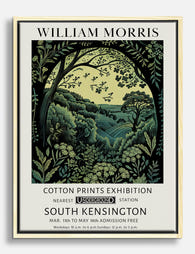
Toile botanique William Morris
Translation missing: fr.products.product.sale_price À partir de €64,95€92,95 -

Toile citation tu es ton œuvre la plus importante
Translation missing: fr.products.product.sale_price À partir de €64,95€92,95 -

Affiche Together Is Home
Translation missing: fr.products.product.sale_price À partir de €16,95€23,95 -

Toile coin moderniste baigné de soleil
Translation missing: fr.products.product.sale_price À partir de €64,95€92,95 -
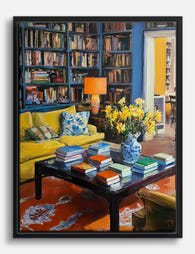
Toile coin lecture cosy
Translation missing: fr.products.product.sale_price À partir de €64,95€92,95 -
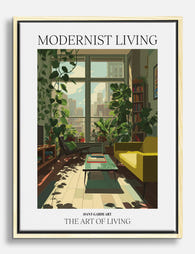
Toile oasis urbaine végétale
Translation missing: fr.products.product.sale_price À partir de €64,95€92,95 -
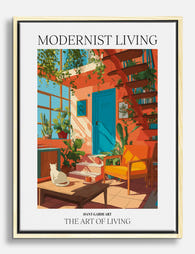
Toile havre moderniste ensoleillé
Translation missing: fr.products.product.sale_price À partir de €64,95€92,95 -

Toile traits audacieux, esprit unique
Translation missing: fr.products.product.sale_price À partir de €64,95€92,95 -

Toile portrait de muse à l’élégance naturelle
Translation missing: fr.products.product.sale_price À partir de €64,95€92,95 -

Toile fantaisie florale de Klimt
Translation missing: fr.products.product.sale_price À partir de €64,95€92,95 -

Toile typographique noir et blanc au message audacieux
Translation missing: fr.products.product.sale_price À partir de €64,95€92,95 -

Toile vue tropicale dans la chambre, Matisse
Translation missing: fr.products.product.sale_price À partir de €64,95€92,95 -

Toile jardin de Giverny de Monet
Translation missing: fr.products.product.sale_price À partir de €64,95€92,95 -

Toile crée la vie que tu aimes
Translation missing: fr.products.product.sale_price À partir de €64,95€92,95 -

Toile cheval au galop aux couleurs vives
Translation missing: fr.products.product.sale_price À partir de €64,95€92,95


Plus de The Frame

Glass vs Acrylic Glazing: The Bit Nobody Explains
Every guide to picture frame glazing reads the same way: a tidy pros and cons list, a vague nod to "personal preference," and a recommendation that conveniently aligns with whatever...

Why We Frame with Real Wood (And What Flat-Pack...
Most people buying a framed print never think about the frame itself. That's fair. You're buying the art. But the frame is the structure that protects it, defines it on...

What Frame Colour Goes with What: A Real Guide
Most frame colour advice is useless because it refuses to commit. You ask "oak or black?" and get a paragraph about undertones. So here's the opposite: a guide that actually...