
 Sourires garantis
 Commandez aujourd'hui, livré le
 Art Prints as Gifts: The Complete Guide to Giving Wall Art (Without Getting It Wrong)
A foolproof system for giving wall art people actually want, from safe-bet subjects to the Instagram stalking shortcut.


Giving art feels risky because it sits on someone's wall every day, judging your taste. The good news: there's a small, reliable playbook that takes most of the anxiety out of it. This guide walks you through when art works as a gift, when it doesn't, and how to land it every time.
Why art prints are actually a brilliant gift (and when they are not)
Art prints are one of the few gifts that genuinely improve a home long after the wrapping is in the bin. They show effort without being effusive, they don't clutter (one item, one wall), and they can be wildly thoughtful for not very much money. A well-chosen print is the rare gift that says "I actually paid attention to who you are."
But art doesn't work for everyone. Skip it for committed minimalists who keep walls deliberately bare, for people mid-move or in temporary rentals, and for anyone with a hyper-specific aesthetic you don't fully understand (the friend who only collects 1970s Italian film posters does not want your guess). It also tends to misfire as a birthday gift for someone you don't know well, because it can quietly imply their walls are lacking.
Housewarmings, weddings, milestone moments, and Christmas for close family are where art shines. If you're in any of those zones, keep reading.

The safe bet subjects: botanical, vintage, William Morris
Some subjects are universally loved. They sit comfortably in modern flats, period homes, country cottages and city studios. If you're buying for someone whose taste you can't quite map, start here.
Botanical prints are the Switzerland of art gifts. Pressed-flower studies, vintage fern illustrations, single-stem ink drawings, leafy palm fronds. They're calm, they reference nature, and they slot into almost any palette. Our botanical art prints collection is the easiest place to start if the recipient leans warm, neutral, or biophilic.
William Morris and Arts and Crafts patterns are another reliably safe choice. The colours are rich but earthy, the patterns are intricate enough to feel considered, and there's a built-in heritage credibility. Even people who say they don't "do" pattern tend to love a Morris print. Browse the William Morris art prints collection if your recipient has any leaning toward traditional, eclectic, or maximalist interiors.
Vintage travel posters, vintage maps and minimalist line art round out the safe-bet roster. Travel posters work brilliantly if you know a place that matters to them. Line art (single-stroke faces, abstract figures) suits modern flats. Maps work for almost everyone, especially housewarming gifts featuring the new city or neighbourhood.
The riskier categories: bold abstracts, anything with text or quotes, religious or political imagery, and very specific photography (a stranger's portrait, for example). Avoid unless you genuinely know their taste.
Choosing for someone else: the style-matching shortcut
You don't need to be a curator. You need ten minutes on Instagram.
Open the recipient's profile and scroll through any home photos they've posted. Look at three things: the dominant colour palette (warm woods and cream, or cool greys and black, or rich saturated jewel tones), the art they already own (if any), and the overall density (gallery walls vs single statement pieces vs deliberately bare).
If they don't post their home, check their saved posts, their Pinterest if you can find it, and the kind of cafés or shops they tag. People are remarkably consistent. Someone who saves moody, candle-lit restaurant photos is not the person for a pastel pink botanical.
Then match, don't contrast. If their palette is warm and earthy, choose a print with terracotta, ochre, sage. If they live in monochrome, pick black, white, or charcoal. The single most common gifting mistake is buying art you love rather than art that fits their existing room.
Size matters: A4 is the safe gift size
When in doubt, give A4 (roughly 21x30cm). Here's the reasoning.
A4 is the sweet spot because it's easy to hang anywhere, easy to slot into an existing gallery wall, and not presumptuous about wall space. It says "this is for you to place where you like" rather than "I have decided your living room needs a 100cm canvas above the sofa."
Anything bigger than A3 (30x40cm) starts to require real knowledge of their walls. A 50x70cm print is gorgeous but commits the recipient to finding a substantial empty wall. A 70x100cm framed piece is a serious object, beautiful for a partner or close family member whose home you know intimately, but a gamble for a colleague or distant friend.
Rule of thumb: A4 for acquaintances, colleagues, and friendly-but-not-close relationships. A3 for good friends and siblings. 50x70cm and above only when you've physically stood in the room you're imagining it in.

Framed vs unframed as a gift: framed wins
Framed is almost always the right answer. Three reasons.
First, it shows effort. An unframed print rolled in a tube, however lovely, lands as "half a gift." A framed piece looks complete, considered, and ready for the wall. Second, it removes friction. Most people never get around to framing prints they receive. The print sits in a drawer for two years until they finally rehome it. Third, framing is the part most people get wrong on their own (mismatched mounts, cheap frames that warp), so doing it for them is genuinely useful.
The exception: if the recipient is a known collector with strong framing preferences, or if you're gifting an art-card with the explicit intention of letting them frame it themselves. In that case, include a clear note ("I thought you'd want to choose the frame yourself") so it doesn't read as unfinished.
A practical note on quality. The biggest reason gift-given art looks underwhelming is poor framing: warped MDF frames, prints shipped separately and assembled at home, glass that catches glare. Look for solid wood frames (FSC-certified, ideally), UV-protective acrylic glaze rather than glass (lighter, no glare, no risk of shattering in transit), and prints that arrive already fitted into the frame, ready to hang.
Occasion guide
Housewarming. The strongest occasion for art. New home, fresh walls, obvious use case. Lean toward calming, decorative subjects: botanicals, abstracts in their palette, a map of their new city. Budget around £40-£80 for friends, more for close family. A housewarming art gift from the most-loved pieces is hard to fault.
Birthday. Trickier. Only give art for birthdays if you know the person well. Otherwise, pivot to interest-led prints: a print of their favourite cocktail, dish, or animal. Our gifts for food lovers and gifts for animal lovers collections sidestep the "are you saying my walls are empty" trap by being explicitly about them.
Wedding. Two routes. Either something for the home (matched pair of botanicals, vintage map of where they met) or something celebratory and decorative. Avoid anything overly romantic or themed unless they specifically asked. Budget tends to run higher here, £80-£150 for friends.
Mother's Day and Father's Day. Lean personal. Mum's favourite flower, a print referencing a place that matters, a William Morris she'd recognise. The gifts for mum edit is built around exactly this. For cat people specifically, gifts for cat lovers tends to land every time.
Christmas. Art works well as the "main" gift for close family and as part of a layered gift for friends (a small print plus something else). Stick to A4 or A3 unless you know their walls.
The gift set: curated pairs and trios
Giving two or three smaller coordinating prints is one of the smartest moves in the playbook. It de-risks the choice (if one doesn't quite land, the other two carry it), it looks intentional, and it gives the recipient the start of a gallery wall.
The simplest formula: choose three A4 prints that share a palette and one common element. Three botanicals on cream backgrounds. Three vintage travel posters. Three abstract studies in the same blues and ochres. Frame them all identically (matching oak frames, or all black) so they read as a deliberate set.
Diptychs (matched pairs) work brilliantly above a sofa, headboard, or sideboard. Triptychs need more wall and more confidence about their layout. When in doubt, two coordinating A4s in matching frames is the most foolproof gift configuration in this entire guide.

Wrapping and presenting art prints
Presentation does a surprising amount of heavy lifting. A thoughtfully wrapped print at £35 feels more generous than a poorly wrapped one at £80.
For framed prints, wrap in tissue paper first (two layers, one inside the other for a soft inner reveal), then in proper gift paper. Use ribbon rather than a bow if the frame is large; the proportion matters. Add a small handwritten card explaining why you chose this particular print. "I saw this and thought of your kitchen" beats any printed gift tag.
Slip in a care note if the print came with one (most quality prints include something on artist, paper, and longevity). It makes the gift feel curated rather than picked off a shelf.
For unframed prints, never give them folded. Always rolled in a tube, ideally with tissue paper inside the tube and a ribbon around it. Include a note about framing, ideally with a specific frame size suggestion so they don't have to guess.
If you've gone the gift card route, dress it up. Print out three or four images of prints you think they'd love, paste them into a small folded card, and attach the gift card inside. It transforms a digital code into something that feels considered.

The short version
Pick a safe-bet subject (botanical, William Morris, vintage map, line art). Match their palette by checking their Instagram. Default to A4. Frame it. Wrap it properly with a handwritten note. If you're nervous, give a coordinating pair instead of one larger piece. That's the whole system.

Produits Fab présentés dans cet article
-

Affiche bûches et couronne, chaleur rustique de Noël
Translation missing: fr.products.product.sale_price À partir de €16,95€23,95 -

Affiche fêtes de fin d’année en ville
Translation missing: fr.products.product.sale_price À partir de €16,95€23,95 -

Affiche couronne de Noël rustique
Translation missing: fr.products.product.sale_price À partir de €16,95€23,95 -

Affiche bienvenue au jardin
Translation missing: fr.products.product.sale_price À partir de €16,95€23,95 -

Affiche fenêtre de Noël chaleureuse
Translation missing: fr.products.product.sale_price À partir de €16,95€23,95 -

Affiche liens qui comptent
Translation missing: fr.products.product.sale_price À partir de €16,95€23,95 -

Affiche esprit casanier en typographie noir et blanc
Translation missing: fr.products.product.sale_price À partir de €16,95€23,95 -

Affiche promenades d’hiver
Translation missing: fr.products.product.sale_price À partir de €16,95€23,95 -

Toile voiture vintage rouge avec cadeaux et sapin de Noël
Translation missing: fr.products.product.sale_price À partir de €64,95€92,95 -

Affiche lueur de Noël vintage
Translation missing: fr.products.product.sale_price À partir de €16,95€23,95 -

Toile chaleur rustique des fêtes
Translation missing: fr.products.product.sale_price À partir de €64,95€92,95 -

Affiche typographique cœur rouge
Translation missing: fr.products.product.sale_price À partir de €16,95€23,95 -

Affiche scène du marché aux fleurs
Translation missing: fr.products.product.sale_price À partir de €16,95€23,95 -

Affiche maison d'hiver rose enneigée
Translation missing: fr.products.product.sale_price À partir de €16,95€23,95 -

Affiche Mi Casa Su Casa noir et blanc
Translation missing: fr.products.product.sale_price À partir de €16,95€23,95 -

Affiche balade d'hiver, bras chargés de livres
Translation missing: fr.products.product.sale_price À partir de €16,95€23,95 -

Toile scène d’hiver enneigée
Translation missing: fr.products.product.sale_price À partir de €64,95€92,95 -
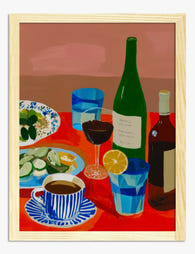
Affiche table rouge et conviviale
Translation missing: fr.products.product.sale_price À partir de €16,95€23,95 -

Affiche portrait de femme en robe rayée avec fleur
Translation missing: fr.products.product.sale_price À partir de €16,95€23,95 -

Affiche bouquet de ballons en forme de cœur à l’aquarelle
Translation missing: fr.products.product.sale_price À partir de €16,95€23,95


Plus de The Frame

How to Build a Gallery Wall with Japanese Art P...
Gallery walls go wrong for predictable reasons: too many frames, too many styles, too little breathing room. Japanese art demands the opposite of all three. This guide walks you through...

How Many Art Prints Do You Actually Need? The R...
Most people buy too many prints that are too small. They end up with what designers quietly call the postage stamp effect: a scattering of A4 frames floating in acres...

Bedroom Wall Art: How to Choose Prints You'll L...
Bedroom art does something no other art in your home does. It is the last thing you look at before you close your eyes and the first thing you register...