
 Commandez aujourd'hui, livré le
 Affiches de chats dorés et intérieurs maximalistes chaleureux : l’accord parfait
How a niche art trend tapped into the biggest interiors movement of the moment, and where to put it.


Le minimalisme froid a vécu. Le maximalisme chaleureux, cette douce révolte du monde de la déco contre les pièces beiges et les émotions en sourdine, ramène l’or, l’ornement, le motif et la personnalité. Et, au cœur de ce mouvement, trône — contre toute attente — un chat recouvert de feuille d’or.
La tendance du maximalisme chaleureux : pourquoi l’or et l’art ornemental reviennent
Le maximalisme chaleureux s’impose dans la plupart des tendances 2026. Dezeen observe un éloignement du « minimalisme discipliné » au profit d’intérieurs stratifiés et texturés, à la chaleur matérielle bien réelle. Domus Academy et StyleBlueprint pointent une humeur dominante de « maximalisme raffiné » : couleurs riches, ornement, artisanat et narration — mais édités, jamais brouillons. Côté français, AD et Elle Décoration vont dans le même sens.
L’idée n’est pas de couvrir chaque surface. Il s’agit de réhabiliter ce que le minimalisme avait silencieusement banni : le motif, l’éclat, le sentiment, et un art décoratif qui raconte vraiment qui vous êtes. L’or se lit d’abord comme une chaleur avant de se lire comme un luxe — d’où son retour partout : luminaires, textiles, encadrements, et surtout, art.
Quant aux chats, ils ont toujours été un raccourci de personnalité. Réunissez les deux et vous obtenez des affiches de chats dorés en parfaite résonance avec l’époque : ornementales, chaleureuses, légèrement maximalistes, et surtout axées sur le caractère plutôt que la retenue.

Comment l’esthétique de Klimt a annoncé l’amour actuel pour les intérieurs superposés et texturés
Gustav Klimt peignait le maximalisme chaleureux plus d’un siècle avant que l’on ne le nomme ainsi. Sa période dorée — Le Baiser, Adèle Bloch-Bauer I, Judith — superpose feuille métallique, motifs géométriques, ornement organique, couleurs denses, et une certaine planéité qui fait de la décoration le sujet, non l’accompagnement.
Regardez ce que demandent les rapports de tendances 2026 : palettes riches, ornements, répétitions géométriques, textures mêlées, sens du geste artisanal. C’est, en substance, une description de la Frise Stoclet de Klimt. Son œuvre a aplati la frontière entre art et arts décoratifs à une époque où cette distinction paraissait cruciale ; l’humeur déco actuelle fait exactement la même chose, à l’échelle domestique.
Et nous revoilà aux chats. Klimt, qui gardait huit à dix chats d’atelier et les adorait, n’en a pourtant jamais peint. Les affiches de chats inspirées de Klimt d’aujourd’hui interprètent un « et si » : l’or de Klimt, ses motifs, sa densité ornementale, appliqués à l’animal qui partageait réellement son quotidien. L’art décoratif fait ici ce qu’il fait de mieux : partir de l’intime pour en faire un rituel.
Qu’appelle‑t‑on une affiche de chat Art nouveau ?
À strictement parler, Klimt relevait de la Sécession viennoise, voisine mais distincte de l’Art nouveau. Dans la pratique, leurs langages visuels se rejoignent : lignes souples, ornement, or, formes organiques, planéité décorative. Ainsi, lorsque l’on cherche des affiches de chats Art nouveau, on désigne souvent toute une famille d’images ornementales à l’esprit feuille d’or. Même atmosphère, adresse historique légèrement différente.
Affiches de chats dorés : pièce de caractère ou élément d’une collection ?
Deux approches s’offrent à vous, et elles appellent des pièces très différentes.
En pièce‑statement. Une grande Affiche, seule sur un mur, qui fait tout le travail. Idéalement en 60 x 80 cm ou plus, placée au‑dessus d’un canapé, d’un lit, d’une console ou d’une cheminée. L’or apporte la chaleur, le chat la personnalité, et le reste de la pièce peut rester relativement apaisé. C’est l’option la plus simple si vous craignez que le maximalisme ne vire au fouillis.
Au sein d’une collection. Trois petites Affiches ou plus, typiquement en 30 x 40 cm ou 40 x 50 cm, réunies en mur de cadres ou déroulées le long d’un couloir. C’est là que l’art « chat façon Klimt » révèle toute sa force : la densité ornementale supporte admirablement la répétition. Mixez une ou deux affiches de chats dorés avec des dessins botaniques au trait, un portrait sombre, ou un abstrait dans une palette complémentaire. L’astuce : la cohérence des cadres. Choisissez une seule couleur de cadre et tenez‑vous‑y pour tout l’ensemble.
Une règle d’échelle simple : une pièce‑statement devrait mesurer environ les deux tiers de la largeur du meuble qu’elle surplombe. Au‑dessus d’un canapé de 200 cm, cela revient à une œuvre d’environ 130 cm de large, ou deux affiches côte à côte. Accrochez le centre de l’œuvre à environ 145 cm du sol, standard de galerie.
Des palettes qui font chanter les tons dorés
L’or vit — ou meurt — selon ce qui l’entoure. Sur un gris froid ou un blanc clinique, il paraît jaune et isolé. Sur les bonnes tonalités chaudes, il devient lumière de bougie.
Voici nos combinaisons préférées :
Ambre brûlé et terre cuite. Des murs dans l’esprit Red Earth de Farrow & Ball, ou une terracotta adoucie, avec l’or de l’affiche qui capte cette chaleur sous-jacente. À marier avec du lin écru, du chêne, et une note plus profonde comme l’aubergine ou le chocolat.
Sarcelle profonde et vert forêt. Un mur vert sombre (pensez Studio Green, Hicks’ Blue, ou Inchyra Blue tirant vers le bleu sarcelle) fait chanter l’or comme l’émeraude dans un écrin. L’option la plus théâtrale — et probablement la plus photogénique.
Blanc cassé chaud et bois. Si vous ne souhaitez pas peindre, misez sur la texture : parquet en chêne, rotin, jute, lin non blanchi, plaid ton argile. L’Affiche dorée devient le point le plus chaleureux de la pièce et fait le lien entre les matières.
Aubergine et rouge bordeaux. Pour les amateurs de dark academia. Profond, feutré, légèrement mélancolique, avec des lampes en laiton et du cuir. Des affiches « chat façon Klimt » dans un cadre noir sur un mur bordeaux : une proposition très spécifique, qui fonctionne.
Évitez les gris froids purs, les bleus glacés et les blancs éblouissants : ils aplatissent l’or et donnent un air de hall d’hôtel en manque d’audace.

Mixer l’art doré avec du mobilier contemporain sans tomber dans le palais
La crainte avec un art ornemental très doré, c’est de finir avec un salon façon foyer de l’Opéra de Vienne. Le remède ? Le contraste, pas l’assortiment.
Placez l’art ornemental au‑dessus de meubles sobres. Une affiche de chat doré dans l’esprit de Klimt sublime une pièce aux lignes nettes : canapé moderne bas en bouclé « avoine », enfilade en chêne aux façades lisses, mur rose plâtre minimal. L’œuvre porte l’ornement, le mobilier peut rester simple.
Unifiez les métaux sans les faire matcher. Si votre Affiche décline des tons d’or chauds, privilégiez le laiton, l’or vieilli ou le laiton non verni pour luminaires et poignées. Évitez chrome et nickel poli dans le même champ visuel. Inutile d’être identique, il suffit d’être dans la même famille de température.
Limitez l’ornement à deux ou trois « voix » par pièce. L’art compte pour une voix. Un tapis à motif pourrait être la deuxième. Un coussin texturé ou une table sculptée, la troisième. Au‑delà, laissez des surfaces respirer. Le maximalisme raffiné, comme le rappelle Dezeen, emprunte la chaleur au maximalisme mais en retire l’excès.
Enfin, laissez de l’air autour de l’œuvre. Une grande affiche dorée a besoin d’espace négatif plus qu’un petit abstrait, car l’œil a besoin d’un repos après tant d’ornement. Résistez à l’envie de l’encercler immédiatement d’étagères d’objets.
Pourquoi le tirage giclée mat est le format idéal pour l’art aux tonalités dorées
C’est le point que la plupart des articles éludent — et pourtant, c’est lui qui décide si votre Affiche ressemble à une œuvre ou à un poster.
Le giclée est un procédé d’impression jet d’encre haute résolution utilisant des encres pigmentaires d’archivage, généralement sur papier mat fort grammage. Bien réalisé, sur le bon papier, il restitue le détail fin et les nuances que les méthodes plus économiques aplatissent. Nos Affiches sont imprimées ainsi, sur papier mat épais, avec des encres garanties pour durer des centaines d’années, même en lumière directe.
Pour l’art aux tonalités dorées, le mat est le seul choix sensé. Voici pourquoi.
Le brillant crée des reflets là où il ne faut pas. Les tons or s’appuient sur de subtils dégradés pour paraître métalliques et non jaune plat. Une finition brillante renvoie la lumière en surface, anéantit ces dégradés et transforme l’or en point chaud. Le mat absorbe la lumière de façon homogène : l’or se lit en profondeur, pas en reflet.
Le papier mat tient le détail de près. L’esthétique inspirée de Klimt est d’une grande densité ornementale : micro‑répétitions géométriques, traits fins, motifs superposés. En giclée mat, on peut s’approcher à 30 cm et voir chaque détail. Sur du brillant, c’est le reflet qui gagne.
Le mat vieillit mieux dans la vraie vie. Les surfaces brillantes montrent la moindre trace de doigt, la poussière, et chaque angle de lumière venant d’une fenêtre. Le mat reste posé, comme une peinture.
Si vous encadrez, le verre pose aussi problème : il ajoute une couche réfléchissante supplémentaire. Nos cadres utilisent un vitrage acrylique anti‑UV, qui prévient la décoloration due au soleil sans l’effet miroir lourd du verre standard. Pour l’art doré en particulier, c’est décisif.
Dernier point pratique. Le principal écueil des Affiches, c’est l’encadrement bâclé : passe‑partout gondolés, cadres expédiés à part, tirages qui arrivent bullés ou de travers. Nous imprimons et encadrons en interne, ajustons chaque pièce avant envoi et l’expédions prête à accrocher, fixations posées.

Cinq scénographies réelles avec des affiches de chats façon Klimt au centre
Pour passer du principe à la pratique, voici cinq scénarios qui fonctionnent vraiment.
1. Le salon minimaliste chaleureux
Canapé beige avoine, parquet en chêne, murs blanc cassé à légère pointe rosée, une grande Affiche 70 x 100 cm de chat doré dans un cadre noir au‑dessus du canapé. Lampadaire en laiton, un coussin terracotta, un plaid crème. L’Affiche assure tout l’appareil décoratif, la pièce reste paisible.
2. Le bureau dark academia
Murs rouge bordeaux ou aubergine profond, fauteuil club en cuir, lampe de bureau en laiton, murs de livres. Deux affiches 40 x 50 cm « chat façon Klimt » dans des cadres noirs encadrant une fenêtre ou une porte. Sombre, studieux, légèrement théâtral. C’est là que l’art mural décoratif de chats porte bien son nom.
3. Le couloir‑galerie maximaliste
Couloir étroit peint dans un ton type Inchyra Blue. Un groupe de six à huit Affiches dans des cadres laiton fins, assortis : deux chats façon Klimt, deux études botaniques, une nature morte sombre, un abstrait ocre et bleu sarcelle. Accrochage serré, style salon, éclairé par une petite picture light.
4. Le mur‑focale de la chambre
Mur vert profond derrière le lit, tête de lit rouille, draps en lin blanc, deux affiches 50 x 70 cm de chats dorés, suspendues côte à côte au‑dessus de la tête de lit dans des cadres noirs fins. Appliques en laiton de part et d’autre. Symétrique, chaleureux, légèrement cinématographique.
5. La salle à manger rose plâtre
Table à manger ronde en chêne, quatre chaises dépareillées, suspension tressée, murs rose plâtre. Une immense Toile 100 x 150 cm d’un chat doré façon Klimt en pièce‑statement sur le plus grand mur. La Toile fonctionne particulièrement bien ici : elle reste bien à plat sans reflets, et les bords « miroir » garantissent qu’aucune partie de l’image ne disparaît autour des côtés.

Note sur les murs de cadres et la superposition maîtrisée
Si vous optez pour la collection, la règle, c’est la superposition intentionnelle, pas l’accumulation au hasard. Choisissez un fil conducteur : une couleur partagée (l’or), une finition de cadre commune (noir, chêne naturel, laiton), ou un sujet récurrent (animaux, botanique, portraits). Faites varier les formats pour créer du mouvement visuel, mais verrouillez une variable. C’est cela, le maximalisme « curaté » : la différence entre « pensé » et « j’ai tout acheté ».
À retenir
L’art du chat doré n’est pas un gadget. Il se situe à l’intersection de deux aspirations très actuelles : la chaleur, dans des pièces qui ont passé une décennie à se refroidir, et la personnalité, dans des maisons qui ont passé une décennie à se neutraliser. L’esthétique de Klimt en est, presque par hasard, le modèle parfait.
Choisissez une grande pièce et laissez‑la porter une pièce calme, ou composez une petite collection en verrouillant une variable. Posez‑la sur une couleur de mur chaude, gardez vos métaux dans la même famille de température, et choisissez le mat plutôt que le brillant — à chaque fois. Voilà tout le cahier des charges.

Produits Fab présentés dans cet article
-

Affiche chat doré style Klimt
Prix promotionnel À partir de €16,95€23,95 -
 Feuille d'or
Affiche chats enlacés à la feuille d'or, style Klimt
Prix promotionnel À partir de €23,95€38,95 -

Affiche chats enlacés inspiration Klimt
Prix promotionnel À partir de €16,95€23,95 -

Affiche muse féline, esprit Klimt
Prix promotionnel À partir de €16,95€23,95 -

Affiche jardin aux chats façon Klimt
Prix promotionnel À partir de €16,95€23,95 -

Toile le baiser doré de Gustav Klimt avec chat
Prix promotionnel À partir de €65,95€93,95 -

Affiche le baiser de Klimt avec un chat
Prix promotionnel À partir de €16,95€23,95 -

Toile le baiser de Klimt avec chat
Prix promotionnel À partir de €65,95€93,95 -
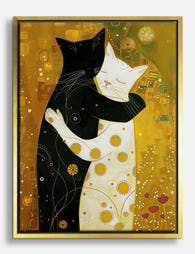
Toile chats enlacés dorée inspirée de Klimt
Prix promotionnel À partir de €65,95€93,95 -
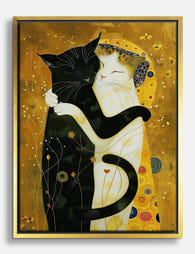
Toile chats enlacés inspiration Klimt
Prix promotionnel À partir de €65,95€93,95 -
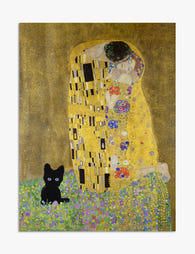
Affiche le baiser de Klimt au chat noir
Prix promotionnel À partir de €16,95€23,95 -

Affiche chat blanc au jardin, inspirée de Gustav Klimt
Prix promotionnel À partir de €16,95€23,95 -

Affiche jardin enchanté de Klimt
Prix promotionnel À partir de €16,95€23,95 -

Toile chat blanc au jardin, style Gustav Klimt
Prix promotionnel À partir de €65,95€93,95 -

Affiche chat noir au jardin, style Klimt
Prix promotionnel À partir de €16,95€23,95 -

Affiche chat à la fenêtre, jardin façon Klimt
Prix promotionnel À partir de €16,95€23,95 -

Affiche chat noir et fleurs orange style Klimt vintage
Prix promotionnel À partir de €16,95€23,95 -

Affiche chat noir dans un jardin inspiré de Klimt
Prix promotionnel À partir de €16,95€23,95 -
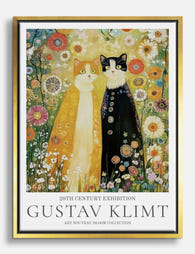
Toile chats espiègles de Klimt
Prix promotionnel À partir de €65,95€93,95


Plus de The Frame

Nos affiches des jardins de Van Gogh préférées ...
Pourquoi les affiches des jardins de Van Gogh fonctionnent dans les intérieurs contemporains (pas seulement classiques) On suppose trop souvent que les tableaux de jardins de Van Gogh ont leur...

Décoration murale style campagne française : cr...
La plupart des guides sur la décoration « campagne française » partent du principe que vous possédez un mas en Provence, un budget antiquités et la permission d’ouvrir les cloisons....

Pourquoi la plupart des galeries murales inspir...
La majorité des galeries murales échouent sur le papier, pas sur le mur. On achète des Affiches coup de cœur, on devine l’espacement, on plante un clou… et on croise...