
 Commandez aujourd'hui, livré le
 Mid-Century Modern Wall Art: Prints That Suit the Style (and How to Display Them)


What Makes Art Feel Mid-Century Modern (and What Just Looks Retro)
Mid-century modern refers to a specific window: roughly 1945 to 1969. It's not a vibe. It's a design movement rooted in post-war optimism, new materials, and the radical idea that good design should be accessible to everyone.
This matters because "retro" has become a catch-all that lumps together 1950s atomic motifs, 1970s macramé, and 1980s Memphis squiggles as if they're the same thing. They're not. A Saarinen tulip table and a shag-pile conversation pit come from different planets. The same applies to wall art. A genuine mid-century modern print has specific qualities: clean geometry, intentional colour, graphic confidence, and a refusal to over-decorate. It borrows from movements that were active during those years, Abstract Expressionism, early Pop Art, the tail end of Bauhaus, and applies their principles to domestic spaces.
What doesn't qualify? Anything that leans on nostalgia rather than design rigour. Vintage diner signage, neon-lit palm trees, and "groovy" typography feel retro, but they're not mid-century modern. Neither is anything Victorian-revival (which was oddly popular in the 1960s) or the maximalist pattern-clashing of the 1970s. If it would look at home in a Brady Bunch rerun, it's probably a decade too late.
The test is straightforward: does the piece rely on strong composition and restrained colour, or does it rely on looking old? Mid-century modern art should feel as fresh on a 2025 wall as it did in 1958. That's the whole point of the movement.

The MCM Colour Palette: Mustard, Teal, Burnt Orange, Olive, Cream
The mid-century palette is one of the most recognisable in design history, and one of the most misunderstood. People think "bold colours" and reach for anything saturated. But authentic MCM colour is specific, warm, and grounded.
The core tones are mustard yellow, teal (not turquoise, not cyan), burnt orange, olive green, and cream. These colours dominated everything from Eames shell chairs to Scandinavian textile design. They share a common trait: they're all slightly muted. Mustard is yellow with the brightness turned down. Teal is blue dragged towards green and softened. Burnt orange sits between rust and terracotta. Nothing screams. Everything hums.
When you're choosing mid-century art prints, look for these tones specifically. A geometric abstract print in mustard and cream reads instantly as MCM. The same composition in neon pink and electric blue reads as something else entirely.
The background colour matters too. Mid-century modern pieces tend to sit on warm whites and creams rather than stark, cool whites. If your walls are brilliant white (as most rental walls are), a print with a cream or off-white background will bridge the gap and stop the art from floating.
Black appears often, but as a graphic element, not as a mood. Think Mondrian's precise black grid lines or Alexander Calder's bold outlines. It's structural, not moody.
Artists and Movements: Abstract Expressionism, Pop Art, Bauhaus, Matisse Cutouts
The mid-century modern era was arguably the richest period in 20th-century art, and the artists who defined it are still defining how we decorate.
Henri Matisse spent his final years creating paper cutouts that are, by a wide margin, the most popular MCM wall art today. Works like "The Snail" and the Blue Nudes series use flat colour, organic shapes, and radical simplicity. They work in almost any room and pair beautifully with the MCM palette. Browse Matisse prints and you'll see why they've become the default starting point for this style.
David Hockney's California swimming pool paintings capture the sunlit optimism and clean geometry that mid-century modernism was built on. The flat planes of turquoise water, the crisp architecture, the sense that life is good and the light proves it. Hockney's prints bring a brightness that works particularly well as a single large piece above a sofa.
Piet Mondrian predates the mid-century era, but his grid-based compositions in primary colours became visual shorthand for modernist design. His influence runs through everything from the Eames House to De Stijl furniture. A Mondrian print is about as MCM as wall art gets.
Alexander Calder is best known for his mobiles, but his gouache paintings and lithographs translate the same playful geometry to two dimensions. Bold shapes, primary colours, a sense of movement caught mid-swing.
Beyond individual artists, several movements feed into mid-century modern wall art. Bauhaus exhibition posters with their sans-serif typography and geometric compositions are a brilliant option for home offices. Abstract Expressionism provides large-scale colour field works from the likes of Rothko and Frankenthaler, where colour itself is the subject. And early Pop Art, before it tipped into the irony of the late 1960s, offered the graphic punch of everyday imagery elevated to fine art.
If you're drawn to the graphic design side, look at vintage prints that capture exhibition posters, architectural drawings, and travel advertisements from the era. These carry the typography and layout sensibility that defined mid-century visual culture.
Frame It Right: Walnut and Teak Frames, Thin Profiles, No Ornament
Framing can make or break mid-century modern wall art. Get it wrong and you'll turn a Matisse cutout into something that belongs above a hotel reception desk.
The two defining MCM frame materials are walnut and teak. Both were everywhere in the 1950s and 1960s, from furniture to architectural details to picture frames. Walnut runs warm and dark with visible grain. Teak is lighter, honey-toned, and slightly more casual. Both connect your wall art to mid-century furniture in a way that painted frames simply can't.
If you don't have a natural wood frame, the next best option is thin black. Not thick, not ornate, not gilded. A slim black profile, ideally metal or painted wood, disappears enough to let the art lead while still providing structure. This was the gallery standard during the mid-century period and it remains the safest choice.
What to avoid: anything thick, anything carved, anything with visible corner ornamentation, and anything gold or antique-finish. These belong to earlier design eras and will fight the clean lines of MCM art rather than support them.
Profile width matters more than people think. Mid-century modern frames were narrow, typically 15-20mm. A chunky 40mm frame adds visual weight that the movement deliberately rejected. When you're ordering, pay attention to the frame dimensions listed. Those extra millimetres change the entire feel.
One practical note on framing quality. The biggest problem with affordable framed prints is warping, poor fitting, or frames that arrive separately and never quite align. Look for prints that ship already fitted in the frame, with the print properly mounted behind glazing. Acrylic glazing is preferable to glass for anything larger than 40x50cm because it's lighter, safer, and (with UV protection) better at preventing fading over time.

The Oversized Single Piece: Why MCM Rooms Look Best With One Big Print
Here's where mid-century modern philosophy diverges from the gallery wall trend that dominates current decorating advice. The MCM approach to wall art was emphatically singular: one large piece per wall, given room to breathe.
This wasn't accidental. Mid-century architects and designers treated art as architecture. A single oversized piece becomes a focal point with the same authority as a fireplace or a picture window. It anchors the room without competing with the furniture below it.
We think a 60x80cm print is the minimum for this to work properly above a sofa or credenza. A 70x100cm piece is better. If you're working with a canvas print, you can go larger still, up to 100x150cm, without the weight becoming a problem. Canvas prints are significantly lighter than framed glass or acrylic, which makes them practical for oversized formats.
The key proportion to get right: the art should be roughly two-thirds the width of the furniture below it. A 180cm sofa wants a 100x70cm landscape print or wider. A 120cm credenza works with a 70x100cm portrait piece. These aren't rigid rules, but they reflect the balance-obsessed approach that MCM designers applied to everything.
Resist the urge to cluster. A wall with one confident abstract art print at 70x100cm will always feel more mid-century than four 30x40cm pieces arranged in a grid. The white space around the art is part of the design.
Mixing MCM Art With Contemporary Furniture (It Works Better Than Period-Matching)
You don't need an Eames lounge chair and a Nelson bubble lamp to hang mid-century modern art. In fact, period-matching your entire room can tip the space from "considered" into "theme restaurant."
Mid-century modern prints actually look their best against contemporary furniture. A Matisse cutout above a simple modern linen sofa. A Calder lithograph over a plain white desk. A Hockney pool scene in a kitchen with handleless cabinets and concrete worktops. The art provides warmth, colour, and personality. The contemporary furniture provides restraint. They balance each other.
This works because MCM design principles and contemporary minimalism share the same DNA: clean lines, functional forms, an allergy to fuss. A mid-century print doesn't clash with a modern interior because modern interiors descend directly from mid-century thinking.
Where it gets tricky is mixing MCM art with traditional or rustic interiors. A Mondrian grid above a chesterfield sofa creates tension, not harmony. That's not necessarily wrong, but it requires confidence and usually benefits from a transitional element, like a mid-century side table, to bridge the gap.
The safest contemporary partners for MCM wall art are Scandinavian-inspired furniture (the kinship is obvious), Japanese-influenced minimalism, and clean-lined Italian modern design. If your room already features any of these, mid-century art prints will feel like they've always been there.

Where to Hang It: The MCM Living Room, the Home Office, the Dining Room
The living room is the natural home for your largest, boldest mid-century piece. Hang it above the sofa, centred, with the middle of the print at roughly eye level (150cm from the floor to the centre works for most ceiling heights). This is where the oversized single-piece approach pays off most dramatically. A 70x100cm abstract geometric print in mustard and teal above a low-profile sofa is about as definitively MCM as a room gets.
Avoid hanging too high. A common mistake is positioning art in the middle of the wall rather than in relation to the furniture. The print should feel connected to the sofa below it, with 15-20cm of space between the top of the sofa back and the bottom of the frame.
The home office is ideal for graphic, text-heavy MCM pieces. Bauhaus exhibition posters, typographic prints, and architectural drawings from the era bring intellectual energy without distraction. A 40x50cm or 50x70cm framed print works well here. Thin black frame, cream mount, hung directly in your sightline above the monitor or on the wall you face most.
The dining room is underrated territory for mid-century modern wall art. The formal symmetry of a dining table, especially a round or oval one (Saarinen, anyone?) pairs brilliantly with a single bold print on the nearest wall. Pop art prints work particularly well in dining spaces because they bring energy and conversation without the seriousness of abstract expressionism. A 60x80cm piece at seated eye level (slightly lower than living room height, around 140cm centre) creates a focal point that every seat at the table can appreciate.
One practical consideration: dining rooms and kitchens tend to have higher humidity. Canvas prints handle this better than paper behind glass, where moisture can occasionally cause issues over time. If your dining area is open-plan with the kitchen, a canvas print on a stretcher frame is the more durable choice.
Pulling It Together
Start with one piece, not four. Choose an artist or movement that genuinely resonates with you rather than defaulting to whatever appears most often on social media. Frame it in walnut or thin black. Hang it lower than you think, bigger than you think, and with more empty wall around it than you think. That restraint is the whole philosophy of mid-century modern design, and it's exactly what makes a room feel intentional rather than decorated.

Produits Fab présentés dans cet article
-

Toile oasis moderniste des années 50
Translation missing: fr.products.product.sale_price À partir de €65,95€93,95 -

Affiche Bauhaus géométrique minimaliste noir et crème
Translation missing: fr.products.product.sale_price À partir de €16,95€23,95 -

Affiche Bauhaus géométrique moderne
Translation missing: fr.products.product.sale_price À partir de €16,95€23,95 -

Affiche muse cubiste moderne
Translation missing: fr.products.product.sale_price À partir de €16,95€23,95 -

Affiche géométrique moderne en tons neutres
Translation missing: fr.products.product.sale_price À partir de €16,95€23,95 -

Affiche bord de piscine style moderniste années 50
Translation missing: fr.products.product.sale_price À partir de €16,95€23,95 -

Affiche géométrique Bauhaus
Translation missing: fr.products.product.sale_price À partir de €16,95€23,95 -

Affiche Bauhaus minimaliste noir et beige
Translation missing: fr.products.product.sale_price À partir de €16,95€23,95 -

Affiche Bauhaus minimaliste moderne
Translation missing: fr.products.product.sale_price À partir de €16,95€23,95 -

Toile géométrique Bauhaus minimaliste
Translation missing: fr.products.product.sale_price À partir de €65,95€93,95 -

Affiche géométrique moderne, jaune chaleureux et vert profond
Translation missing: fr.products.product.sale_price À partir de €16,95€23,95 -

Affiche refuge moderniste coloré
Translation missing: fr.products.product.sale_price À partir de €16,95€23,95 -

Affiche sculpture cubiste moderne
Translation missing: fr.products.product.sale_price À partir de €16,95€23,95 -

Affiche géométrique Bauhaus
Translation missing: fr.products.product.sale_price À partir de €16,95€23,95 -

Affiche Bauhaus géométrique moderne
Translation missing: fr.products.product.sale_price À partir de €16,95€23,95 -

Affiche cactus du désert
Translation missing: fr.products.product.sale_price À partir de €16,95€23,95 -

Affiche géométrique monochrome moderne
Translation missing: fr.products.product.sale_price À partir de €16,95€23,95 -

Affiche Bauhaus géométrique
Translation missing: fr.products.product.sale_price À partir de €16,95€23,95 -

Affiche géométrique moderne
Translation missing: fr.products.product.sale_price À partir de €16,95€23,95 -
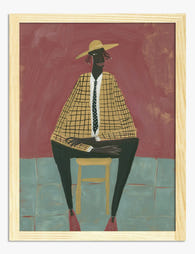
Affiche portrait de muse moderne
Translation missing: fr.products.product.sale_price À partir de €16,95€23,95


Plus de The Frame

Urban Jungle Interiors: Using Wall Art Instead ...
The urban jungle look is having a moment that refuses to end. But most of the people pinning those plant-drenched living rooms will never own 47 monsteras, and that's fine....

Room by Room: How to Hang William Morris Floral...
You've fallen for Morris. The question now is which floral goes where, at what size, in what frame. This guide skips the Arts and Crafts lecture and gets straight to...

Jungle Bedroom Ideas for Adults: Grown-Up Ways ...
Jungle bedrooms have a reputation problem. Search the term and you'll find nursery mood boards, cartoon monkeys, and bright kelly green walls that would keep anyone awake. The grown-up version...