
 Commandez aujourd'hui, livré le
 How to Build a Gallery Wall Around a Bicycle Print (Without Going Overboard)
One great cycling print, the right companions, and a layout that earns its place on the wall.


A gallery wall built around a bicycle print should feel like a well-edited bookshelf, not a clubhouse. The trick is restraint: one strong cycling piece, a thoughtful supporting cast, and a layout that holds together. This guide gives you the formula, the measurements, and the layouts to copy.
Start with one anchor: choosing your hero bicycle print
Pick one bicycle print and let it earn its place as the anchor. This is the piece your eye lands on first, the one that signals your interest in cycling without shouting about it. Everything else on the wall is in conversation with it.
Go bigger than feels comfortable. A 50x70cm or 60x90cm print works as a proper anchor, where a 30x40cm gets lost the moment you add companions. If you have wall space, a 70x100cm framed print pulls the whole arrangement together with very little effort.
Choose carefully. A graphic Tour de France poster sets a completely different tone to a misty black-and-white photograph of a peloton on a mountain pass. Browse cycling wall art prints with the rest of your room in mind: the sofa, the rug, the woodwork. The anchor should feel like it belongs to the space, not visit it.
If you're torn between two bicycle prints, pick the one with a stronger colour story. That palette becomes the brief for everything else on the wall.

The companion rule: subjects that pair well with cycling art
The ratio that works: one cycling print to four or six companions. Any more bikes and the wall tips into theme park territory. Any fewer companions and the bicycle print floats on its own without context.
Subjects that genuinely complement cycling art:
- Landscapes, especially mountain ranges, coastal roads, and rolling countryside. They echo the places you'd want to ride.
- Architectural photography of bridges, cobbled streets, or European city scenes. Quiet, structural, and grown-up.
- Abstract art in colours pulled from your bicycle print. A wash of sage, ochre, or dusty blue holds the wall together without competing.
- Vintage travel posters, particularly Alpine and Mediterranean ones. They share the graphic sensibility of cycling posters without doubling up on bikes.
- Botanical prints, surprisingly, work well as palette cleansers. A single eucalyptus or fern print stops the wall feeling masculine and one-note.
A good rule: if you removed the bicycle print, the remaining wall should still look like a coherent gallery. If it would look random and themeless, you're over-relying on the bike to do the heavy lifting.
Use the colours inside your bicycle print to brief the rest. If your hero print has a burnt orange jersey and a slate grey sky, look for abstract art prints and botanical art prints that pick up those exact tones. This single move is what separates a curated wall from a random one.
Consistent frames, varied sizes: the formula that always works
Frame consistency is more important than size consistency. You can mix a 60x80cm with a pair of 21x30cms and it will look intentional, as long as the frames agree with each other.
Three frame combinations that always work:
- All black frames with white mounts. Sharp, modern, gallery-feel. Best for graphic cycling posters and contemporary photography.
- All natural oak frames, no mounts. Warmer, softer, more residential. Best for muted cycling prints, landscapes, and botanical companions.
- All white frames with white mounts. Light, airy, almost invisible. Lets the imagery do everything. Best in bright rooms and minimalist hallways.
What rarely works: mixing black frames with natural wood frames in the same arrangement. It reads as accidental. Gold frames are also a tough sell against modern cycling photography, where they tip the whole thing into something that looks like a gastropub. If your hero print is a vintage cycling poster from the 1930s, gold can work, but commit to it across every frame.
The other reason consistent frames matter: poor framing is the single biggest failure in this category. Frames that arrive separately, prints that warp, mounts that bubble. A gallery wall amplifies any of these problems. Order prints that arrive framed and ready to hang in one box, with the print properly fitted and the fixtures already attached. It saves a weekend of swearing.
Vary sizes deliberately. A wall of identical frames in a grid looks formal and corporate. A mix of one large, two medium, and three or four small pieces feels like it grew naturally over time, even if you bought everything in one go.
Layout planning on the floor before you touch a drill
Lay everything out on the floor before a single hole gets drilled. Use a bedsheet or a length of brown paper roughly the size of your wall, then arrange the frames on top.
The spacing rule: 5 to 8cm between frames. Closer than 5cm and the wall looks cluttered. More than 8cm and the pieces stop reading as a group.
Centre the arrangement at eye level, which professional consensus puts at around 145 to 150cm from the floor to the centre of the gallery, not the centre of any single piece. If the wall is above a sofa or sideboard, leave 15 to 20cm of breathing room between the top of the furniture and the bottom of the lowest frame.
Place the bicycle print slightly off-centre. Dead-centre placement of the anchor makes the wall look symmetrical in a way that fights against the mixed-size approach. Put it centre-left or centre-right, and let the smaller pieces balance it from the other side.
Take a photo of the floor layout from directly above. Look at the photo, not the layout. Distance gives you objectivity that proximity destroys, and you'll spot imbalance immediately on a screen.
Once you're happy, cut paper templates of each frame, tape them to the wall with masking tape, and live with it for 24 hours. This sounds excessive. It's the difference between a wall you love and a wall you tolerate.

Three gallery wall layouts with specific dimensions and placements
Three layouts to copy, with exact sizes. All assume 5 to 7cm spacing between frames.
Layout 1: The seven-piece hallway
Best for a wall around 180cm wide.
- Anchor: 60x80cm bicycle print, positioned centre-left, with its centre at 145cm from the floor.
- Upper right: 40x50cm landscape print, top edge aligned roughly with the top of the anchor.
- Lower right: 30x40cm abstract, bottom edge aligned with the bottom of the anchor.
- Far right column: two stacked 21x30cm prints (one architectural, one botanical).
- Above the anchor: one 21x30cm print in landscape orientation.
- Below the anchor: one 21x30cm print in landscape orientation.
This layout reads as a relaxed cluster around a strong centre. The bicycle print holds the eye, the small pieces give it texture.
Layout 2: The five-piece office wall
Best for a wall above a desk, around 150cm wide.
- Anchor: 50x70cm bicycle print, centre, top edge at around 175cm from the floor.
- Left of anchor: 30x40cm abstract in matching palette.
- Right of anchor: 30x40cm landscape.
- Far left: 21x30cm botanical, centred vertically against the anchor.
- Far right: 21x30cm architectural photograph, mirrored to the botanical.
A horizontal, symmetrical-feeling arrangement that sits well above a desk without dominating. Works particularly well in wall art sets where the supporting prints are designed to coordinate.
Layout 3: The stairwell rise
Best for a stairwell, where the eye travels up.
- Lowest piece: 40x50cm landscape, centred 145cm above the lowest stair tread it sits over.
- Middle anchor: 60x80cm bicycle print, positioned so its centre rises with the stair line, roughly 30cm higher and 20cm to the right of the first piece.
- Upper companions: two 30x40cm pieces (one abstract, one architectural), stacked or staggered, continuing the diagonal rise.
- Topmost piece: 21x30cm botanical, sitting at the top of the climb.
The arrangement should follow the angle of the stairs, not sit horizontally across them. Imagine a line drawn through the centre of each frame: it should run roughly parallel to the banister.
Hallway, stairwell, and home office: which wall shape suits which arrangement
Different walls call for different shapes.
Narrow hallways suit vertical arrangements. The eye doesn't have room to step back, so a tall, slim cluster works better than a wide one. Stack pieces in two columns rather than three or four.
Stairwells suit diagonal arrangements that follow the rise. A horizontal layout in a stairwell looks like it's fighting the architecture. Let the wall do what it wants to do.
Home offices suit horizontal arrangements above the desk. You want the wall to feel grounded and steady when you're sitting in front of it, not towering. Keep the bottom edge of the lowest frame around 20cm above the desk surface so it doesn't feel disconnected.
Living rooms above a sofa want a horizontal arrangement around two-thirds the width of the sofa. Wider than the sofa looks awkward. Much narrower looks undersized.
This is also the answer to where to hang bicycle prints: a hallway, a stairwell, or a home office almost always works better than a living room, because cycling art has a slightly personal, slightly editorial quality that suits transition spaces.

Mistakes to avoid
A few traps worth knowing about before you commit.
Too many bikes. If more than 30% of your wall is cycling content, you've slipped into shrine territory. Two bicycle prints can work if one is graphic and one is photographic, but three is almost always too many.
Clashing frame finishes. Mixing black and oak in the same gallery is the most common failure. Pick one finish and stick with it across every frame.
Uneven spacing. Inconsistent gaps between frames make the wall look amateur. Measure. A small spirit level and a tape measure save more dignity than they cost.
All pieces in the same orientation. Six landscape-oriented prints in a row look like a film strip. Mix portrait and landscape orientations to break the rhythm.
No colour variation beyond the bike imagery. If every piece on the wall pulls from the same narrow palette as the bicycle print, the wall flattens out. Let one or two companions push slightly outside the palette: a deeper navy, a softer cream, a flash of terracotta.
Hanging too high. The most common mistake in any gallery wall. If in doubt, lower it by 10cm. Almost every wall improves.
Swapping and rotating prints to keep things fresh
A gallery wall doesn't have to be permanent. The smartest approach is to treat the bicycle print and one or two companions as fixed, then rotate the remaining pieces seasonally.
Keep the same frames. Swap only the prints inside them. This is where ordering prints in standard sizes pays off: a 30x40cm print slides out and another slides in without any new drilling.
Seasonal rotations that work: switch botanical prints from green-leaning summer ones to ochre and rust in autumn. Swap a coastal landscape for a snowy mountain pass in winter. The anchor stays. The mood changes.
This also gives you a graceful exit if you ever fall out of love with a companion piece. You're not committed to the wall forever, just to the frames.
A wall built this way ages well. The bicycle print stays the heart of it, but the supporting cast keeps things alive. Print quality matters here more than people expect: museum-grade giclée on thick matte paper holds its colour for decades, even on a hallway wall that catches afternoon sun. Cheaper prints fade visibly within a couple of years, and a faded companion next to a fresh anchor looks worse than no companion at all.
Build it once, properly. Then play with it for years.


Produits Fab présentés dans cet article
-

Toile vélo minimaliste noir et blanc
Translation missing: fr.products.product.sale_price À partir de £49.95£74.95 -

Toile étude de vélos vintage monochrome
Translation missing: fr.products.product.sale_price À partir de £49.95£74.95 -

Affiche vélo vintage en bois
Translation missing: fr.products.product.sale_price À partir de £11.95£19.95 -

Affiche cyclistes vintage en balade
Translation missing: fr.products.product.sale_price À partir de £11.95£19.95 -

Toile guidon de vélo minimaliste noir et blanc
Translation missing: fr.products.product.sale_price À partir de £49.95£74.95 -

Toile vélo en bois vintage
Translation missing: fr.products.product.sale_price À partir de £49.95£74.95 -

Affiche vélo, cyclistes sur route de montagne
Translation missing: fr.products.product.sale_price À partir de £11.95£19.95 -

Toile vélo minimaliste noir et blanc
Translation missing: fr.products.product.sale_price À partir de £49.95£74.95 -

Affiche cyclistes sur route de campagne sinueuse
Translation missing: fr.products.product.sale_price À partir de £11.95£19.95 -

Toile couple à vélo vintage
Translation missing: fr.products.product.sale_price À partir de £49.95£74.95 -

Affiche cyclistes dans les collines ensoleillées
Translation missing: fr.products.product.sale_price À partir de £11.95£19.95 -

Toile vélo, esprit du Tour de France
Translation missing: fr.products.product.sale_price À partir de £49.95£74.95 -

Affiche détail de vélo minimaliste noir et blanc
Translation missing: fr.products.product.sale_price À partir de £11.95£19.95 -

Affiche cyclistes sur route de montagne
Translation missing: fr.products.product.sale_price À partir de £11.95£19.95 -

Affiche trois vélos vintage
Translation missing: fr.products.product.sale_price À partir de £11.95£19.95 -

Toile cyclistes dans une vallée montagneuse
Translation missing: fr.products.product.sale_price À partir de £49.95£74.95 -

Toile cyclistes traversant la vallée ensoleillée
Translation missing: fr.products.product.sale_price À partir de £49.95£74.95 -

Toile cyclistes sur route de montagne
Translation missing: fr.products.product.sale_price À partir de £49.95£74.95 -

Affiche ou toile Le Vélo, vélo rétro
Translation missing: fr.products.product.sale_price À partir de £49.95£74.95 -
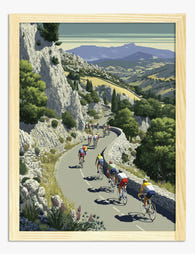
Affiche cyclistes sur route de montagne
Translation missing: fr.products.product.sale_price À partir de £11.95£19.95


Plus de The Frame

Jungle Bedroom Ideas for Adults: Grown-Up Ways ...
Jungle bedrooms have a reputation problem. Search the term and you'll find nursery mood boards, cartoon monkeys, and bright kelly green walls that would keep anyone awake. The grown-up version...

The Strawberry Thief: Everything You Need to Kn...
Strawberry Thief is the William Morris design people search for by name. It's also the one most often bought badly: wrong size, wrong colourway for the room, wrong print quality...

Our Favourite Jungle Prints for Every Room: The...
Jungle prints have a reputation problem. Done badly, they tip a room into themed-restaurant territory faster than almost any other trend. Done well, they add depth, movement and a sense...