
 Commandez aujourd'hui, livré le
 Dragonflies in Japanese Art: From Samurai Symbol to Modern Wall Art
How a thousand-year-old samurai motif became one of the most quietly powerful symbols in modern interiors.


The dragonfly might be the most underrated motif in Japanese visual culture. For over a thousand years it has hovered through armour, woodblock prints, kimono silk and haiku, carrying a meaning far weightier than its delicate wings suggest. Here's how that history translates into the prints you can hang on your wall today.
Kachimushi: why Japanese samurai revered the dragonfly
To a samurai, the dragonfly was not a pretty garden visitor. It was kachimushi, the "victory insect," and it was painted onto helmets, lacquered into sword guards and embroidered into the silk linings of armour worn into battle.
The logic was simple and brutal. Dragonflies only fly forwards. They never retreat. For a warrior class built around codes of honour and resolve, that single behavioural quirk turned the insect into a near-perfect emblem. You can find dragonfly crests on jingasa war hats from the Edo period and tsuba (sword guards) from as early as the 16th century, often rendered with astonishing anatomical accuracy.
The symbolism runs deeper than military bravado, though. Japan's oldest name for itself is Akitsushima, usually translated as "Dragonfly Island." The legend, recorded in the 8th-century Nihon Shoki, tells of Emperor Jimmu surveying his land and remarking that its shape resembled a dragonfly drinking from a pond. So the insect is woven into the country's founding myth, not just its warrior history.
There's an agricultural layer too. Japan is home to more than 170 species of dragonfly, and they swarm over rice paddies in late summer eating the pests that would otherwise destroy the harvest. Farmers saw them as guardians of the crop. Samurai saw them as guardians of honour. The same insect, two different ideologies, one shared reverence.

Dragonflies in Japanese woodblock prints and textile design
By the Edo period (1603 to 1868), the dragonfly had escaped the battlefield and settled into the wider visual vocabulary of Japanese art. This is where the imagery we recognise today really takes shape.
Ukiyo-e and the woodblock tradition
Ukiyo-e, the "pictures of the floating world," gave dragonflies a starring role in the kachō-e genre (bird-and-flower prints). Hokusai produced studies of dragonflies with the same scientific patience he applied to waves and mountains, capturing the iridescence of wings and the segmented anatomy of the body in a few confident lines. Hiroshige and Utamaro followed with their own variations, often pairing dragonflies with seasonal flora like morning glory, irises or autumn grasses.
What makes these prints feel so distinctly Japanese is the composition. There's no Western horror of empty space. A single dragonfly might occupy one quadrant of the print, the rest left as cream paper or a wash of indigo. The eye is forced to settle on the insect itself, and the negative space does as much work as the linework.
Kimono, textiles and family crests
On silk, the dragonfly became a marker of late summer and early autumn, the seasons when the real insects appear. You'll find them embroidered on men's haori jackets and the inner linings of formal kimono, often in gold or silver thread against deep indigo or black. The tonbo mon (dragonfly family crest) was adopted by clans wanting to broadcast martial virtue, and several variants survive in heraldic catalogues to this day.
Haiku and the literary echo
Haiku poets, Bashō and Issa among them, kept returning to the dragonfly as a kigo (seasonal word) for autumn. The visual and literary traditions reinforce each other. When you look at a Japanese dragonfly print, you're looking at a motif that has been polished through poetry as well as paint.
The dragonfly in modern Japanese-inspired interiors
The reason this matters for your walls is that all of this history is encoded into the visual language. A well-made Japanese dragonfly print carries that weight without needing to explain itself.
If you've been wondering why dragonflies are popular in art now, this is part of the answer. The motif sits at a useful intersection: it's natural without being floral, ornamental without being fussy, and it reads as both calming and quietly assertive. In a wall art context, that's a rare combination.
Japanese interiors lean on a few core principles that the dragonfly motif suits perfectly: ma (purposeful negative space), wabi-sabi (beauty in imperfection and natural materials), and a restrained palette built around indigo, sumi ink black, off-white, sage, terracotta and ochre. A single large dragonfly print on an otherwise bare wall is more "Japanese" in feel than a gallery wall of twelve smaller ones. Resist the urge to fill.
The Art Nouveau movement of the late 19th century borrowed heavily from this tradition. Tiffany, Lalique and Gallé all encountered Japanese woodblock prints at the 1867 Paris Exposition and absorbed the dragonfly motif into their glass, jewellery and lamps. The Western interpretation tended to push the insect toward decadence and femme fatale imagery, which is a fascinating divergence from the Japanese reading of stoicism and harvest. Both traditions are valid. They just say different things.

How to style Japanese dragonfly art prints in a Western home
Most homes are not minimalist Kyoto teahouses, and you don't need to gut your living room to make a Japanese-inspired print work. A few practical decisions do most of the heavy lifting.
Pick the right room
Dragonfly art tends to land best in rooms with a contemplative function. Bedrooms, reading corners, home offices, hallways and dining rooms work well. The motif is a touch too still for high-energy spaces like kids' playrooms or kitchens, where you'd lose its quietness against the bustle.
Bathrooms are an underrated option, particularly if you're going for a spa-inspired feel. Just make sure the room has decent ventilation. Canvas handles humid environments more forgivingly than paper, so a canvas dragonfly print is the safer choice in a steamy ensuite.
Choose your size honestly
A 30x40cm print floating alone on a six-metre wall will look apologetic. For a feature wall above a sofa or bed, go large: 70x100cm framed, or 100x150cm on canvas. For a hallway or above a console, 50x70cm is usually right. Measure the wall, then measure the furniture beneath, then aim for art that's roughly two-thirds the width of the furniture.
Frame choices that respect the tradition
Japanese aesthetics favour clean, unornamented framing. A slim black wooden frame is the most reliable choice for dragonfly prints, mimicking the sumi ink linework of woodblock originals. Natural oak works beautifully if your interior leans Scandinavian-Japanese (sometimes called Japandi). Avoid ornate gold or heavily distressed frames. They fight the motif rather than serve it.
If you're going framed, the frame really has to be right. Solid wood (not MDF or veneer), properly fitted with the print, no warping. Acrylic glazing is gentler than glass on Japanese-style prints because it has less reflective glare, so you can actually see the fine linework without lighting gymnastics. UV protection matters too, particularly for indigo-heavy prints which can fade in direct sun.
Colour pairings that work
Japanese dragonfly art tends to anchor around four palettes. Pair accordingly:
- Indigo and cream prints: pair with off-white walls, oak furniture, natural linen
- Sumi ink black and white prints: pair with charcoal walls, black metal accents, pale stone
- Polychrome ukiyo-e style prints: pair with sage or clay-pink walls, dark wood, brass
- Gold-leaf style prints: pair with deep green or aubergine walls, black lacquer, ivory
Hang it at the right height
The eye-level rule (centre of the artwork around 145 to 150cm from the floor) holds for most rooms, but Japanese interiors traditionally view art from a lower seated position. If you spend most of your time in a room on a sofa or floor cushion, drop the centre to around 135cm. Small change, big difference.
Pairing Japanese dragonfly pieces with other East Asian-inspired art
A dragonfly print rarely wants to live alone if you're building a broader Japanese-inspired scheme. The trick is contrast within a coherent palette.
Pair a dragonfly print with calligraphy or sumi-e ink landscape work, which provides the architectural backbone for a wall. Mountains, pine trees and waves play well with insects because they sit at completely different scales: a vast landscape and a tiny creature, both rendered with the same restraint. Browse traditional Japanese art prints for landscape and calligraphy pieces that share the same visual grammar.
Cherry blossom (sakura) and crane imagery also pair beautifully, but use them sparingly. Two motifs per wall is plenty. Three starts to feel like a souvenir shop.
If you're leaning more pan-Asian than strictly Japanese, you can introduce Chinese-influenced botanical prints (peonies, bamboo, lotus) without losing coherence. The shared vocabulary of brush and ink does most of the integrating work for you. Our botanical art prints collection includes pieces that bridge both traditions.
One pairing to avoid: heavily Western florals (English rose gardens, French country bouquets). They speak a completely different visual language and will make the dragonfly look orphaned.

Our picks: dragonfly prints with a Japanese sensibility
If you're starting from scratch, here's how to filter the field. The dragonfly symbolism in art varies wildly depending on the piece, and dragonfly art meaning is something you can actually choose deliberately rather than absorb by accident.
For a quiet, contemplative space
Look for single-dragonfly compositions on cream or pale indigo backgrounds. These echo the spaciousness of original ukiyo-e prints and work brilliantly in bedrooms, reading nooks and meditation corners. Stick to one or two colours maximum.
For a bolder, more graphic statement
Choose prints that use the sumi ink black-on-white tradition, where the dragonfly is rendered in confident calligraphic strokes. These have presence without being loud, and they sit comfortably in modern interiors with industrial elements.
For a richer, more decorative scheme
Polychrome ukiyo-e-style prints, where the dragonfly hovers among irises, morning glory or autumn grasses, give you more colour to play with. They're a strong choice for dining rooms, formal lounges and anywhere you want the art to do more conversational work.
For a nature-led, less culturally specific look
If you love the dragonfly motif but want it to read as botanical rather than overtly Japanese, look for naturalistic studies that emphasise the insect's anatomy and habitat. Our nature art prints collection has options that sit somewhere between scientific illustration and Japanese kachō-e.
Colour symbolism worth knowing
Different coloured dragonflies carry different associations in Japanese tradition. Red dragonflies (akatonbo) are tied to late summer, nostalgia and childhood; they appear in countless folk songs. Indigo and black dragonflies lean closer to the samurai tradition: focus, victory, resolve. Iridescent green or gold dragonflies are associated with prosperity and good harvest. None of this is binding, but it gives you a frame for choosing rather than just scrolling.

Where to take this next
Start with one large piece rather than three small ones. A single well-chosen dragonfly print, properly framed and hung at the right height on a wall with breathing room around it, will do more for your interior than a busier arrangement ever could. That restraint is the most Japanese thing about the whole tradition, and it's the part most worth borrowing.

Produits Fab présentés dans cet article
-

Affiche libellule botanique vintage
Translation missing: fr.products.product.sale_price À partir de £11.95£19.95 -

Affiche botanique libellule élégante
Translation missing: fr.products.product.sale_price À partir de £11.95£19.95 -

Affiche tigre et dragon d'Utagawa Hiroshige
Translation missing: fr.products.product.sale_price À partir de £11.95£19.95 -

Affiche William Morris libellule
Translation missing: fr.products.product.sale_price À partir de £11.95£19.95 -

Toile libellule élégante de Morris
Translation missing: fr.products.product.sale_price À partir de £44.95£74.95 -

Affiche hirondelles en vol de Hokusai
Translation missing: fr.products.product.sale_price À partir de £13.99£19.99 -

Affiche libellule et pivoines élégantes
Translation missing: fr.products.product.sale_price À partir de £11.95£19.95 -

Affiche libellule, style William Morris
Translation missing: fr.products.product.sale_price À partir de £11.95£19.95 -

Affiche libellule William Morris
Translation missing: fr.products.product.sale_price À partir de £11.95£19.95 -

Affiche élégance de la libellule et des pivoines
Translation missing: fr.products.product.sale_price À partir de £11.95£19.95 -

Affiche libellule de William Morris
Translation missing: fr.products.product.sale_price À partir de £11.95£19.95 -

Affiche grenouilles Kabuki de Kuniyoshi
Translation missing: fr.products.product.sale_price À partir de £11.95£19.95 -

Affiche libellule William Morris
Translation missing: fr.products.product.sale_price À partir de £11.95£19.95 -

Toile guerrier sur grue, inspirée par Hokusai
Translation missing: fr.products.product.sale_price À partir de £55.99£79.99 -

Affiche libellule et pivoines en harmonie
Translation missing: fr.products.product.sale_price À partir de £11.95£19.95 -

Affiche libellule botanique, style William Morris
Translation missing: fr.products.product.sale_price À partir de £11.95£19.95 -

Affiche libellule élégante inspirée par William Morris
Translation missing: fr.products.product.sale_price À partir de £11.95£19.95 -

Affiche lucioles au-dessus d'une rivière sombre par Utagawa Hiroshige
Translation missing: fr.products.product.sale_price À partir de £11.95£19.95 -
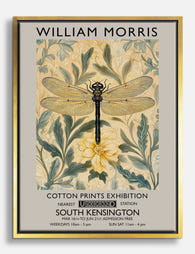
Toile libellule en vol, inspirée de William Morris
Translation missing: fr.products.product.sale_price À partir de £44.95£74.95 -
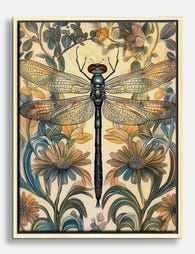
Toile libellule et fleurs sauvages vintage
Translation missing: fr.products.product.sale_price À partir de £44.95£74.95


Plus de The Frame

Traditional or Contemporary? Styling William Mo...
William Morris designs have a reputation problem. They're either dismissed as dusty Victoriana or treated so reverently that people end up with rooms that look like National Trust tearooms. The...

House Print Decorating Ideas That Work in Every...
You bought a beautiful print of a Georgian townhouse, or maybe a row of pastel Lisbon facades, because you genuinely love architecture. Six months later you've added two more, and...

William Morris Tree Designs: Why They Still Cap...
William Morris is remembered for his florals, but his trees tell a different story. They are slower, more architectural, and rooted in a tradition older than the wallpapers that made...