
 Commandez aujourd'hui, livré le
 Going Big: How to Choose and Hang Large Botanical Prints Without Overwhelming a Room
The practical guide to scaling up botanical art without making your lounge feel like a garden centre.


Large botanical prints are one of the easiest ways to give a room presence, but going big comes with practical questions most shopping guides skip. Which leaves and flowers actually hold up at 100cm wide? How do you stop a statement piece feeling oppressive? This is the guide we wish existed when shoppers ask us whether 60x80cm or 100x150cm is the right call.
Why some botanical subjects look stunning at scale (and some don't)
Not all botanical art scales the same way. The subjects that look extraordinary at large sizes tend to share three traits: bold silhouettes, strong tonal contrast, and a clear focal point. Think monstera deliciosa, banana leaves, fan palms, fiddle leaf fig, bird of paradise, and large magnolia studies. Blown up to 70x100cm or larger, the structure of the leaf becomes architectural.
Vintage botanical illustration in the Pierre-Joseph Redouté tradition (single specimen, neutral background, fine line work) also scales beautifully because the empty space around the specimen gives the eye somewhere to rest. A single tulip or protea rendered with detailed botanical line work can carry an entire wall.
What doesn't work as well at large sizes: delicate wildflower meadow scenes with dozens of tiny stems, intricate herbarium grids where each specimen is small, and busy mixed bouquets. Enlarged, the detail that made them charming gets lost, and the piece reads as visually noisy rather than confident. If you love that style, two or three medium prints grouped together will land better than one oversized version.
The test we use: squint at the image thumbnail. If the main subject is still readable, it will scale. If it dissolves into texture, it won't.

How to measure your wall and pick the right print size
The biggest sizing mistake is going too small. A 40x50cm print floating above a three-seater sofa looks apologetic. There are two reliable rules of thumb that designers use, and they actually work.
Rule one: art above furniture should be 50 to 75% of the furniture's width. A standard three-seater sofa is around 200cm wide, so you want art roughly 100 to 150cm wide. That's why our 100x150cm canvas size exists. For a 180cm sideboard, aim for 90 to 135cm wide.
Rule two: for empty walls, fill two-thirds to three-quarters of the available wall width. Measure the wall, multiply by 0.66 and 0.75, and shop within that range.
There's also the height rule. The centre of the artwork should sit at average eye level, which museums treat as 145 to 152cm from the floor. Above furniture, leave around 20cm (roughly 8 inches) between the top of the sofa or sideboard and the bottom of the frame. Closer than that and the art feels like it's pressing down on the furniture. Further and the two stop reading as a pair.
A quick way to test before you commit: cut newspaper or brown paper to the exact print dimensions, tape it to the wall, and live with it for a day. You'll know immediately if the scale is right.
Paper vs canvas at large sizes: weight, texture, and visual impact
This is where most guides go quiet. At small sizes the choice is mostly aesthetic. At large sizes it becomes a structural decision.
Large paper prints (framed) behind a glaze are heavier than people expect. A 70x100cm framed art print with solid wood moulding and acrylic glazing can weigh several kilograms. The upside is that paper holds fine detail better, the matte surface has a quiet, gallery-like quality, and a proper frame adds formality. If you're after a considered, slightly traditional feel, framed paper wins.
Large canvas prints are lighter, often significantly so. A 100x150cm canvas stretched over an FSC wood frame is easier to handle, easier to hang, and has no glaze to catch reflections. The poly-cotton surface has a subtle texture that reads as more relaxed and contemporary. For high-ceilinged rooms, open-plan spaces, or anywhere with a lot of natural light, botanical canvas prints tend to be the more forgiving choice.
The texture point matters more than people realise. Canvas catches light across its surface, giving leaves and petals a slight three-dimensional quality. Paper behind acrylic looks crisper and flatter, which suits graphic illustration and vintage plates. Neither is better. They're different finishes for different rooms.
One thing to flag honestly: we use UV-protective acrylic rather than glass, which means our large framed prints are lighter than a traditional glass-fronted frame and won't shatter if knocked. That solves part of the weight problem, but a large framed paper print is still heavier than the canvas equivalent.

The best rooms for a large botanical statement piece
Botanicals work almost everywhere, but some rooms make them sing.
Living rooms are the obvious home. A large palm or monstera above the sofa anchors the seating area and pulls the eye up, which makes ceilings feel higher. If you're browsing botanical wall art for the living room, think about what the print will sit next to. Linen sofas, leather, and natural wood all flatter green tones.
Bedrooms suit softer botanicals: magnolia studies, single-stem florals, eucalyptus, or muted vintage plates. A large piece above the headboard centres the room. Canvas tends to feel calmer here than framed paper because there's no glaze reflecting bedside lamps back at you.
Hallways and stairwells are underused. A tall narrow botanical (a single banana leaf, say) at 70x100cm portrait orientation transforms an awkward hallway into something deliberate.
Bathrooms and kitchens can take botanicals beautifully, but humidity is a real consideration. Canvas handles steam and temperature swings better than paper behind a frame, which can develop condensation issues over time in genuinely steamy rooms. For a downstairs cloakroom, either works. For a family bathroom that gets daily showers, lean canvas.
Dining rooms love large, dramatic florals. A single oversized peony or protea above a sideboard, ideally lit by a pendant or wall light, gives the room an evening mood that smaller art can't match.
Hanging large prints safely: fixings, wall types, and weight considerations
Hanging large art is the step where people get nervous, and rightly so. A 100x150cm framed print is not a 30x40cm print you can hang on a single nail.
For plasterboard (drywall) walls: standard picture hooks are fine up to a few kilos. For anything heavier, use plasterboard anchors rated for the weight, or find a stud and screw directly into it. A stud finder costs less than ten pounds and removes most of the guesswork. For a large piece, two fixings spaced apart give better stability than one central hook, and they stop the frame tilting.
For solid brick or masonry walls: you'll need a drill, a masonry bit, wall plugs, and screws. It's more effort, but the hold is bombproof. For plaster over brick (common in older British homes) drill carefully and use a slightly longer screw to reach the masonry behind.
For lath and plaster: older walls are unpredictable. Find a joist where you can, or use specialist anchors designed for lath. Avoid hammering, which can crack the plaster.
Our framed prints arrive with fixtures already attached, so you're not assembling anything. Canvas prints likewise arrive ready to hang with a cord or D-rings fitted. Use a spirit level, mark both fixing points before drilling, and measure twice. Tilting on a large piece is much more visible than on a small one.
One reassurance worth offering: a recurring frustration in this category is frames and prints arriving separately, with the buyer expected to fit the print themselves. We ship frame and print together, properly fitted in one box, so there's no warping, no bubbling, and no fiddly assembly when you'd rather just hang it and pour a drink.

Framed vs unframed vs canvas: what looks best when you go big
Three real options, three different effects.
Framed paper prints look the most polished and the most intentional. A solid wood frame around a botanical illustration reads as gallery, library, or considered country house, depending on the moulding. This is the right choice for traditional interiors, period properties, or any room where you want the art to feel like a piece of furniture in its own right. The trade-off is weight and the slight reflectivity of any glaze, even our matte acrylic.
Unframed canvas has a contemporary, easy-going feel. Without a frame, the piece sits closer to the wall and reads as part of the room rather than something hung on it. Our canvases use a mirrored edge wrap, which means the main image isn't cropped and the sides have a soft continuation of the print rather than a hard cut. For minimalist or Scandinavian-leaning interiors, this is usually the right answer.
Framed canvas splits the difference. You get the texture and lightness of canvas with the definition a frame provides. A slim black or natural oak frame around a 100x150cm botanical canvas looks expensive and grown-up without feeling fussy.
If you're paralysed by the choice: go canvas for tropical leaves and modern botanical photography, framed paper for vintage illustration and detailed line work, framed canvas if you want one piece that flexes between styles.
Our favourite large botanical prints to start with
If you're building confidence with a first big piece, these subjects are reliably forgiving.
A single monstera leaf on a pale background is the entry point for a reason. The silhouette is unmistakable at any size, the colour palette is simple, and it works with almost any sofa fabric. Try it at 70x100cm framed for a more considered look, or 100x150cm canvas for full statement energy.
Vintage palm studies in the style of 19th-century botanical plates suit period rooms beautifully. The cream backgrounds and detailed line work give framed paper a real reason to exist. Pair with brass picture lighting if you can.
Bird of paradise brings colour without chaos. The orange and blue contrast against deep green leaves makes a room feel warmer instantly, and the strong vertical lines work well in tall rooms or above narrow furniture.
Eucalyptus and olive branches are the calm option. Soft sage green, dusty silver, and ivory backgrounds suit bedrooms and reading corners. These read as botanical without feeling tropical, which suits cooler British light.
A single oversized peony, magnolia, or protea is the dining room move. One bloom, rendered large, has a presence that no grouping of smaller flowers can match.
Browse the full botanical art prints collection for specific options, and if you've already decided you want to go big, large wall art filters everything to statement sizes only.

Before you click buy
Measure the wall. Tape up a paper template at the actual print size. Decide whether your room wants the polished formality of framed paper or the relaxed texture of canvas. Check what your walls are made of and whether you've got the right fixings. Then commit to a size at the upper end of what you measured, because under-scaling is the regret we hear most often. Going big works. Going timidly big rarely does.

Produits Fab présentés dans cet article
-

Toile botanique d’intérieur vibrante
Translation missing: fr.products.product.sale_price À partir de £44.95£74.95 -

Toile botanique vibrante
Translation missing: fr.products.product.sale_price À partir de £44.95£74.95 -
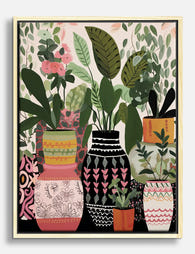
Toile vases bohèmes à motifs botaniques
Translation missing: fr.products.product.sale_price À partir de £44.95£74.95 -

Toile escalier végétal
Translation missing: fr.products.product.sale_price À partir de £44.95£74.95 -
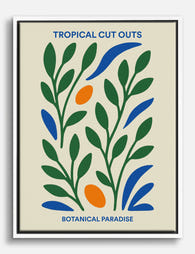
Toile paradis botanique aux formes découpées
Translation missing: fr.products.product.sale_price À partir de £44.95£74.95 -

Toile botanique vintage
Translation missing: fr.products.product.sale_price À partir de £44.95£74.95 -

Toile jungle urbaine pour salle de bain
Translation missing: fr.products.product.sale_price À partir de £44.95£74.95 -

Toile botanique vert héritage
Translation missing: fr.products.product.sale_price À partir de £44.95£74.95 -

Toile havre botanique luxuriant
Translation missing: fr.products.product.sale_price À partir de £44.95£74.95 -

Toile botanique vintage vert profond
Translation missing: fr.products.product.sale_price À partir de £44.95£74.95 -

Toile botanique audacieuse
Translation missing: fr.products.product.sale_price À partir de £44.95£74.95 -

Toile oasis botanique
Translation missing: fr.products.product.sale_price À partir de £44.95£74.95 -

Toile d'abstraction botanique douce
Translation missing: fr.products.product.sale_price À partir de £55.99£79.99 -

Toile botanique bohème
Translation missing: fr.products.product.sale_price À partir de £44.95£74.95 -

Toile botanique rose aux courbes fluides
Translation missing: fr.products.product.sale_price À partir de £44.95£74.95 -

Toile femme chic au manteau floral
Translation missing: fr.products.product.sale_price À partir de £44.95£74.95 -

Toile jungle d'intérieur éclectique
Translation missing: fr.products.product.sale_price À partir de £44.95£74.95 -

Affiche botanique, plantes sur étagère, fond jaune
Translation missing: fr.products.product.sale_price À partir de £11.95£19.95 -

Affiche botanique à grandes fleurs
Translation missing: fr.products.product.sale_price À partir de £11.95£19.95 -

Toile botanique verte style héritage
Translation missing: fr.products.product.sale_price À partir de £44.95£74.95


Plus de The Frame

Modern vs. Vintage Botanical Prints: Which Styl...
Botanical prints are one of the most over-recommended categories in interior design, and one of the least well-explained. The "botanical prints go with everything" line is comforting but wrong: a...

Large Botanical Prints: How to Make a Single Pr...
A single large botanical print, chosen well and hung properly, will do more for a room than three small ones ever could. It reads as a deliberate design choice rather...

Vintage vs Modern Botanical Prints: A Honest Co...
Botanical prints have been a decorating mainstay for over two centuries, and they're having another major moment in 2026. But "botanical" covers two very different aesthetic worlds, and choosing the...