
 Commandez aujourd'hui, livré le
 Every Plant William Morris Used in His Designs (and Why He Chose Them)
A field guide to the acanthus, willow, strawberries and wildflowers that built the most beloved patterns in design history.


William Morris didn't draw plants from imagination. He grew them, walked past them, watched them climb his garden wall, then translated them onto paper with an almost obsessive eye. Understanding which plants he used, and why, is the fastest way to choose between his designs for your own home.
Morris the gardener: how Kelmscott Manor shaped his art
Morris's relationship with plants began in childhood, roaming Epping Forest with a copy of Gerard's Herball (1597) for company. The medieval woodcuts in that book, flat, stylised, slightly stiff, would shape his pattern-making for the rest of his life.
His first house, Red House in Bexleyheath, had a garden planted with old English roses climbing wooden trellises. That trellis became, almost literally, his Trellis wallpaper of 1862, his very first design, with birds added by his friend Philip Webb. The pattern is essentially a portrait of his back garden.
But it was Kelmscott Manor in Oxfordshire, which Morris took on in 1871, that did the deeper work. The house sat in a tangle of orchard, river meadow and walled kitchen garden. Thrushes raided the strawberry beds. Wild tulips, fritillaries and snake's head lilies grew in the meadows beyond. Willows leaned over the Thames. Almost every plant pattern Morris designed after 1871 traces back, directly or obliquely, to that garden.
This matters when you're choosing prints. Morris wasn't designing fantasy botanicals. He was painting what he could see from his window.

Acanthus: the backbone of Morris's boldest designs
Acanthus is the plant Morris reached for whenever he wanted scale and drama. The huge, scrolling leaves had been a fixture of European ornament since classical Greece, where they crowned Corinthian columns, and in Victorian design language they signalled endurance, longevity and intellectual ambition.
Morris used acanthus in at least three major patterns. Acanthus (1875) is the most famous: a wallpaper of vast curling leaves in deep ochres, sages and rust. It took 30 separate woodblocks to print and was, in his own words, the most ambitious wallpaper he'd attempted. Acanthus Portière and the later Acanthus and Vine tapestry pushed the same plant into textile.
The leaves themselves are a hybrid. Morris drew on real bear's breeches growing in his garden, but stylised them through the language of medieval manuscripts. The result feels architectural rather than botanical, more carved than grown.
For wall art, acanthus designs reward scale. A small framed Acanthus print can look fussy. At 70x100cm or as a 100x150cm canvas, the leaves finally have room to breathe and the pattern reads the way Morris intended. Pair it with deep walls, sage or oxblood, rather than fighting it with white. You can browse the full range of William Morris plant prints to see how the larger sizes change the feel of these designs entirely.
Willow Boughs: why his simplest plant design became his most popular
If Acanthus is Morris at his most operatic, Willow Boughs (1887) is Morris at his quietest. The pattern is just willow leaves, drifting in soft, repeating curves, with no flowers, no birds and no architectural framing.
The willows came from the banks of the Thames near Kelmscott. Morris would have walked past them every day. There's no Victorian symbolism doing heavy lifting here, although willow has long been associated with grief and resilience in British folk tradition. Morris seems to have chosen it for its movement and its colour, the silvery underside of the leaves, the way the boughs lean.
Willow Boughs is comfortably his most popular pattern today, and the reason is simple: it works almost anywhere. It reads as texture more than picture, like a well-made wallpaper or a soft tweed. It sits beautifully in bedrooms, hallways, small dining rooms and any space where you want pattern without commitment.
We think Willow Boughs is the best Morris design for first-time buyers and for rooms where art needs to recede slightly. The original colourway, sage green on cream, is the one to choose. It plays well with everything from oak floors to painted plaster.
Honeysuckle, tulip, and sunflower: Morris's signature flowers
Three flowers appear again and again across Morris's work, each carrying its own Victorian charge.
Honeysuckle was a favourite of his daughter May, who designed her own version in 1883, but William used it earlier in his Honeysuckle textile of 1876. Wild honeysuckle scrambles through English hedgerows, and Morris loved its informal, climbing habit. In Victorian flower language, it meant devoted affection. As a print, honeysuckle patterns tend to be busy and curling, best suited to larger walls and rooms with plenty of natural light.
Tulip runs through Tulip (1875), Tulip and Willow (1873) and Wild Tulip (1884). Morris drew the small, nodding wild tulips that grew in the Kelmscott meadows rather than the showy Dutch hybrids fashionable in Victorian gardens. This was a deliberate choice. He wanted the British wildflower, not the imported showpiece. Tulips in Victorian symbolism meant declared love, which Morris probably ignored entirely.
Sunflower was the unofficial mascot of the Aesthetic Movement, and Morris used it in his Sunflower wallpaper of 1879. The flower had become shorthand for artistic, anti-industrial taste. Morris's version is restrained: the heads are stylised into near-circles, geometric and calm rather than exuberant.

Strawberry Thief and the fruit-and-vine patterns
Strawberry Thief (1883) is Morris's best-loved textile, and the story behind it is true. Thrushes kept stealing the strawberries from the Kelmscott kitchen garden. Morris, rather than netting the beds, decided to put the thieves into a pattern.
The design uses indigo discharge printing, a notoriously difficult dyeing technique Morris spent years mastering. The deep blue background is achieved by dipping the cloth in indigo, then bleaching out the pattern. The strawberries themselves are small, red and almost incidental, half-hidden among leaves and the pale breasts of the birds.
Other fruit and vine patterns include Fruit (also called Pomegranate, 1866), one of his earliest wallpapers, and Vine (1874). Pomegranate carried heavy Victorian symbolism: fertility, abundance, resurrection through its Christian and classical associations. Morris, a committed socialist and lifelong sceptic of religious sentiment, almost certainly chose it for the visual richness rather than the meaning.
Strawberry Thief is the rare Morris pattern that works at small scale. The birds give it a focal point that abstract leaf patterns lack. A 50x70cm framed print suits it well, particularly in kitchens, breakfast rooms and any space where you want a pattern that rewards close looking.
How Morris stylised real plants into flat pattern
Morris's design process is worth understanding because it explains why his patterns feel different from the realistic botanical illustrations of his contemporaries.
He believed strongly that pattern should not pretend to be a window onto a real garden. "Do not introduce any element of mystery as to the surface of the wall," he wrote. A wall is flat. A pattern on it should be flat too.
So he studied real plants closely, drew them in detail, then deliberately flattened them. He removed shadows. He simplified leaves into clean silhouettes. He made stems curve in regular rhythms that real plants never quite achieve. The reference points were medieval herbals like Gerard's, illuminated manuscripts, and 16th-century woodcuts, all of which treated plants as decorative motifs rather than scientific specimens.
The result is what one V&A curator called "subtle stylised evocations, not literal transcriptions." You recognise the plant immediately. You also know, immediately, that it's a pattern.
This is why Morris prints work so well as wall art. Photographic botanicals fight for attention with everything else in a room. Morris's flattened, rhythmic plants behave more like fabric or wallpaper, settling into a space rather than dominating it. The depth and detail still come through beautifully on giclée prints, where every line of the original woodblock is visible up close.
A note on the plants Morris refused to use
Morris had strong opinions about which plants belonged in pattern and which didn't. In his lectures he warned designers off "trouble savers" like bindweed, passion-flower and "the poorer forms of ivy," arguing they had been "used so cheaply this long while we are sick of them."
He also avoided fashionable Victorian exotics: orchids, palms, hothouse lilies. His plant choices were almost militantly British. Hedgerow flowers, kitchen garden fruits, meadow wildflowers, the willows by the river. This wasn't accident. Morris's socialism extended to his botany. He wanted the plants of working English gardens, not the imports of greenhouse-owning industrialists.
The full list of plants he did use is longer than most articles let on. Across his roughly 50 patterns you'll find acanthus, willow, honeysuckle, tulip, sunflower, rose, jasmine, pomegranate, larkspur, marigold, strawberry, pimpernel, chrysanthemum, fritillary, blackthorn, daisy, oak and acorn, vine, lily, iris, columbine and bay. The smaller, gentler patterns, Daisy (1864) and Pimpernel (1876), are often overlooked but reward close attention.

Which Morris plant prints to choose for different rooms
Different patterns suit different spaces. Here's how we'd think about it.
Living rooms
Go bigger and bolder. Acanthus, Chrysanthemum and Honeysuckle have the scale and density to anchor a sofa wall. A 70x100cm framed print or a 100x150cm canvas gives the pattern room to work. Acanthus on sage or oxblood walls is the classic move. If your living room is small or already busy, switch to Willow Boughs, which calms a space rather than charging it.
Bedrooms
Quieter patterns suit bedrooms. Willow Boughs, Jasmine and Pimpernel all read as soft texture rather than statement. We'd avoid Strawberry Thief here: the birds and the deep indigo can feel restless in a sleep space. A pair of 50x70cm framed prints above a chest of drawers works better than one large piece above the bed.
Kitchens and dining rooms
Strawberry Thief belongs in kitchens. So does Fruit, and Vine. The food references feel right, and the patterns are detailed enough to reward the long looking that happens at a dining table. Canvas prints work particularly well in kitchens, where humidity from cooking can occasionally affect framed paper, and the lighter weight is easier to hang.
Hallways and small spaces
Daisy, Trellis and Willow Boughs. Simple repeating patterns feel generous in tight spaces, where complex designs can overwhelm. A tall narrow hallway is a good place for two or three smaller prints stacked vertically.
Studies and offices
Acanthus, Bay and the leaf-only patterns. Something with weight and seriousness, in deeper colourways. Morris's dense leaf designs read almost like wallpaper at scale, which gives a study the layered, lived-in feel of a Victorian library.
For broader options beyond Morris's specific patterns, our botanical art prints collection includes other plant-led designs in similar Arts and Crafts mood, and the vintage art prints collection sits comfortably alongside Morris pieces if you're building a gallery wall.
Bringing the Arts and Crafts garden onto your walls
A few practical notes worth knowing before you commit.
Morris's patterns were designed for repetition across walls, which means a single framed print is essentially a fragment of a larger design. Choose where the pattern crops thoughtfully. The best Morris prints find a balance, a clear focal flower or bird, with enough surrounding pattern to give the rhythm.
Colour matters more than with most art. Morris's original colourways, the sages, indigos, ochres and madders, came from the natural dyes he was experimenting with: woad and indigo for blue, walnut for brown, madder and cochineal for red. Modern reproductions in those original colourways feel correct in a way that brightened, modernised versions don't.
If you're hanging Morris alongside contemporary art, give him space. His patterns are dense and need a clear visual margin. White mounts inside frames help. So does hanging him as a single statement rather than crowding him into a gallery wall of competing styles.
Choose the plant that means something to you. Morris drew what he knew and loved. The patterns that have lasted are the ones where his attention is most visible. You can see the full range of William Morris art prints and decide which of his gardens you want on your wall.

The shortest route to choosing between his designs: pick the room first, the scale second, and the plant third. Acanthus for big rooms with deep walls. Willow Boughs for almost anywhere. Strawberry Thief for kitchens and breakfast rooms. The rest, including Daisy, Pimpernel and Jasmine, are quietly brilliant in spaces where you want pattern without weight.

Produits Fab présentés dans cet article
-

Affiche motif botanique style William Morris
Prix promotionnel À partir de £11.95£19.95 -

Toile motif floral inspiré par William Morris
Prix promotionnel À partir de £49.95£74.95 -

Toile florale romantique William Morris
Prix promotionnel À partir de £49.95£74.95 -

Affiche vase botanique William Morris
Prix promotionnel À partir de £11.95£19.95 -

Affiche botanique inspirée de William Morris
Prix promotionnel À partir de £11.95£19.95 -

Toile William Morris motif floral vert olive
Prix promotionnel À partir de £49.95£74.95 -

Affiche harmonie florale de William Morris
Prix promotionnel À partir de £11.95£19.95 -

Toile William Morris élégance florale
Prix promotionnel À partir de £49.95£74.95 -

Affiche botanique inspiration William Morris
Prix promotionnel À partir de £11.95£19.95 -

Hoji Garden Willow — Morris Art Print
Prix promotionnel À partir de £11.95£19.95 -

Affiche motif Fruit de William Morris
Prix promotionnel À partir de £11.95£19.95 -

Affiche William Morris vase fleuri au jasmin
Prix promotionnel À partir de £11.95£19.95 -

Affiche botanique Vine de William Morris
Prix promotionnel À partir de £11.95£19.95 -

Affiche harmonie florale inspiration William Morris
Prix promotionnel À partir de £11.95£19.95 -

Affiche tapisserie de fleurs sauvages par William Morris
Prix promotionnel À partir de £11.95£19.95 -

Affiche botanique d'automne style William Morris
Prix promotionnel À partir de £11.95£19.95 -
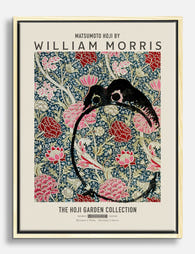
Toile William Morris fleurs de jardin
Prix promotionnel À partir de £49.95£74.95 -

Affiche papillon et motifs botaniques style William Morris
Prix promotionnel À partir de £11.95£19.95 -

Toile oiseaux et motifs botaniques esprit William Morris
Prix promotionnel À partir de £49.95£74.95 -
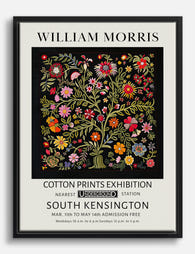
Toile botanique style William Morris
Prix promotionnel À partir de £49.95£74.95


Plus de The Frame

Why Do Palm Prints Work So Well in Minimalist B...
Palm prints have a reputation problem. Say the words and most people picture tiki bars, holiday postcards, and hot pink flamingos. Done properly, though, palm art is one of the...

9 Vintage House Decor Ideas That Start With Wha...
Most vintage decor advice starts with the wrong thing. It tells you to hunt flea markets, install crown moulding, or refinish a dresser before you've decided what the room is...

What Art Actually Looks Good in a Kitchen (Spec...
Most kitchen art advice tells you to "choose what speaks to you." That's useless. You need a framework for elimination, specific subjects that work with the function of the room,...