
 Ordina oggi, consegna il
 Beyond the Tree of Life: Klimt's Most Beautiful Tree Paintings
The Tree of Life gets all the attention, but Klimt's real tree paintings are quieter, stranger, and far more interesting.


You've seen the Tree of Life everywhere. Spiralled gold branches, swirling roots, the whole thing reproduced on cushions, mugs and yoga mats. But Klimt painted dozens of actual trees, and most of them look nothing like that. This is a guide to all of them, with honest advice on which one belongs on your wall.
Why Klimt kept returning to trees
Klimt is remembered for gold leaf and glamorous portraits, but he spent every summer from 1900 to 1916 painting landscapes on Lake Attersee in the Austrian Salzkammergut. He called himself a "Waldschrat", a forest dweller, and walked the woods at 6am with a viewfinder cut from cardboard, hunting compositions.
The trees mattered because they gave him a structure to fill. Klimt was a horror vacui painter, meaning he hated empty space, and a dense forest or an orchard canopy let him cover every centimetre of canvas with pattern. The same instinct that made him bury Adele Bloch-Bauer in gold mosaic made him bury a birch trunk in flecks of moss, leaves and undergrowth.
He also worked almost exclusively on square canvases for these landscapes, a deliberate nod to Vienna Secession design principles. That square format is worth noting if you're shopping, because it changes how the work hangs.

The Tree of Life: what it actually is (and isn't)
Here's the confusion worth clearing up first. The Tree of Life is not a landscape painting. It's a section of the Stoclet Frieze, a decorative mural Klimt designed between 1905 and 1911 for the dining room of the Stoclet Palace in Brussels. The original is a working drawing in tempera, watercolour, gold and silver leaf on paper, now held at the MAK in Vienna.
It belongs to Klimt's gold phase, the same period as The Kiss. The spiralling branches are symbolic, drawing on Egyptian, Byzantine and Art Nouveau motifs. It's about life, death and continuity, not about a specific tree Klimt saw in the woods.
So when people search for "klimt tree paintings", they often get pointed at the Tree of Life and assume that's the style. It isn't. The actual tree paintings, the ones he made standing in fields and forests, look completely different: naturalistic, square, pointillist, and almost always without sky.
If you love the decorative golden version, that's a legitimate choice and you'll find it in our Klimt tree art prints collection. But know that it sits closer to The Kiss in spirit than to anything in this guide.
Birch Forest (1903): Klimt's quiet masterpiece
Birch Forest, sometimes called Buchenwald (Birken), is the painting that converted a lot of people to Klimt the landscapist. He painted it in 1903 at Lake Attersee, and it's a vertical wall of slim white trunks rising out of a carpet of autumn leaves. No sky. No horizon. Just trees, ground, and the suggestion of more forest behind.
The painting sold for $104.6 million at Christie's in 2022 from the Paul Allen collection, which gives you a sense of where it sits in the canon. That price tag doesn't matter for our purposes except as a reminder: this is museum-grade work, not a decorative afterthought.
What makes it work as a print is the colour palette. The trunks read as bone white and pale grey. The leaf litter is a tapestry of rust, ochre, sage and umber, applied in thousands of tiny dabs. It's a Post-Impressionist technique he picked up from looking at Seurat and the French Neo-Impressionists, but Klimt makes it denser, more obsessive.
klimt birch forest prints suit rooms where you want a meditative, slightly melancholy mood. Studies, bedrooms, reading corners. Hung large (we'd recommend 70x70cm framed or 100x100cm on canvas), the verticals of the trunks make the ceiling feel taller, which is useful in flats with low ceilings.
There's also Beech Forest I from the same year, very similar in mood but warmer, with more golden-orange leaf cover. If Birch Forest feels too cool for your space, Beech Forest is the obvious alternative.
Apple Tree I and the orchard paintings
If the forest works are Klimt being introspective, the orchard paintings are Klimt being generous. Apple Tree I (around 1907) is the headline piece: a single mature apple tree, fruit-laden, its canopy filling almost the entire square canvas, with a meadow of wildflowers underneath.
The colour is the opposite of Birch Forest. Where the forest is cool and tonal, the orchard is hot. Reds, golds, deep greens, splashes of cobalt and violet in the meadow. It feels like late summer at golden hour, dense and slightly dizzying.

Pear Tree (1903), now at the Harvard Art Museums, sits in the same family. It's possibly the most pointillist of all his landscapes, the canopy built from thousands of small dots of colour. Up close it dissolves into abstraction. Step back and it resolves into a single, glowing tree.
These pieces suit rooms that already have warmth: kitchens, dining rooms, living rooms with terracotta, mustard, or warm neutral walls. They don't sit well in cool minimalist spaces because they fight the palette rather than complement it.
We'd also flag Apple Tree II (around 1916), painted toward the end of his life. It's looser, more abstracted, with the foreground meadow doing as much work as the tree itself. Less famous, but for shoppers who want a Klimt that doesn't feel over-reproduced, it's a smart pick.
Farm gardens, pear trees, and the overlooked works
Beyond the headline forests and orchards, there's a third category that gets ignored. Klimt painted farm gardens, country houses fringed by trees, and overgrown park corners that don't fit either label.
Farm Garden with Sunflowers (around 1907) is the most popular of these, and yes, the sunflowers are technically flowers, but the composition is structured around the dark conical tree forms in the background. The Park (1910), now at MoMA in New York, is almost the inverse of Birch Forest: an almost entirely abstract mass of leaves filling the top three-quarters of the canvas, with a thin strip of ground at the bottom. It's the most modernist of the lot, and it looks remarkable hung very large in a contemporary space.
There's also Rosebushes Under the Trees (around 1905), Avenue in Schloss Kammer Park (1912), and Forester's House in Weissenbach on the Attersee (1914). These aren't obscure for any good reason. They're just overshadowed by the famous works. If you've been looking through Gustav Klimt art prints and find the usual suspects too familiar, these are worth a closer look.
The Avenue painting in particular is interesting for narrow walls. It's a path receding between two rows of trees, and the perspective makes it work brilliantly in a hallway, where most square landscapes can feel awkward.
How Klimt's tree paintings compare to his figurative work
This matters more than people think when you're choosing a print. Klimt's figurative work, the portraits and the gold-phase pieces, is theatrical. The Kiss, Judith, the Bloch-Bauer portraits, they demand attention. They're the focal point of any room they're in, and they don't play nicely with other strong art.
The tree paintings work differently. They're immersive rather than confrontational. Because they have no sky, no figure, no narrative, your eye moves around inside the painting instead of being held by a face or a gesture. They function more like wallpaper in the best sense, a textured field rather than a single image.
That makes them much easier to live with. A portrait by Klimt on your living room wall is a statement. Birch Forest on the same wall is an atmosphere.
It's also worth noting how much the tree paintings influenced his later figurative backgrounds. The patterned canopies and meadow flecking show up almost directly in the dress patterns of the Bloch-Bauer II portrait and in the background of the Stoclet Frieze itself. So even if you only know him through The Kiss, you've already been looking at his trees, just rearranged.

Choosing the right Klimt tree print for your home
Here's where most guides leave you stranded. We'll be direct about what works where.
For calm, meditative rooms
Birch Forest and Beech Forest are the obvious choices. Cool palette, vertical structure, contemplative mood. They work in bedrooms, studies, home offices, and reading corners. They sit beautifully against off-white, pale grey, sage and muted blue walls.
We'd push you toward a framed print rather than canvas for these. The fine detail of the leaf litter and the precision of the trunks benefit from the crispness of paper under acrylic glaze, and a slim black or natural oak frame echoes the verticals of the birches. At 60x60cm or 70x70cm, they hold a wall without dominating it.
For warm, sociable rooms
Apple Tree I, Pear Tree, Farm Garden with Sunflowers. These belong in kitchens, dining rooms, and living rooms where you want the art to add energy. They handle warm wall colours (terracotta, mustard, deep green) better than almost any other Klimt work.
For these, canvas is a genuinely good option. The mirrored edge wrapping means none of the painting gets cropped, and the matte poly-cotton finish suits the textured, pointillist surface. They also work hung unframed for a more relaxed look, which fits the orchard subject matter. If you want the polish, frame them, but it isn't required.
For statement walls
The Park (1910) hung at 100x100cm or larger is one of the most striking single pieces you can put in a contemporary room. It reads almost as abstract from a distance, which gives it a flexibility that the more obviously figurative trees don't have.
If you have the wall for it, this is where the larger canvas sizes earn their keep. At 100x100cm or scaled up to a 100x150cm format with appropriate cropping, it becomes the anchor of the room.
For narrow spaces
Avenue in Schloss Kammer Park is the only Klimt landscape with a strong central perspective, which makes it the rare one that suits a hallway, stairwell or narrow alcove. Most square landscapes look cramped in those spots. This one doesn't.
A note on the Tree of Life
If you want the decorative golden version, go in clear-eyed. It's a different beast from the landscapes, more pattern than painting, and it suits eclectic, maximalist rooms with rich colour and lots of texture. It does not sit comfortably alongside the naturalistic tree paintings. Pick one camp or the other.
For broader inspiration on how nature-led prints can shape a room, our tree art prints and forest art prints collections sit alongside the Klimt-specific work and might help you sense-check the mood you're after.
The honest summary: most people default to the Tree of Life because it's the one they recognise. But if you actually want a Klimt on your wall, the landscapes are quieter, more original, and far easier to live with. Start with Birch Forest if you want calm, Apple Tree I if you want warmth, and only go gold if you're certain.


Prodotti Fab presentati in questo blog
-
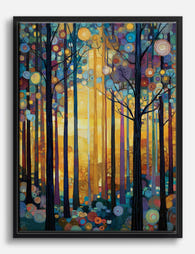
Tela bosco dorato ispirata a Klimt
Translation missing: it.products.product.sale_price A partire da CHF 62.00CHF 88.00 -

Tela bosco dorato di Klimt
Translation missing: it.products.product.sale_price A partire da CHF 62.00CHF 88.00 -

Poster sentiero dorato di Klimt
Translation missing: it.products.product.sale_price A partire da CHF 16.00CHF 22.00 -
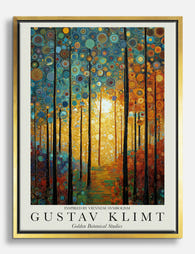
Tela foresta dorata ispirata a Klimt
Translation missing: it.products.product.sale_price A partire da CHF 62.00CHF 88.00 -

Tela foresta baciata dal sole di Klimt
Translation missing: it.products.product.sale_price A partire da CHF 62.00CHF 88.00 -
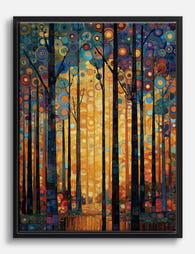
Tela foresta dorata ispirata a Klimt
Translation missing: it.products.product.sale_price A partire da CHF 62.00CHF 88.00 -
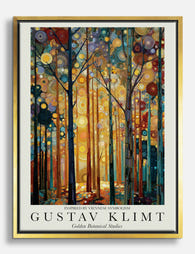
Tela foresta dorata in stile Klimt
Translation missing: it.products.product.sale_price A partire da CHF 62.00CHF 88.00 -
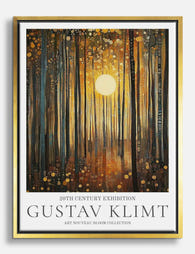
Tela foresta illuminata dal sole di Klimt
Translation missing: it.products.product.sale_price A partire da CHF 62.00CHF 88.00 -

Tela foresta dorata ispirata a Klimt
Translation missing: it.products.product.sale_price A partire da CHF 62.00CHF 88.00 -

Tela bosco illuminato dal sole ispirata a Gustav Klimt
Translation missing: it.products.product.sale_price A partire da CHF 62.00CHF 88.00 -
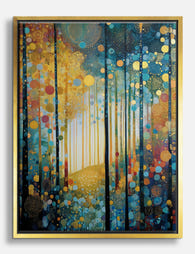
Tela bosco primaverile ispirata a Klimt
Translation missing: it.products.product.sale_price A partire da CHF 62.00CHF 88.00 -

Tela bosco fiorito ispirata a Klimt
Translation missing: it.products.product.sale_price A partire da CHF 62.00CHF 88.00 -

Tela foresta dorata ispirata a Klimt
Translation missing: it.products.product.sale_price A partire da CHF 62.00CHF 88.00 -

Tela foresta vibrante di Klimt
Translation missing: it.products.product.sale_price A partire da CHF 62.00CHF 88.00 -
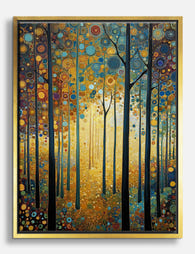
Tela foresta di primavera ispirata a Klimt
Translation missing: it.products.product.sale_price A partire da CHF 62.00CHF 88.00 -

Tela bosco di faggi I di Gustav Klimt
Translation missing: it.products.product.sale_price A partire da CHF 62.00CHF 88.00 -

Tela cespugli di rose sotto gli alberi di Gustav Klimt
Translation missing: it.products.product.sale_price A partire da CHF 62.00CHF 88.00 -

Tela foresta in fiore ispirata a Klimt
Translation missing: it.products.product.sale_price A partire da CHF 62.00CHF 88.00 -

Poster foresta soleggiata di Klimt
Translation missing: it.products.product.sale_price A partire da CHF 16.00CHF 22.00 -

Poster foresta luminosa di Gustav Klimt
Translation missing: it.products.product.sale_price A partire da CHF 16.00CHF 22.00


Di più da The Frame

Room by Room: How to Hang William Morris Floral...
You've fallen for Morris. The question now is which floral goes where, at what size, in what frame. This guide skips the Arts and Crafts lecture and gets straight to...

Jungle Bedroom Ideas for Adults: Grown-Up Ways ...
Jungle bedrooms have a reputation problem. Search the term and you'll find nursery mood boards, cartoon monkeys, and bright kelly green walls that would keep anyone awake. The grown-up version...

The Strawberry Thief: Everything You Need to Kn...
Strawberry Thief is the William Morris design people search for by name. It's also the one most often bought badly: wrong size, wrong colourway for the room, wrong print quality...