
 Ordina oggi, consegna il
 The Greenhouse Aesthetic: Why Glasshouse Art Is Having a Moment
How to bring the light-drenched, leaf-tangled magic of a Victorian glasshouse into a flat with zero conservatory.


There's a particular daydream doing the rounds on mood boards right now: cast iron arches, fogged glass, palms pressing against the panes, a wrought iron table laid for tea. Almost nobody who's pinning it actually owns a conservatory. The greenhouse aesthetic has quietly become one of the most photographed, most longed-for looks in interiors, and most of us are building it on our walls rather than in our gardens.
What the greenhouse aesthetic actually is (and isn't)
The greenhouse aesthetic is the feeling of being inside a glasshouse, not a literal recreation of one. It's filtered sunlight, condensation on glass, the slightly damp warmth of contained nature, and the particular romance of plants growing in an architectural cathedral built for them.
It isn't a houseplant wall. It isn't a few ferns on a shelf. Those things help, but the aesthetic is really about atmosphere: light, scale, lushness, and a sense that nature has been invited inside and given permission to take over a little.
The reason it translates so well into wall art is that most of us can't recreate the architecture. We can't install a 4 metre glass roof or commission cast iron columns. What we can do is hang work that conjures the feeling: botanical illustrations, palm studies, dim conservatory paintings, specimen drawings. Done well, a single large print can shift the mood of a room more than a dozen pots ever will.
The biophilic design connection: why we crave glass, greenery, and natural light
Biophilic design, the professional consensus that humans feel calmer and more focused in spaces that reference the natural world, has been edging its way into mainstream interiors for years. Greenhouse imagery sits at the absolute centre of it. A glasshouse is biophilic design in its purest historical form: a building designed entirely around plants and light.
There's also something specifically post-pandemic about the appeal. After years of staring at our own ceilings, we got hungry for indoor spaces that felt outdoors. Glasshouses promise both: the comfort of shelter and the openness of a garden, held together by panes of glass.
The wall art version delivers a smaller, more affordable hit of the same thing. A large botanical print above a sofa does some of the visual work that a wall of windows would do, drawing the eye outward and softening the boundary between room and garden, even if the "garden" is two storeys of brick across the road.

Victorian glasshouse vs. modern botanical garden: two visual directions
There are really two distinct flavours of greenhouse aesthetic, and choosing one before you start hanging things will save you a room that feels confused.
The Victorian glasshouse
Think Kew, Syon Park, the great Edwardian conservatories. The visual language is heritage botanical: hand-drawn specimen plates, sepia tones, copperplate Latin names, ferns and orchids rendered with scientific precision. Palettes lean towards aged cream, deep forest green, brass, burgundy, and warm browns.
This direction pairs beautifully with darker rooms, panelled walls, antique furniture, and anything with a slight dark academia leaning. It tends to feel scholarly, contained, and a little melancholic in the best way.
The modern botanical garden
This is the brighter, looser cousin. Bold contemporary illustrations of monstera, banana leaves, bird of paradise, sometimes in flat colour, sometimes in moody photography. Palettes go either very crisp (white, jade, terracotta) or very saturated (jungle green, charcoal, ochre).
It suits open-plan flats, mid-century furniture, plaster pink walls, and rooms that get good light. Less herbarium, more hothouse. If the Victorian version feels like a quiet afternoon at Kew, this one feels like Singapore's Gardens by the Bay at golden hour.
You can absolutely blend the two, but it works best when one direction leads and the other supports. A room of vintage specimen prints with one large modern palm photograph feels intentional. Fifty-fifty tends to feel like a shop.
Vintage greenhouse botanical art: what to look for and how it reads on the wall
Vintage botanical prints are the backbone of the Victorian glasshouse look, and they're surprisingly forgiving to hang. A few things to look for if you want the work to genuinely evoke a glasshouse rather than just "plants on paper."
Specimen-style composition. A single plant, isolated on a plain or aged background, with roots and flowering parts shown together. This is the herbarium tradition, and it's instantly readable as scholarly botanical art rather than generic foliage.
Visible labelling or numbering. Latin names, plate numbers, faint pencil annotations. These details signal that the image came from a scientific tradition, which is exactly the association you want.
Aged paper tones. Pure white backgrounds can feel a bit modern catalogue. Cream, ivory, and soft sepia ground the work in its century.
Ferns, orchids, and palms above other plants. These three were the obsessions of the Victorian glasshouse era. Anything from the fern, palm, or orchid families reads immediately as conservatory subject matter.
For framing, deep wooden frames in walnut, oak, or black work best. The slightly heavier frame echoes the wooden mounts of original herbarium specimens, and it stops the print from looking lightweight on the wall. Fab's frames are solid FSC-certified wood rather than veneer, which matters here, because thin veneered frames have a habit of cheapening exactly this kind of heritage print.
A run of three or four matched specimen prints down a hallway is one of the most effective ways to use this look. You can browse the vintage art prints collection for a sense of what works, and the dedicated botanical greenhouse art prints collection if you want to go straight to the glasshouse register.
Tropical greenhouse prints: going bold with palms, ferns, and exotic foliage
If the vintage direction is about quiet scholarship, tropical greenhouse prints are about drama. The Palm House at Kew, the Princess of Wales Conservatory, the misted-up steaminess of a hothouse, that's the territory.
What works in this register is scale and density. Tropical foliage was meant to overwhelm, and small prints rarely do it justice. A single 70x100cm palm print above a bed will do more than four A4 ones spread across a wall. The leaves need room to breathe and stretch.
A few directions that consistently land:
Single-leaf studies. One enormous monstera, banana, or fan palm leaf, photographed or illustrated against a dark background. Reads as graphic and modern, but instantly tropical.
Conservatory photography. Black and white or moody colour photographs of actual glasshouses, often with the architectural framework visible. These do double work: they reference the building and the plants at once.
Dense jungle illustrations. Layered, overlapping foliage with no single focal point. Best in rooms where you want immersive atmosphere rather than a single hero piece.
For colour, deep greens on charcoal or near-black backgrounds give you that humid, low-light hothouse feel. Lighter, more saturated greens on cream or sand give you the bright conservatory feel. Both are valid. Pick whichever matches the light you actually have, not the light you wish you had.
Canvas tends to suit this direction particularly well. The matte poly-cotton finish absorbs light rather than reflecting it, which keeps deep greens looking lush rather than plasticky, and the larger XL sizes (up to 150x100cm) genuinely match the scale tropical foliage needs. The tropical art prints collection is a good starting point if you want to lean fully into this direction.

How to pair greenhouse art with your existing decor style
You don't need to redecorate to bring the aesthetic in. The prints do most of the work; your job is to make sure the room isn't fighting them.
Modern minimalist
Stick to one or two pieces, larger rather than smaller. A single large framed fern study above a low sofa, or a pair of botanical specimen prints flanking a doorway. Black or natural oak frames, generous white margins inside the mount, no clutter. The minimalist instinct to keep walls quiet actually serves botanical work well, because each piece gets the space to read clearly.
Cottagecore
Cottagecore and the greenhouse aesthetic are practically siblings. Lean into vintage botanical prints, mix sizes freely, and don't be afraid of a proper gallery wall. Cream walls, painted wooden furniture, gingham, and dried flowers all play nicely. The danger here is sweetness overload, so balance softer florals with at least a few more architectural specimen prints to keep things grounded.
Dark academia
This is where the Victorian glasshouse really sings. Deep green or oxblood walls, brass picture lights, leather, antique books. Specimen prints, fern studies, and orchid plates in dark wood frames feel completely native here. Hang things slightly lower than you'd think, around eye level when seated, to keep the room intimate.
Mid-century modern
Skew towards the modern botanical garden direction. Bold single-leaf prints, graphic palm illustrations, anything with a slight 1950s travel poster feel. Walnut frames, teak furniture, terracotta and mustard accents. Avoid the heavily aged vintage look, it'll clash with the cleaner lines.
Scandi
Light woods, white walls, soft grey textiles. Botanical art works here if you keep the palette restrained: muted greens, soft sepias, plenty of negative space. One large piece per wall rather than a dense cluster. Frames in pale oak or black.
Renting and reluctant to commit
Lean on prints rather than permanent changes. A large framed print above a sofa can completely redefine a rental living room without touching the walls beyond a single nail (or a command strip rated for the weight). Because Fab's framed prints arrive ready to hang with fixtures already attached and the print properly fitted, you avoid the classic rental headache of buying a frame, a print, and discovering they don't quite fit together.
Our favourite greenhouse prints and why they work
Rather than a list of specific titles, here are the categories that consistently deliver the strongest greenhouse feeling, and why each one works.
Single fern specimen prints
Ferns are the most quietly powerful plant in the glasshouse vocabulary. They read as Victorian without being twee, they suit almost any room, and a single large fern print in a dark frame is one of the most reliably elegant things you can put on a wall. Look for prints with visible frond detail and ideally a faint plate number or Latin name.
Palm house photography
Black and white or warm-toned photographs taken inside actual glasshouses. They give you the architecture and the plants at once, which is a shortcut to the full aesthetic. These work especially well in hallways and stairwells where you want a sense of depth.
Orchid plates
Hand-drawn or hand-painted orchid illustrations from the great botanical artists of the 19th century. Slightly more decorative than ferns, slightly more rarefied than palms. A trio of orchid plates above a bed or dressing table is a classic move.
Monstera and banana leaf studies
The modern equivalent of the Victorian palm obsession. Best when treated boldly: large scale, deep greens, dramatic compositions. Avoid the slightly tired flat-illustration version that was everywhere in 2019. Look for work with real depth and texture.
Conservatory still lifes
Paintings or illustrations of plants on tables, in pots, near windows. Less common than straight botanical art but very effective at evoking the lived-in glasshouse feeling, particularly in dining rooms and kitchens.

For browsing across all of these, the broader botanical art prints collection covers the full range, from heritage specimen plates to contemporary leaf studies.
A note on framing and atmosphere
The frame matters more than people think for this aesthetic. A beautiful botanical print in a thin, cheap frame loses most of its power. The Victorian glasshouse tradition was always presented with care: hardwood mounts, generous margins, glass that didn't yellow. Replicating that sense of considered framing is what separates a print that feels like a poster from one that feels like an object.
A few practical notes. UV-protective glazing matters for botanical prints because plant pigments and aged paper tones are exactly the colours that fade fastest in sunlight, and these prints tend to end up in the brightest rooms. Acrylic glazing rather than glass also means no reflection competing with the image, which keeps the depth of a good giclée intact.
Solid wood frames hold their shape over time. Veneered or MDF frames have a tendency to warp, particularly in humid rooms (kitchens, bathrooms, anywhere near plants you're actually watering), and the bowing pulls the print away from the mount. Worth checking before you buy, whoever you buy from.

Where to start
If you're building the look from scratch, start with one large piece rather than several small ones. Choose your direction first (heritage Victorian or modern tropical), pick the wall that gets the best light, and commit to scale. One 70x100cm framed botanical print will shift a room's atmosphere more than six A4 prints scattered across three walls.
Add real plants where you can, but don't feel you need a jungle. Two or three good specimens near the artwork will amplify the effect without turning the project into a horticultural commitment. And resist the urge to theme too hard. A room that whispers "glasshouse" reads as elegant. A room that shouts it reads as a gift shop.

Prodotti Fab presentati in questo blog
-

Poster serra botanica incantata
Translation missing: it.products.product.sale_price A partire da CHF 15.00CHF 22.00 -

Tela serra tropicale
Translation missing: it.products.product.sale_price A partire da CHF 61.00CHF 86.00 -
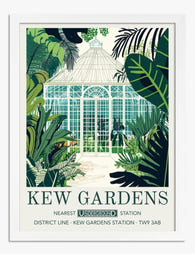
Poster serra tropicale dei Kew Gardens
Translation missing: it.products.product.sale_price A partire da CHF 15.00CHF 22.00


Di più da The Frame

The Best Botanical Prints for Your Conservatory...
Conservatories are sun traps, and most art prints are not built for them. The same light that makes the space so lovely to sit in will cook a poorly made...

Arts and Crafts Cat Art: Victorian Roots, Moder...
Cat art is everywhere right now, and most of it is forgettable. The pieces that actually hold up on a wall borrow from a much older tradition, one that runs...

William Morris Bird Prints: Which Ones to Choos...
If you've started searching for Morris birds, you've probably already hit the wall: there are at least five distinct designs, they look nothing like each other, and most shops sell...