
 Ordina oggi, consegna il
 Every Klimt Garden Painting Worth Knowing (and Hanging on Your Wall)
A practical guide to Klimt's lesser-known masterpieces and exactly where each one belongs in your home.


Most people know Klimt for the gold leaf and the kiss. But spend a summer at Lake Attersee, as he did almost every year from 1900 onwards, and you'd come back with paintings like these: dense, square, riotously coloured fields of flowers that look less like landscapes and more like tapestries. His gardens are the quietest revolution in his catalogue, and they're the ones interior designers keep pulling off the shelf right now.
Why Klimt's gardens are having a moment in interior design
The last few years have been kind to maximalism, and Klimt's gardens are maximalism with a pedigree. They sit comfortably next to the cottagecore palette (sage, ochre, dusty rose) but they have the chromatic intensity to hold their own against bolder modern interiors too. They flatter both painted plaster walls and clean Scandinavian whites.
There's also the textile thing. Klimt was deeply involved with the Wiener Werkstätte, the Viennese design workshop that blurred fine art and decorative craft, and you can see it in the gardens. They read like embroidered quilts. That makes them work in rooms where most fine art prints feel cold: bedrooms, snugs, reading nooks, anywhere you want softness without losing visual interest.
And practically, the square format that Klimt favoured for many of his garden works solves a problem that taller portrait prints can't: filling the awkward space above a low chest of drawers, a bedside table, or a square section of wall between two windows. More on that below.

Flower Garden: the one everyone wants (and how to style it)
Flower Garden (1907), sometimes called Bauerngarten or Cottage Garden, is the headline act. It's the painting that sold for £48 million at auction in 2017, briefly becoming one of the most expensive landscapes ever sold. The composition is a near-vertical wall of triangular blooms: poppies, daisies, zinnias, roses, all crammed together with almost no sky and no horizon. You're standing inside the garden, not looking at it.
This is the Klimt garden print that does the heavy lifting in a room. It needs space to breathe, ideally a wall at least 1.5 metres wide with nothing competing nearby. We'd hang it at 70x70cm minimum in a small bedroom and go to 100x100cm in a lounge or hallway with high ceilings. Anything smaller and the density of detail starts to mush together at viewing distance.
It works best in rooms with off-white, putty, or muted sage walls. Bright white walls can flatten it; the print needs a little warmth around it to pick up the ochres and reds. Avoid hanging it directly above a heavily patterned sofa or rug, you'll create visual chaos. A plain linen sofa in oat or clay is the ideal foreground.
Naming note, because this trips people up constantly: Flower Garden, Bauerngarten, and Cottage Garden are often used interchangeably for the 1907 painting, but Klimt also painted a separate Cottage Garden with Sunflowers in 1907 and another Farm Garden with Sunflowers around 1907. They're different works. We've put the full Klimt landscape collection together with proper titles and dates to save you the headache.
Italian Garden Landscape and Cottage Garden with Sunflowers: quieter picks that punch above their weight
If Flower Garden is the obvious choice, these two are the ones we'd quietly recommend to anyone who's already got a busy room or simply wants something less expected.
Italian Garden Landscape (1913)
Painted on Klimt's trip to Lake Garda, Italian Garden Landscape is structured differently from his Attersee gardens. There's actual depth, a sense of receding cypresses and architectural geometry behind the flowers. The palette leans cooler, more terracotta and deep green than the hot pinks and reds of Flower Garden.
This one is a dining room painting. The verticality of the cypresses gives it a sense of formality that suits a room with a table at its centre. Hang it at 60x80cm or 70x100cm on the long wall of the room, ideally opposite a window so the cooler greens get backlit by daylight. It pairs beautifully with dark wood furniture and a brass or aged pewter pendant light.
Cottage Garden with Sunflowers (1905–06)
This is the painting that most clearly shows Van Gogh's influence on Klimt. The two artists never met, but Klimt saw a major Van Gogh exhibition in Vienna in 1903, and the impact landed directly in the next few summers of garden work. Cottage Garden with Sunflowers has the same vertical thrust, the same emphasis on individual blooms as almost-portraits.
It's a quieter print than Flower Garden despite the brighter yellows, because there's more variation in scale and rhythm. We'd put this one in a home office or a reading corner at 50x70cm or 60x80cm. It rewards close looking, which makes it perfect for spaces where you'll actually be near it for hours, not just walking past.

Klimt's Sunflower: the perfect print for a kitchen or dining room
The Sunflower (1907) is technically a single-flower study rather than a garden landscape, but it belongs in this conversation because it shares the same DNA: same summer, same Attersee garden, same hand. The composition is a single sunflower rendered almost as a figure, standing alone against a tapestry of smaller blooms. Some scholars have drawn a direct line between this composition and Klimt's full-length portraits of women. It's a flower painted like a person.
The reason this one belongs in a kitchen or dining room is the colour temperature. The yellows and warm greens read as appetising in a way that, say, a moody landscape doesn't. It looks especially good in a kitchen with painted cabinetry in deep green, navy, or oxblood, where the print becomes the warm accent that lifts the room.
Size it generously. 70x100cm in portrait orientation above a sideboard or against a tall section of wall between cabinets and ceiling. Smaller and you lose the sense of the sunflower as a presence in the room.
Frame and size recommendations for Klimt garden prints
Klimt's gardens have a specific framing problem that's worth being honest about: their density of detail and intense saturation can fight with a busy or fussy frame. The painting is already doing a lot. The frame's job is to stop, not to add.
The frame styles that work
A slim solid wood frame in natural oak, warm walnut, or matte black is almost always the right call. The natural oak picks up the ochres and earthy tones in the garden palette without competing. Walnut adds richness in rooms with darker furniture. Matte black sharpens the colour and works well in more contemporary spaces.
Avoid gold frames. We know it feels intuitive given Klimt's gold period, but the gardens are deliberately not the gold paintings, and a gilt frame turns the whole thing into pastiche. Avoid ornate or carved frames for the same reason.
A white border (a generous mount of 5 to 8cm) gives the composition room to breathe. With Klimt's edge-to-edge density, this matters more than with most other prints. If you skip the mount, go with a slightly thicker frame profile so the print doesn't feel like it's bursting out of its boundary.
The size logic
For square Klimt compositions like Flower Garden, 50x50cm is the smallest size that still reads at distance. 70x70cm is the sweet spot for most rooms. 100x100cm is the statement size for lounges, stairwells, and double-height spaces.
For portrait formats like The Sunflower or Italian Garden Landscape, 50x70cm works in tighter spaces, 60x80cm and 70x100cm are the workhorses, and you can go to 100x140cm on canvas if you're filling a major wall.
One thing worth mentioning given how rampant poor framing is in this category: framed prints from us arrive in a single box with the frame already properly fitted, no separate shipping, no warping, no bubbling. UV-protective acrylic glaze means the colour doesn't fade even in a sunny dining room, which matters for Klimt specifically because his palette is what you're paying for.

How to create a gallery wall using multiple Klimt garden paintings
Most gallery wall advice is built around mixing artists and media. With Klimt gardens, the opposite approach works better: lean into the cohesion, treat the works as a series, and let the variation between paintings do the visual lifting.
The three-print arrangement
Our favourite combination: Flower Garden (square) flanked by The Sunflower and Cottage Garden with Sunflowers (both portrait). Hang the square print centred at eye level, around 145cm from floor to centre, with the two portrait prints on either side, top edges aligned with the top of the square. Leave 8 to 10cm between frames. This creates a triptych effect with the square as the anchor.
Size it like this: square at 70x70cm, portraits at 50x70cm. All three in matching natural oak frames with white mounts. The arrangement works on any wall at least 2.4 metres wide.
The four-print grid
For a more formal feel, four squarish Klimt landscapes (Flower Garden, Farm Garden with Sunflowers, Italian Garden Landscape cropped if needed, and Apple Tree I) hung in a 2x2 grid at 50x50cm or 60x60cm each. This works particularly well above a bed, a long sofa, or a dining sideboard. Keep gaps consistent at 5cm.
The mixed botanical wall
If pure Klimt feels too matchy, mix one or two garden prints with broader botanical art prints or other floral art prints. Anchor with one larger Klimt at 70x100cm and surround with three or four smaller botanical studies at 30x40cm. This works better in lounges and hallways where you want some visual variation.
A word on social vs. private spaces: Klimt's gardens are "unpeopled landscapes," there are no human figures, just plants. That intimacy makes them work especially well in bedrooms, reading rooms, and home offices, spaces where you're contemplating rather than performing. They can absolutely hold a lounge wall, but they have an introspective quality that's wasted in a purely social room.

Where to buy quality Klimt garden art prints that actually do the colour justice
This is the part nobody talks about, and it matters more for Klimt than for almost any other artist. The gardens are defined by saturation. Get the print wrong and you've bought a muddy, flat, washed-out approximation of one of the most chromatically dense paintings in Western art.
What to look for, in order of importance:
Giclée printing on thick matte paper. Giclée (pronounced "zhee-clay") uses pigment-based inks sprayed at extremely high resolution. It's the standard for museum and gallery reproductions. Matte paper avoids the glare that kills the depth in dark colours. Glossy paper is a red flag for any fine art reproduction, but especially for Klimt, where the painted surface itself was matte and textured.
Pigment inks, not dye-based. Pigment inks last for hundreds of years without fading. Dye inks shift colour within a few years, especially in any room with daylight. For a painting where the colour is the painting, this is non-negotiable.
Honest sizing. Some sellers list dimensions that include the mount or frame, not the printed image. Always check what size the actual print is.
UV protection if framed. Acrylic glazing with UV filtering protects the colour from sunlight. Standard glass does not.
Our own Klimt garden prints are giclée printed on heavy matte paper with pigment inks, framed (if you choose framed) in solid FSC-certified wood with UV-protective acrylic. They arrive ready to hang in a single box. We mention this not to sell you, but because the colour-reproduction problem is the single biggest reason people end up disappointed with Klimt prints, and it's worth knowing what to look for wherever you buy.
A short closing thought
If you're choosing one Klimt garden, start with Flower Garden at 70x70cm in a natural oak frame, and put it somewhere you'll actually sit still. If you're choosing three, build the triptych above. And if you're still deciding between Klimt's gardens and Monet's or Van Gogh's, the deciding factor is density: Klimt's gardens are denser, flatter, and more decorative. They behave more like wallpaper than like windows. That's either exactly what you want or exactly what you don't, and the answer tells you everything.

Prodotti Fab presentati in questo blog
-

Poster giardino selvatico di Gustav Klimt
Translation missing: it.products.product.sale_price A partire da CHF 16.00CHF 22.00 -

Tela giardino fiorito in stile Klimt
Translation missing: it.products.product.sale_price A partire da CHF 62.00CHF 88.00 -

Poster giardino fiorito di Gustav Klimt
Translation missing: it.products.product.sale_price A partire da CHF 16.00CHF 22.00 -

Tela il giardino fiorito di Klimt
Translation missing: it.products.product.sale_price A partire da CHF 62.00CHF 88.00 -

Tela giardino selvatico di Klimt
Translation missing: it.products.product.sale_price A partire da CHF 62.00CHF 88.00 -

Poster giardino fiorito di Klimt
Translation missing: it.products.product.sale_price A partire da CHF 16.00CHF 22.00 -

Poster giardino rosa di Gustav Klimt
Translation missing: it.products.product.sale_price A partire da CHF 16.00CHF 22.00 -

Tela il giardino vibrante di Klimt
Translation missing: it.products.product.sale_price A partire da CHF 62.00CHF 88.00 -

Poster giardino di campagna di Klimt
Translation missing: it.products.product.sale_price A partire da CHF 16.00CHF 22.00 -
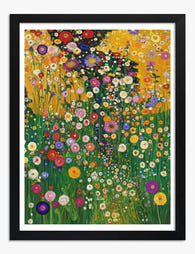
Poster giardino selvatico di Klimt
Translation missing: it.products.product.sale_price A partire da CHF 16.00CHF 22.00 -

Poster giardino fiorito di Gustav Klimt
Translation missing: it.products.product.sale_price A partire da CHF 16.00CHF 22.00 -

Tela Cottage Garden di Gustav Klimt
Translation missing: it.products.product.sale_price A partire da CHF 62.00CHF 88.00 -

Tela giardino selvatico di Klimt
Translation missing: it.products.product.sale_price A partire da CHF 62.00CHF 88.00 -

Poster giardino fiorito di Gustav Klimt
Translation missing: it.products.product.sale_price A partire da CHF 16.00CHF 22.00 -
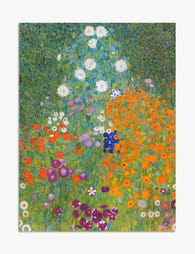
Poster il giardino di campagna di Klimt
Translation missing: it.products.product.sale_price A partire da CHF 16.00CHF 22.00 -

Tela giardino di campagna di Gustav Klimt
Translation missing: it.products.product.sale_price A partire da CHF 62.00CHF 88.00 -
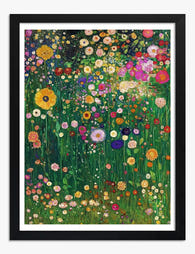
Poster giardino di fiori di campo di Klimt
Translation missing: it.products.product.sale_price A partire da CHF 16.00CHF 22.00 -

Tela il giardino incantato di Klimt
Translation missing: it.products.product.sale_price A partire da CHF 62.00CHF 88.00 -

Poster foresta stellata di Klimt
Translation missing: it.products.product.sale_price A partire da CHF 16.00CHF 22.00 -

Tela giardino fiorito di Klimt
Translation missing: it.products.product.sale_price A partire da CHF 62.00CHF 88.00


Di più da The Frame

Kids' Room Art: Playful Without Childish
Most kids' room art falls into two camps: aggressively cute (rainbows, cartoon animals, alphabet posters) or weirdly adult (minimal black and white prints that could hang in a dentist's office)....

Nursery Art That Grows with the Room
Most nursery art gets retired by the time the cot comes down. That's a waste of money, wall space and the chance to build something genuinely meaningful. This guide is...

Office and Study: Art That Helps You Focus or A...
The art you hang in a workspace isn't neutral decoration. It either supports the kind of thinking you do at your desk, or it quietly works against it. The trick...