
 Ordina oggi, consegna il
 Black Picture Frames: Why They Always Work and 5 Ways to Style Them at Home
The design psychology behind the world's bestselling frame colour, and how to use it without ending up in conference room territory.


Black frames outsell every other colour by a wide margin, and most articles will tell you it's because they're "versatile." That's lazy. The real reason is design psychology, and once you understand it, you can style black frames properly instead of defaulting to them and hoping for the best.
Why black frames outsell every other colour
Black frames work because they do two specific jobs at once: they visually anchor an image, and they signal "this is meant to be looked at." That second part is the cultural shortcut. Galleries, museums and serious photography studios have framed work in black for over a century, so your eye reads a black frame as a frame for art rather than decoration.
The anchoring is the more interesting part. Black creates the strongest possible separation between the artwork and the wall, which gives any image a defined edge. Soft watercolours stop bleeding into the paint colour. Busy abstracts get a hard boundary that calms them down. Photography gets the gallery treatment it was designed for.
This is why black frames are the safest bet for picture frames for art prints when you're not sure what else to choose. They don't add a personality, they enforce one the artwork already has. The trade-off is they can feel cold or institutional if you use them carelessly, which is the part nobody warns you about.

Black frames on white walls vs. dark walls vs. coloured walls
Wall colour changes everything about how a black frame reads. The "black goes with anything" line is technically true and practically useless. Here's what actually happens.
White walls
Maximum contrast. The frame becomes a graphic element in its own right, almost like a thick border drawn on the wall. This works brilliantly for bold photography, high-contrast prints, and minimalist line drawings, but it can feel harsh with delicate or pastel artwork.
Two adjustments help. First, use a wide white mat (5cm or more) inside the frame to create breathing space between the art and the black edge. Second, lean towards thinner frame profiles, around 2 to 3cm, on stark white walls. A thick black frame on bright white can start to feel like a warning sign rather than a piece of art.
Dark walls
This is where most people get nervous, and they shouldn't. Black frames on charcoal, navy or forest green walls look extraordinary, but only if you treat the frame as a subtle outline rather than a contrast element. The frame essentially disappears and the artwork floats.
The rule: on dark walls, choose art with light or bright content so the image carries the visual weight. A moody black-and-white photograph on a navy wall will vanish. A bright botanical or a pale abstract on the same wall sings. If the frame is going to blend into the wall, the art has to do the heavy lifting.
Coloured walls
Greige, sage green, terracotta, dusty pink, mustard. These mid-tone walls are where black frames are most flattering and most underused. The frame provides the structure that softer paint colours lack, and it makes the wall colour look more intentional.
On greige or warm neutrals, black frames look architectural. On sage green, they read as botanical and grounded. On terracotta or warm clay, black adds the contrast that stops the wall from feeling washed out. The frame width matters less here because the mid-tone wall absorbs visual intensity. Go thicker if you want presence, thinner if you want the art to lead.
Styling a single black frame as a focal point
A single large piece is harder to get right than a gallery wall, because there's nowhere to hide.
Above a sofa, the artwork should span roughly two-thirds of the sofa's width. A three-seater at 220cm wants a frame around 140 to 150cm wide, which usually means going to the largest available size. The bottom of the frame should sit 15 to 25cm above the back of the sofa. Any higher and it floats. Any lower and it looks like it's resting on the cushions.
Above a bed, the same two-thirds rule applies to the headboard width. Centre it precisely. A single black frame above a bed reads as deliberate and calm, which is what bedrooms need. This is one place where dramatic photography art prints in black frames consistently outperform anything else, especially landscape or architectural work.
The mistake people make with a single black frame is choosing artwork that's too quiet. A solo piece needs to earn its position. If you're hanging one large frame on a feature wall, pick artwork with strong composition or bold colour. Subtle, textural work belongs in a group where it can build atmosphere with neighbours.

Building a gallery wall with black frames
Here's the elephant in the room: an all-black gallery wall can absolutely look like a corporate conference room. Rows of identical black frames at identical spacing, hung over a beige sofa, is a meeting space, not a home. The fix is variation, and not the kind most guides recommend.
Layout: salon hang vs. grid
A grid layout (rows and columns of identical frame sizes) is the most common gallery wall and the most likely to feel sterile. It works best with a unified set of wall art sets where the imagery has a clear conceptual link, like a botanical series or a set of architectural studies. Spacing should be 5 to 7cm between frames, with the whole arrangement centred at 145 to 150cm from the floor (measuring to the centre of the arrangement, not the bottom).
A salon hang is messier and more residential. Mix three to five different frame sizes, including at least one piece significantly larger than the others to act as an anchor. Start by laying the arrangement out on the floor before you commit to nail holes. The visual rule: keep an imaginary border around the whole composition rectangular, but vary the spacing inside it. Spacing inside a salon hang can range from 4 to 10cm and still look intentional.
Mixing art types
The single biggest factor in avoiding the corporate look is mixing art categories. Don't hang seven black-and-white photographs in identical black frames. Mix photography with line drawings, abstract paintings, typography, and textural minimalist art prints. The frames provide the unity. The artwork provides the personality.
A useful ratio: aim for at least three distinct art types in any gallery wall of five or more pieces. Two photographs, two abstracts, one piece of text-based or graphic work is a reliable formula.
Mixing black with other frame colours
The all-black gallery wall is the most common version, but the 70/30 mixed approach almost always looks more relaxed. Try 70% black frames with 30% natural oak or brass for warmth, or 70% black with 30% white for a cleaner, lighter feel. The black still dominates and provides the structure, while the second colour breaks the institutional rhythm.
Matte black vs. gloss black vs. black wood grain
Finish matters more than people realise, and most retailers don't bother explaining the difference.
Matte black
The default and the most flexible. Matte absorbs light, recedes slightly into the wall, and lets the artwork do all the talking. It's the right choice for contemporary interiors, minimalist spaces, and almost any photography. The honest trade-off: matte black shows fingerprints and dust more than any other finish. Wipe with a soft dry cloth occasionally, never with sprays or wet cloths, and you'll be fine.
Gloss black
Reflective, dramatic, and unmistakably modern. Gloss reads as more decorative than matte, almost like a piece of furniture rather than a frame. It works in maximalist or art deco interiors, in rooms with a lot of texture (velvet, marble, brass) where a matte frame would look flat by comparison. Gloss reflects whatever's in front of it, so don't hang it directly opposite a window unless you want glare to be part of the experience.
Black wood grain
Stained wood with the grain still visible. This is the warmest of the three and the only one that doesn't read as overtly modern. It bridges the gap between black and natural wood, which makes it useful in rustic, mid-century, or transitional interiors where pure black would feel too sharp. If your room has a lot of warm wood furniture (oak, walnut, teak), wood grain black is more flattering than matte.
A note on construction: any frame, regardless of finish, should be solid wood rather than MDF or veneer. MDF frames warp in humid rooms and the corners separate over time. Solid FSC-certified wood holds its shape, and with UV-protective acrylic glaze instead of glass, it travels well and won't fade in direct sunlight.

When not to use a black frame
This is the part nobody writes, so here it is.
When the artwork is already mostly black
A heavy black frame around a moody, dark-toned photograph or a black-and-white print with deep shadows can swallow the image. The frame and the dark areas merge, the composition collapses, and the piece loses its edge. Reach for a white, off-white, or natural oak frame instead, which will give the dark imagery somewhere to breathe.
When you're trying to warm up a cold room
North-facing rooms with cool light, rooms with grey or blue walls, rooms with a lot of metal and glass: black frames will reinforce the chill. Natural oak, walnut, or warm-toned wood frames add the warmth these spaces actually need. Don't use black to "ground" a cold room. It just makes it colder.
Vintage, shabby chic or cottagecore interiors
Black frames are too graphic and too contemporary for genuinely vintage aesthetics. Distressed wood, gilded, or off-white frames look correct in these settings. A black frame in a cottage-style room will always look like it wandered in from a different house.
Children's rooms
Black frames in a child's bedroom feel adult and severe. The exception is a teenager's room with a deliberately moody palette. For younger children, lighter frames (natural wood, white, soft pastel) match the energy of the room and the artwork better.
Kitchens and casual dining
This one is contested, but black frames in informal eating areas can read as overly formal. If your kitchen is sleek and modern, black works. If it's a warm family kitchen with open shelves and visible clutter, natural wood frames feel more at home. Trust the rest of the room. If everything else is relaxed, the frames should be too.
A few last things
Frame width is the underrated decision. As a starting point, thin profiles (1 to 2cm) work for prints under 50x70cm and on busy walls. Wide profiles (3 to 5cm) suit larger pieces and statement walls. On coloured walls, you can go wider without it feeling heavy. On bright white, stay thinner.
Mat colour matters too. White mats are the safe default and look clean on almost everything. Black mats inside black frames are dramatic and only work with high-contrast or graphic art. Coloured mats are a commitment and usually a mistake unless you're matching a specific colour story in the room.
Get the wall colour pairing right, mix your art types if you're going gallery-wall, and trust that black frames don't need to do the work of being interesting. The artwork does that. The frame just makes sure you actually look at it.


Prodotti Fab presentati in questo blog
-

Tela astratta boho con forme nere
Translation missing: it.products.product.sale_price A partire da €64,95€92,95 -

Poster cornice gialla iconica su sfondo viola
Translation missing: it.products.product.sale_price A partire da €16,95€23,95 -

Tela cornice gialla iconica su sfondo lavanda
Translation missing: it.products.product.sale_price A partire da €64,95€92,95 -

Tela minimalista in bianco e nero a linee decise
Translation missing: it.products.product.sale_price A partire da €64,95€92,95 -

Tela collage monocromo moderno
Translation missing: it.products.product.sale_price A partire da €64,95€92,95 -
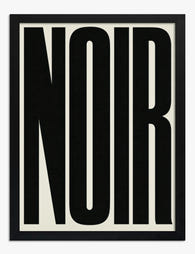
Poster tipografico audace in bianco e nero
Translation missing: it.products.product.sale_price A partire da €16,95€23,95 -

Poster tipografico 9 in grassetto nero
Translation missing: it.products.product.sale_price A partire da €16,95€23,95 -

Tela astratta curve nere su grigio
Translation missing: it.products.product.sale_price A partire da €64,95€92,95 -

Tela promemoria bagno in bianco e nero
Translation missing: it.products.product.sale_price A partire da €64,95€92,95 -
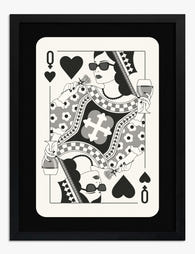
Poster regina di stile in bianco e nero
Translation missing: it.products.product.sale_price A partire da €16,95€23,95 -

Tela arco bianco e nero
Translation missing: it.products.product.sale_price A partire da €64,95€92,95 -

Tela profilo monocromo
Translation missing: it.products.product.sale_price A partire da €64,95€92,95 -

Tela stivali da cowboy in bianco e nero
Translation missing: it.products.product.sale_price A partire da €64,95€92,95 -

Tela astratta curve nere su beige
Translation missing: it.products.product.sale_price A partire da €64,95€92,95 -

Tela Five minimalista con tipografia verde petrolio
Translation missing: it.products.product.sale_price A partire da €64,95€92,95


Di più da The Frame

Realist Garden Prints vs Botanical Illustration...
Realist garden prints are some of the most rewarding wall art you can hang, and some of the trickiest to arrange. Get the balance right and you've got a wall...

Wall Art for Your Home Gym That's Actually Wort...
Most home gyms look like an afterthought. Bare walls, a single dusty motivational poster from 2014, maybe a flag pinned up with drawing pins. You spend hours in there every...

Bedroom Wall Art Ideas for Every Style: From Mi...
Most bedroom art advice throws thirty ideas at you and calls it inspiration. What you actually need is a framework: a way to narrow the field based on what's already...