
 Sorrisi garantiti
 Ordina oggi, consegna il
 How to Build a Gallery Wall with Japanese Art Prints (Without It Looking a Mess)
A practical guide to mixing Hokusai, Noritake, and everything in between without the wall looking like a chaotic mood board.


Gallery walls go wrong for predictable reasons: too many frames, too many styles, too little breathing room. Japanese art demands the opposite of all three. This guide walks you through the layouts, spacing, and curation logic that make a Japanese gallery wall feel intentional rather than accidental.
Why Japanese art prints make brilliant gallery walls
Japanese art has always understood negative space. The concept of ma (間), the meaningful pause between elements, sits at the heart of everything from ukiyo-e woodblocks to contemporary line illustration. That sensibility translates beautifully to a gallery wall, where the wall itself becomes part of the composition.
There's also a stylistic range here that few other traditions offer. You can pull from Edo-period landscapes, mid-century graphic posters, and contemporary minimalist illustration, and the underlying visual language (clean linework, considered composition, restrained palettes) holds it all together. That makes Japanese prints unusually forgiving when you mix eras and artists.
The flip side: because Japanese art relies so heavily on restraint, mistakes show up faster. An overcluttered Japanese gallery wall looks chaotic in a way that a maximalist Victorian one doesn't. The good news is that the rules below are simple, and once you internalise them, you can stop second-guessing.

The golden rule: consistent frames, varied sizes
If you remember one thing from this article, make it this: keep your frames identical, vary the sizes.
Japanese art lives or dies on linework and composition. The moment you introduce ornate gold frames next to thin black ones, the frames start competing with the artwork. Worse, they fight each other, and the wall reads as a jumble of objects rather than a curated collection. A single frame style across the whole wall removes that visual noise instantly.
For Japanese prints specifically, three frame finishes work consistently well:
- Natural light oak or ash: warm, neutral, complements both traditional woodblock prints and contemporary illustration
- Matte black: graphic and modern, brilliant for bold contemporary work and equally good for high-contrast ukiyo-e
- White: minimal, gallery-style, best when your prints already have strong colour or detail
Pick one finish. Vary the size of the frames freely (30x40cm, 50x70cm, 70x100cm), but never the style. This is doubly important when your prints come from different sellers, which is the most common reason gallery walls look mismatched. If you've already bought prints with frames you don't love, the cleanest fix is reframing everything to match. It's annoying, but it's the difference between a wall that works and one that doesn't.
A note on mat boards: traditional ukiyo-e and bird-and-flower prints benefit from a generous white mat, which gives the imagery room to breathe and references the traditional presentation of Japanese prints. Contemporary minimalist illustration usually doesn't need one, the white space is already built into the design.
Three gallery wall layouts that actually work (with dimensions)
Lay everything out on the floor first. Better still, cut paper templates the exact size of each print, tape them to the wall, and live with them for 48 hours before committing. You'll spot problems you couldn't see in your head.
The Trio (3 prints, ideal for above a sofa or sideboard)
Three prints is the most underrated configuration. It's restrained, naturally balanced, and impossible to overcrowd.
- One large centrepiece (50x70cm or 70x100cm)
- Two smaller flanking prints (30x40cm or 40x50cm)
- Hung in a horizontal line, centres aligned
- Spacing between frames: 8 to 10cm
Total wall width needed: roughly 160 to 200cm. This works above a three-seater sofa or a long sideboard.
The Grid (5 prints, balanced and architectural)
Best when your prints share a strong common element (all the same artist, all the same palette, or all the same era). The grid imposes order, so the prints can be visually busier without the wall feeling chaotic.
- Five prints in a 3-over-2 or 2-over-3 arrangement
- All prints the same size (40x50cm or 50x70cm)
- Spacing: 5 to 8cm between frames, identical horizontally and vertically
- Treat the whole grid as a single rectangular block when hanging
The Salon (7 to 9 prints, for a large wall)
The classic asymmetric gallery wall. Hardest to execute, most rewarding when it lands.
- Mix of sizes: one or two large anchors (70x100cm), two or three medium (50x70cm), three or four small (30x40cm)
- Anchor the largest print slightly off-centre
- Build outwards, alternating sizes
- Spacing: 8 to 10cm throughout
- Imaginary outer rectangle should be roughly proportional to the wall
For Japanese prints specifically, lean towards the wider end of spacing (10cm rather than 5cm). The extra breathing room respects the ma principle and stops the wall from feeling crowded, which is the single biggest failure mode for Japanese gallery walls.

Mixing graphic, illustrative, and minimalist Japanese styles
This is where most gallery walls fall apart. You've got a Hokusai wave, a delicate Noritake-style line drawing, and a graphic mid-century travel poster. They're all "Japanese," but they don't automatically belong together.
The trick is to find the connective tissue. Three things to look for:
Shared palette. The fastest way to unify mixed styles is colour. If everything pulls from a similar palette (indigo and cream, or black and rust, or muted earth tones), the wall reads as cohesive even when the styles vary wildly. Audit your prints. If one is screaming red against a wall of blues, it's going to dominate, full stop.
Shared visual weight. A bold, high-contrast ukiyo-e print like the Great Wave carries enormous visual weight. A delicate single-line contemporary illustration carries almost none. Hang them next to each other at the same size, and the wave eats the illustration alive. The fix: either size the delicate print significantly larger to compensate, or place the bold print as your anchor and surround it with prints that have room to recede.
Shared subject matter or motif. Even across centuries, Japanese art returns to the same themes: nature, water, mountains, birds, figures, weather. A wall built around a single motif (say, water in all its forms, from Hokusai's waves to a contemporary minimalist rain illustration) feels intentional even when the styles span 200 years.
Traditional Japanese art prints work surprisingly well alongside contemporary Japanese illustration when these three principles are in play. The work of artists like Taguchi Tomoki sits in an interesting middle ground, drawing from traditional bird-and-flower compositions while feeling distinctly modern, which makes it a natural bridge piece on a mixed-era wall.
What to avoid
- Mixing heavy woodblock texture with ultra-glossy graphic prints (the textural mismatch reads as cheap)
- Pairing ornate traditional prints with stark, single-line contemporary work without a transitional piece
- Combining more than three distinct styles on one wall
How many prints do you really need? (Fewer than you think)
The instinct is always to add more. Resist it.
For a medium wall (above a sofa, around 200cm wide), three to five prints is plenty. For a large feature wall (a full hallway run, or a tall double-height space), five to seven. Beyond nine prints, you've stopped curating and started collecting.
Japanese aesthetics reward restraint in a way Western maximalism doesn't. A wall with three perfectly chosen prints and generous space around them will almost always look more sophisticated than the same wall stuffed with nine. If you're tempted to add a fourth print to "fill the gap," sit with the gap for a week first. The gap might be the point.
A useful test: stand back from your proposed layout and squint. If your eye lands on one anchor print and then moves comfortably around the others, you're done. If your eye darts and can't settle, you have too many prints, or one of them is the wrong scale.
Pre-curated wall art sets solve a lot of this for you, since the curation has already happened. They're a sensible starting point if you're new to gallery walls and don't trust your own eye yet.

Spacing, height, and alignment: the practical stuff
Hanging height
The centre of your gallery wall (not the centre of the top print, the centre of the entire arrangement) should sit at roughly 145cm from the floor. That's gallery standard, and it's calibrated to average eye level.
Above furniture, the bottom edge of the lowest frame should sit 15 to 20cm above the top of the furniture. Closer than that and the wall feels cramped. Further and the art floats away from the room.
Spacing between frames
Standard gallery wall advice says 5 to 8cm between frames. For Japanese prints, push that to 8 to 10cm. The extra breathing room serves the work better and gives each print room to be itself.
Keep spacing consistent across the entire wall. Uneven spacing is the single most common cause of "this looks wrong but I can't tell why."
Aligning mixed sizes
When you're mixing print sizes, you have three alignment options:
- Top edges aligned: feels formal, works in horizontal rows
- Centres aligned: feels balanced, the easiest default
- Bottom edges aligned: feels grounded, good above furniture
Pick one and apply it consistently. Mixing alignments within the same row is what creates that "drunk gallery" look.
The aspect ratio problem
Got a square bird-and-flower print, a vertical landscape, and a horizontal wave scene? This is where most people freeze. The fix: build the wall around the most extreme aspect ratio (usually the horizontal one), and use it as your anchor. Place vertical prints to one side as a pair to balance the horizontal weight. Square prints work as connectors between vertical and horizontal pieces.
Finishing touches: lighting and surrounding decor
Lighting
Japanese prints, particularly traditional woodblocks, are sensitive to UV. Direct sunlight will fade pigments over time, sometimes dramatically. UV-protective glazing on framed prints handles most of this concern, but it's still worth avoiding hanging valuable prints opposite a south-facing window.
For deliberate lighting, picture lights or recessed ceiling spots angled at the wall work best. Avoid lighting that's too cold (above 4000K), it strips the warmth out of traditional inks and makes contemporary illustration look clinical. Aim for 2700K to 3000K, the same warm white you'd use elsewhere in the room.
Avoid uplighters that throw harsh raking light across the prints. They exaggerate every imperfection in the wall and create distracting shadows on textured frames.
What goes around the wall
The wall doesn't end at the frames. What sits beneath and beside the gallery affects how it reads.
Keep furniture beneath restrained. A low linen sofa, a simple oak sideboard, a ceramic lamp. Busy furniture (heavily patterned upholstery, ornate carving, gloss finishes) competes with the delicacy of Japanese linework. The Japandi aesthetic, which fuses Japanese minimalism with Scandinavian warmth, exists precisely because these two design languages share the same restraint principles.
A single sculptural object on a console below the wall (a stoneware vase, a small bonsai, a stack of books) grounds the arrangement without crowding it.
Adapting for different rooms
- Hallways: long, narrow walls suit horizontal grids or linear arrangements of three to five prints in matching sizes
- Bedrooms: above the bed works best with two or three larger prints rather than many small ones, the scale needs to match the headboard
- Home offices: a tighter grid behind the desk reads as a deliberate backdrop, particularly useful on video calls
- Living rooms: the salon-style asymmetric layout suits the largest wall, usually behind or opposite the sofa

A few last things
Cut paper templates before you put a single nail in the wall. Forty-eight hours of looking at taped paper rectangles is worth more than any amount of measuring.
Buy your prints from one place if you can, or commit to reframing everything in matching frames before you hang anything. Mismatched frames sabotage more gallery walls than any other single factor.
And resist the urge to fill every gap. The empty wall around a Japanese print isn't a problem to solve. It's the print doing its job.

Prodotti Fab presentati in questo blog
-
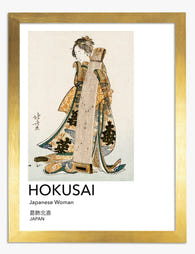
Poster Hokusai eleganza giapponese
Translation missing: it.products.product.sale_price A partire da €16,95€23,95 -

Poster i sei poeti di Kamisaka Sekka
Translation missing: it.products.product.sale_price A partire da €16,95€23,95 -

Poster geisha elegante di Hokusai
Translation missing: it.products.product.sale_price A partire da €16,95€23,95 -

Poster brindisi giapponese
Translation missing: it.products.product.sale_price A partire da €16,95€23,95 -

Poster la grande onda di Hokusai
Translation missing: it.products.product.sale_price A partire da €16,95€23,95 -

Poster Monte Fuji di Utagawa Hiroshige
Translation missing: it.products.product.sale_price A partire da €16,95€23,95 -

Poster papaveri giapponesi di Sakai Doitsu
Translation missing: it.products.product.sale_price A partire da €16,95€23,95 -

Poster tatami al chiaro di luna di Utagawa Hiroshige
Translation missing: it.products.product.sale_price A partire da €16,95€23,95 -
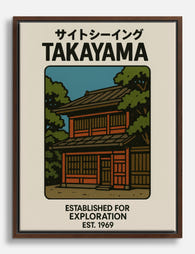
Tela Takayama, Giappone tradizionale
Translation missing: it.products.product.sale_price A partire da €64,95€92,95 -

Poster passeggiata urbana a Tokyo
Translation missing: it.products.product.sale_price A partire da €16,95€23,95 -

Poster fiori di ciliegio a Tokyo
Translation missing: it.products.product.sale_price A partire da €16,95€23,95 -

Poster paesaggio onirico di Tokyo
Translation missing: it.products.product.sale_price A partire da €16,95€23,95 -

Poster mercato dei fiori di Ibiza
Translation missing: it.products.product.sale_price A partire da €16,95€23,95 -

Poster ventagli di Kamisaka Sekka
Translation missing: it.products.product.sale_price A partire da €16,95€23,95 -

Poster cascata di fiori e foglie blu
Translation missing: it.products.product.sale_price A partire da €16,95€23,95 -

Tela Tokyo con ciliegi in fiore
Translation missing: it.products.product.sale_price A partire da €64,95€92,95 -
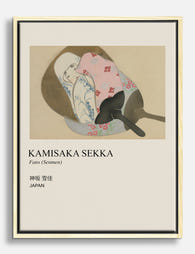
Tela ventagli di Kamisaka Sekka
Translation missing: it.products.product.sale_price A partire da €64,95€92,95 -

Tela sei poeti di Kamisaka Sekka
Translation missing: it.products.product.sale_price A partire da €64,95€92,95 -

Poster botanico vintage dei giardini di Kyoto
Translation missing: it.products.product.sale_price A partire da €16,95€23,95


Di più da The Frame

Canvas Prints vs Framed Art Prints: Which One B...
You're stuck between two formats, the internet keeps telling you "it depends on personal preference," and you still don't know what to buy. Let's fix that. This is an opinionated...

Giclée Print vs Original Watercolor: What Actua...
The question everyone asks: can a print really capture watercolour? Watercolour is the trickiest medium to reproduce. The translucent washes, the soft bleeds where two colours meet, the visible grain...

Art Prints as Gifts: The Complete Guide to Givi...
Giving art feels risky because it sits on someone's wall every day, judging your taste. The good news: there's a small, reliable playbook that takes most of the anxiety out...