
 Ordina oggi, consegna il
 The Most Famous William Morris Designs and the Stories Behind Them
A curator's guide to Morris's most beloved floral patterns and how to choose the one that fits your home.


William Morris designed over 50 wallpapers and dozens of textiles between 1862 and his death in 1896, but only a handful became truly iconic. The patterns we still hang on our walls today were chosen by history for good reasons: they tell stories, they reward close looking, and they hold up at any scale. Here's what makes each of the famous ones special, and how to work out which belongs in your home.
Strawberry Thief: the garden scene that became a cultural icon
Strawberry Thief (1883) is the design most people picture when they hear the name William Morris. The story behind it is real and slightly absurd. Morris lived at Kelmscott Manor in Oxfordshire, and song thrushes kept stealing fruit from his kitchen garden. Rather than chase them off, he designed a textile around them.
The pattern shows pairs of thrushes nestled symmetrically among strawberry plants, tulips, and curling foliage. It's busy, but the symmetry keeps it calm. Morris used the indigo-discharge printing technique for the first time on this design, which is why the original has that deep, slightly inky blue ground. The process was so technically demanding that the cloth was expensive, and Morris was reportedly frustrated that only wealthy customers could afford the thing he'd made about a bird stealing his breakfast.
What to look for: the birds appear in mirrored pairs, the strawberries hang in clusters of three, and the background is far darker than most Morris designs. It's a high-contrast pattern with a strong sense of narrative.
Where it works: Strawberry Thief is dense and storytelling, so it suits rooms where you want a focal point. A 50x70cm framed print above a fireplace, or a 70x100cm above a dining sideboard, gives the eye time to find the birds. It struggles in very minimal rooms where its richness can feel marooned.

Honeysuckle: the quiet masterpiece for understated rooms
Honeysuckle (1876) is often passed over in favour of louder designs, which is exactly why it deserves a closer look. It was designed by Morris's daughter May, though for many years it was attributed to her father, and the pattern is sometimes still credited to him in error. Either way, it carries the family signature: dense botanical detail, a complete refusal to leave empty space, and a colour palette that feels lifted from a hedgerow on a damp morning.
The design winds honeysuckle, jasmine, and crown imperial flowers through a vertical lattice. There are no birds, no fruit, no narrative incident. It's pure plant. The original colourways used soft sages, dusty pinks, and parchment grounds, and the pattern reads as almost neutral from across a room before resolving into intricate floral structure when you get close.
This is what makes Honeysuckle so useful. From two metres away it functions as texture. From half a metre away it functions as botanical illustration. Few patterns work that hard.
Where it works: bedrooms, studies, hallways, and any room where you want pattern without drama. Pair it with linen, oak, and unbleached materials. It also handles low light better than most Morris designs because the pale ground reflects what light there is.
Golden Lily: rich, layered, and unapologetically decorative
Here's the attribution correction that matters: Golden Lily (1897) was not designed by William Morris. It was designed by John Henry Dearle, who joined Morris & Co. as a teenager and eventually became chief designer after Morris's death. Many retailers and even reputable museums still credit it to Morris, but it's Dearle's work, and it's one of the high points of the firm's later output.
Golden Lily is more layered than anything Morris himself produced. It uses three distinct planes: a back layer of small flowers, a middle layer of curling acanthus-like leaves, and a foreground of large lily blooms. Dearle had absorbed Morris's principles about flat pattern and rhythm, then pushed the depth further. The original colourways are warm and saturated, ochre yellows, soft reds, deep greens, with none of the inky restraint of Strawberry Thief.
What to look for: the diagonal movement. Most Morris designs use vertical or symmetrical structures. Golden Lily flows on a diagonal, which makes it feel more dynamic and slightly less formal.
Where it works: large rooms with warm undertones. Golden Lily looks magnificent at scale, and a 70x100cm or canvas print at 100x150cm will give the layered structure room to breathe. It clashes with cool Scandinavian palettes and very modern interiors. It loves a wood floor, a wool rug, and lamplight.
You'll find Golden Lily and other Dearle designs throughout the William Morris floral collection, correctly attributed.
Fruit (Pomegranate): the design that defined a movement
Fruit, sometimes called Pomegranate, dates from around 1866 and is one of Morris's earliest wallpapers. Designed for his own home, the Red House in Kent, it shows pomegranates, lemons, peaches, and oranges hanging among stylised foliage. It's quieter than Strawberry Thief and more naive in its drawing, which is part of its charm.
This is the design that established Morris's working method. He believed pattern should derive from honest observation of plants, organised into flat repeats that didn't pretend to be three-dimensional. Victorian wallpaper at the time was full of trompe l'oeil swags, fake architectural mouldings, and overblown exotic blooms. Morris rejected all of it. Fruit is the manifesto in pattern form.
It also reflects his politics. Morris was a committed socialist who believed beauty shouldn't be the privilege of the rich, and that ordinary British plants were as worthy of celebration as any imported orchid. The choice of common orchard fruit over hothouse exotics was deliberate. This thread runs through all of his most loved william morris floral patterns: hawthorn, willow, honeysuckle, marigold. Wildflowers and kitchen-garden plants, painted with the seriousness Victorian designers reserved for tropical specimens.

Willow Boughs and Acanthus: Morris's botanical obsession
If you want to understand Morris as a botanical observer rather than a storyteller, look at Willow Boughs (1887) and Acanthus (1875). They're at opposite ends of his style range and they bracket his career.
Acanthus is one of Morris's most ambitious wallpapers. The pattern shows great curling leaves overlapping in dense, rhythmic waves, hand-printed from 30 separate woodblocks in the original production. The leaves move in a slow rotational pattern that pulls your eye around the design rather than across it. Acanthus is unmistakably 1870s Morris: complex, three-dimensional, and slightly heavy.
Willow Boughs is the opposite. Designed twelve years later, it shows narrow willow leaves in a delicate all-over repeat with no central motif, no flowers, and no narrative. It's almost a texture rather than a picture. This shift from dense complexity to flat simplicity reflects Morris's growing interest in medieval Italian silks, which used flatter, more abstracted plant forms.
Together they show Morris's range. Acanthus wants to be the loudest thing in a room. Willow Boughs wants to be wallpaper in the truest sense, a calm field that lets other things sit in front of it.
Where they work: Acanthus suits high-ceilinged rooms with strong architecture, Georgian or Victorian, where it can match the scale of cornicing and tall windows. Willow Boughs works almost anywhere, and it's particularly good behind beds and in narrow hallways where you want pattern that doesn't compete.
How to pick the right design for your space
Most articles tell you these designs exist. Almost none help you choose. Here's a simple framework.
Start with pattern density
Morris designs vary enormously in how much visual information they contain per square centimetre. Strawberry Thief, Acanthus, and Golden Lily are dense. Willow Boughs, Honeysuckle, and Pimpernel are open. If your room already has a lot going on, books, rugs, mixed furniture, choose an open pattern. If your walls and surfaces are mostly empty, you can handle density.
Think about diagonal vs. vertical movement
Vertical patterns like Honeysuckle and Willow Boughs add height and calm. Diagonal patterns like Golden Lily add movement and energy. Symmetrical patterns like Strawberry Thief feel formal and grounded. Match the movement to the mood you want.
Match the colour ground to your light
Dark grounds (Strawberry Thief indigo, Acanthus deep greens) absorb light and want a well-lit room or a deliberately moody one. Pale grounds (Honeysuckle, Willow Boughs in their lighter colourways) bounce light and rescue dim corners. North-facing rooms generally want pale grounds. South-facing rooms can take anything.
Consider scale carefully
Morris designed most of these patterns for wallpaper or fabric, where they repeat across a wide surface. As a single framed print, the repeat gets cropped, and small prints can look like a fragment of pattern rather than a composition. For dense patterns like Acanthus, go large: 70x100cm minimum, or canvas at 100x150cm. For more contained motifs, 50x70cm works fine.
Pick contrarian if you want something less expected
Strawberry Thief is the obvious choice and it's obvious for good reason. But if you want something with the same Morris quality and less ubiquity, look at Pimpernel (Morris's personal favourite, which he hung in his own dining room at Kelmscott House) or Brother Rabbit. Both have all the Morris hallmarks and you'll see them less often on other people's walls.
You can browse the full range of vintage and Arts and Crafts art prints to compare side by side.

Why these designs look better as giclée prints than mass-produced reproductions
Morris designs suffer more than most from cheap reproduction, and it's worth understanding why before you buy.
The first issue is colour fidelity. Morris worked obsessively with natural dyes, and his original colourways have specific tonal qualities, the slight warmth of madder red, the muted depth of indigo, the dusty quality of weld yellow. Mass-produced prints using four-colour offset processes flatten these into approximate equivalents that lose the subtlety. Giclée printing uses many more inks (usually 10 to 12) and reproduces the original tonal range much more faithfully.
The second issue is detail resolution. Morris designs are built on dense layering of small marks: stamens, leaf veins, bird feathers, the texture of woodblock printing itself. Cheap prints blur this detail into mush. Giclée printing on thick matte paper holds the fine line work, which is exactly what rewards close looking in a Morris design.
The third issue is the substrate. Morris originals were printed on quality paper or woven into substantial cloth. Thin, glossy poster stock makes any pattern look like advertising. Thick uncoated matte paper, the kind used for museum prints, gives the design the weight it was designed to have.
The fourth issue is framing. The most common failure in this category is patterns arriving in flimsy frames, with prints not properly fitted, glass that warps the colour, or frames shipped separately and damaged in transit. We use solid FSC-certified wood frames with UV-protective acrylic glaze (which won't shatter and won't yellow the print), and everything ships pre-fitted in one box, ready to hang.
The UV protection matters specifically for Morris designs because so many use natural-toned grounds that show fading first. Museum-grade inks combined with UV glaze mean the print will hold its colour for generations, even on a sunny wall.
You can see the full range of botanical art prints including Morris and his contemporaries, all printed and framed to the same standard.

A final thought
The best way to choose a Morris design isn't to pick the most famous one. It's to spend ten minutes looking carefully at three or four candidates and noticing which one keeps drawing your eye back. Morris designed these patterns to reward attention, and the one that pulls you in across a screen will pull you in across a room. Trust that instinct, then pay attention to scale, ground colour, and the light in the wall you have in mind. The rest takes care of itself.

Prodotti Fab presentati in questo blog
-

Poster William Morris Strawberry Thief - il ladro di fragole
Translation missing: it.products.product.sale_price A partire da €16,95€23,95 -

Poster Strawberry Thief di William Morris
Translation missing: it.products.product.sale_price A partire da €16,95€23,95 -

Poster Strawberry Thief di William Morris
Translation missing: it.products.product.sale_price A partire da €16,95€23,95 -

Tela 'Strawberry Thief' di William Morris
Translation missing: it.products.product.sale_price A partire da €64,95€92,95 -

Tela 'Strawberry Thief' di William Morris
Translation missing: it.products.product.sale_price A partire da €64,95€92,95 -

Tela Strawberry Thief di William Morris
Translation missing: it.products.product.sale_price A partire da €64,95€92,95 -

Poster fragole vintage in stile William Morris
Translation missing: it.products.product.sale_price A partire da €16,95€23,95 -

Poster Strawberry Fields di William Morris
Translation missing: it.products.product.sale_price A partire da €16,95€23,95 -

Poster motivo botanico ispirato a William Morris
Translation missing: it.products.product.sale_price A partire da €16,95€23,95 -

Poster botanico con uccelli, ispirato a William Morris
Translation missing: it.products.product.sale_price A partire da €16,95€23,95 -

Poster botanico in stile William Morris
Translation missing: it.products.product.sale_price A partire da €16,95€23,95 -

Tela fragole e foglie di William Morris
Translation missing: it.products.product.sale_price A partire da €64,95€92,95 -
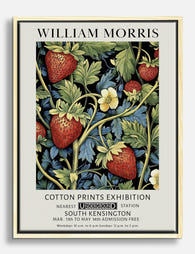
Tela fragole botaniche di William Morris
Translation missing: it.products.product.sale_price A partire da €64,95€92,95 -

Tela con motivo floreale in stile William Morris
Translation missing: it.products.product.sale_price A partire da €64,95€92,95 -

Tela botanica romantica in stile William Morris
Translation missing: it.products.product.sale_price A partire da €64,95€92,95 -

Tela Honeysuckle di William Morris
Translation missing: it.products.product.sale_price A partire da €64,95€92,95 -

Poster botanico con uccello ispirato a William Morris
Translation missing: it.products.product.sale_price A partire da €16,95€23,95 -

Poster floreale ispirato a William Morris
Translation missing: it.products.product.sale_price A partire da €16,95€23,95 -

Poster botanico con uccelli ispirato a William Morris
Translation missing: it.products.product.sale_price A partire da €16,95€23,95 -

Tela botanica romantica ispirata a William Morris
Translation missing: it.products.product.sale_price A partire da €64,95€92,95


Di più da The Frame

9 Sun Wall Art Ideas We Keep Coming Back To
Sun art is one of those motifs that keeps reinventing itself, from terracotta boho suns to clean black line drawings. The trick is matching the style of sun to the...

Best Dog Wall Art for Every Room (Not Just the ...
Dog art has an image problem. For decades it's been treated as something you tolerate in a downstairs loo or tuck behind a coat rack, as if loving your dog...

Small Bathroom Gallery Wall Ideas: How to Make ...
Small bathrooms are the most overlooked walls in your home. They're also the easiest to get right, because the constraints make most of the decisions for you. This guide gives...