
 Ordina oggi, consegna il
 The Best Art for a Meditation Room: Styles, Subjects, and Sizes That Work
A principle-led guide to choosing art that supports stillness, not just art that looks the part on Pinterest.


Most "meditation room" art roundups confuse calm aesthetics with calm experience. A serene-looking print can still pull your eye in ten directions once you sit with it. This guide is about the difference, and how to choose work that genuinely supports stillness in the space you actually have.
What makes art 'meditative' (and what just looks like it)
Meditative art shares four visual qualities, and they have very little to do with subject matter. The first is generous negative space. Your eye needs somewhere to rest, and a composition that fills every corner gives it nowhere to go. The second is low to moderate contrast. High-contrast work creates visual tension, which is exactly what you don't want in a space designed for nervous system regulation.
The third is restrained colour saturation. Muted earth tones, ink blacks, soft greys, sage, oat, faded indigo. Highly saturated colours read as energetic because they are. The fourth is compositional balance without symmetry-as-gimmick. An ensō circle is balanced. A mandala packed with sixty-four repeating motifs is balanced too, but it's also a visual puzzle your brain wants to solve.
This is why a lot of art that looks meditative isn't. Intricate mandalas pull the eye into pattern recognition. Motivational quotes with elaborate typography force you to read. Metallic foils and gloss finishes catch light and create movement. Photographs of "calm" subjects (a forest, the ocean) can be visually frantic if the composition is busy.
The test is simple. Look at the piece for thirty seconds. Does your attention settle, or does it keep hunting? If it hunts, the art is working against the room.

Different practices, different visual needs
Mindfulness practice (open awareness, breath focus) benefits most from art that gives the eye nothing to do, so the mind can return to the body. Mantra and visualisation practices can tolerate slightly more subject matter, because the eyes are often closed and the art functions more as ambient setting than focal point. If you use a personal deity or symbol in your practice, that's its own category and the rules below bend accordingly.
For most readers building a general-purpose meditation space, lean towards visual quiet. You can always add complexity. It's harder to subtract it once the wall is up.
Zen ink-wash and ensō: the original meditation art
Sumi-e, the Japanese tradition of monochrome ink-wash painting, was developed in close relationship with Zen Buddhism from around the 14th century. The aesthetic principles aren't accidental. They reflect a philosophy that values suggestion over description, emptiness as a positive presence, and the gesture of the brush as evidence of a present mind.
A traditional sumi-e composition might depict a single branch of plum blossom, a solitary heron, or a misted mountain peak, with most of the paper left untouched. That untouched space is called yohaku, and it's considered part of the image, not the absence of one. This is the visual logic you want for a meditation room.
Ensō, the hand-drawn circle, is the most distilled expression of this tradition. Painted in a single breath with a loaded brush, it's read as a record of the artist's state of mind in the moment of making. An ensō on your wall isn't decoration. It's a small daily reminder of what you're practising.
You'll find both styles in our traditional Japanese art prints collection. If you go this route, resist the urge to pair them with anything visually loud. They need room to breathe.
Minimalist abstracts that let the eye rest
If traditional Japanese work feels too culturally specific for your space, minimalist abstracts cover the same psychological ground. The category is broad, so here's how to filter it.
Look for pieces with one dominant gesture. A single brushstroke, a soft horizon line, a colour field divided into two or three large areas. Avoid anything with more than four or five distinct compositional elements. Avoid hard geometric patterns that read as graphic design rather than art, because the eye treats them like information to decode.

Soft-edged abstraction works better than hard-edged abstraction in this context. A blurred colour gradient settles the eye in a way that a crisp geometric shape doesn't. Tonal painting (variations within a single colour family) almost always reads as calm because there's no competing chromatic information.
Texture is allowed, even encouraged, as long as it stays subtle. Visible brushwork, paper grain, a sense that human hands made the thing. This is where giclée printing on thick matte paper matters. The texture you see in the original work needs to survive the printing process, and gloss finishes flatten it.
Browse our minimalist art prints for work in this register. Pieces with sand, stone, plaster and water palettes tend to be the safest bets for meditation spaces.
Nature scenes that work (and the ones that are too busy)
Nature photography is the most popular meditation room category and the one most often gotten wrong. The problem is that "nature" includes both still water at dawn and a thunderstorm breaking over a cliff. Both are nature. Only one belongs in a meditation room.
Here's the working principle. Choose nature scenes that depict stillness, not nature scenes that depict drama. The image should look like it could hold its breath.
What works: still water surfaces, mist over a lake, a single bare tree against fog, a long horizon with low cloud, soft-focus grasses, an empty beach in flat light, a single mountain at dawn. The composition should have a clear focal point and very little else.
What doesn't: dense forests where every leaf demands attention, crashing waves, vivid sunsets in full saturation, busy floral arrangements, wildlife caught mid-action, mountain ranges with sharp peaks and high contrast. These are beautiful images. They're just not restful ones.
Botanical work occupies an interesting middle ground. A single pressed leaf, a sparse branch study, a soft watercolour of a single stem. These can be deeply meditative. A dense tropical jungle scene cannot, no matter how lovely. Our botanical art prints collection includes plenty of the former, and you can filter by visual density once you know what you're looking for.
One more rule for nature work. Avoid anything with visible weather drama, including dramatic skies, mist that looks like motion rather than stillness, or any sense of wind. Movement is the enemy here.
Why framing quality matters more in a calm space
In a busy living room, a slightly warped frame or a print fitted askew is a minor visual irritant you'll stop noticing. In a meditation room, where your nervous system is actively scanning for things to settle on, those small imperfections become very loud.
This is the most overlooked aspect of meditation room design. The frame either disappears into the wall or it competes with the art. In a calm space, competing is unacceptable.
A few practical points. Solid wood frames sit flatter and age better than MDF or veneer ones, which is why all our framed prints use FSC-certified solid wood. Acrylic glazing is preferable to glass for two reasons: it's lighter (so the piece sits more securely) and it doesn't produce the sharp specular reflections that glass does. Glare on a meditation room wall is a constant low-grade distraction.

Frame colour matters more than you'd think. For most meditation rooms, a natural oak or a soft black frame works. Avoid stark white frames (they create high contrast against the wall) and avoid anything ornate. The frame's job is to hold the print, not to perform.
The most common framing failure in this category isn't bad taste. It's bad execution. Frames that arrive separately from prints, prints that bubble or warp inside the frame, fixtures missing or wrong. If you're building a meditation space, you don't want a project. You want something that arrives ready to hang, properly fitted in one piece, with the print sitting flat behind the glaze.
Size guide: matching your print to your meditation setup
Sizing is where most meditation room articles fall silent, despite being the practical question that determines whether the room actually works. Here's the framework.
The variable that matters most is your eye level when seated in practice. Art should be hung so that the centre of the piece sits roughly at seated eye level, which is much lower than standard wall-hanging guidance suggests. If you sit on a floor cushion, that's around 90 to 110cm from the floor to the centre of the print. If you use a meditation bench, around 100 to 120cm. If you sit on a chair, the standard 145 to 150cm rule applies.
Small corner or nook (under 4 square metres)
A single print at 50x70cm framed is usually the right call. Going larger overwhelms the space, going smaller makes the wall feel unfinished. One piece, well placed, beats three pieces fighting for attention.
Dedicated meditation room (4 to 10 square metres)
You have options. A single statement piece at 70x100cm sits beautifully behind an altar or focal cushion. Alternatively, a pair of 50x70cm prints hung with a generous gap between them creates rhythm without clutter. Avoid gallery walls. The whole point of this room is fewer focal points, not more.
Larger room or shared yoga and meditation space (10+ square metres)
This is where canvas comes into its own. A canvas print at 100x150cm reads as architectural rather than decorative, anchors the space, and (because canvas isn't glazed) eliminates glare entirely. Canvas also handles humidity better, which matters if the room doubles for hot yoga or breathwork. The trade-off is that canvas reads less formal than a framed print. In a meditation context, that's often a feature, not a bug.
Shared or swappable spaces
If your meditation room doubles as a guest room or home office, consider building a small rotating collection. Two or three prints in matching frames at the same size, swapped depending on the room's current function. A calm ensō for practice, a more energetic abstract for working hours. Same frame, different print, no holes redrilled.
Our top picks from the mindfulness collection
If you want a shortlist rather than a framework, here's where to start. Our full mindfulness and meditation art prints collection is curated around the principles above, so most pieces will work, but a few categories are particularly reliable.
Single ensō prints in black ink on bone or oat backgrounds. The most concentrated form of meditative art available, and they read beautifully at 50x70cm framed in natural oak.
Soft horizon photographs in muted palettes. Mist, water, low cloud. Look for ones where the horizon line sits roughly a third of the way up the image, which is calmer than centred compositions.
Tonal abstracts in single colour families. Sage on sage, sand on sand, ink on bone. These pieces are almost impossible to get wrong and they let other elements of the room (cushions, plants, light) carry the personality.
Sparse botanicals. A single pressed leaf, a bare branch study, one stem of pampas grass. These bring a sense of life into the room without adding visual noise.
A final thought
Pick the piece you can sit in front of for ten minutes without your eye getting bored or restless. That's the only test that matters. A room designed for stillness should be furnished with things that are themselves still, and the art on your walls is doing more work than almost anything else in the space. Choose accordingly, hang it at the height you actually sit, and let it disappear into the practice.


Prodotti Fab presentati in questo blog
-

Poster yoga minimalista flusso zen
Translation missing: it.products.product.sale_price A partire da €16,95€23,95 -

Tela rana zen in armonia
Translation missing: it.products.product.sale_price A partire da €64,95€92,95 -

Poster posa yoga minimalista in bianco e nero
Translation missing: it.products.product.sale_price A partire da €16,95€23,95 -

Poster yoga zen in blu
Translation missing: it.products.product.sale_price A partire da €16,95€23,95 -

Tela figura pensierosa in verde
Translation missing: it.products.product.sale_price A partire da €64,95€92,95 -

Poster espressione meditativa di Jawlensky
Translation missing: it.products.product.sale_price A partire da €16,95€23,95 -

Tela yoga blu equilibrio e concentrazione
Translation missing: it.products.product.sale_price A partire da €64,95€92,95 -

Tela disegno a linee yoga minimal in bianco e nero
Translation missing: it.products.product.sale_price A partire da €64,95€92,95 -

Poster evasione interiore
Translation missing: it.products.product.sale_price A partire da €16,95€23,95 -

Poster musa astratta e serena
Translation missing: it.products.product.sale_price A partire da €16,95€23,95 -

Tela rana zen in bianco e nero
Translation missing: it.products.product.sale_price A partire da €64,95€92,95 -

Poster musa serena di campagna
Translation missing: it.products.product.sale_price A partire da €16,95€23,95 -

Poster ritratto avvolto nella calma
Translation missing: it.products.product.sale_price A partire da €16,95€23,95 -

Poster fuga nell'oceano
Translation missing: it.products.product.sale_price A partire da €16,95€23,95 -

Poster gatto nero in posa yoga zen
Translation missing: it.products.product.sale_price A partire da €16,95€23,95 -

Tela sequenza di yoga rilassante
Translation missing: it.products.product.sale_price A partire da €64,95€92,95 -
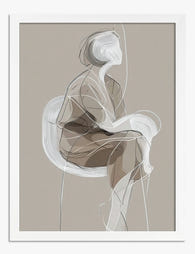
Poster musa minimalista elegante
Translation missing: it.products.product.sale_price A partire da €16,95€23,95 -

Tela colline estive con figura in meditazione
Translation missing: it.products.product.sale_price A partire da €64,95€92,95


Di più da The Frame

Why William Morris Prints Look Brilliant in Mod...
William Morris has been quietly miscategorised for decades. His patterns get filed under "country cottage" or "Arts and Crafts revival" and rarely escape, which is a shame because his tree...

Why Arts and Crafts Nature Prints Are the Antid...
The minimalism hangover: why bare walls stopped feeling calming For about a decade, the aspirational interior was a white box with one boucle chair in it. That look has officially...

Botanical Petal Art: Why Close-Up Prints Feel M...
Full florals have had a long run, and they're not going anywhere. But if you've noticed that the botanical art appearing in design magazines, boutique hotel lobbies, and the better-styled...