
 Ordina oggi, consegna il
 Can You Hang Art in a Bathroom? Yes, and Here's Exactly How
The truth about steam, framing, and why your bathroom is probably safer for art than you think.


Short answer: yes, and the worries you've inherited about humidity destroying your prints are mostly twenty years out of date. Modern printing and framing handle bathroom conditions far better than people assume. The trick is knowing which spots are actually risky, which are completely fine, and how to match the art to the room.
Why people worry about bathroom art (and why most of those worries are outdated)
The fear goes something like this: bathrooms are humid, humidity ruins paper, therefore art doesn't belong in bathrooms. It's a tidy logic chain that falls apart the moment you look at how prints are actually made today.
Two decades ago, the concern had teeth. Prints were often run on uncoated stock with dye-based inks that bled when damp, and frames were built from MDF and cardboard backings that swelled the first time someone took a hot shower. Both have been replaced. Giclée printing uses pigment-based inks that bond to coated, weight-heavy papers. Quality frames are now built from solid kiln-dried wood with sealed backs and acrylic glazing instead of glass.
The other shift is in the bathrooms themselves. Newer builds have extractor fans on humidity sensors, better insulation reducing condensation on cold walls, and windows that actually open. The room you're hanging art in is, in most cases, not the steam chamber your grandparents had.

The real enemy: direct water contact, not steam
This is the distinction that everyone gets wrong. Ambient steam in a ventilated bathroom is not what damages art. The damage mechanism is condensation, water droplets forming on a cold surface and sitting there long enough to soak into unprotected paper or warp a wooden frame.
For condensation to actually hurt your print, three things have to line up. The print surface needs to be cold enough to attract condensation. The room needs to stay humid long enough for water to bead and pool. And the print itself needs to be unprotected, meaning no glazing, no sealed back, no barrier between the moisture and the paper.
In a well-ventilated bathroom with a properly framed print, none of those conditions are met for long enough to matter. Your shower might generate steam for fifteen minutes a day. Your extractor fan clears most of it within five. The print, sitting behind acrylic with a sealed back, never sees a single water droplet.
Direct water contact is a different story. Splashes from the sink, spray from the shower, water running down a wall from a leaky window: these are real threats because they bypass every protective layer. Keep art away from those, and you've handled 95% of the risk.
Categorising your bathroom by moisture level
Not all bathrooms are the same, and treating them as one category is what produces bad advice. Three rough tiers cover most situations.
A powder room or guest WC has a sink and toilet but no shower or bath. Humidity barely rises above the rest of the house. You can hang anything here that you'd hang in a hallway. No special considerations.
A family bathroom with shower or bath plus decent ventilation (an extractor fan that works, or a window that opens) is the middle tier. This is where most people actually live, and where modern framed prints perform well as long as you're sensible about placement.
A small, poorly ventilated bathroom with a daily-use shower is the high-risk category. No fan, no window, walls that stay damp for hours after a shower. Even here, art is possible, but you'll want to be more careful about positioning and may want to skip irreplaceable pieces.
What to look for in bathroom-safe art prints and framing
A few specifics matter more than the rest.
Glazing material. Acrylic is significantly better than glass for bathrooms. It's lighter (which matters because heavier frames are more prone to working loose from humid plaster), it doesn't shatter if it falls, and good acrylic includes UV protection that prevents fading. Our framed prints use a UV-protective acrylic glaze rather than glass for exactly these reasons.
Frame construction. You want solid wood, not MDF or veneered chipboard. MDF absorbs moisture, swells, and eventually splits at the joins. Solid FSC-certified wood holds up because it was kiln-dried to a stable moisture content and finished to resist further absorption. If you can't tell what a frame is made of, that's usually a bad sign in itself.
Sealed backs. A proper frame has a backing board fitted tightly into the rebate, sealing the print into a near-airtight enclosure. This is the single biggest factor in bathroom longevity. The print isn't exposed to room air; it's sitting in its own small, stable environment behind the glazing.
Paper weight and coating. Museum-grade matte papers used for giclée printing are heavier and more dimensionally stable than thin poster stock. They resist cockling (the rippling that happens when paper expands unevenly) even if humidity does manage to reach them.
Inks. Pigment-based giclée inks are bonded to the paper at a molecular level and don't run, bleed, or fade the way older dye-based inks did. Quality prints today are rated to last centuries even in direct sunlight, which tells you something about how robust they are against more ordinary stress.
For art specifically designed with these rooms in mind, our bathroom art collection is a good starting point.

Best spots to hang art in a bathroom (with examples)
Placement matters more than people realise. Some walls in a bathroom are essentially the same as walls anywhere else in the house. Others sit in the splash and steam zone and deserve more thought.
The wall opposite the shower or bath. This is usually the safest and most visually rewarding spot. Far enough from direct spray, often catching good natural light, and giving you a sightline from the shower or bath itself. Large statement pieces work brilliantly here. A 70x100cm framed print can become the focal point of the whole room.
Above the toilet. A practical wall that often gets ignored. A pair of smaller prints stacked vertically, or a single medium piece (around 40x60cm), fills the space without crowding. Low moisture exposure since it's nowhere near the water sources.
Behind or above the sink (not directly above the tap). Fine in most bathrooms, with the caveat that you should leave enough clearance that splashing doesn't reach the frame. Roughly 30cm above the highest splash point is a sensible rule.
Either side of the mirror. Narrow vertical prints flanking a mirror look polished and balanced, especially in bathrooms that lean towards a more layered, decorated feel rather than minimalist.
Inside a freestanding cabinet or shelf nook. If you have an alcove or recess away from the water, this is essentially neutral territory.
What kind of art actually suits a bathroom?
Style-wise, there's no rule, but a few categories tend to land well. Botanical prints feel obvious for a reason: leaves, palms, and pressed flowers echo the green-and-water associations bathrooms naturally have, and the colours work with most tile palettes. Black and white photography reads sophisticated in compact spaces and avoids the visual clutter that can make small bathrooms feel busy. Abstract work in muted tones suits modern bathrooms with neutral palettes.
What we'd avoid: anything overtly twee (no "wash your hands" signs), anything so colour-saturated it competes with your tiles, and anything you'd be genuinely heartbroken to lose if something did go wrong over a decade of use.
Spots to avoid: inside the shower and directly above the tub splash zone
A few places are genuine no-go areas regardless of framing.
Inside the shower enclosure. This is direct water contact territory. Even sealed frames aren't built to be sprayed daily with hot water. Don't do it.
The wall directly behind the bath taps. When someone fills the tub or has a vigorous bath, this wall takes splash. Keep the bottom of any frame at least 60cm above the rim of the bath, and further if your taps are particularly enthusiastic.
The ceiling-adjacent zone right above the shower. This is where steam condenses most heavily because hot air rises and the ceiling stays relatively cold. Even with good ventilation, this strip can stay damp longer than the rest of the room.
Any wall with a known damp problem. If you've got rising damp, a leaky window, or a wall that already shows condensation staining, fix that first. Art won't make it worse, but you'll be hanging into a problem that will affect the print eventually.

How proper framing protects your prints for years
A well-made framed print is essentially a sealed unit. Here's what's actually happening inside that frame.
The print sits flat against a backing board. The glazing (acrylic in our case) covers the front, held in place by the frame's rebate. The backing board is then sealed into the frame from behind, typically with a fitted board and tape or kraft paper backing. Once this is done, the print is in a small enclosed volume with minimal air exchange.
This matters in a bathroom because the print isn't experiencing the same humidity swings as the room. Air movement into the frame is slow enough that conditions inside stay relatively stable even when the bathroom spikes to 90% humidity for twenty minutes. By the time interior conditions might start to shift, the room has ventilated and you're back to baseline.
A small trick that helps further: bumper pads on the back corners of the frame. These create a 2-3mm air gap between the frame and the wall, letting air circulate behind the frame instead of trapping moisture against the wall where condensation would otherwise form. Most quality frames include these as standard.
The big failure modes in this category have nothing to do with humidity. They're shoddy framing done badly: frames shipped separately to prints, warped backings, bubbling where the print wasn't properly mounted, MDF frames that fall apart. When the framing is done properly from the start (with the print fitted and ready to hang in a single box), these issues disappear. Browse our framed prints if you want a sense of what proper construction looks like in practice.
In real terms, you should expect a well-framed print in a normal bathroom to look identical in ten years to how it looked on day one. We've had customers report no visible change after years in family bathrooms with daily-use showers.
Quick checklist: is your bathroom ready for art?
Run through this before you commit.
Ventilation. Do you have a working extractor fan, an openable window, or both? If yes, you're in the safe majority. If no, you can still hang art but stick to the lower-risk walls and avoid pieces you couldn't bear to replace.
Condensation test. After a shower, check the walls where you want to hang art. If they're visibly wet to the touch, that wall isn't a great choice. If they feel cool but dry, you're fine.
Wall material. Painted plaster and tile-adjacent walls hold fixings well. Avoid hanging directly on tile if you can help it (drilling is a pain and the fix is permanent). Plasterboard with appropriate fixings is straightforward.
Distance from water. Measure from the nearest splash source (shower head, bath taps, sink). Aim for at least 60cm of clearance, more if it's a high-spray situation.
Frame quality. Solid wood, acrylic glazing, sealed back, bumper pads. If your frame ticks those four, you're protected.
The print itself. Pigment-based giclée on coated paper, properly fitted into the frame, no gaps or bubbles. If you've got that, you've got something built to last.

If the checklist passes, hang the art. The bigger risk in most bathrooms isn't ruining a print; it's leaving a blank wall up for another five years because you weren't sure. A properly framed piece in a sensible spot will outlast the tiles around it.

Prodotti Fab presentati in questo blog
-

Tela con lontra divertente per il bagno, bianco e nero
Translation missing: it.products.product.sale_price A partire da €64,95€92,95 -

Poster frase per bagno in bianco e nero
Translation missing: it.products.product.sale_price A partire da €16,95€23,95 -

Poster regole del bagno in stile classico
Translation missing: it.products.product.sale_price A partire da €16,95€23,95 -

Poster rituali quotidiani del bagno
Translation missing: it.products.product.sale_price A partire da €16,95€23,95 -

Poster gatto in bagno che legge il giornale
Translation missing: it.products.product.sale_price A partire da €16,95€23,95 -

Poster tigre nella vasca da bagno
Translation missing: it.products.product.sale_price A partire da €16,95€23,95 -
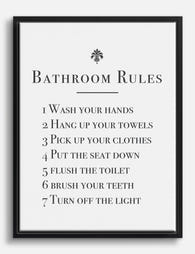
Tela promemoria bagno in bianco e nero
Translation missing: it.products.product.sale_price A partire da €64,95€92,95 -

Tela gatto soriano che legge in bagno
Translation missing: it.products.product.sale_price A partire da €64,95€92,95 -

Tela bagno degli alligatori
Translation missing: it.products.product.sale_price A partire da €64,95€92,95 -

Tela gatto nero in bagno
Translation missing: it.products.product.sale_price A partire da €64,95€92,95 -

Poster bagno tipografico con saluto irriverente
Translation missing: it.products.product.sale_price A partire da €16,95€23,95 -

Tela gatto nero curioso in bagno
Translation missing: it.products.product.sale_price A partire da €64,95€92,95 -

Poster gatto nero in bagno che gioca con la carta igienica
Translation missing: it.products.product.sale_price A partire da €16,95€23,95 -

Poster gatto nero curioso in bagno
Translation missing: it.products.product.sale_price A partire da €16,95€23,95 -

Poster gatto nero in bagno tropicale
Translation missing: it.products.product.sale_price A partire da €16,95€23,95 -

Tela rituali quotidiani del bagno in bianco e nero
Translation missing: it.products.product.sale_price A partire da €64,95€92,95 -

Tela tipografica giocosa per bagno
Translation missing: it.products.product.sale_price A partire da €64,95€92,95 -
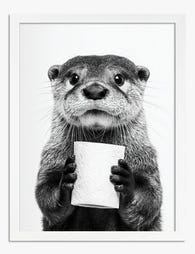
Poster lontra con rotolo di carta igienica
Translation missing: it.products.product.sale_price A partire da €16,95€23,95


Di più da The Frame

Why William Morris Prints Look Brilliant in Mod...
William Morris has been quietly miscategorised for decades. His patterns get filed under "country cottage" or "Arts and Crafts revival" and rarely escape, which is a shame because his tree...

Why Arts and Crafts Nature Prints Are the Antid...
The minimalism hangover: why bare walls stopped feeling calming For about a decade, the aspirational interior was a white box with one boucle chair in it. That look has officially...

Botanical Petal Art: Why Close-Up Prints Feel M...
Full florals have had a long run, and they're not going anywhere. But if you've noticed that the botanical art appearing in design magazines, boutique hotel lobbies, and the better-styled...