
 Ordina oggi, consegna il
 Where to Buy Art Prints Online in the UK: What to Look For (and What to Avoid)
A buyer's guide to decoding paper weights, print methods, and framing claims so you can spot quality on any website.


Search "best art print websites UK" and you'll get a wall of listicles, most of them written by the brands themselves or affiliates earning commission. None of them teach you how to actually evaluate a print before you spend £80 on something that arrives looking nothing like the photo. This guide does the opposite: it gives you the technical knowledge to assess quality on any site, so you can stop relying on rankings and start trusting your own judgement.
The UK art print market: what's actually out there
There are three broad categories of seller, and knowing which you're on changes everything about how you should evaluate the product.
Marketplaces (the big platforms hosting thousands of independent sellers) offer huge variety but wildly inconsistent quality. One seller might use archival inks on cotton rag; the next might be running a desktop printer in a garage. Reviews are seller-specific, returns are seller-specific, and what arrives is anyone's guess.
Print-on-demand poster shops specialise in trend-led prints at low prices, usually printed on lightweight paper and shipped flat or rolled. Fine for a student flat. Less fine if you want something that still looks good in five years.
Specialist print houses focus on a smaller curated range with controlled production. They tend to print to order, use heavier papers, and frame in-house. Prices are higher. Quality is more predictable.
None of these are inherently bad. The mistake is buying from one assuming you're getting another. A £12 poster is doing exactly what a £12 poster does. The problem is when a site charges £80 and delivers a £12 poster.

The quality checklist: 7 things to check before you buy
Before you add anything to a basket, scan the product page for these. If three or more are missing, close the tab.
- Paper weight in GSM (grams per square metre). Anything under 190gsm is poster territory. Quality fine art prints sit at 190gsm and above.
- Print method named explicitly. "Giclée" should appear if it's a giclée. Vague phrases like "high quality printing" usually mean it isn't.
- Ink type. Archival, pigment, or "museum-grade" inks last decades without fading. Dye-based inks don't.
- Frame material specified. "Wood effect" means MDF. You want "solid wood" or a named timber.
- Glazing material. Real glass, acrylic, or plexiglass should be stated. Silence is a red flag.
- Returns policy in plain English. 30 days minimum, no restocking fees, free returns on faulty items.
- Real customer photos in reviews. Stock images and five-star text-only reviews aren't enough.
If a product page can't answer these basic questions, the seller either doesn't know or doesn't want you to know. Neither bodes well.
Paper weight and printing method: how to read a product page
Paper weight is the single most useful spec on any product page, and most shops bury it or skip it entirely. Here's the rough hierarchy:
- 120-170gsm: Office paper to thin poster. Avoid for anything you care about.
- 170-190gsm: Decent mid-weight poster. Acceptable for budget prints in low-stakes spaces.
- 200gsm and up: Genuine fine art weight. Has substance in the hand, holds detail, doesn't curl.
Anything described as "cotton rag" or "100% cotton" is a step up again. Cotton-based papers hold ink differently to wood-pulp papers and tend to render shadows and skin tones more naturally. They're also more expensive, which is part of why you rarely see them under £40.
What "giclée" actually means
Giclée (pronounced zhee-clay) is a French-derived term for high-resolution inkjet printing using archival pigment inks on fine art paper. The term has been diluted by overuse, but a real giclée print should:
- Use a wide-gamut pigment ink printer (typically 8 to 12 ink channels, not 4)
- Print on archival paper of 200gsm or higher
- Resolve fine detail at 300dpi or above
If a site uses the word "giclée" but doesn't mention paper weight, ink type, or resolution, they're using it as marketing dressing. A genuine giclée operation will tell you what they print on, because it's the whole point.
At Fab, our art prints are giclée printed on thick matte paper using water-based pigment inks rated to last centuries even in direct sunlight. We mention this not as a flex but because it's exactly the information you should expect to see on any product page worth your money.
Made-to-order vs pre-printed stock
This distinction rarely makes it onto product pages but it's one of the clearest quality signals you can use.
Pre-printed stock means the shop printed a batch in advance and is sitting on inventory. It's faster to ship and cheaper to produce. The trade-off is that prints can sit in warehouses for months, exposed to humidity and handling, and there's pressure to clear stock rather than reprint when something fades or scuffs.
Made-to-order means each print is produced after you place the order. This is slower (typically 3 to 7 working days before shipping) and more expensive, but it has three meaningful benefits:
- Every print is fresh. No warehouse fade, no creased corners from being shuffled around.
- Quality control is per-unit, not per-batch. A bad print gets caught before it ships, not after.
- Far less waste. Nothing is printed unless someone wants it, which matters if you care about where your paper and ink end up.
Made-to-order operations also tend to use better materials, because the production model only works if customers think the wait is worth it. If a site is silent on this, the answer is almost always pre-printed stock.

Framing quality: red flags to watch for
Bad framing is where most online art print orders go wrong. The print itself can be excellent and the frame can ruin it within a year. Here's what to look for, and what to run from.
Frame material
"Solid wood" means solid wood, ideally with a named species (oak, ash, walnut). "Wood" on its own is suspicious. "Wood effect," "wood finish," or no description at all almost always means MDF with a printed paper veneer.
MDF frames are heavier than solid wood, prone to swelling in humid rooms (kitchens, bathrooms), and the veneer chips at the corners. A solid wood frame, by contrast, gets better with age. We use solid FSC-certified wood across our framed art prints for exactly this reason: it's the only material that holds up over decades.
Glazing: glass vs acrylic
Real glass looks beautiful but is heavy, fragile, and prone to glare. It also shatters in transit, which is why so many framed prints arrive cracked.
Acrylic glazing (sometimes called plexiglass or perspex) is lighter, shatter-resistant, and much safer to ship. The downside is that cheap acrylic scratches easily and yellows in sunlight over years. Better-quality acrylic is UV-protective, which prevents both fading of the print underneath and yellowing of the acrylic itself.
There's no universally "right" answer here. We use UV-protective acrylic because it survives shipping intact, doesn't reflect glare in lit rooms, and protects the print from sun damage. If you specifically want glass, that's a valid choice, but check the seller has a clear damaged-in-transit policy.
Frames shipped separately
This is the biggest hidden trap in online art print shopping. Many shops print the artwork in one country and ship the frame from another, leaving you to assemble it yourself. The result is bubbled prints, off-centre mounts, and dust trapped behind the glazing.
A good operation prints, fits, and ships in one box, ready to hang. If you can't tell from the product page whether this is the case, ask. The answer tells you a lot.
Returns policies and guarantees: what good looks like
Returns policies are where shops quietly tell you how confident they are in their product.
The minimum acceptable:
- 30 days to return for any reason
- Free returns on damaged or faulty items
- A clear process for damage in transit (photos, replacement, no quibbling)
Red flags:
- Restocking fees (typically 15-25%)
- Customer pays return shipping on damaged items (genuinely unreasonable)
- "Final sale" on personalised or made-to-order items with no exception for faults
- 14-day windows or shorter
- Vague language about "case-by-case" assessments
A confident shop offers a generous returns window because most customers don't return things they like, and the ones who do had a real problem. Our 99-day returns policy isn't a marketing gimmick; it's a function of the fact that returns rates on quality prints are very low. Shops that hedge their returns are usually hedging because they know what's coming.
How to read reviews for quality signals
Star ratings tell you almost nothing. What you want is:
- Photo reviews showing the print on a wall, in real lighting
- Comments on paper feel and weight ("substantial," "thick," "weighty")
- Mentions of colour accuracy versus the on-screen image
- Comments on framing if it's a framed print, especially how it arrived
Filter for one and two-star reviews and read them carefully. Common themes (warped frames, faded colours, prints that look nothing like the listing) are far more revealing than the five-star average.

The price-quality sweet spot
Once you understand the production economics, prices make more sense. Here's a realistic UK guide for what quality costs.
Unframed art prints:
- A4 (21x30cm): £15-30 for genuine giclée on 150gsm+ paper
- A3 (30x42cm): £25-50
- A2 (42x60cm): £40-80
- 50x70cm and up: £60-150
Framed prints roughly double these figures, sometimes more depending on frame material and glazing. A solid wood framed A2 print with UV acrylic typically lands between £100 and £180. Anything dramatically below that range either uses MDF, lightweight paper, or both.
Canvas prints sit slightly differently. A hand-stretched canvas print on solid wood stretchers at 60x80cm should land around £80-120. Sub-£40 large canvases almost always mean thin canvas stapled to a flimsy frame, which warps within months.
When cheap is fine
Not every wall needs a museum-grade print. A rental hallway, a teenager's bedroom, a temporary office: these are perfectly reasonable places for budget posters. The mistake is buying budget posters expecting them to behave like fine art prints. They won't, and they're not meant to.
When the price is too good to be true
If a site is selling "giclée fine art prints" for £8 in A2, something is wrong. Either the paper is too thin to hold the ink properly, the inks aren't archival, or it's mass-produced offset printing being marketed as something else. Real giclée production at A2 costs more than £8 in materials alone.
A short note on sustainability claims
"Eco-friendly" means nothing on its own. What you want to see:
- FSC certification on paper and wood (a real, audited standard)
- Water-based or vegetable-based inks rather than solvent inks
- Made-to-order production to avoid waste
- Local production to cut shipping emissions
If a site uses words like "sustainable" without naming any of the above, treat it as decoration. Genuine certifications are specific and verifiable.

What to do with all this
You don't need to memorise every spec. You just need to scan a product page and ask: does this seller tell me what I'm buying? Paper weight, ink type, frame material, glazing, returns policy. If those five answers are easy to find, you're probably in safe hands. If you have to dig for them, or they aren't there at all, take that as the answer.
Once you know what to look for, every art print site in the UK becomes easier to assess in about ninety seconds. That's worth more than any "best of" list, because it's a skill that doesn't expire when next year's rankings shuffle. If you want a starting point that already meets the checklist, our Fab Favourites collection is where most people begin.

Prodotti Fab presentati in questo blog
-

Poster case a schiera in toni pastello a Notting Hill, Londra
Translation missing: it.products.product.sale_price A partire da £11.95£19.95 -

Poster skyline di Londra ad acquerello
Translation missing: it.products.product.sale_price A partire da £11.95£19.95 -
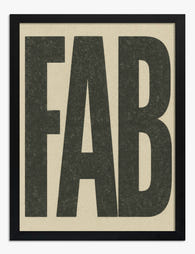
Poster tipografico Bold Fab
Translation missing: it.products.product.sale_price A partire da £11.95£19.95 -

Poster riflessi soffusi
Translation missing: it.products.product.sale_price A partire da £13.99£19.99 -

Poster rifugio accogliente in stile Matisse
Translation missing: it.products.product.sale_price A partire da £11.95£19.95 -

Poster figura con giacca a quadri dorata e cappello di paglia
Translation missing: it.products.product.sale_price A partire da £11.95£19.95 -

Poster alberi in silhouette bianco e nero
Translation missing: it.products.product.sale_price A partire da £13.99£19.99 -

Poster rifugio toscano baciato dal sole
Translation missing: it.products.product.sale_price A partire da £13.99£19.99 -

Poster fuga sulla Riviera italiana
Translation missing: it.products.product.sale_price A partire da £13.99£19.99 -

Tela astratta moderna geometrica nei toni caldi della terra
Translation missing: it.products.product.sale_price A partire da £44.95£74.95 -

Poster fuga vintage nel bosco di Oxhey Woods
Translation missing: it.products.product.sale_price A partire da £11.95£19.95 -

Poster musa di campagna
Translation missing: it.products.product.sale_price A partire da £11.95£19.95 -

Poster fascino di Londra
Translation missing: it.products.product.sale_price A partire da £11.95£19.95 -

Tela volto astratto a linea continua blu intenso
Translation missing: it.products.product.sale_price A partire da £55.99£79.99 -

Tela astratta con forme morbide su fondo terracotta
Translation missing: it.products.product.sale_price A partire da £55.99£79.99 -

Tela acquerello skyline di Londra sul Tamigi
Translation missing: it.products.product.sale_price A partire da £44.95£74.95 -

Poster paesaggio collinare baciato dal sole
Translation missing: it.products.product.sale_price A partire da £13.99£19.99


Di più da The Frame

Arts and Crafts Cat Art: Victorian Roots, Moder...
Cat art is everywhere right now, and most of it is forgettable. The pieces that actually hold up on a wall borrow from a much older tradition, one that runs...

The Greenhouse Aesthetic: Why Glasshouse Art Is...
There's a particular daydream doing the rounds on mood boards right now: cast iron arches, fogged glass, palms pressing against the panes, a wrought iron table laid for tea. Almost...

William Morris Bird Prints: Which Ones to Choos...
If you've started searching for Morris birds, you've probably already hit the wall: there are at least five distinct designs, they look nothing like each other, and most shops sell...