
 Ordina oggi, consegna il
 Giclée Print vs Original Watercolor: What Actually Matters for Your Walls
How to spot a museum-quality watercolour reproduction, and why a great print often beats a poorly framed original.


The question everyone asks: can a print really capture watercolour?
Watercolour is the trickiest medium to reproduce. The translucent washes, the soft bleeds where two colours meet, the visible grain of the paper underneath: these are the things people worry will flatten out into something that looks like a cheap photocopy. It's a fair worry, because most prints sold online genuinely do flatten the medium.
But a properly made giclée print on the right paper does not. The gap between a good reproduction and a bad one is enormous, and once you know what separates them, you can shop with confidence and stop second-guessing every Paris scene you fall in love with.

How giclée printing reproduces watercolour texture, gradients, and transparency
Giclée (pronounced zhee-clay, from the French for "to spray") is a fine art printing process that uses pigment-based inks sprayed onto paper at extremely high resolution. The technical detail that actually matters: a proper giclée printer uses 10 to 12 separate ink cartridges, compared to the 4 inks in a standard home or poster printer.
Why does that matter for watercolour? Because watercolour lives in the subtle transitions. The pale wash of grey-blue at the edge of the Seine fading into the warm cream of a building facade involves dozens of intermediate tones. With 4 inks, the printer has to fake those transitions using tiny dots of cyan, magenta, yellow and black, which creates banding and a slightly digital look. With 11 inks, including light cyan, light magenta, multiple greys and orange, the printer can hit those soft mid-tones directly. The gradients stay smooth. The transparency reads as transparency, not as a faded patch.
The resolution helps too. Giclée prints are typically output at 1440 DPI or higher, which means the texture of the original paper, the visible brushwork, the dry-brush scrape at the edge of a roof tile, all of it survives the reproduction. Look closely at a quality giclée and you can still see where the artist's brush ran out of water.
Why paper matters: thick matte vs glossy poster stock
This is where most cheap prints fall apart, and it's the single easiest quality marker to check before you buy.
Watercolour was made on textured cotton paper. To reproduce it convincingly, you need a print paper that behaves the same way: matte, slightly textured, with weight to it. Glossy poster stock does the opposite. It adds a plasticky sheen that watercolour never had, reflects light back at every angle so you can't actually see the image properly, and screams "mass-produced" the moment you walk into the room.
The numbers to look for: a quality fine art print paper sits between 200 and 310 gsm (grams per square metre). Anything under 170 gsm is poster territory and will feel flimsy in your hands. Cotton content matters too. 100% cotton or high cotton-content papers hold ink better, resist yellowing, and have a soft natural texture that mimics original watercolour paper.
A thick matte paper does three things glossy can't. It diffuses light evenly so the image looks the same from any angle. It creates a tactile, museum-like feel when you hold it. And it lets the printed texture sit on the surface the way pigment sits on real watercolour paper, rather than floating under a layer of plastic shine.
Our watercolour art prints are printed on thick matte fine art paper for exactly this reason. The medium demands it.
Longevity and fading: what museum-grade inks actually mean
"Archival" is the most abused word in the print industry. Every product page claims it. Almost none of them explain it.
Here's what it actually means in practice. There are two types of ink: dye-based and pigment-based. Dye inks are what cheap inkjet printers use. They sit on top of the paper, fade quickly when exposed to UV light, and can start to shift colour within 5 to 10 years. A dye-based Paris poster hung on a sunny wall will be visibly washed out before your tenancy ends.
Pigment inks are different. The colour comes from microscopic solid particles bonded into the paper fibres, which makes them dramatically more stable. Independent testing by Wilhelm Imaging Research, the industry standard for print longevity, gives quality pigment giclée prints lifespans of 100 to 200 years under normal display conditions before any noticeable fading. That's not marketing language. That's why museums and galleries use the same process for archival reproductions.
The other half of the equation is UV protection. Even the best inks fade faster in direct sunlight. A framed print with UV-protective glazing buys you decades more, which matters if you're hanging art in a south-facing room or anywhere with strong natural light. Our framed prints use UV-protective acrylic rather than glass, which blocks the damaging wavelengths and won't shatter if it falls off the wall.

Framing quality: the hidden factor that makes or breaks a print
You can spend £80 on a beautiful giclée print and ruin it with a £15 frame. This is not an exaggeration, and it's the trap most first-time buyers fall into.
The standard failure mode goes like this. You buy a print online. You buy a frame separately, often from a high-street homewares shop. The frame arrives, the print doesn't quite fit, the mount sits unevenly, the backing board warps after a month in a slightly humid room, and the whole thing looks cheap despite the actual artwork being lovely. Even worse, many online sellers ship prints rolled in tubes, which leaves you fighting curling paper that never quite flattens.
What good framing looks like: solid wood (not MDF or veneered chipboard, both of which warp), proper conservation-grade backing, a print that's been mounted flat and fitted to the frame before it ships to you, and glazing that's actually protecting the artwork rather than scratching it. The frame should arrive with hanging fixtures already attached so you can put it up with one screwdriver and no swearing.
Our framed prints ship in a single box, fitted, with the print, mount, frame and glazing all assembled by hand before they leave us. No warping, no bubbling, no separate frame to source. If you're buying a watercolour print as a gift or for a room you actually care about, this is where the difference shows.
When an original makes sense and when a giclée print is the smarter buy
Originals have a romance that prints can't fully replicate. There's something to standing in front of a piece knowing the artist's hand made those exact marks. If you have the budget, an established connection to a specific artist, and a wall where the piece will live for decades, an original is wonderful.
But originals come with realities people often skip past. They're frequently sold unframed, and quality custom framing for a watercolour, with conservation matting and UV glass, runs £150 to £400 in the UK. They fade if not framed properly, and many small-studio originals were not painted on archival paper to begin with. They're one of one, which means if you change your colour scheme or move house, you're stuck with what you have. And the price of an emerging artist's original Paris scene typically starts around £200 to £500 for anything sized to be a focal point.
A giclée print on cotton paper, properly framed, behind UV protection, costs a fraction of that and will outlast most originals in display terms. The maths often goes like this. A £180 unframed original plus £180 in framing equals £360 for a piece that may or may not be archival. A £90 framed giclée gets you a museum-grade reproduction, ready to hang, with documented longevity of a century or more.
Here's the honest answer. Buy an original when you have a personal connection to the artist or the specific piece, and buy a quality giclée when you've fallen in love with an image and want it on your wall looking incredible. Both are legitimate. Neither is a compromise if you choose well.
The classic test for telling them apart, by the way: look at the surface from a sharp angle in raking light. An original watercolour shows the texture of the brushwork and slight variations where the pigment pooled. A flat giclée surface tells you it's a print, but a good giclée on textured cotton paper can blur this line surprisingly well, especially behind glazing.

What to look for when buying Paris watercolour prints online
Paris is the most reproduced subject in watercolour, which means the market is flooded with everything from masterful interpretations to flat, sad, oversaturated tourist scenes printed on the cheapest stock available. Knowing what to filter for makes the difference.
Specs that signal quality
Before you buy any Paris watercolour art print, check the listing for these specifics:
- Paper weight stated in gsm, ideally 200 gsm or higher. If they don't tell you, assume it's poster stock.
- The word "giclée" alongside a mention of pigment inks, not just "high-quality printing."
- Matte finish, explicitly. Glossy is a red flag for watercolour reproductions.
- FSC-certified paper or sustainable sourcing, which tends to correlate with higher production standards generally.
- Frames described as solid wood, not MDF or composite. MDF warps, full stop.
- Ready-to-hang fixtures included, so you're not assembling anything yourself.
Red flags
Suspiciously low prices for large sizes (a 70x100cm framed print for £25 is not a quality product, no matter what the listing claims), no mention of paper specifications, stock photos that look like screenshots rather than photographs of real prints, vague language like "premium quality" without anything concrete behind it, and shipping that involves rolling the print in a tube when you've ordered it framed.
Size and placement
Larger watercolour prints (60x80cm and up) need quality paper more than small ones do. A small print can get away with mid-weight paper because the eye can't pick up the flimsiness from across the room. A large print on thin paper looks visibly cheap from anywhere in the room. If you're going big, don't compromise on the spec.
For placement, watercolour suits softer light. A Paris scene above a bed, in a hallway, or in a reading corner will glow. Bathrooms and kitchens are fine for archival pigment prints behind UV-protective glazing, but humidity is the enemy of cheap framing, so quality matters even more in those rooms. Canvas alternatives can work better in genuinely steamy spaces if you prefer.
You can browse our full Paris print collection for cityscapes, landmarks and quieter street scenes, or explore our wider art prints range if you want to compare watercolour to other mediums on the same wall.

The takeaway
A "watercolour Paris poster" and a museum-grade giclée Paris watercolour print are different products at different price points with different lifespans. The cheap version will fade, look glossy and plasticky, and probably arrive with a warped frame. The quality version will look like fine art on your wall for the next century.
Filter for paper weight, pigment inks, matte finish, solid wood framing, and proper assembly before shipping. If a listing won't tell you those specifics, move on. If it does, and the image speaks to you, buy it without second-guessing. The print will look better in person than it does on screen, which is the one promise the good sellers can actually keep.

Prodotti Fab presentati in questo blog
-

Poster Torre Eiffel ad acquerello
Translation missing: it.products.product.sale_price A partire da £11.95£19.95 -

Poster strada parigina romantica in acquerello
Translation missing: it.products.product.sale_price A partire da £11.95£19.95 -

Tela fascino delle strade di Parigi
Translation missing: it.products.product.sale_price A partire da £44.95£74.95 -

Poster Torre Eiffel in acquerello, Parigi
Translation missing: it.products.product.sale_price A partire da £11.95£19.95 -

Poster scena di strada di Parigi ad acquerello
Translation missing: it.products.product.sale_price A partire da £11.95£19.95 -
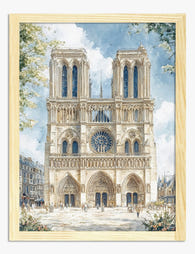
Poster Notre-Dame di Parigi in acquerello
Translation missing: it.products.product.sale_price A partire da £11.95£19.95 -

Tela scena di strada parigina ad acquerello
Translation missing: it.products.product.sale_price A partire da £44.95£74.95 -

Poster Notre-Dame di Parigi ad acquerello
Translation missing: it.products.product.sale_price A partire da £11.95£19.95 -

Poster fascino di Parigi in acquerello
Translation missing: it.products.product.sale_price A partire da £11.95£19.95 -

Tela Notre-Dame di Parigi in acquerello
Translation missing: it.products.product.sale_price A partire da £44.95£74.95 -

Tela fascino delle strade di Parigi
Translation missing: it.products.product.sale_price A partire da £44.95£74.95 -

Tela strada di Parigi ad acquerello
Translation missing: it.products.product.sale_price A partire da £44.95£74.95 -

Poster fascino delle strade di Parigi ad acquerello
Translation missing: it.products.product.sale_price A partire da £11.95£19.95 -

Tela scena di strada parigina in acquerello
Translation missing: it.products.product.sale_price A partire da £44.95£74.95 -

Poster scena di strada a Parigi in acquerello
Translation missing: it.products.product.sale_price A partire da £11.95£19.95 -
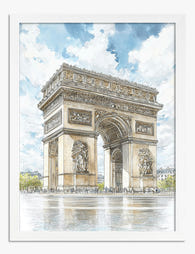
Poster Arco di Trionfo di Parigi in acquerello
Translation missing: it.products.product.sale_price A partire da £11.95£19.95 -
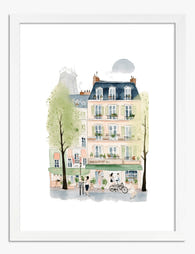
Poster caffè parigino in acquerello
Translation missing: it.products.product.sale_price A partire da £11.95£19.95 -
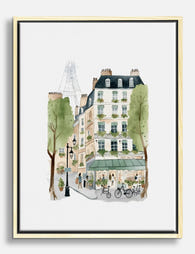
Tela fascino delle strade di Parigi in acquerello
Translation missing: it.products.product.sale_price A partire da £44.95£74.95


Di più da The Frame

Vintage or Modern Kitchen Prints? How to Match ...
Most kitchen art guides tell you to "choose what you love" and leave you to it. That's not advice, that's a shrug. The real question is whether your kitchen leans...

Transform Your Kitchen Walls with Art That Work...
Most kitchen art advice is the same recycled list: lemons, herbs, a typography print telling you to "Eat, Drink, Be Merry". You deserve better, and your walls do too. This...

Room by Room: Where to Hang Botanical Prints fo...
Botanical prints are the most forgiving genre of wall art you can buy. That doesn't mean every leaf-on-paper works in every room, or that hanging them is intuitive. This guide...