
 Ordina oggi, consegna il
 Building a Gallery Wall Around Expressionist Art Prints (Step by Step)
A foolproof one-hero, four-supporting formula for hanging bold emotional art without your wall descending into visual chaos.


Expressionist prints are the most rewarding and most intimidating choice for a gallery wall. Get it right and you have a wall that holds the room together emotionally. Get it wrong and you have five competing pieces shouting over each other.
This guide gives you a specific framework, real measurements, and a mixing strategy so you end up with a curated wall, not a random explosion of colour.
Why expressionist prints make the best gallery wall anchors
Expressionism prioritises feeling over accuracy. Distorted forms, charged colour, visible brushwork. That emotional intensity is exactly what most gallery walls lack, which is why so many end up looking like a mood board printed at random sizes.
A single expressionist piece does the heavy lifting that ten polite prints cannot. It sets the tone, carries the colour story, and gives every other piece on the wall a reason to exist. That is its job as the anchor.
The trade-off is visual weight. Expressionist work demands attention by design, so you cannot treat it like another tile in a grid. You build around it, you do not bury it. Browse expressionism art prints with that anchor role in mind and the selection process gets much simpler.

The layout we recommend: one hero, four supporting pieces
We have tried symmetrical grids, salon-style clusters, and asymmetric scatter layouts. For expressionist work, one consistently outperforms the others: one hero plus four supporting pieces, arranged in a loose rectangle around the hero.
Here is the formula:
- Hero piece: 70x100cm framed expressionist print
- Two medium supporting pieces: 40x50cm each
- Two small supporting pieces: 30x40cm each
The hero sits slightly left or right of centre on the wall (not dead centre, that reads static). Two mediums flank it vertically on the opposite side. The two smalls fill in above and below to balance the rectangle. Total wall footprint: roughly 180cm wide by 140cm tall, which suits most sofa walls and dining walls.
If your wall is smaller, scale down proportionally: a 50x70cm hero with 30x40cm and 21x30cm supporting pieces. Keep the ratio. Do not shrink the hero and keep the supporting pieces large, because that flattens the hierarchy and the wall stops working.
Why this layout works
You are creating a clear visual hierarchy. The eye lands on the hero first, then travels outward. Five pieces is enough to feel like an intentional gallery, few enough that nothing fights for dominance, and odd-numbered groupings (one plus four) feel more natural than perfectly even ones.
Choosing your hero print: scale, colour, and emotional weight
Not every expressionist print can be a hero. Three criteria to apply when choosing:
Colour intensity. The hero should have at least one dominant, saturated colour you can pull through the rest of the wall. Muddy or chromatically scattered pieces struggle to anchor anything. Look for a piece where one colour clearly leads, even if there are five in the composition.
Emotional weight. Stand back from the screen. Does the piece make you feel something specific? Calm, unsettled, exhilarated, melancholy. If your reaction is "it's nice," it is not your hero. Hero pieces should provoke a reaction in under three seconds.
Visual complexity. Counterintuitively, the best heroes are not the busiest pieces. A composition with one clear focal point and surrounding texture works better than chaotic all-over compositions, because the supporting pieces need somewhere to live without competing.
Size matters here too. We recommend going larger than feels comfortable. A 70x100cm framed print sounds enormous on paper and almost always looks correctly scaled in the room. A 50x70cm hero on a sofa wall typically reads as too small once you actually hang it.
Complementary styles that balance expressionism
The mistake most people make: buying five expressionist pieces because they like the style. Five bold emotional prints on one wall is sensory overload. Your hero stops being a hero because everything around it is shouting too.
The four supporting pieces should be calmer in three specific ways: simpler compositions, more restrained colour, lower emotional volume. Three styles that consistently work:
Line art
Single-weight black lines on cream or white backgrounds. Figurative line drawings, botanical studies, abstract continuous-line pieces. The reason this works: line art shares the gestural, hand-drawn quality of expressionist brushwork, so it feels related, but the absence of colour gives your eye somewhere to rest. Browse line art prints for supporting pieces that whisper while your hero speaks.
Black and white photography
Architectural details, landscapes, still life. Photography brings a different texture (smooth tonal gradation rather than visible mark-making) which creates contrast without competition. Stick to monochrome. Colour photography next to expressionist work usually clashes.
Minimalist abstract shapes
Single shapes, soft colour fields, simple geometric compositions. These work because they pick up colours from your hero in muted form, like a quiet echo. Pull a sage from the hero into a minimalist sage-and-cream shape print and the wall starts feeling intentional.
What to avoid as supporting pieces: surrealism (too narratively loud), other expressionist work (competing emotional weight), highly detailed botanical or vintage prints (different visual era), typographic prints (introduces a new visual language).

Frame consistency: why matching frames stop a gallery wall from looking random
The single most underrated tool in gallery wall design. Five different frames on five different prints will look chaotic no matter how well you have curated the artwork. Five identical frames make even a slightly mismatched selection look intentional.
Our recommendation: matte black or natural oak, slim profile, all five pieces. No ornate mouldings, no mixed metals, no white frames next to wood frames. The frame should disappear so the artwork can speak.
Why this matters specifically for expressionism: bold artwork already carries plenty of visual texture. Adding ornate or mixed frames compounds the busyness. Uniform slim frames create a quiet rhythm that contains the expressionist energy without dampening it.
A practical note. Frames shipped separately from prints, then assembled at home, almost always end up looking off. Prints get warped during fitting, mounts shift, and the alignment is rarely as crisp as it should be. Our framed prints arrive with the print already fitted into solid FSC wood frames behind UV-protective acrylic, fixtures attached, ready to hang. That eliminates the most common reason gallery walls look amateur.
Spacing, height, and the practical details of hanging
Numbers, because vague advice is the reason gallery walls go wrong:
Spacing between frames: 5 to 7cm. Closer than that and the pieces visually merge. Wider than that and the wall stops reading as one composition.
Centre height: the visual centre of your overall arrangement should sit at 145 to 150cm from the floor. This is gallery standard eye level. Above a sofa, the bottom of the lowest frame should sit 15 to 20cm above the back of the sofa, no higher.
Distance from furniture: if hanging above a console, dining sideboard, or bed, leave roughly 20cm between the top of the furniture and the bottom of the lowest frame. Less than that and the artwork looks like it is resting on the surface.
Plan on the floor first. Lay all five pieces on the floor in front of the wall and shuffle them until the composition feels right. Photograph it. Then transfer to the wall using the photo as reference. Tracing each frame on brown paper and taping the templates to the wall before you commit to nail holes is genuinely worth the twenty minutes it takes.
Hang the hero first. Once the hero is on the wall at the right height, the four supporting pieces position themselves in relation to it. Hanging supporting pieces first and trying to fit the hero around them never works.
A real example: building an expressionist gallery wall from our collection
To make this concrete, here is a worked example for a 200cm sofa wall in a living room with cream walls, a charcoal sofa, and warm oak flooring.
Hero (70x100cm framed, oak): an expressionist abstract in burnt sienna, deep ochre, and charcoal. Strong central composition, visible brushwork, one dominant warm tone.
Medium supporting piece one (40x50cm framed, oak): a black ink line drawing of a reclining figure on cream paper. Picks up the gestural energy of the hero without colour competition.
Medium supporting piece two (40x50cm framed, oak): a minimalist abstract in soft ochre and cream. Echoes the hero's warm tone in a quieter register.
Small supporting piece one (30x40cm framed, oak): black and white architectural photography, a close-up of weathered concrete. Adds textural contrast.
Small supporting piece two (30x40cm framed, oak): a simple two-tone shape print in charcoal and bone. Final note that ties to the sofa colour.
Arrangement: hero positioned slightly left of centre. Medium one above small one on the right side, vertically stacked. Medium two and small two tucked into the upper right and lower left quadrants to balance the rectangle. Total composition: 180cm wide, 130cm tall, centred at 148cm from the floor.
The result reads as one cohesive piece with a clear focal point, not five separate prints sharing a wall. If you want pre-curated combinations that already follow this logic, our wall art sets take the pairing decisions out of the equation.

Common mistakes that make gallery walls look messy
The same errors come up repeatedly. Each one is fixable.
Multiple bold expressionist pieces. Two heroes cancel each other out. Pick one and let the others wait for a different room. If you genuinely cannot choose, the second piece belongs on the opposite wall as its own focal point.
Ornate frames on busy artwork. Decorative mouldings compete with expressionist mark-making. Slim, simple, uniform. Always.
Hanging too high. The most common error. If you have to tilt your head up to look at the hero, it is too high. Centre the composition at 145 to 150cm, not at the top of the wall.
Crowding pieces together. Less than 5cm between frames and the wall reads as one bloated rectangle. Give the pieces room to breathe.
Mixing warm and cool dominant tones without a bridge. A warm hero needs warm or neutral supporting pieces, not a cool blue minimalist print plonked in for variety. Pick a temperature and commit.
Treating the wall as decoration rather than composition. A gallery wall is not just five prints in proximity. It is a single visual unit. Step back six metres and squint. If your eye does not land somewhere specific first, the hierarchy is broken.
Using thin paper prints in cheap frames. Buckling, warping, glare from glass, prints that fade within a year of sunlight. Museum-grade matte paper, UV-protective acrylic glaze, and proper fitting solve all of this. It is also why our prints look the same in five years as they do the day they arrive.

A final thought
The reason most gallery walls fail is not bad taste, it is the absence of a framework. One hero, four supporting pieces, uniform frames, deliberate spacing, calmer styles around the bold one. Apply that and the intimidation disappears.
Buy the hero first. Live with it for a week, on the floor leaning against the wall if you have to. Once you know what your hero is doing emotionally, choosing the four supporting pieces becomes obvious rather than overwhelming. That sequence, hero first then everything else, is the difference between a curated wall and a cluttered one.

Prodotti Fab presentati in questo blog
-

Poster ispirato a Kandinsky piccoli mondi IX
Translation missing: it.products.product.sale_price A partire da £11.95£19.95 -

Poster espressione meditativa di Jawlensky
Translation missing: it.products.product.sale_price A partire da £11.95£19.95 -

Tela energia astratta ispirata a Kandinsky
Translation missing: it.products.product.sale_price A partire da £49.95£74.95 -

Tela paesaggio onirico Bauhaus
Translation missing: it.products.product.sale_price A partire da £49.95£74.95 -

Tela fascino del Bauhaus
Translation missing: it.products.product.sale_price A partire da £49.95£74.95 -

Poster piccoli mondi IV di Kandinsky
Translation missing: it.products.product.sale_price A partire da £11.95£19.95 -

Poster ritratto astratto a blocchi di colore
Translation missing: it.products.product.sale_price A partire da £11.95£19.95 -

Poster cerchi concentrici in stile Bauhaus
Translation missing: it.products.product.sale_price A partire da £11.95£19.95 -

Poster Piccoli mondi I di Kandinsky
Translation missing: it.products.product.sale_price A partire da £11.95£19.95 -

Tela geometrie Bauhaus audaci
Translation missing: it.products.product.sale_price A partire da £49.95£74.95 -

Tela Bauhaus dalle geometrie colorate
Translation missing: it.products.product.sale_price A partire da £49.95£74.95 -

Poster Bauhaus geometrie estive
Translation missing: it.products.product.sale_price A partire da £11.95£19.95 -

Tela Bauhaus a linee sinuose
Translation missing: it.products.product.sale_price A partire da £49.95£74.95 -
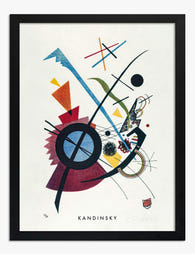
Poster linea viola di Kandinsky
Translation missing: it.products.product.sale_price A partire da £11.95£19.95 -

Poster onde astratte in stile Bauhaus
Translation missing: it.products.product.sale_price A partire da £11.95£19.95 -

Tela piccoli mondi I di Kandinsky
Translation missing: it.products.product.sale_price A partire da £49.95£74.95 -

Tela geometrie astratte stile Bauhaus
Translation missing: it.products.product.sale_price A partire da £49.95£74.95 -

Poster ritratto astratto in blu intenso
Translation missing: it.products.product.sale_price A partire da £11.95£19.95 -

Tela a geometrie Bauhaus audaci
Translation missing: it.products.product.sale_price A partire da £49.95£74.95 -

Tela Kandinsky viola e verde
Translation missing: it.products.product.sale_price A partire da £49.95£74.95


Di più da The Frame

The Most Famous William Morris Designs, Ranked:...
William Morris designed over 50 patterns in his lifetime, and roughly six of them get all the attention. That's mostly fair, but not entirely. Here's our honest ranking of the...

Urban Jungle Interiors: Using Wall Art Instead ...
The urban jungle look is having a moment that refuses to end. But most of the people pinning those plant-drenched living rooms will never own 47 monsteras, and that's fine....

Room by Room: How to Hang William Morris Floral...
You've fallen for Morris. The question now is which floral goes where, at what size, in what frame. This guide skips the Arts and Crafts lecture and gets straight to...