
 Ordina oggi, consegna il
 Urban Jungle Interiors: Using Wall Art Instead of 47 Houseplants
All the lush, layered greenery of a plant-filled apartment, minus the fungus gnats, dead fiddle leafs and Sunday watering rota.


The urban jungle look is having a moment that refuses to end. But most of the people pinning those plant-drenched living rooms will never own 47 monsteras, and that's fine. Here's how to get the same lush, layered atmosphere with wall art doing the heavy lifting.
The urban jungle look: what it actually is (and isn't)
Urban jungle interior design is the deliberate layering of greenery, natural textures and organic shapes inside a modern home. It emerged properly around 2017 and has since colonised Pinterest, TikTok and every rental flat with decent natural light. The core idea is simple: bring the density and drama of a tropical environment indoors, in a city context that usually offers neither.
What it isn't: a random collection of houseplants on a windowsill. The look depends on scale, repetition and depth. You need big leaves, layered heights, and enough green in your line of sight that the eye reads "abundance" rather than "someone bought a pothos."
That density is exactly what makes the aesthetic so hard to achieve with living plants alone. To get the Pinterest effect, you genuinely do need dozens of them, in varied sizes, staggered on shelves, hanging from ceilings, spilling from plant stands. Which is a full-time hobby, not a decorating decision.

Wall art as the low-maintenance alternative to living walls
The dirty secret of urban jungle interiors is that most of the rooms you admire online are either professionally maintained, freshly styled for the photo, or six months from looking like a plant graveyard. Fungus gnats appear from nowhere. Fiddle leaf figs drop leaves if you look at them wrong. Cats eat lilies and end up at the vet. Anyone with hay fever knows what a room full of flowering plants actually feels like in June.
Wall art solves all of this in one move. A large-scale jungle print delivers the visual weight of three or four mature plants and asks nothing of you in return. No repotting, no leaf-wiping, no travel-induced die-off, no wondering whether that yellow leaf means overwatering or underwatering or existential despair.
There's also the cost question that plant content rarely addresses. A decent mature monstera costs anywhere from £40 to £150. Multiply that by the ten to fifteen plants you'd need for a genuine jungle effect, add pots, soil, plant stands, grow lights for the darker corners, and factor in the ones that inevitably die. A few well-chosen jungle art prints do the same visual work for years, without the mortality rate.
And unlike a shelf of real plants, wall art doesn't require good light. You can build a jungle atmosphere in a north-facing bedroom, a hallway with no windows, or a bathroom where nothing green would survive a week.
Choosing between photographic rainforest prints and illustrated botanicals
There are three main routes into jungle wall art, and they suit very different rooms.
Photographic rainforest prints
These are your immersive, cinematic options. Think misty canopies, close-up palm fronds shot against dark backgrounds, or wide shots of dense tropical foliage that read almost like a window into somewhere else. Photography works brilliantly at large scale, ideally 70x100cm or bigger, because the detail rewards close viewing.
Photographic prints suit contemporary spaces with clean lines. They add richness without adding pattern, which matters if the rest of your room is already busy. On matte paper with a proper giclée print, dark greens and shadowy blacks stay deep rather than looking flat or muddy.
Illustrated botanicals
Illustrated botanical art prints are the more graphic, decorative option. Vintage-style leaf studies, ink-drawn ferns, watercolour palm fronds, minimalist single-stem compositions. These lean elegant rather than immersive.
Illustrations work particularly well in smaller rooms and in minimalist interiors where a full photographic jungle would feel overwhelming. They also age better in traditional spaces, sitting comfortably alongside antique furniture or panelled walls.
Statement leaf prints
Somewhere between the two sit large-scale leaf art prints, often single-subject compositions of a monstera, banana leaf or palm frond. These are the workhorses of the jungle aesthetic. One large leaf print above a sofa can carry a whole room, especially paired with a real plant or two nearby to blur the line between wall and greenery.
How to layer jungle prints with the houseplants you do have
Most people realistically own three to five houseplants, not forty. The trick is using wall art to amplify what you already have, so the room reads as densely planted even when it isn't.
Place a large jungle print directly behind or above a real plant. The eye reads the two together as a single, layered mass of foliage. A trailing pothos on a shelf in front of a printed rainforest canopy creates genuine visual depth. Your one monstera, positioned beneath a large framed leaf print, suddenly feels like part of a collection.

Group prints and plants at varied heights. Real jungles have canopy, understorey and floor layers. Replicate this by hanging one print at eye level, another lower down above a console, and letting a floor plant fill the gap between them. The staggered composition mimics natural growth.
Match the greens. If your real plants lean cool and blue-green, choose prints in the same register rather than warm tropical yellows. Cohesion sells the illusion.
Modern vs. maximalist: two approaches to jungle interiors
Modern jungle interior design trends have split into two camps, and the wall art you choose should follow one of them.
The modern minimalist approach
Restrained, architectural, calm. One or two large prints on white or off-white walls. Furniture in natural wood, cream boucle or dark leather. A single sculptural plant. The aesthetic borrows from Scandinavian and Japandi thinking: green as an accent, not a takeover.
For this look, choose one hero print at scale. A 70x100cm framed botanical illustration above a low sideboard, hung so it commands the wall on its own. No gallery cluster, no competing patterns. The frame matters here too. Solid oak or black wood with a proper mount gives the print the gravity it needs to work alone.
The maximalist approach
The opposite instinct. Layer everything. Botanical wallpaper on one wall, framed jungle prints on another, real plants filling any gap. Pattern on pattern. Deep green walls, terracotta accents, brass fittings, vintage rattan.
Maximalist jungle home decor ideas work best when you commit fully. A single leaf print in a maximalist room disappears. You want gallery walls of five to nine prints, mixing photographic and illustrated, framed and canvas, sized deliberately to create rhythm rather than symmetry.
The trick with maximalism is anchoring the chaos. Keep frame colours consistent (all black, all natural wood, all brass) even when the artwork inside varies wildly. That's what stops it from tipping into visual noise.
The best rooms for the urban jungle treatment
Not every room wants to be a jungle. Some benefit from the treatment more than others.
Living rooms
The obvious candidate, and the room where scale matters most. A large canvas print above a three-seater sofa, ideally 100x150cm or close to it, sets the tone for the whole space. Canvas works particularly well here because the matte finish absorbs light rather than reflecting it, which reads as more organic and less commercial than glossy alternatives.
Bathrooms
Underrated. Bathrooms are usually too humid, too dark, or too small for real tropical plants to thrive, but they're the perfect place for a print. A framed jungle scene turns a functional room into a small escape. If you're worried about steam, canvas handles humid conditions better than paper prints and won't warp in the way cheaper framed prints often do.
Bedrooms
Jungle prints work beautifully in bedrooms because they add richness without demanding attention. Position one large print above the bed rather than a cluster; the eye wants to rest here, not scan. Deeper greens and softer illustrations tend to work better than high-contrast photography, which can feel a bit awake for a sleep space.

Hallways and stairwells
Long walls that get overlooked. A run of three or four medium botanical prints in matching frames turns a hallway into something worth walking through. Because you're moving past them rather than sitting with them, illustrated prints tend to work better here than dense photography.
Home offices
If you spend eight hours a day at a desk, having something green in your eyeline genuinely helps. A print on the wall opposite your screen gives you somewhere restful to look, without adding another thing to water on your lunch break.
Materials and textures that complete the look
Wall art carries the jungle aesthetic, but the rest of the room has to meet it halfway. The materials that make urban jungle interiors feel warm rather than clinical are almost always natural.
Rattan and cane furniture. Woven jute or sisal rugs. Terracotta pots (even if there's nothing planted in them, they read as part of the language). Linen curtains rather than heavy velvet. Solid wood over anything laminate. Ceramic vases with organic shapes.
Colour-wise, the palette that supports green art prints best is warm and grounded: terracotta, ochre, sand, deep brown, off-white, black. Cool greys and stark whites can make jungle art feel isolated. Warm neutrals let it breathe.
Consider your frames as part of the material story. Natural wood frames tie a jungle print into a room full of rattan and linen almost automatically. Black frames sharpen the look and suit more modern, architectural interiors. Avoid anything overly ornate or metallic in warm gold; it fights the organic tone.
Framing decisions that matter
Canvas versus framed paper is a real decision, not a preference. Canvas hangs lighter, works in humid rooms, and gives a softer, less formal finish. It suits maximalist walls where you're layering multiple pieces and don't want the visual weight of frame after frame after frame.
Framed prints with UV-protective glazing look more polished and preserve colour better in direct sunlight, which matters if your jungle print is going on a sunny wall. They're heavier and need proper fixings, but they hold their crispness for decades.
For gallery walls, mix the two. A cluster of framed illustrations alongside an unframed canvas creates the layered, collected feel that maximalist jungle interiors want.

When your jungle wall looks flat
If you've hung the prints and the room still doesn't feel lush, the issue is usually one of three things.
Scale. Small prints in big rooms disappear. When in doubt, go bigger than feels comfortable. A print that looks large on the wall in your delivery photo will look normal-sized once furniture is back in place.
Lighting. Jungle art needs warm light to come alive. Overhead cool-white LEDs kill the effect. Add a table lamp, a floor lamp, or wall sconces with warm bulbs directed towards your prints.
Layering. One print alone rarely does the work. Even in minimalist rooms, pair your hero piece with something three-dimensional nearby: a real plant, a woven basket, a ceramic vessel. The eye reads texture as depth, and depth is what makes a flat wall feel like a jungle.
Start with one large print in the room you spend the most time in. Live with it for a week. Then decide whether you're a one-hero-piece minimalist or a gallery-wall maximalist, and build from there. Either route gets you the urban jungle, without the fungus gnats.

Prodotti Fab presentati in questo blog
-
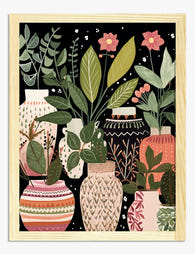
Poster vasi botanici boho con foglie e fiori
Translation missing: it.products.product.sale_price A partire da £11.95£19.95 -

Tela vasi boho con motivi botanici
Translation missing: it.products.product.sale_price A partire da £49.95£74.95 -

Poster passeggiata nella giungla
Translation missing: it.products.product.sale_price A partire da £11.95£19.95 -

Poster botanico con piante in vaso colorate
Translation missing: it.products.product.sale_price A partire da £11.95£19.95 -

Poster piante sul pianerottolo
Translation missing: it.products.product.sale_price A partire da £11.95£19.95 -

Poster giungla urbana di New York
Translation missing: it.products.product.sale_price A partire da £11.95£19.95 -
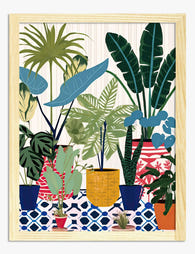
Poster oasi botanica mediterranea
Translation missing: it.products.product.sale_price A partire da £11.95£19.95 -

Poster astratto urbano verde, beige e nero
Translation missing: it.products.product.sale_price A partire da £11.95£19.95 -

Poster astratto muschio urbano
Translation missing: it.products.product.sale_price A partire da £11.95£19.95 -

Poster oasi moderna a Miami
Translation missing: it.products.product.sale_price A partire da £11.95£19.95 -
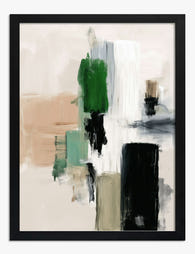
Poster astratto verde urbano
Translation missing: it.products.product.sale_price A partire da £11.95£19.95 -

Poster guida per gli amanti del pane
Translation missing: it.products.product.sale_price A partire da £11.95£19.95 -

Poster vista serena del mattino
Translation missing: it.products.product.sale_price A partire da £11.95£19.95 -
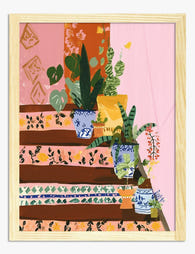
Poster gradini decorati e piante
Translation missing: it.products.product.sale_price A partire da £11.95£19.95 -

Poster incontro nella giungla
Translation missing: it.products.product.sale_price A partire da £11.95£19.95 -

Tela oasi botanica lussureggiante
Translation missing: it.products.product.sale_price A partire da £49.95£74.95 -

Tela scala botanica lussureggiante
Translation missing: it.products.product.sale_price A partire da £49.95£74.95 -

Tela botanica con foglie grandi e colori vivaci
Translation missing: it.products.product.sale_price A partire da £49.95£74.95 -

Tela meraviglia della giungla
Translation missing: it.products.product.sale_price A partire da £49.95£74.95 -

Tela vita moderna a Miami
Translation missing: it.products.product.sale_price A partire da £49.95£74.95


Di più da The Frame

William Morris Animal Designs: The Complete Sto...
Animals in William Morris's original work: what he actually designed William Morris designed a surprising number of animals, but not the ones most people assume. His original wallpapers, textiles and...

Why Vintage Fish Prints Work in Modern Homes Wh...
Vintage fish prints have quietly become one of the most useful things you can put on a wall. Not because they're trendy, but because their scientific origins make them work...

Every Bird in William Morris's Designs: The Sto...
Why birds obsessed William Morris more than any other motif Morris designed acanthus leaves, willow boughs, strawberries, tulips and pomegranates, but he kept coming back to birds. Between the 1870s...