
 Bestel vandaag, levering vóór
 Toiles ou Affiches encadrées : le guide qui tranche pour votre décoration murale
A no-BS comparison that actually picks winners, room by room, subject by subject, size by size.


Vous hésitez entre deux formats, tout Internet vous répète que « ça dépend des goûts », et vous ne savez toujours pas quoi acheter. Corrigeons ça. Voici un guide assumé qui tranche et désigne des gagnants selon ce que vous accrochez, l’endroit où vous l’accrochez et l’ampleur que vous visez.
La réponse rapide : quand choisir la toile ou l’affiche encadrée
Choisissez une Affiche encadrée lorsque l’œuvre comporte des détails fins, de la typographie, de la photographie, de l’illustration – bref, tout ce qui exige de la netteté. Optez pour une Toile quand l’image est picturale, atmosphérique ou de grand format et que vous voulez de la présence sans la formalité d’un cadre.
Les Affiches encadrées paraissent plus réfléchies. Les Toiles donnent une impression plus douce et décontractée. Dans un salon formel, une salle à manger ou partout où vous recherchez un esprit galerie, privilégiez l’encadrement. Pour habiller un grand mur dans un séjour convivial ou une chambre et apporter de la chaleur sans lourdeur, la Toile fait merveille.
Voilà l’essentiel. La suite explique pourquoi.

Ce que ça change vraiment au mur (texture, fini, présence)
Une Toile présente une surface tissée. La lumière accroche le grain et se diffuse, ce qui adoucit les détails et confère à l’image une qualité picturale. C’est idéal pour les paysages, les abstractions et les œuvres d’esprit impressionniste. C’est moins heureux pour la photo de portrait, l’illustration au trait fin ou tout ce qui comporte de la typographie nette : la texture entre en conflit avec l’image.
Une Affiche sur papier mat épais, protégée par un vitrage acrylique anti-UV, reste précise. Chaque ligne, chaque dégradé, chaque détail fin se lit comme l’artiste l’a voulu. Le papier mat supprime aussi les reflets, vous évitant l’effet miroir parfois visible avec un verre brillant.
La présence compte également. Un cadre dessine une limite. Il dit à l’œil « l’œuvre s’arrête ici, le mur commence là ». Cette structure rend l’affiche encadrée plus volontaire et plus « curatée ». Les Toiles, avec leurs bords retournés, se fondent davantage dans le mur. Elles se perçoivent moins comme un objet et davantage comme une fenêtre.
Quand la texture de la toile aide… ou dessert
La Toile aide :
- Reproductions de peintures à l’huile ou acryliques
- Paysages atmosphériques (montagnes, bords de mer, forêts)
- Abstraction lyrique, color field
- Illustrations botaniques anciennes en grand format
La Toile dessert :
- Photographie noir et blanc (la texture brouille la gamme tonale)
- Dessins au trait détaillés ou plans d’architecture
- Tout ce qui comporte du texte ou de la typographie
- Graphisme, motifs géométriques, minimalisme
- Portraits où la peau doit rester lisse
Si votre image figure dans la seconde liste et que vous envisagiez une toile, arrêtez. Choisissez une affiche encadrée.
Durabilité et longévité : le match
Les deux formats durent plus longtemps que la plupart des meubles s’ils sont bien fabriqués. La différence se joue selon l’environnement.
Les Affiches encadrées avec vitrage anti-UV sont les championnes de l’endurance. Des encres giclée qualité musée sur papier certifié FSC, scellées derrière un acrylique protecteur, conservent leurs couleurs pendant des décennies, même à la lumière. L’acrylique protège aussi de la poussière, des graisses et de l’oxydation lente qui ternit les tirages non protégés. En contrepartie : dans des pièces très humides, le papier peut se gondoler si l’encadrement est négligé.
Les Toiles tolèrent mieux l’humidité car il n’y a ni papier ni vitrage susceptible de se troubler. Salles de bains (bien ventilées), cuisines et vérandas sont plus clémentes avec la toile qu’avec le papier encadré. En contrepartie : la toile peut se décolorer plus vite en plein soleil direct, faute de barrière UV frontale. La qualité compte ici. Une toile bon marché imprimée avec des encres à colorants peut virer en deux ou trois ans. Une giclée à pigments sur toile polycoton tient bien plus longtemps.
Aucun des deux formats n’est étanche. N’accrochez ni l’un ni l’autre juste au-dessus d’une baignoire ou d’une plaque de cuisson.
Le problème des toiles bon marché
Si vous avez déjà vu une toile un peu terne, légèrement mal tendue, avec un recadrage visible sur les bords ou un châssis qui vrille déjà, vous avez aperçu le bas du marché. Les signes d’une toile de qualité : tension manuelle sur bois massif (pas de composite sujet au gauchissement), bords miroir pour éviter de rogner l’image principale, impression giclée en haute résolution, tension régulière et ferme sur toute la surface. Quand ces cases sont cochées, une toile a l’air haut de gamme. Sinon, elle sonne « stand de marché ».
Recommandations pièce par pièce
Salon
Optez pour l’encadrement pour la pièce maîtresse au-dessus du canapé ou de la cheminée. Une grande affiche encadrée, 70 x 100 cm, ancre l’espace et affirme l’intention. Le cadre crée un point final visuel qui unit l’ensemble.
La toile fonctionne très bien en pièce secondaire sur un mur latéral, surtout si vous visez une atmosphère apaisée et vécue. Mélanger les deux formats dans une même pièce est tout à fait possible – et souvent judicieux – à condition que la pièce la plus imposante soit encadrée. Parcourez nos affiches pour le salon pour démarrer.
Chambre
La Toile l’emporte ici la plupart du temps. La chambre gagne à être adoucie. La surface mate de la toile absorbe la lumière plutôt que de la renvoyer, ce qui sert l’ambiance. Une grande toile au-dessus de la tête de lit, par exemple 100 x 70 cm, apporte de la chaleur sans le poids visuel d’un cadre.
Exception : si votre chambre est minimaliste ou d’inspiration hôtelière, avec des draps impeccables et des lignes nettes, l’affiche encadrée renforce cette élégance soignée. Parcourez les affiches pour la chambre et notez les images que vous imaginez encadrées plutôt qu’en toile.
Entrée et couloir
Encadré, presque toujours. C’est là que se forment les premières impressions, et une affiche encadrée paraît plus aboutie. Ce sont aussi des espaces étroits : des formats plus petits accrochés en série ou en mur galerie fonctionnent à merveille. La toile, surtout en petit format, peut paraître « bouche-trou » dans un couloir.
Bureau à la maison
Encadré, avec une nuance. Si vous êtes souvent en visioconférence et que l’œuvre est dans le champ derrière vous, l’encadrement paraît plus professionnel à l’écran. Le bord défini structure l’arrière-plan. La toile peut sembler un peu douce et floue via une webcam.
Nuance : si votre bureau fait aussi office d’atelier créatif ou de coin lecture détendu, de grandes toiles paraissent moins corporate et plus accueillantes. Adaptez le format à l’ambiance que vous souhaitez projeter.

Cuisine et salle à manger
Salle à manger : encadré. Ce sont des espaces d’apparat, et les cadres élèvent l’ensemble. Cuisine : toile, si vous avez un pan de mur à valoriser. L’absence de vitrage signifie zéro reflet sous l’éclairage zénithal, et la toile encaisse mieux les variations de température que le papier.
Salle de bains
Idéalement, aucun des deux. Mais si vous insistez, toile dans une salle de bains bien ventilée qui s’assèche après la douche. Évitez l’affiche encadrée en papier ici, sauf ventilation irréprochable.
Toile encadrée : la troisième option que beaucoup ignorent
C’est souvent le vrai meilleur des deux mondes, et pourtant on en parle rarement correctement.
Une toile encadrée est une toile tendue placée dans une caisse américaine (cadre « flottant »), avec un léger jour entre le bord de la toile et l’intérieur du cadre. Vous bénéficiez de la surface douce et picturale de la toile, et du bord structuré qui donne à la pièce un caractère abouti, prêt pour la galerie.
Le bon choix lorsque :
- Vous aimez le fini toile mais la pièce est trop formelle pour une toile non encadrée
- Vous accrochez un grand format dans un salon ou une salle à manger et souhaitez de la présence sans reflets
- Vous voulez de la toile dans un intérieur ancien où une œuvre non encadrée jurerait
L’inconvénient, c’est le coût. Vous payez la toile et le cadre. Mais pour une pièce forte que vous garderez dix ans, c’est souvent l’option la plus soignée de la pièce.
Taille et impact : quel format tient mieux le très grand ?
Au-delà d’environ 80 x 120 cm, les formats se comportent très différemment.
Les grandes Affiches encadrées deviennent lourdes. Une affiche encadrée de 70 x 100 cm, avec cadre en bois massif et vitrage acrylique, est substantielle. Il faut des fixations adaptées, idéalement dans un montant ou avec des chevilles renforcées pour plaques de plâtre (placo). Nos affiches encadrées s’arrêtent à 70 x 100 cm, le point idéal avant que le poids ne complique sérieusement la pose.
Les grandes Toiles restent relativement légères car il n’y a ni verre ni papier. On peut tendre des toiles jusqu’à 100 x 150 cm sans problème de poids, raison pour laquelle elles dominent la catégorie des pièces « statement ». À cette taille, une toile habille entièrement le mur du canapé et coûte moins cher que l’équivalent en papier encadré – si tant est que ce dernier soit judicieux à ce format.
Au-dessus de 80 x 120 cm, la toile est presque toujours la bonne réponse. En dessous de 50 x 70 cm, l’encadré l’emporte presque toujours. Entre les deux (60 x 80 cm à 80 x 120 cm), tout se joue sur le sujet et la pièce.
Coût au centimètre carré : la toile est-elle plus avantageuse ?
Au centimètre carré, la toile coûte sensiblement moins cher que le papier encadré en grand format. Les raisons sont structurelles : un cadre nécessite moulures en bois, vitrage acrylique, montage et assemblage. Une toile demande l’impression, le châssis et la mise en tension. Moins de matériaux, moins d’assemblage, coût inférieur.
Sur les petits formats (30 x 40 cm, 40 x 50 cm), l’écart se resserre car la quantité de matière est limitée de part et d’autre. Les affiches encadrées en petit format offrent souvent un meilleur rapport valeur/impact, le cadre ajoutant un poids visuel disproportionné à une petite pièce.
Sur les grands formats (80 x 120 cm et plus), la toile peut être 30 à 50 % moins chère que l’équivalent encadré pour une couverture visuelle similaire. Pour habiller un grand mur avec un budget maîtrisé, la toile s’impose. Pour une petite pièce maîtresse unique, l’encadré offre plus de présence par euro dépensé.
Alors, la toile en vaut-elle la peine ? En grand format, oui, presque toujours. En petit format, l’écart de valeur se réduit et l’encadré l’emporte souvent en impact.

Les aspects pratiques que la plupart des guides oublient
Locataire ou propriétaire
La toile est plus légère : des fixations plus discrètes et moins de traces au mur. Si vous louez et tenez à votre caution, une grande toile est bien plus conciliante qu’une affiche encadrée lourde qui exige des ancrages sérieux. Une toile de 100 x 70 cm peut tenir sur un crochet solide unique dans de nombreux cas. L’équivalent encadré réclame des supports plus robustes.
Enfants et animaux
La toile pardonne davantage. Si quelque chose la heurte, vous aurez le plus souvent une petite bosse, pas de l’acrylique en éclats au sol. Les affiches encadrées avec vitrage acrylique (plutôt que verre) aident aussi, mais la toile reste plus tolérante aux chocs. Pour des pièces accrochées bas dans une salle familiale, la toile gagne.
Fréquence des relooking
Si vous changez d’intérieur tous les quelques années, la toile se démode un peu plus vite car elle est souvent liée à des styles précis. Une affiche sur papier mat de qualité, dans un cadre en bois neutre, traverse plus sereinement les évolutions esthétiques. Pour un investissement long terme, l’encadré est plus sûr. Pour des rafraîchissements tous deux ou trois ans, la toile convient très bien.
Murs galerie et agencements multipanneaux
Les affiches encadrées gagnent sans débat pour les murs galerie. Les bords définis créent rythme et structure quand vous combinez plusieurs pièces. La toile en mur galerie paraît inachevée, comme si les œuvres attendaient encore leur montage. Pour un mur de d’affiches d’art bien pensé, engagez-vous sur l’encadrement.
Pour les compositions multipanneaux (un triptyque d’une même image), la toile fonctionne à merveille : les bords retournés interrompent moins la lecture que trois cadres alignés.
Associer sujet et format : mémo rapide
- Photographie (couleur ou noir et blanc) : encadrée
- Illustrations botaniques et de nature : les deux, encadrée pour les sujets détaillés, toile pour l’atmosphère
- Abstrait et expressionnisme : toile
- Typographie et mots : encadrée, toujours
- Affiches vintage et art de voyage : encadrée
- Peintures de paysage : toile
- Portraits illustrés : encadrée
- Dessins au trait minimalistes : encadrée
- Reproductions de peintures à l’huile : toile
Si vous explorez nos toiles, examinez bien l’image source. Si elle comporte des lignes nettes ou du texte, reconsidérez.

Notre verdict : faire correspondre le format à votre espace
Voici la grille de décision, en condensé :
- Quel est le sujet ? Détail fin, photographie ou texte : encadrée. Pictural, atmosphérique ou abstrait : toile.
- Quelle taille visez-vous ? En dessous de 60 x 80 cm, avantage encadré. Au-delà de 100 x 70 cm, avantage toile. Entre les deux, le sujet et la pièce tranchent.
- Quelle pièce ? Espaces formels (salle à manger, entrée, bureau à l’écran) : encadré. Espaces doux (chambre, salon détente, cuisine) : toile.
- Quel mode de vie ? Locataires, jeunes familles et amateurs de relooking fréquent : toile. Investissements long terme et murs galerie : encadré.
- Envie des deux à la fois ? La toile encadrée est la réponse que peu proposent et elle résout plus de cas qu’on ne l’imagine.
Le pire n’est pas de choisir le « mauvais » format. C’est d’opter pour une version mal réalisée. Un cadre voilé, une toile qui relâche, ou une affiche livrée séparément de son cadre et à monter soi-même : voilà ce qui déçoit le plus en décoration murale. Achetez auprès d’une maison qui livre l’ensemble prêt à accrocher, bien ajusté. Cela évite 90 % des regrets avant même qu’ils n’apparaissent.
Choisissez le format qui convient à votre image, à votre pièce et à votre vie. Puis accrochez-le à hauteur des yeux (environ 145–150 cm du sol jusqu’au centre de l’œuvre) et profitez-en.

Fab-producten in dit blog
-
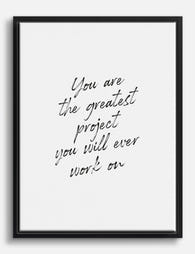
Canvas handgeschreven quote – jij bent je meesterwerk
Aanbiedingsprijs Vanaf €65,95€93,95 -

Canvas abstract rood met geometrische lijnen op donkerblauw
Aanbiedingsprijs Vanaf €65,95€93,95 -

Canvas Andy Warhol citaat in zwart-wit
Aanbiedingsprijs Vanaf €65,95€93,95 -

Canvas zwart-wit boomkruin van onderaf
Aanbiedingsprijs Vanaf €65,95€93,95 -

Canvas krachtige typografie in zwart-wit
Aanbiedingsprijs Vanaf €65,95€93,95 -

Canvas dramatische elegantie
Aanbiedingsprijs Vanaf €65,95€93,95 -

Canvas zwart-wit quote over zelfvertrouwen
Aanbiedingsprijs Vanaf €65,95€93,95 -

Canvas mi casa su casa welkom in zwart-wit
Aanbiedingsprijs Vanaf €65,95€93,95 -

Canvas krachtige moderne typografie in bruintinten
Aanbiedingsprijs Vanaf €65,95€93,95 -

Canvas typografie 'Yeah'
Aanbiedingsprijs Vanaf €65,95€93,95 -

Canvas samen door het bos
Aanbiedingsprijs Vanaf €65,95€93,95 -

Canvas moderne abstracte vormen in aardetinten
Aanbiedingsprijs Vanaf €65,95€93,95 -

Canvas minimalistische lijnen en bogen in zwart-wit
Aanbiedingsprijs Vanaf €65,95€93,95 -

Canvas gedurfde typografie in zwart
Aanbiedingsprijs Vanaf €65,95€93,95 -

Canvas 'Music Is the Answer'
Aanbiedingsprijs Vanaf €65,95€93,95 -

Canvas omhuld door rust
Aanbiedingsprijs Vanaf €65,95€93,95 -

Canvas moeiteloze elegantie in zachte pasteltinten
Aanbiedingsprijs Vanaf €65,95€93,95


Meer van The Frame

Voorbij de keuken: 5 onverwachte ruimtes waar c...
Citroenkunst heeft een imagoprobleem. Zoek er online op en je verdrinkt in keukenscènes: farmhouse-borden, fruitschalen, theedoeken met slogans. Maar een goede citroenprint is in wezen een studie in geel, groen...

Affiches de citrons pour la cuisine : où les ac...
Les affiches de citrons se sont discrètement imposées comme le sujet le plus plébiscité pour la cuisine ces dernières années, et ce n’est pas un hasard. Oublions les étagères parfaitement...

Waarom werken palmbladprints zo goed in minimal...
Palmbladprints hebben een imagoprobleem. Zeg de woorden en de meeste mensen zien tiki-bars, vakantiekaartjes en felroze flamingo’s voor zich. Maar goed toegepast is palmbladkunst een van de meest ingetogen, sculpturale...