
 Bestel vandaag, levering vóór
 You've Finished the Renovation. The Walls Are Still Empty.
The bridge between construction-mode exhaustion and a home that actually feels finished, one wall at a time.


The dust has settled. The skip is gone. You've made roughly 4,000 decisions about grout colour and socket placement, and now you're standing in a beautifully painted room staring at walls that feel strangely accusatory. The renovation is done. The home, somehow, isn't.
This is the part nobody warns you about.
The strange limbo between "finished" and "finished"
There's a specific kind of exhaustion that arrives after a renovation. You've spent months in construction mode, where every decision was urgent, technical, and irreversible. Wrong tile choice? Live with it for ten years. Wrong tap? Replumb the wall.
Then suddenly the trades leave, the protective sheeting comes off, and you're handed a different job entirely. You have to make the space feel like yours. And the tools for that job, like art, textiles, lamps, the soft things, require a completely different kind of thinking. Slower. More intuitive. Less right-or-wrong.
Most people hit a wall here (pun acknowledged). After months of decisiveness, the idea of choosing a print for the lounge feels weirdly enormous. You've already spent so much. You don't want to "ruin it" with something average. So the walls stay empty. For weeks. Sometimes for years.
If that's where you are, this article is for you. We're not going to tell you to hang a gallery wall and call it done.

First, give yourself permission to wait
The single best piece of advice for post renovation wall art decisions is the one nobody wants to hear: live in the space first.
Two to four weeks, minimum. Longer if you can stand it.
Here's why. A renovation changes a room in ways you won't fully understand until you've used it. The light moves differently. Sightlines from the kitchen to the lounge create new "first views" you didn't have before. That wall you assumed needed a huge piece might actually be in shadow most of the day. The wall you barely noticed might be the first thing every visitor sees.
You also need to watch how the paint behaves. Modern paints shift dramatically between morning and evening, and that sage green you chose looks like three different colours throughout the day. Art that works against morning sage might fight against evening sage. You can't know until you've watched it.
So give yourself a grace period. Empty walls are not a moral failing. They're a research phase.
How to know when a wall actually needs art
Not every wall does. This is one of the quiet truths of decorating that the internet doesn't talk about, because it doesn't sell anything.
A wall needs art when one of these is true:
- It's the first thing you see when entering a room
- It sits behind a major piece of furniture (sofa, bed, dining table) and looks visually unmoored without something above it
- It's a focal wall the room was designed around (a chimney breast, an alcove, an end wall in an open-plan space)
- It's in a high-traffic sightline where the eye naturally lands
A wall does NOT need art just because it's empty. Bare wall can be a design choice. Negative space lets your architecture, your paint colour, and your other furnishings breathe. If you've just spent eight months exposing original brick or installing crittall doors, please, for the love of everything, do not cover them up to "balance the room."
Start by identifying your two or three priority walls. Ignore everything else for now.
A sequencing framework for art after renovation
Here's the order we'd recommend tackling things, assuming budget fatigue is real and you'd like to avoid making rushed decisions you'll regret.
1. The hero wall
Every home has one. It's the wall that anchors the room you use most, usually the lounge or the kitchen-diner. This is where you spend money. One properly-sized, properly-framed piece that you genuinely love will do more work for your home than ten cheap prints scattered around.
If you splurge on one thing this year, splurge here.
2. Bedroom focal wall
Usually behind or opposite the bed. This room sets your mood twice a day. It deserves consideration, but it can wait a few weeks. Bedrooms tolerate quieter, calmer pieces, and abstract art tends to read well here because it doesn't demand attention when you're trying to sleep.
3. Hallway and entrance
High-impact-per-pound territory. Hallways are narrow, so smaller prints work. They're also where guests form their first impression, which means a well-chosen piece does disproportionate emotional work. Save this for month two or three.
4. Everything else
Bathrooms, studies, guest rooms, the awkward bit of wall by the stairs. These can wait six months. They can wait a year. Nobody is judging you.

Letting the renovation inform the art (not the other way around)
You've already made huge decisions about your home's palette and character. Use them.
Look at your three most prominent finishes: the floor, the main wall colour, and the dominant furniture or cabinetry tone. These are your anchors. Good art for the space will either echo one of them (creating cohesion) or deliberately contrast with one of them (creating focal energy). Both work. What rarely works is art that ignores them entirely.
A few specific calls we'd make:
- Warm white walls with oak floors and brass fixtures: lean into earthy, organic work. Botanicals, landscapes, warm abstracts. Line art and minimal pieces read beautifully here.
- Deep, saturated walls (forest green, navy, oxblood): counter-intuitively, you want art with light or pale backgrounds to "pop" off the wall. Dark art on dark walls tends to disappear.
- Crisp white minimal interiors: this is the rare case where you can go bold. Strong colour, graphic work, or large-scale photography stops the room feeling sterile.
- Period properties with restored details: don't fight them. Let the cornicing be the cornicing. Choose pieces with some breathing room around the subject.
Scale: the mistake almost everyone makes
If your renovation involved knocking through, raising ceilings, or opening up a floor plan, your art needs to be bigger than your instinct tells you.
The rule we use: a piece of art (or a grouping) should span roughly two-thirds the width of the furniture beneath it. A 60cm print above a three-seater sofa looks like a postage stamp. You probably need 100x70cm at minimum. Possibly larger.
Open-plan spaces in particular swallow small art. Higher ceilings change the proportions of the wall you're working with. What looked appropriate in your old, smaller rooms will look apologetic in the new ones.
If you're uncertain, cut newspaper to size and tape it to the wall. Live with it for three days. You'll know.
For larger statement walls, canvas prints at the XL end of the scale (100x150cm) can work brilliantly because they fill space without the visual weight of glass and a heavy frame. They also handle humid rooms (kitchens, bathrooms) better than framed prints if that's relevant to your layout.
A realistic post-renovation art budget
You've just spent a lot of money. You probably feel like you can't spend any more. That's understandable, but here's how we'd think about it.
A reasonable rule of thumb is 1 to 3 percent of your renovation budget for art across the whole home. On a £30,000 renovation, that's £300 to £900. It sounds like a lot until you realise you're furnishing potentially eight to twelve walls.
Split it like this:
- 50% on one or two hero pieces (the lounge, the bedroom)
- 30% on supporting pieces in secondary rooms
- 20% reserve for things you discover you need six months in
Buy fewer, better pieces rather than filling every wall cheaply. A single museum-grade giclée print on thick matte paper, properly framed, will outlast and outclass a dozen thin posters from a discount site. Cheap art reads as cheap, especially against good finishes.
What's worth paying for: print quality (giclée, not inkjet), paper weight, frame material (solid wood, not MDF wrapped in foil), and UV protection on the glazing so your investment doesn't fade in the south-facing room you just spent £8,000 putting bifolds into.
What you can save on: the smaller pieces in the rooms you spend less time in. A guest loo doesn't need museum-grade anything.

The audit: what you already own
Before you buy anything, lay out every piece of art you currently own on the floor. All of it. The framed prints from the old flat, the wedding photo, the thing your sister painted, the poster you bought in Lisbon eight years ago.
Now sort into three piles:
1. Still works: the renovation hasn't outgrown it, you still love it, it fits the new palette
2. Reframe and rehome: good piece, wrong frame, or right piece in the wrong room
3. Let it go: you've outgrown it, the renovation has outgrown it, or you only kept it because you spent money on it once
Pile three is the hardest. Be ruthless. You did not just spend months renovating to hang things you don't love anymore.
A fresh frame can completely transform a piece you already own. If you have prints worth keeping, consider reframing them in solid wood with proper mounting. The difference between a cheap clip frame and a proper one is the difference between a student flat and a finished home.
Temporary solutions while you decide
For the walls you can't quite commit to yet, here are some honest interim moves:
- Lean, don't hang: large prints leaning against the wall on the floor (behind a sofa, against a shelf) read as deliberate and let you live with the piece before you commit to nail holes
- Single statement, multiple options: hang one piece on the priority wall and let the others stay bare while you watch how the room behaves
- The two-week test: when you do buy something, lean it for two weeks before hanging. You'll know within days whether it's right.
There's a quiet myth that proper homes have every wall styled. They don't. The homes you see in magazines have been styled for a specific photograph. Real homes evolve over years.
Mistakes we see constantly
A short list, offered with love:
- Buying small art for big newly-opened spaces
- Hanging everything at the same height (vary it, especially in open plans where you have new sightlines)
- Ignoring the new sightline from the kitchen island into the living area
- Filling every wall in the first month because the empty space feels like failure
- Choosing art that fights the paint colour you spent three weekends agonising over
- Forgetting to consider how morning vs evening light hits each wall

The point of all this
A finished home is not one with full walls. A finished home is one where the things on the walls feel inevitable, like they were always meant to be there. That feeling comes from time, attention, and a few good decisions, not from a frantic shopping sprint the week after your trades leave.
Pick one wall. The one that matters most. Get that right. Live with it. Let the rest of the house tell you what it needs, on its own schedule.
The walls have waited through the renovation. They can wait another month.

Fab-producten in dit blog
-
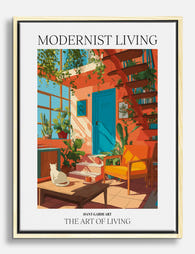
Canvas zonovergoten modernistische oase
Translation missing: nl.products.product.sale_price Vanaf €64,95€92,95 -

Poster zonnige keuken in Matisse-stijl
Translation missing: nl.products.product.sale_price Vanaf €19,95€33,25 -

Poster vrouwportret in rust
Translation missing: nl.products.product.sale_price Vanaf €16,95€23,95 -

Poster stilleven met citroenen in zonlicht
Translation missing: nl.products.product.sale_price Vanaf €19,95€33,25 -

Poster dakterras met zwembad in pastel
Translation missing: nl.products.product.sale_price Vanaf €19,95€33,25 -
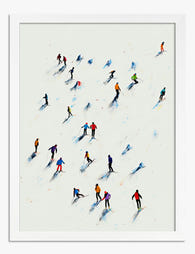
Poster skiërs in de sneeuw
Translation missing: nl.products.product.sale_price Vanaf €19,95€33,25 -

Canvas stilleven ochtendritueel
Translation missing: nl.products.product.sale_price Vanaf €64,95€92,95 -

Canvas stilleven met citroenen in zonlicht
Translation missing: nl.products.product.sale_price Vanaf €64,95€92,95 -

Poster wachtende hond bij de deur
Translation missing: nl.products.product.sale_price Vanaf €16,95€23,95 -

Canvas zonnige Matisse-geïnspireerde mediterrane oase
Translation missing: nl.products.product.sale_price Vanaf €64,95€92,95 -

Poster wielrenners in canyonlandschap
Translation missing: nl.products.product.sale_price Vanaf €19,95€33,25 -

Canvas zonovergoten mid-century interieur
Translation missing: nl.products.product.sale_price Vanaf €64,95€92,95 -

Poster zonnig modern interieur met witte kat en planten
Translation missing: nl.products.product.sale_price Vanaf €19,95€33,25 -

Poster serre geïnspireerd door Matisse
Translation missing: nl.products.product.sale_price Vanaf €19,95€33,25 -
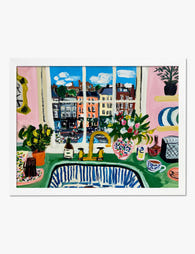
Poster kleurrijke keuken met stadszicht in Matisse-stijl
Translation missing: nl.products.product.sale_price Vanaf €19,95€33,25 -
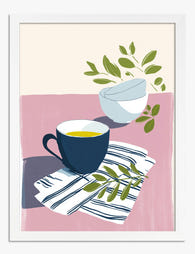
Poster modern stilleven met ochtendritueel
Translation missing: nl.products.product.sale_price Vanaf €19,95€33,25 -

Poster lente in de stad
Translation missing: nl.products.product.sale_price Vanaf €19,95€33,25 -

Poster Wonderwall songtekst
Translation missing: nl.products.product.sale_price Vanaf €19,95€33,25 -

Canvas gezellig stilleven in de keuken
Translation missing: nl.products.product.sale_price Vanaf €64,95€92,95 -

Canvas stilleven met geraniums van Matisse
Translation missing: nl.products.product.sale_price Vanaf €64,95€92,95


Meer van The Frame

Hosting at Christmas: Three Small Changes That ...
Most Christmas hosting advice asks you to do too much. You don't need a complete seasonal overhaul, you need your rooms to feel finished. The difference between a space that's...

You Bought the Sofa. Now What?
The sofa arrived. It looks great. And now you're staring at the empty wall above it wondering if you've made a terrible mistake, because nothing else in the room seems...

You've Just Moved In: What to Put on the Walls ...
The boxes are mostly unpacked, the sofa is in roughly the right place, and now you're staring at a lot of very blank walls. The instinct is to fix it...