
 Bestel vandaag, levering vóór
 How Many Art Prints Do You Actually Need? The Room-by-Room Answer
Stop hanging postage stamps. Here's exactly how many prints each room actually needs, by size and style.


Most people buy too many prints that are too small. They end up with what designers quietly call the postage stamp effect: a scattering of A4 frames floating in acres of empty wall, looking like an afterthought. This guide gives you actual numbers, not hedging.
The most common mistake: too many small prints
A single 30x40cm print above a three-seater sofa looks lost. Add three more around it at random heights, and you've made it worse. You now have four small things competing for attention on a wall that needed one big one.
The professional consensus, often called the two-thirds rule, is that art should fill roughly 60 to 75% of the available wall space above a piece of furniture. If your sofa is 220cm wide, your art (whether one piece or a grouping) should span around 130 to 165cm. Most people massively undershoot this.
Small prints work in clusters with intent, or in tight spaces like a loo or a narrow bit of hallway. They almost never work as the main event on a large wall. If you take one thing from this article: when in doubt, go bigger and fewer.

One statement piece: when a single print is all you need
A single large print is the most underused option in home decor, and often the best looking. It works when you have a defined zone (above a sofa, bed, console, or fireplace) and the wall is essentially one continuous surface.
For sizing, measure the furniture beneath and aim for the art to span 60 to 75% of that width. Above a standard 200cm sofa, that means a print around 100x70cm or larger. Above a king bed (150cm), 70x100cm portrait works beautifully. Above a console table or fireplace, match the width of the furniture below, give or take.
Go single when:
- The room leans minimalist or mid-century
- Ceilings are standard height (2.4m) and the wall is uncluttered
- The furniture below is a statement in itself (a coloured sofa, a sculptural bed)
- You want the art to be the moment, not part of an ensemble
This is where an XL piece earns its keep. Browse the centrepiece XL edit if you're committing to one big piece, because at this scale, print quality matters more. A poorly framed large print announces itself across the room.
The set of two: symmetry above a bed or either side of a window
Pairs are calm. They create symmetry, which the eye reads as deliberate and grown-up. Two matching or complementary prints work brilliantly:
- Above a bed, side by side, each centred over a pillow
- Either side of a window, mirroring each other
- Flanking a fireplace or doorway
- Above twin bedside tables (one print above each)
Sizing for pairs: each print should be roughly half the width you'd use for a single, with a 5 to 10cm gap between them. Above a 150cm bed, two 50x70cm prints with a 5cm gap gives you 105cm of art, comfortably in the 60 to 75% range.
Pairs work best when the prints are clearly related: same artist, same palette, same subject treated two ways. A diptych of botanical studies. Two abstracts in the same colour family. Avoid mixing wildly different styles in a pair, because the symmetry only reads if the content rhymes.
The set of three: the triptych effect
Three is the most dynamic number in art arrangement. It creates rhythm and movement without tipping into chaos. There are two configurations that consistently work:
Horizontal row. Three prints lined up at the same height, with even spacing (5cm between each is the sweet spot for prints under 50cm wide; 7 to 10cm for larger). Best above sofas, sideboards, and long beds.
Vertical stack. Three prints stacked above each other, again with even spacing. This is the move for narrow walls: between two doors, in a hallway, beside a tall bookcase. It draws the eye up and makes ceilings feel higher.
Triptychs work because the brain reads three as a complete set, not an incomplete one. Two feels paired. Four feels grid-like. Three feels composed. Wall art sets are designed around this principle, often arriving as coordinated trios so the colour and composition already work together.
The decision between one big print and three smaller ones usually comes down to room style. Minimalist, mid-century, Scandi spaces favour the single. Eclectic, traditional, layered spaces favour the trio. Tall ceilings (over 2.7m) can handle either; standard ceilings tend to look better with one large piece than three medium ones squeezed in.

The gallery wall (5+): when more is more
Gallery walls are the maximalist's reward. They work when you want a wall to feel collected, personal, lived-in. They do not work as a shortcut to filling space, because a bad gallery wall looks worse than a blank one.
The magic numbers for gallery walls are 5, 7, 9, and 12. Odd numbers feel curated; 9 and 12 read as deliberate grids if you arrange them that way. Avoid 4, 6, 8: they tend to look like you ran out of ideas.
Three rules keep gallery walls from becoming chaos:
- Anchor with one large piece. Start with a single print at least 50x70cm and build outwards. Without an anchor, the eye has nowhere to land.
- Limit your variables. Either match all the frames, all the mounts, or all the colour palettes. Vary one thing, hold the others steady.
- Keep spacing tight and consistent. 5 to 7cm between frames for a salon-style wall, no more. Wide gaps make a gallery wall look like floating debris.
Lay everything out on the floor first. Better still, cut paper templates and tape them to the wall before you put a single nail in. The most common gallery wall regret is committing to a layout that didn't quite work and living with it for two years.
Room-by-room recommendations
Concrete numbers, not "it depends."
Living room: 2 to 4 prints
The main wall (usually behind or facing the sofa) takes one large print or a triptych. A second wall (often above a sideboard or beside a TV) takes one or two more. Total: 2 to 4 prints across the room. More than that and the room starts to feel like a waiting area. Browse living room art prints sized for the dominant wall first, then fill in.
Bedroom: 1 to 3 prints
Bedrooms are for rest, which means restraint. A single large print above the bed, or a pair, or a tight triptych. Don't add a gallery wall in a bedroom unless the room is genuinely large. The eye should land somewhere calm. Bedroom art prints tend to work best in muted palettes here.
Kitchen: 1 to 2 prints
Kitchens have very little uninterrupted wall. One print on a breakfast nook wall, or two small prints in a row above a coffee station, is usually the ceiling. Resist the urge to scatter food-themed prints across every spare inch.
Hallway: 3 to 6 prints
Hallways are the natural home of the gallery wall, because you walk past them rather than sitting in them. They tolerate density. A run of 3 to 6 prints, evenly spaced at eye level (around 145cm to the centre), turns dead corridor into something worth looking at. Hallway art prints in vertical orientation work especially well in narrow spaces.
Bathroom: 1 print
One. Maybe two if it's a large family bathroom. Humidity is hard on paper, so canvas tends to hold up better in steamy rooms because there's no glazing to fog and the stretched cotton handles temperature swings well. Keep it small, keep it simple.

The "less is more" test
If you're standing in front of a wall debating between one large print and three medium ones, default to the single large print. If you're debating between three medium and a six-piece gallery wall, default to the three.
The reason is purely practical. A single well-chosen, well-framed piece at the right scale is almost impossible to get wrong. A gallery wall has dozens of decisions in it (frame, mount, spacing, colour, balance) and any one of them can sink the whole arrangement. The risk-to-reward ratio favours fewer, larger pieces, especially if this is your first time committing real money to wall art.
Going larger also tends to be the better value calculation. One 70x100cm print costs less than five 30x40cm prints, hangs in fifteen minutes instead of an afternoon, and reads as more considered. The smaller-print habit is a holdover from when art was expensive per square centimetre. With giclée printing on properly framed FSC wood, scaling up is the obvious move.

The shortlist
- One wall, one focal point: go single, go big (60 to 75% of the furniture width below)
- Symmetrical room or matching furniture: pair
- Want energy without chaos: triptych, horizontal or vertical
- Hallway or eclectic room with high ceilings: gallery of 5, 7, or 9
- In doubt: bigger and fewer, every time
Measure your wall, measure the furniture beneath it, and pick the arrangement that fills 60 to 75% of the space. Then stop. The empty wall around your art is what makes the art look good.

Fab-producten in dit blog
-

Poster minder is meer, maar soms meer
Aanbiedingsprijs Vanaf £11.95£19.95 -

Poster minimalistische mensen in rij
Aanbiedingsprijs Vanaf £11.95£19.95 -

Poster minimalistische figuren
Aanbiedingsprijs Vanaf £11.95£19.95 -

Poster minimalistische zwart-wit lijntekening elegant evenwicht
Aanbiedingsprijs Vanaf £11.95£19.95 -

Canvas zwart-witte quote 'More Than Minimal'
Aanbiedingsprijs Vanaf £49.95£74.95 -

Canvas minimalistische figuren
Aanbiedingsprijs Vanaf £49.95£74.95 -

Poster Van Goghs slaapkamer
Aanbiedingsprijs Vanaf £11.95£19.95 -

Poster minimalistische stadsscène
Aanbiedingsprijs Vanaf £11.95£19.95 -

Poster badkamerregels in klassiek zwart-wit
Aanbiedingsprijs Vanaf £11.95£19.95 -

Poster Matisse-geïnspireerde knusse oase
Aanbiedingsprijs Vanaf £11.95£19.95 -

Poster studie van een eenvoudige stoel
Aanbiedingsprijs Vanaf £11.95£19.95 -

Poster minimalistische witte bloem in aardetinten
Aanbiedingsprijs Vanaf £11.95£19.95 -

Poster kleine werelden IX in Kandinsky-stijl
Aanbiedingsprijs Vanaf £11.95£19.95 -

Poster fleurige bloementuin
Aanbiedingsprijs Vanaf £11.95£19.95 -

Poster modern interieur in zonlicht
Aanbiedingsprijs Vanaf £11.95£19.95 -

Poster minimalistische roos in rood en blauw
Aanbiedingsprijs Vanaf £11.95£19.95 -
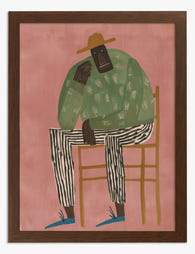
Poster gestreepte reflectie
Aanbiedingsprijs Vanaf £11.95£19.95 -
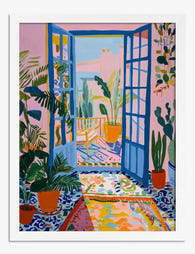
Poster zonnige serre in Matisse-stijl
Aanbiedingsprijs Vanaf £11.95£19.95


Meer van The Frame

Botanical Bedroom Ideas: How to Use Plant Print...
Botanical prints belong in bedrooms more than any other room in the house. The trick is choosing the right subjects, sizing them properly, and understanding how a printed leaf on...

Why Kew Gardens Became the World's Most Famous ...
Kew Gardens holds around 200,000 botanical illustrations, the largest collection of its kind anywhere. Behind that number is a story of royal ambition, global exploration, and artists sent to the...

Are Botanical Prints Still in Style? Why They W...
Yes, botanical prints are still in style. But the version of botanical art that feels current in 2025 looks very little like the pastel rose bouquets in gilt frames you...